
Kia e-Niro is the leader in battery degradation, retaining 97.25% of its capacity after 100,000 km.
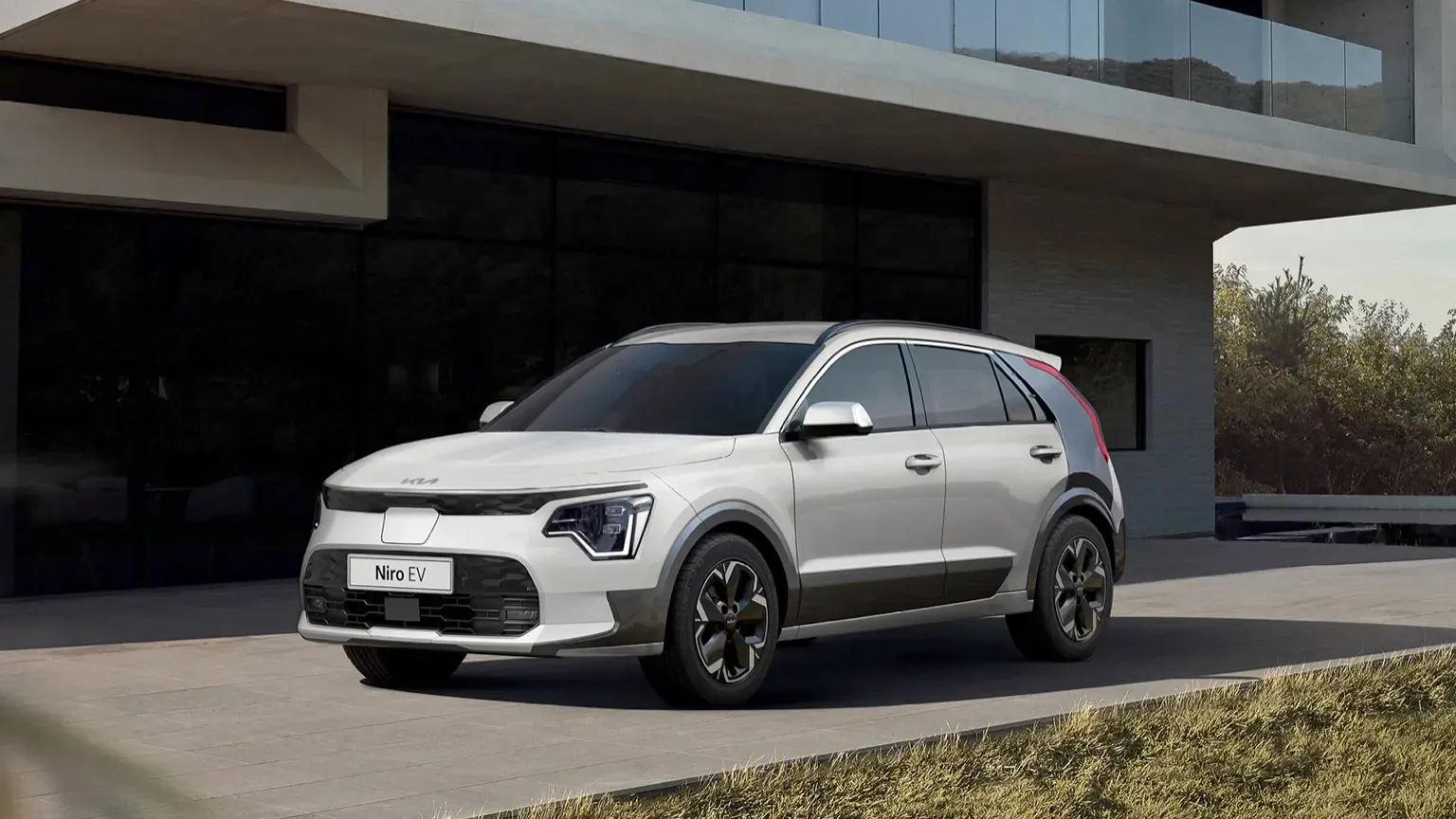
The Swedish company Carla tested 9,954 battery health tests in electric cars from 2022 to 2026. After 100,000 km, the Kia e-Niro and Hyundai Kona Electric performed best, with even the lowest-ranked model retaining 91.79% battery health.
Table of Contents
Show
Hide
If someone is looking for a used electric car and worries that the battery will fail after a few years, these numbers are quite reassuring. Especially since we’re talking about nearly 10,000 measurements rather than individual cases.
Korea Did Best
The Kia e-Niro with a 64 kWh battery came in first, achieving an average battery health of 97.25% after 100,000 km. The technically similar Hyundai Kona Electric took second place with 97.18% health.
The third place went to the Kia EV6 with a battery of 77.4 kWh, achieving 95.95% efficiency. Following behind were the Volvo XC40 Recharge with CATL cells at 94.70%, and the Polestar 2 at 94.35%. The sixth position was occupied by the BMW i3 with a larger 42.2 kWh battery introduced in 2019, which had an average efficiency of 93.77%.
This is impressive because we’re talking about vehicles that are no longer brand-new prototypes after just one season, but rather cars that are being used regularly.
Ranking:
Model
Battery condition after 100,000 km (%)
1
Kia e-Niro – 64 kWh
97.25%
2
Hyundai Kona – 64 kWh
97.18%
3
Kia EV6 – 77.4 kWh
95.95%
4
Volvo XC40 Recharge – 69 kWh – CATL
94.70%
5
Polestar 2 – 78 kWh – CATL
94.35%
6
BMW i3 – 120 Ah
93.77%
7
Polestar 2 – 78 kWh – LG Chem
93.53%
8
Tesla Model 3 – 60.5 kWh – CATL – LFP
93.34%
9
Audi e-tron 50 – 71 kWh
93.02%
10
Audi e-tron 55 – 95 kWh
92.93%
11
Skoda Enyaq iV – 77 kWh (software version 3.x.x)
92.88%
12
Tesla Model 3 – 78.8 kWh – LG Chem – newer software
92.83%
13
Tesla Model S – 96 cells
92.80%
14
Volkswagen ID.4 – 77 kWh
92.77%
15
Skoda Enyaq iV – 77 kWh
92.60%
16
Tesla Model X – 96 cells
92.52%
17
Volkswagen ID.4 – 77 kWh (software version 3.x.x)
92.27%
18
Tesla Model Y – 78.8 kWh – LG Chem
92.18%
19
Audi Q4 e-tron – 77 kWh
92.18%
20
Volkswagen ID.3 – 58 kWh
91.79%
Slower charging might have helped
The e-Niro and Kona are older models. Intuitively, one might assume newer cars should perform better since battery chemistry has improved. But that’s not necessarily the case.
One possible explanation is quite simple: these two Korean models treat their batteries fairly gently. They have liquid cooling, but their DC charging capacity remains below 80 kW. Lower current and less heat usually mean a slower aging process for the cells.
On the other hand, the Kia EV6 charges about three times faster and operates on an 800 V architecture, yet it still achieved 95.95% capacity retention. So fast charging doesn’t necessarily mean severe damage to the battery. It really depends on the overall package: chemistry, temperature management, and buffers.
There’s one catch with the Kona
When it comes to the Kony’s results, one thing needs to be kept in mind. Hyundai replaced entire traction packs in tens of thousands of early models due to issues with LG Energy Solution cells and fire risks. Globally, this recall affected around 82,000 vehicles.
If many models in the survey underwent such replacements, the Kony’s results might have been slightly inflated. The e-Niro didn’t have this problem because it used cells from a different supplier and wasn’t included in the same recall.
Even the “worst” result looks good
At the bottom of the top twenty was the Volkswagen ID.3. Its average battery condition after 100,000 km was 91.79 percent. This still represents a decline of less than 10 percent.
This is precisely the most interesting aspect of the entire comparison. Degradation does exist, but in most modern electric vehicles it doesn’t resemble a cliff drop rather than a slow descent down stairs. Thus, the fear of a battery in a used EV can sometimes be greater than the problem itself.
If you were to buy a used electric vehicle today, would you focus more on the model and battery chemistry, or simply on the SoH test results of a specific unit?
Order your Tesla and take advantage of the bonuses for purchasing through the referral link!