
Greencell Habu Den – a home wallbox that can do a lot
It’s time for the first test of a home wallbox. First up, I got my hands on a device from a Polish manufacturer – Greencell Habu Den, which is a station that can be hung on a wall or pole. Is this wallbox worth buying if you’re considering an electric car? Judge for yourselves based on my review!
Table of Contents
Show
Hide
Greencell Habu Den Specifications
I received the second revision of this device, whose capabilities have been expanded to include NFC card support. The Greencell Habu Den allows charging an electric car at 22 kW and comes in two lengths for the charging cable – 5 m and 7.5 m. The station can be controlled via a mobile app, though in 99% of cases you won’t need to do anything else with it after the initial setup. And here are the technical details:
Power: 3.6 kW to 22 kW (8-level adjustment)
Rated current: 32A
Voltage: 1P 230 VAC / 3P 400 VAC
Plug: Type 2
Connection: Bluetooth and Wi-Fi + NFC support
Dimensions: 338 x 211 x 73 mm
Weight: 6.72 kg
Operating temperature: from -25°C to +40°C
Water resistance: IP54
Connection to mobile app: Android / iOS
Upcoming integration: Home Assistant
Daily use and features
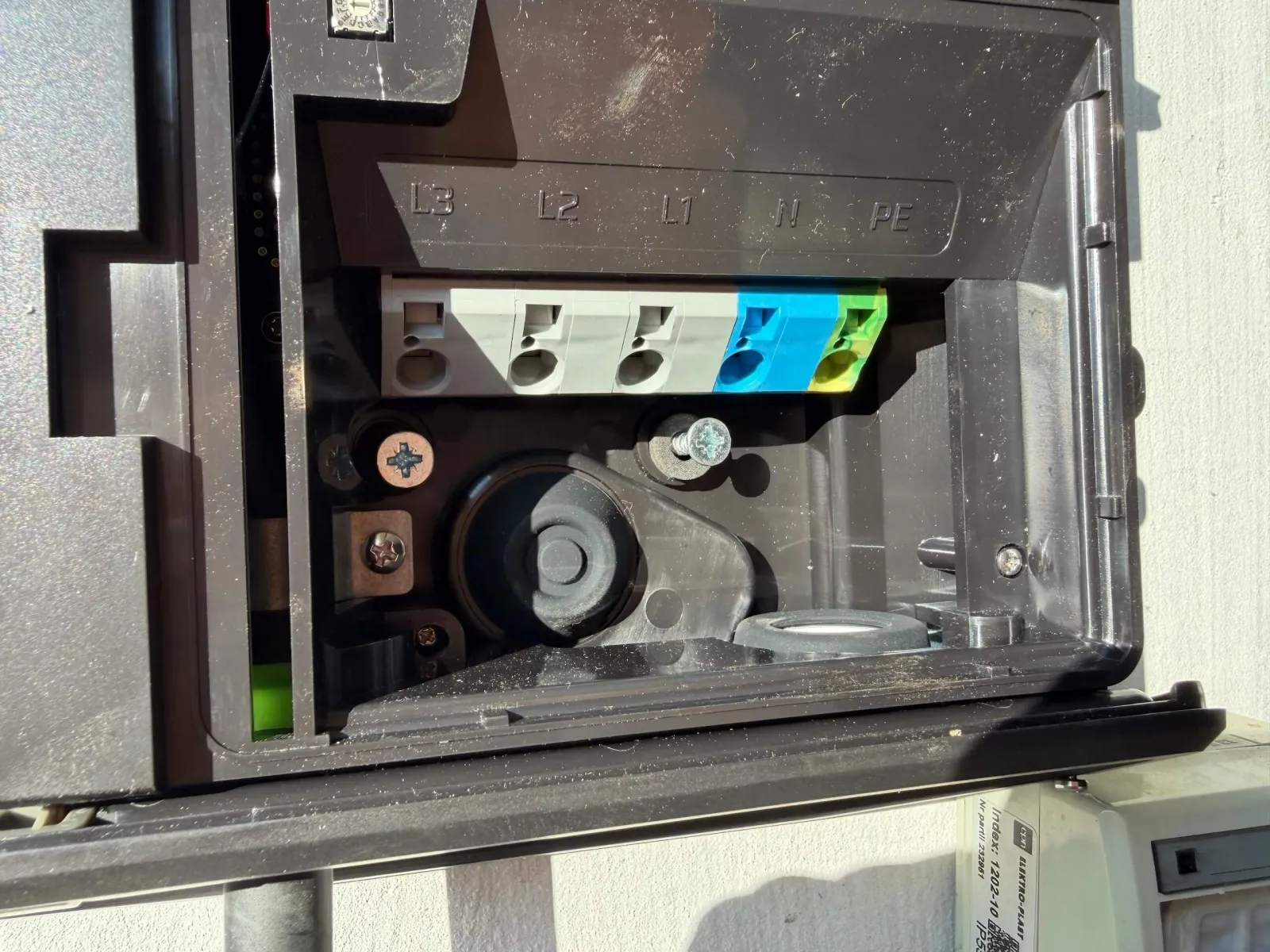
The installation of the Greencell Habu Den station is not complicated. The user manual and included drilling template make wall mounting take only a moment. Additionally, a major advantage is the ability to supply power to the charger from both the bottom and the back of the device. During installation, you can set the maximum current level at which the device will operate (thanks to the built-in trimmer, from 8A to 32A in 8-step adjustments), allowing you to set the maximum charging power to match what most cars support (11 kW) or just your specific car.
After assembly, it’s time for configuration — and this is where I encountered my first issue, as the manufacturer didn’t handle multiple cameras on an iPhone very well in the mobile app, and I was unable to scan the QR code that authenticates the device. Fortunately, the user manual included a larger code that allowed me to connect Habu Den to my smartphone easily. After that, just an software update was needed, and the device was ready for use.
Next, all that’s required is plugging the charging cable into the car and heading home. A convenient feature is the button that allows opening the Tesla’s charging port lid without having to touch it or use a phone, as well as the built-in flashlight in the plug that illuminates the charging port. It’s a small detail, but it’s pleasing.
Mobile App – What It Can Do
The mobile app allows for remote management of the Greencell charger, including setting your own rate per kWh and monitoring detailed charging statistics (time, costs, power, electricity used, etc.). It also provides the option to enable a charging lock without authentication via NFC—by tapping a card or phone (especially useful when the charger is in a public place). Additionally, there’s an option to schedule charging (set start and end times) as well as adjust the charging power (useful for those whose car doesn’t have such a feature in its app).
In addition, the app allows us to add more than one of our cars so we can monitor how much each car has been charged. Unfortunately, it doesn’t automatically detect which vehicle is connected, so we need to manually set what we’re charging before starting the process. Another major advantage is the planned integration of the app with Home Assistant, which will significantly expand the capabilities of this Greencell charger.
Summary – Is it worth buying the Greencell Habu Den?
If you have the option to install your own charger, then the Greencell Habu Den will be an excellent choice. And if you plan to do this in a public area (such as an underground garage or outdoor space), it’s worth opting for a charger with NFC locking (so that unauthorized people can’t use your charging station).
The device is very user-friendly, well-made, and looks really good too. For me, it’s one of the most interesting solutions on the market that worth considering when buying an electric heater. It’s definitely much more convenient than so-called bricks that need to be connected to a power outlet (though it’s also a device designed for a slightly different use). I leave the final purchasing decision to you – I’m satisfied with it.