
Geely E2 review: Electric city car starting at 19,990 euros
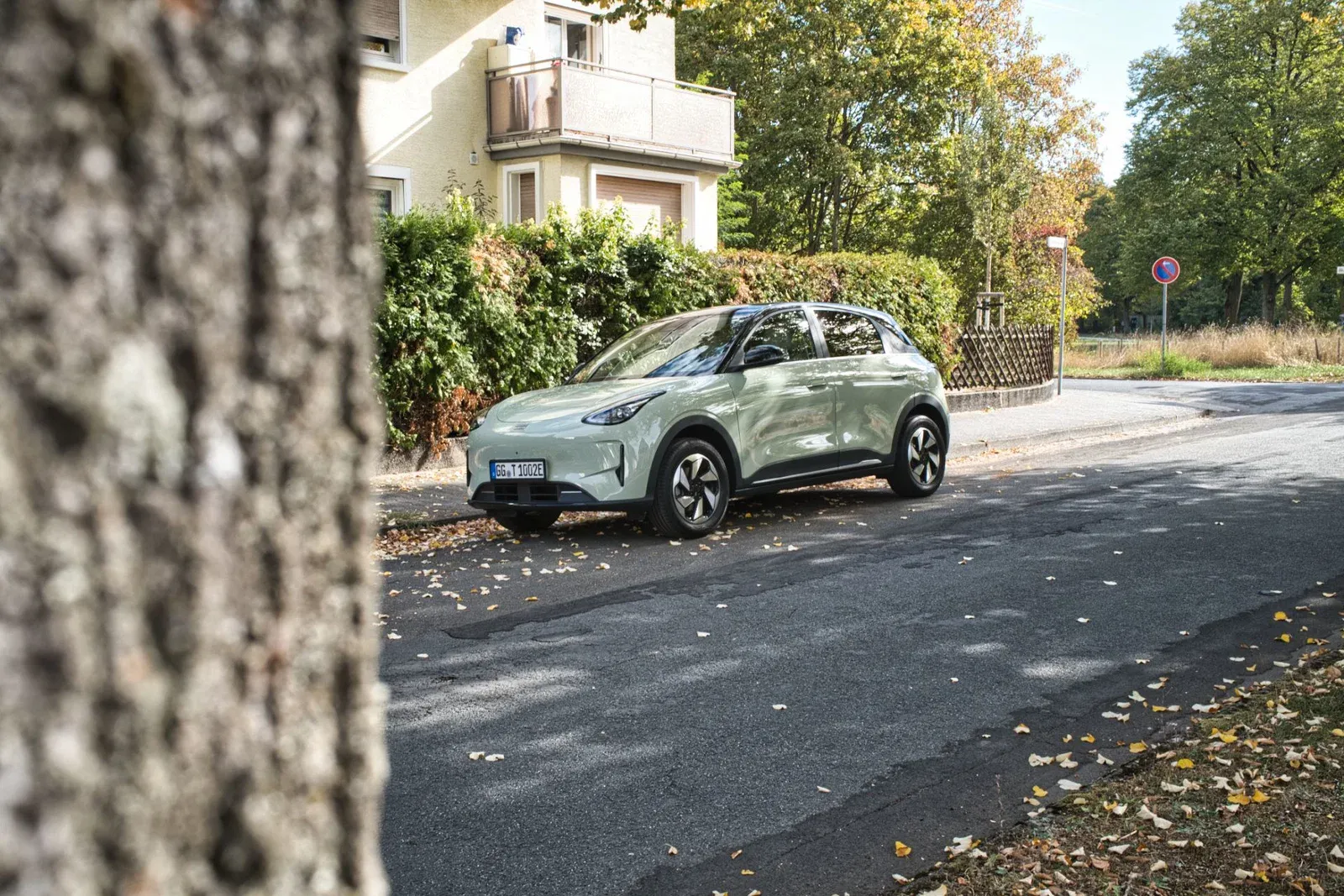
With the E2, Geely is bringing an electric city car to Germany, with the base version costing 19,990 euros. Even before the first deliveries, the Chinese automaker claims to have received over 5,000 expressions of interest in the country. Geely has largely established its dealer network and spare parts supply chain ahead of the market launch, which are precisely the areas by which new brands are evaluated in their initial phase. Whether this will be enough to establish a brand little known in Germany in the competitive B-segment will be determined in the coming months.
The E2 is new only in this country. According to an IHS study cited by the manufacturer, it was the world’s best-selling compact car in 2025 with around 466,000 units sold. Following the compact SUV E5, it is the second electric vehicle that Geely Auto Deutschland introduces to the market from Raunheim. The model’s victory in the Value Award at the 2027 German Car of the Year election is expected to give it a boost.
The three trim levels differ primarily in one aspect: the battery. Even the Pro version, priced at 19,990 euros, is well-equipped, featuring a 14.6-inch touchscreen, electrically adjustable front seats, and a V2L function that powers external devices with up to 3.3 kW. However, its 35 kWh lithium-iron-phosphate battery provides only a range of 252 kilometers according to WLTP standards, powered by a 60 kW motor. The Max version, costing 23,990 euros, has a 47 kWh battery offering up to 345 kilometers of range, along with higher performance and seat and steering wheel heating.
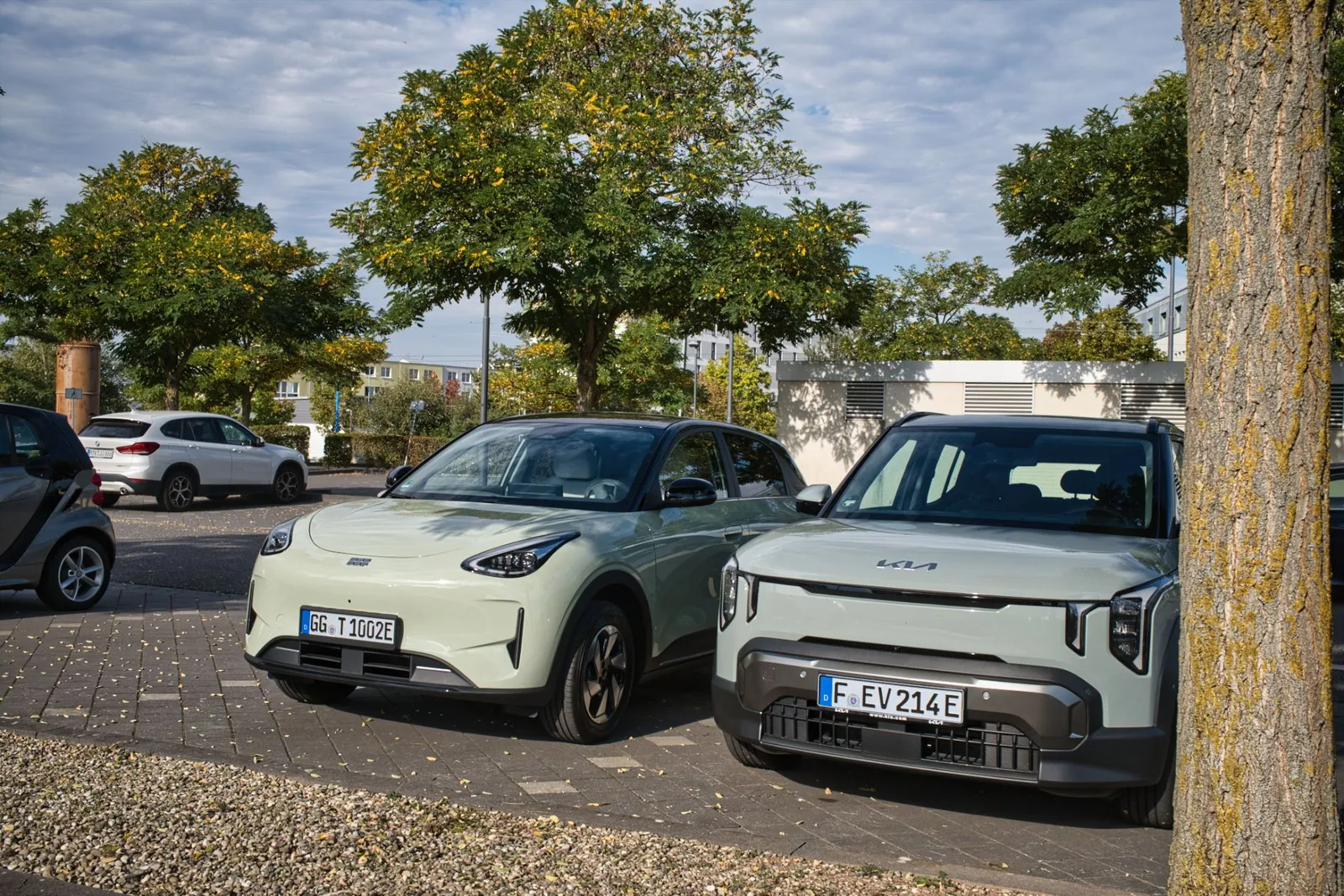
The top-tier Ultra model, priced at 26,990 euros, sits above it. Technically similar to the Max, it adds comfort and aesthetics such as alloy wheels, an electric tailgate, a 540-degree camera, and inductive smartphone charging. Those willing to overlook these features will find a better price-to-spec ratio in the Max. Regardless of the model, an eight-year or 200,000-kilometer warranty covers both the vehicle and the high-voltage battery, with the latter guaranteed up to 70 percent remaining capacity. Under the updated 2026 Euro NCAP testing protocol, the E2 received five stars.
Geely E2: A steady performer rather than a short-term sprinter
The larger battery also increases charging capacity. With the DC charger, the Pro can accept up to 60 kW, while the Max and Ultra models reach up to 80 kW. These aren’t particularly high values. The manufacturer officially states 25 minutes for charging from 30 to 80 percent. However, what’s more revealing than the maximum power is how long it can be maintained.
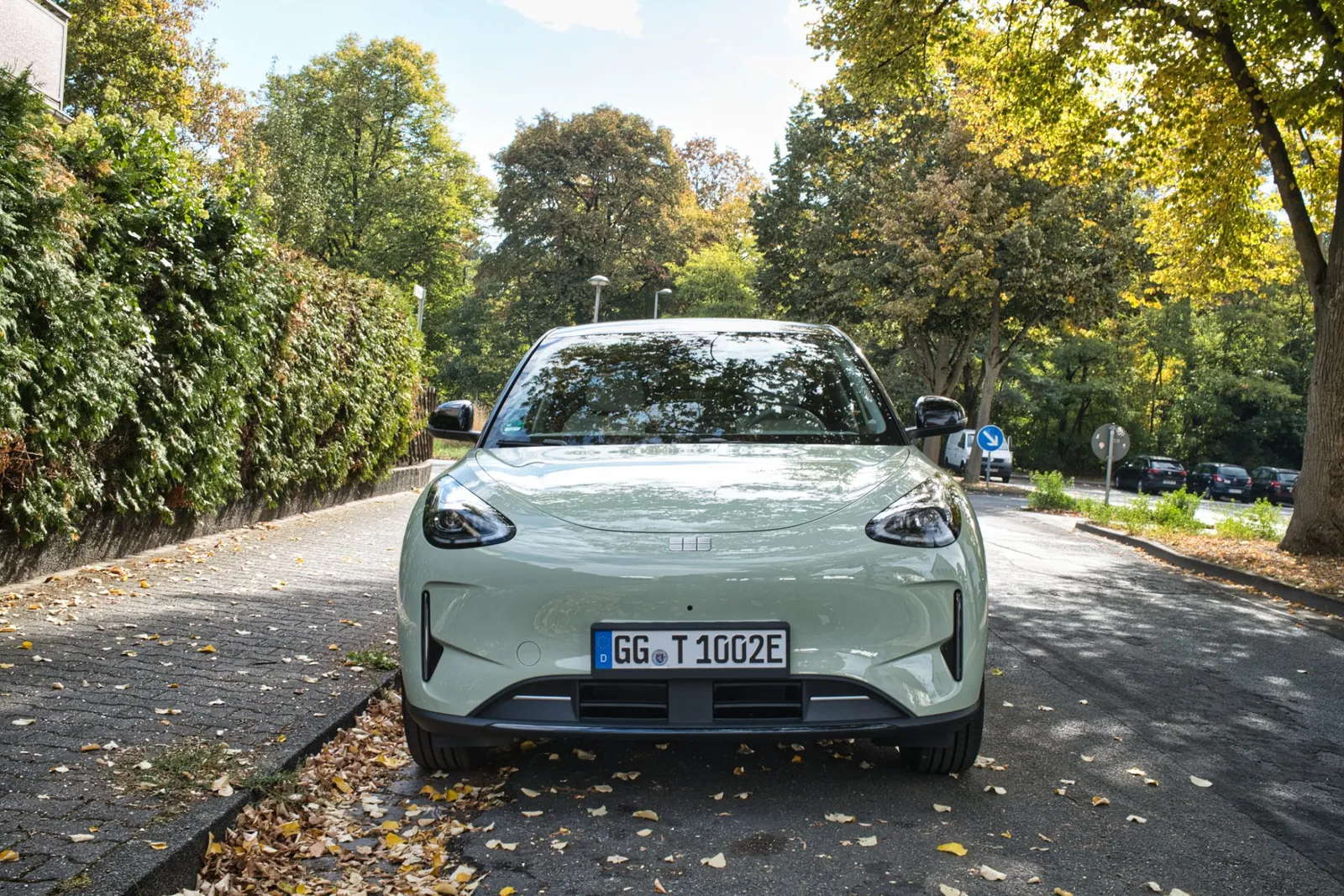
It is here that the E2 displays its own profile. Charging tests using pre-production vehicles show a nearly flat curve: the 47-kWh battery sustained around 80 kW until approximately 70 percent capacity was reached. It took just under 26 minutes to go from 10 to 80 percent. The smaller battery produced a similar result at around 60 kW with almost identical charging times. Against this backdrop, the official figure appears rather conservative; however, in winter with a cold battery, longer endurance times can be expected.
For the standard, Geely reports 15.5 to 15.9 kWh per 100 kilometers, including charging losses. During the test drive with a low proportion of highway driving and favorable weather conditions, the Ultra’s onboard computer even showed 9.5 to 10.4 kWh, without accounting for charging losses here. Those who travel at high speeds for extended periods must expect higher values, as the E2 cannot reach speeds over 130 km/h anyway.
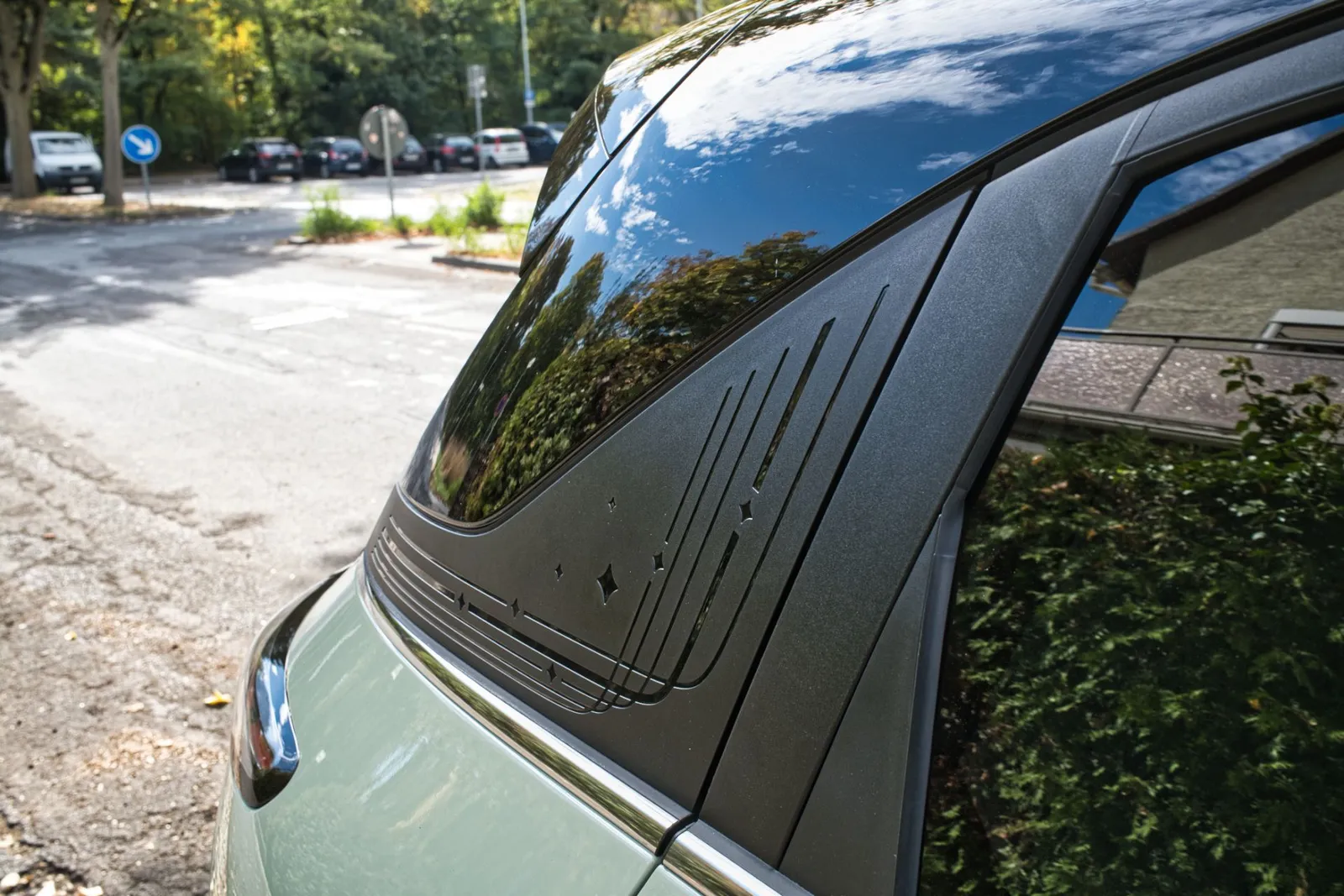
Charging at home using a wall charger is slower. The onboard charger operates at a maximum of 6.6 kW, so charging from 10 to 100 percent takes 5.3 hours for the Pro model and 7.1 hours for the larger versions. This time is sufficient for overnight charging, but public chargers with limited charging time deliver less energy to the battery. A heat pump is not listed among the standard features; instead, the battery is pre-conditioned using an electric heating element.
Geely E2: Plenty of space, few buttons, well-thought-out storage areas
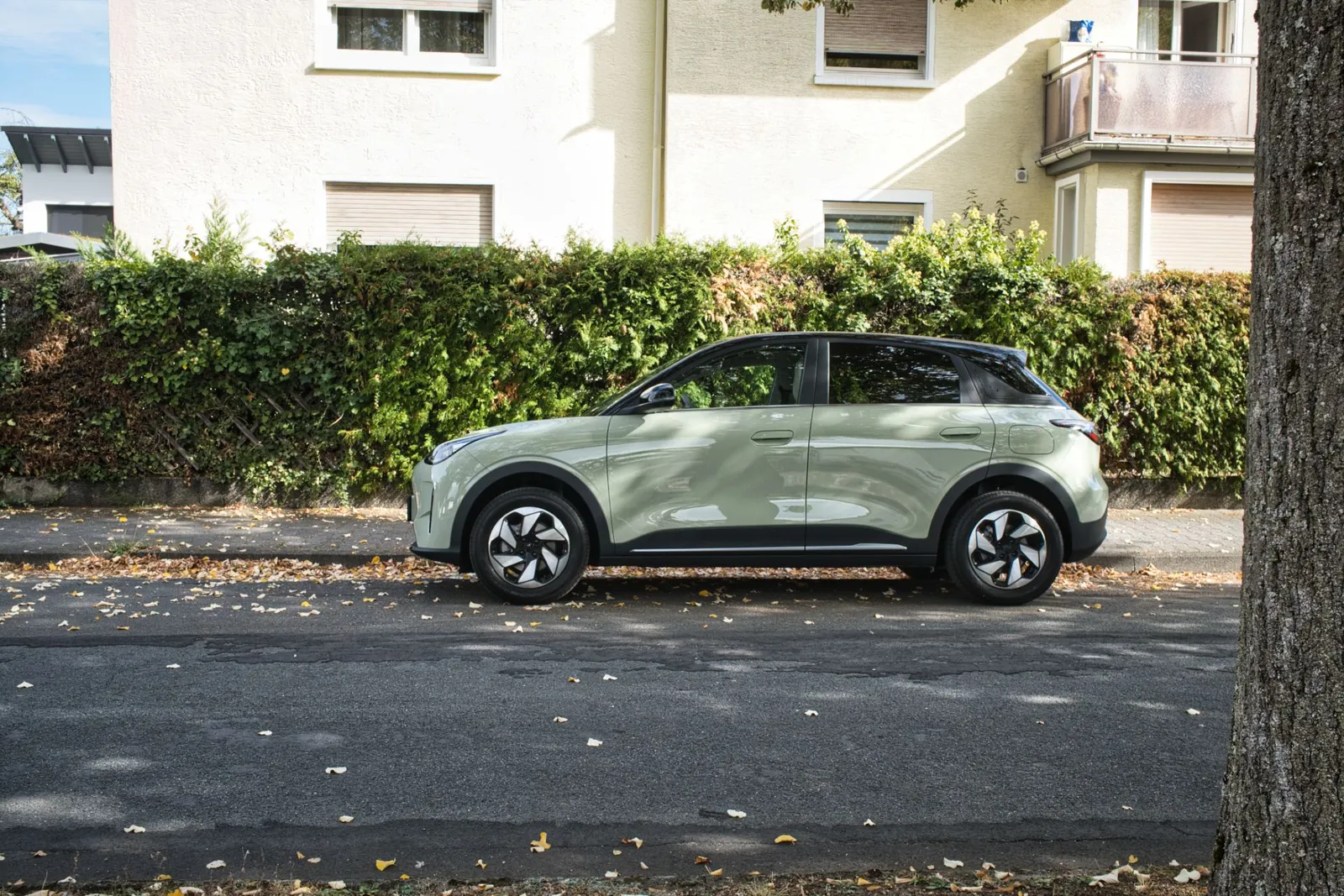
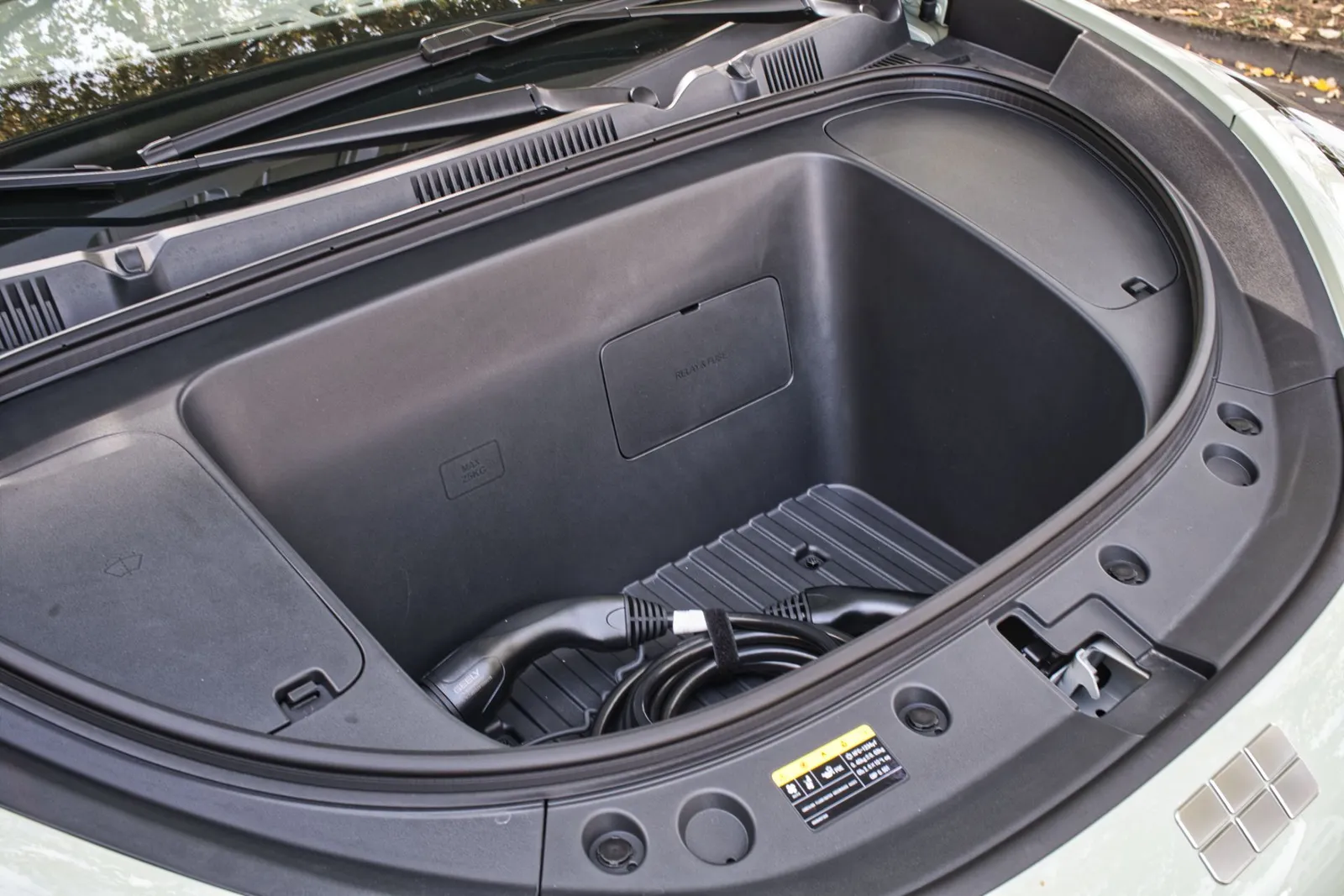
At 4.14 meters in length, the E2 is generously sized for its class, which is evident in its interior space. Even with a height of around 1.85 meters, passengers sit comfortably in the back seat, with Geely claiming 890 millimeters of legroom. There is a storage compartment under the rear seat and a glove box in the form of a 10-liter drawer that can be fully loaded. Under the front hood, the rear-wheel drive setup provides space for a 70-liter frunk according to Geely.
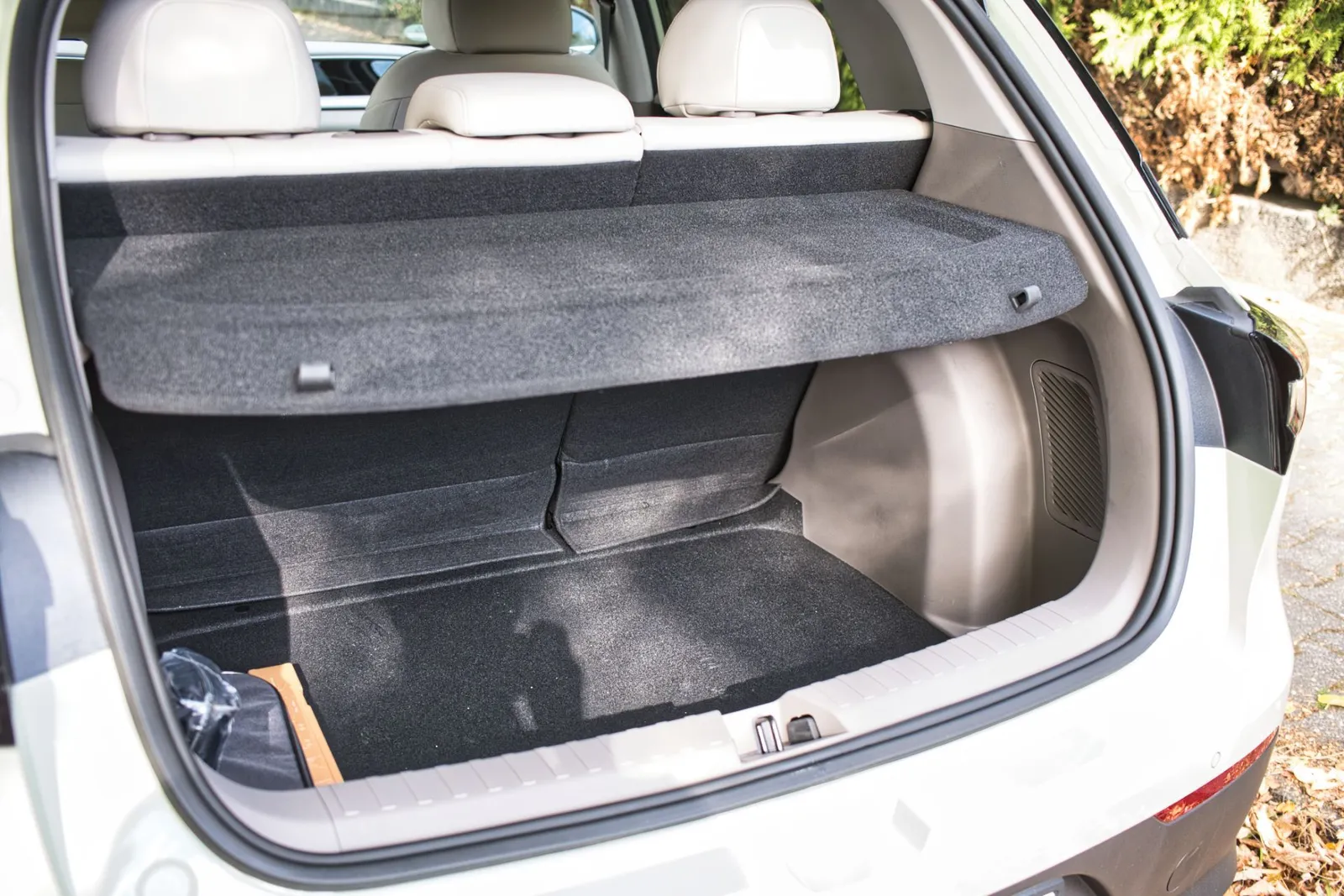
The trunk has a capacity of 375 liters, which increases to 1320 liters when the rear seats are folded down, with an additional 28 liters available in a separate compartment under the load floor. In daily use, however, it’s inconvenient that the trunk floor is one level below the loading edge, requiring bags to be lifted over a threshold. Geely does not offer a variable load floor to address this issue. Space is also limited in terms of payload: with only 315 kilograms, it quickly runs out for four adults plus vacation luggage, and the absence of a trailer hitch rules out the use of a bike rack as well.
In the Ultra version, the cream-white interior available for an additional 750 euros creates a bright and welcoming atmosphere, although closer inspection reveals a lot of plastic used. Geely has added padding where the arms rest. The front seats are heated, but the manufacturer has omitted a massage function. For control, Geely relies solely on the screen; only the climate control can still be adjusted via a panel in the center console. The menus fulfill their purpose, though they appear playful and show clear Chinese influences. Apple CarPlay and Android Auto connected reliably.
The control for regenerative braking is hidden in the submenus, which hardly causes any inconvenience in daily use since the automatic mode works reliably. Additionally, there is customization: once set, the electric vehicle starts in the preferred driving mode (Eco, Comfort, Sport, or Snow) along with the desired regenerative braking level (Auto, Low, Medium, or High). Thus, there is no need to navigate through the menu on subsequent rides.
The cruise control is similarly straightforward, activated with a click on the steering wheel. The speed can be adjusted in steps of 5 km/h or automatically via traffic sign recognition, which, as is common with other vehicles in this class, unfortunately does not always work reliably. The speed warning and attention monitoring systems appear less developed, as they trigger frequently but can be disabled using preset shortcuts. The voice assistant sometimes initiates conversations with the passenger without a trigger word, offering little practical value in this regard.
Geely E2: Agile in daily use, limited at higher speeds
In the Max and Ultra versions, the E2 reaches 100 km/h in 11.5 seconds, while the weaker Pro model takes 14.2 seconds. For everyday use and quick short sprints, the 85 kW and 150 Nm are sufficient. It handles well in highway traffic, but its true domain is urban areas and surrounding regions.
There, the suspension provides comfortable comfort, but the steering is very light at low speeds and only gains more feedback in sport mode. The limitations became more apparent on faster country roads. In corners, the chassis tilts noticeably to one side, and the suspension and steering lack firmness in such situations.
This contrasts with Geely’s own description. According to them, Geely Technology Europe has adjusted the steering to meet European requirements, such as a stronger suspension at speeds up to 50 km/h, and refined the driving dynamics over approximately 720,000 kilometers of testing.
The E2 excels in the areas for which it was designed: narrow streets and parking lots. According to the manufacturer, it is the only rear-wheel-drive vehicle in the electric B-segment, with its rear-wheel drive and multi-link rear axle enabling a turning radius of 9.9 meters.
Geely E2 vs. ID. Polo: Price versus Efficiency
The direct comparison with the ID. Polo shows nuanced differences. The price gap is more significant between the base models than between the E2 Max and ID. Polo Trend: both deliver 85 kW of power, but the Volkswagen costs about 1,000 euros more at 24,995 euros. On paper, the Geely has a slight advantage due to its larger battery, offering 345 kilometers versus 323 kilometers according to WLTP standards.
The Volkswagen, however, is more efficient and charges faster. According to the standards, the ID. Polo Trend consumes 13.8 kWh per 100 kilometers, while the E2 Max uses 15.5 kWh per 100 kilometers. At a fast charger, Volkswagen claims around 23 minutes to reach 80% charge at up to 88 kW, whereas the E2 required nearly 26 minutes in pre-production tests. The Polo charges via AC at 11 kW, can reach speeds of 160 km/h, and has a towing capacity of 500 kilograms, while the Geely does not offer any trailer hitch.
The space is divided among the seats. The 4.05 meter long Polo has a trunk capacity of 441 liters, while the E2 offers 375 liters in the back, though this is partially offset by a front storage compartment and underfloor tray. When it comes to maneuverability, Geely still has an advantage, with a smaller turning circle by one meter. Overall, it presents a slightly more affordable option with greater range and better efficiency compared to a well-established brand with a extensive dealer network.
Geely: Ready before the first car rolls off the line
The interest expressions from Germany are currently being converted into orders, with a final figure yet to be determined. Those who pre-ordered received an additional 500 euros in credit from EnBW by mid-September. Regular buyers will receive 144 euros in credit, which covers the base fee for the mobility+ L plan for twelve months.
Meanwhile, Geely has rapidly expanded its dealer network. The manufacturer now has 52 active partners in Germany, with a total of 67 contracts signed, thus already achieving the goal of 50 locations by year’s end. All partners handle sales and workshop services; businesses without the necessary after-sales capabilities were not included.
Spare parts currently come from a European central warehouse in Amsterdam. A own warehouse in Germany is targeted by year’s end, but it could be delayed until the first quarter of 2027. The biggest challenge remains brand awareness, which Geely is addressing through increased dealer presence and competitive pricing.
Disclaimer: Geely invited us to test the Geely E2. However, this does not affect our honest opinion expressed here.