
Western Hungary: Pannonhalma, Sopron, Kőszeg and the Őrség
Eight days through the quiet west of Hungary, where the Danube plain rises into vineyards, chestnut woods and the first foothills of the Alps. The loop leaves Budapest for the lake castle of Tata and the baroque balconies of Győr, climbs to the thousand-year-old abbey of Pannonhalma and reaches the Esterházy Palace at Fertőd, where Haydn wrote music for a prince. Sopron, the ‘most loyal town’, looks out over the reeds of Lake Fertő; Kőszeg still rings its eleven o’clock bells for a siege of 1532; and the scattered hamlets of the Őrség hide frescoed churches in the forest. The road then turns to the warm lake of Hévíz, the castle of Sümeg and the lone volcanic wine hill of Somló before the Bakony forests lead back to the capital. Fast chargers line the M1 and every county town; spa hotels and wine guesthouses gladly lend a socket overnight.
Season: Best from late April to October. Lavender flowers on the hill of Pannonhalma in June and early July, the harvest fills the cellars of Sopron and Somló in September and October, and the chestnut woods around Kőszeg turn copper in autumn, when roasted chestnuts are sold in the squares. Lake Hévíz rarely drops below 23 °C, so a winter swim among the rising steam is a real pleasure, but the narrow lanes of the Őrség can be icy and some museums keep short hours from November to March. In summer book the cave theatre at Fertőrákos and the palace concerts at Fertőd ahead, and buy the Hungarian e-vignette online before joining the M1.
Eight days through the quiet west of Hungary, where the Danube plain rises into vineyards, chestnut woods and the first foothills of the Alps. The loop leaves Budapest for the lake castle of Tata and the baroque balconies of Győr, climbs to the thousand-year-old abbey of Pannonhalma and reaches the Esterházy Palace at Fertőd, where Haydn wrote music for a prince. Sopron, the ‘most loyal town’, looks out over the reeds of Lake Fertő; Kőszeg still rings its eleven o’clock bells for a siege of 1532; and the scattered hamlets of the Őrség hide frescoed churches in the forest. The road then turns to the warm lake of Hévíz, the castle of Sümeg and the lone volcanic wine hill of Somló before the Bakony forests lead back to the capital. Fast chargers line the M1 and every county town; spa hotels and wine guesthouses gladly lend a socket overnight.
Day by day
Győr
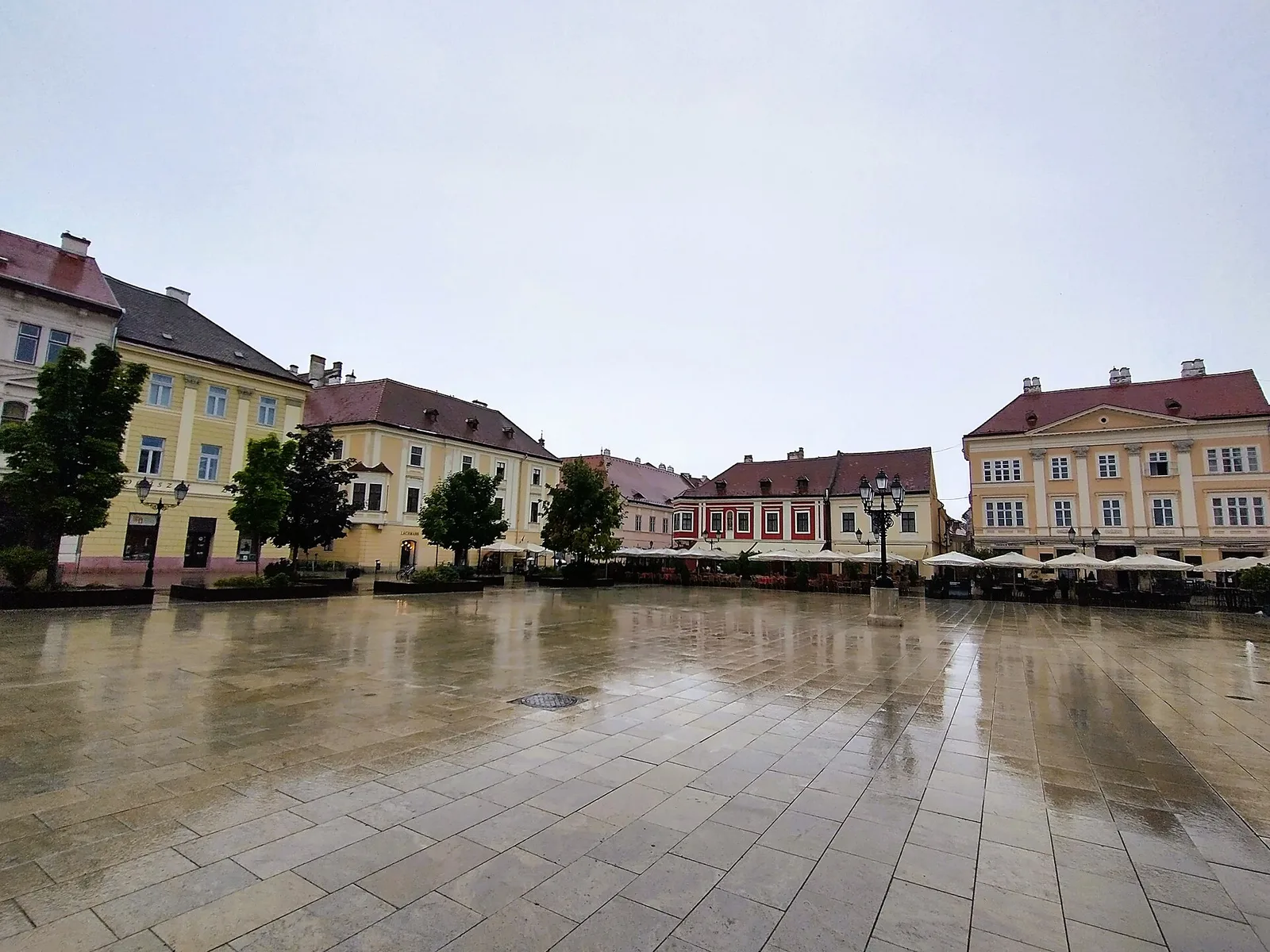
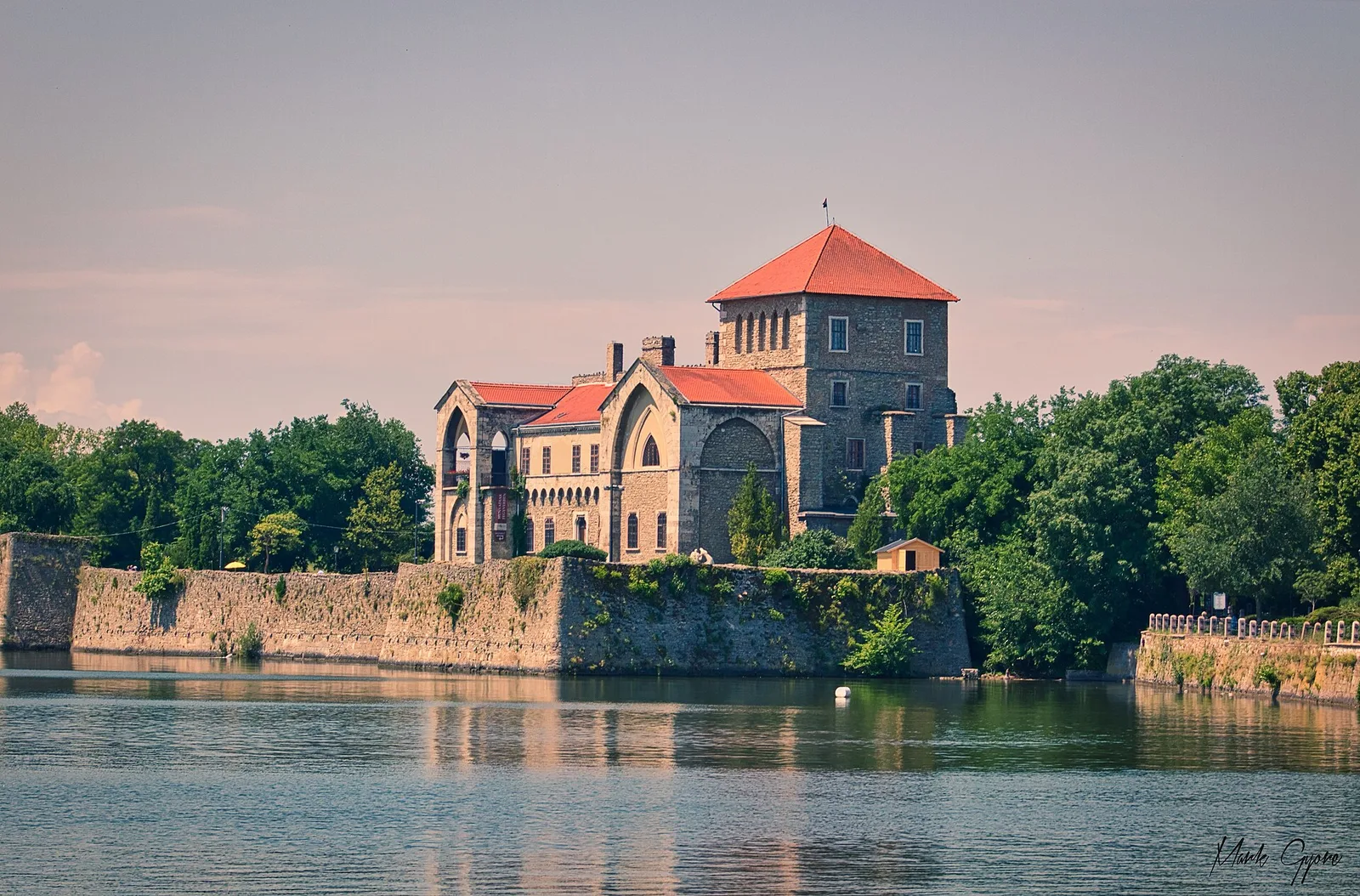
The first morning follows the M1 west out of Budapest, and after an hour you leave it for Tata, a ‘town of waters’ built around the Old Lake. Walk the shore path to the castle, where King Matthias came to hunt and fish in the fifteenth century, then past the old water mills into the English park with its romantic artificial ruins; in late autumn tens of thousands of wild geese come down to roost on the lake at dusk. Continue to Győr, where three rivers meet below Chapter Hill. In the baroque old town, look up: the corners of the houses carry enclosed balconies of carved wood and iron, and on Széchenyi Square the Benedictine church faces a row of pastel façades. Climb to the cathedral to see the gilded herm of Saint Ladislaus, and end the day on the Rába embankment as the bridges light up. Charge at the fast charger a short walk from the old town of Győr.
Why stop hereCharge nearby: Shell Recharge (Shell Recharge Győr) — typical arrival 35%, about 25 min to 80%. Why stop here: Széchenyi Square and the baroque balconies, Győr Cathedral on Chapter Hill, Egregy Árpád-era church. Access: walk from the overnight — leave the car.
Sopron
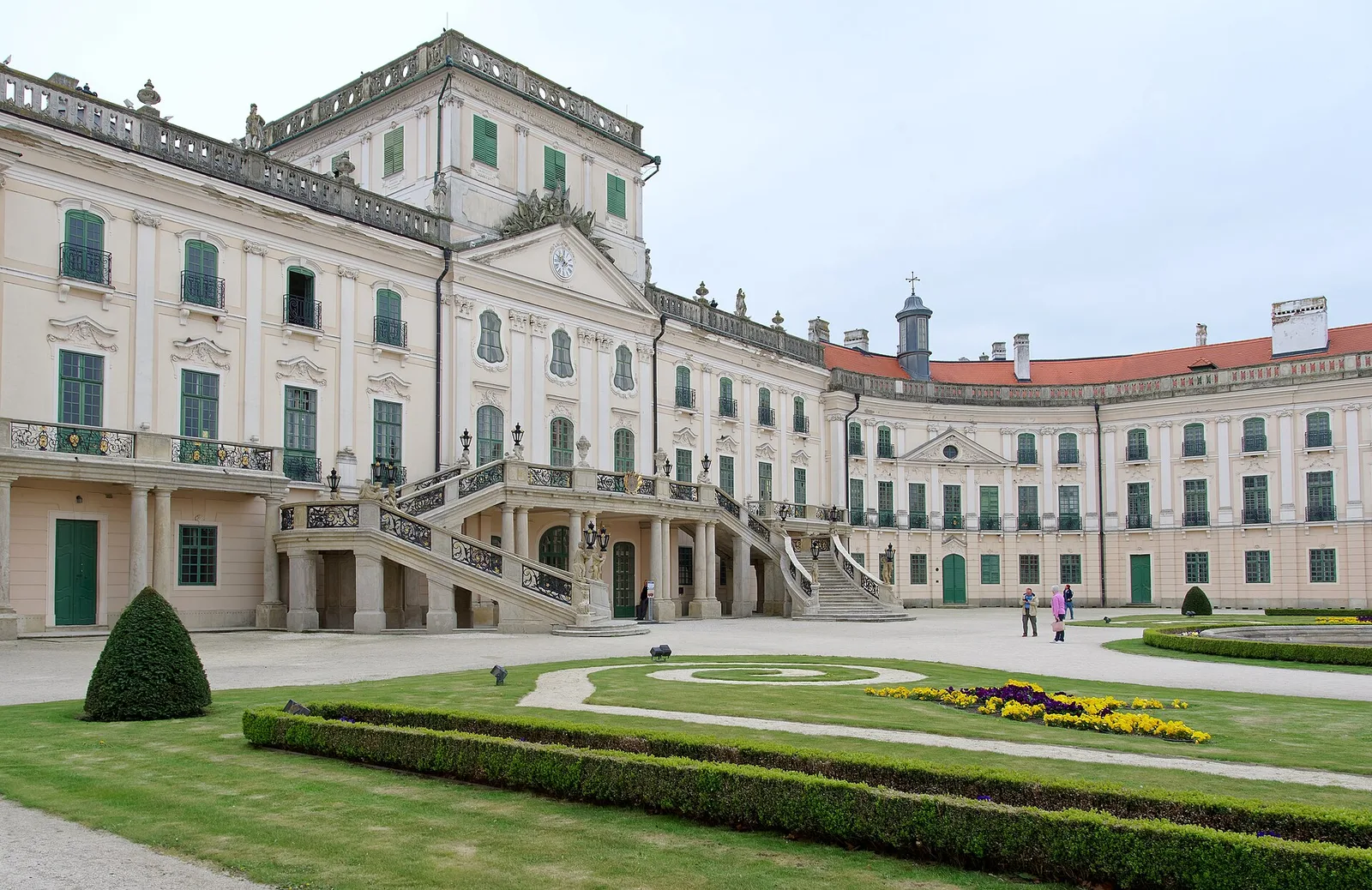
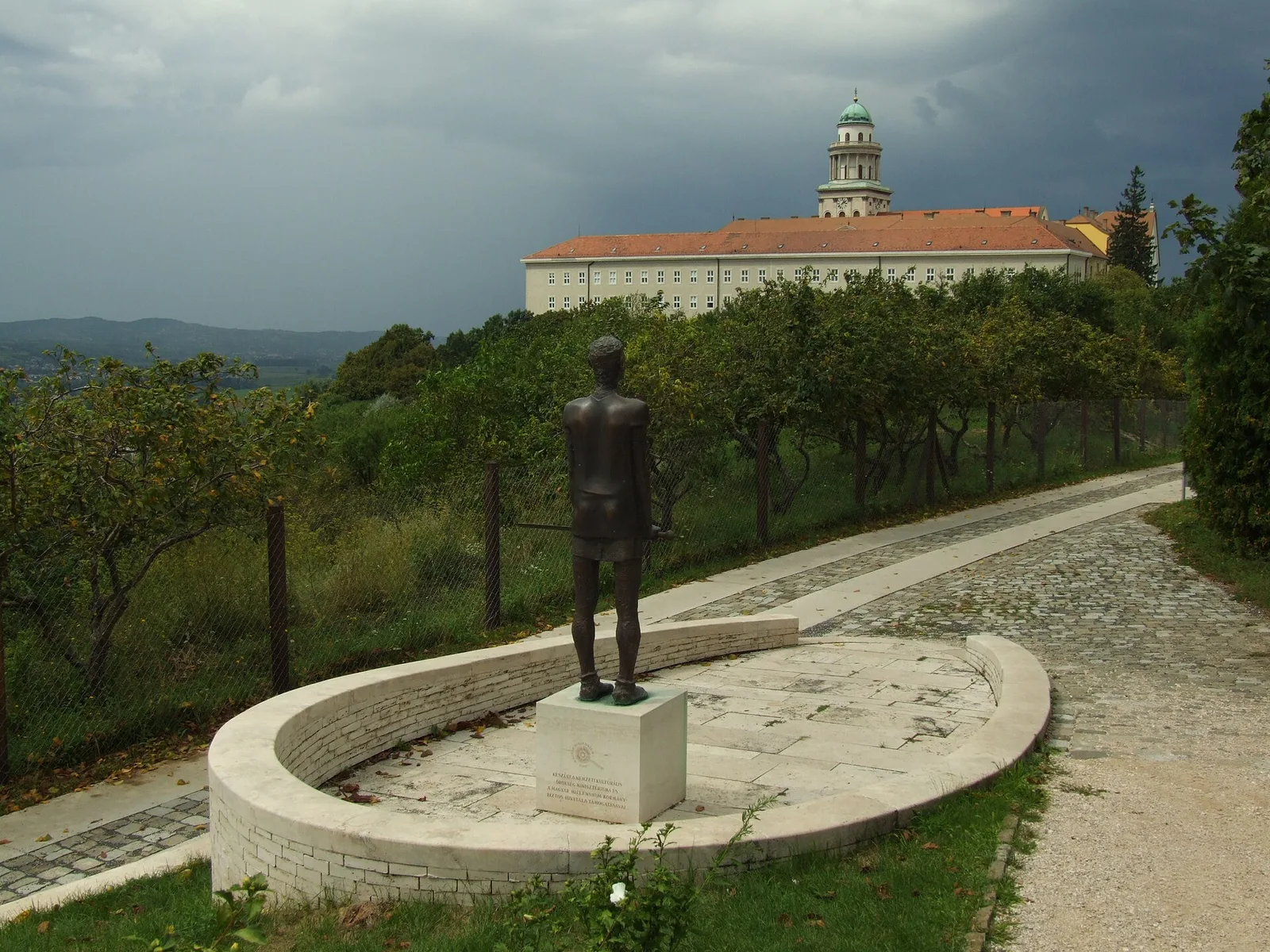
Twenty minutes south of Győr, the Archabbey of Pannonhalma crowns its hill like a ship above the plain. Benedictine monks have prayed here since 996: walk down into the cool crypt, through the carved Porta Speciosa and into the neoclassical library, where some four hundred thousand volumes line the oval hall under a painted ceiling. In early summer the slopes below are purple with lavender, and the abbey winery pours its whites on a terrace looking towards the Bakony. In the afternoon cross the flat farmland of the Rábaköz to Fertőd and the Esterházy Palace, a rococo horseshoe of yellow stucco set in French gardens, where Joseph Haydn served as court Kapellmeister for almost thirty years; if you can, catch an evening concert in the music room. Arrive in Sopron as the lamps come on in the old town. Plug in at the 22 kW point by the palace park in Fertőd while you visit, or at the fast charger on the edge of Sopron.
Why stop hereCharge nearby: Mobiliti (Mobiliti Sopron) — typical arrival 30%, about 25 min to 80%. Why stop here: Firewatch Tower and the Gate of Loyalty, Pan-European Picnic memorial park. Access: walk from the overnight — leave the car.
Sopron
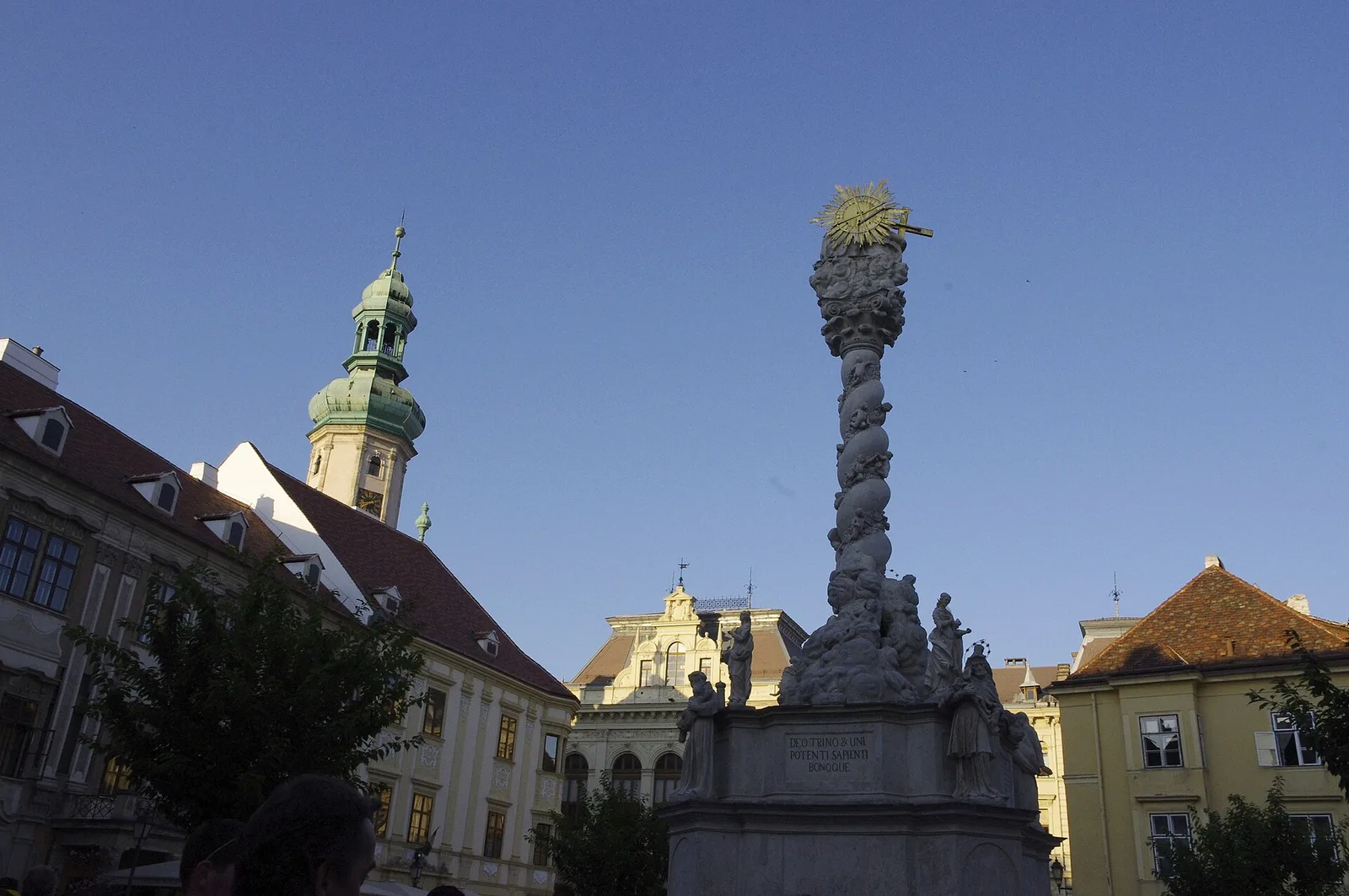
Sopron keeps its old town inside the oval of its Roman and medieval walls. Climb the Firewatch Tower for the view over red roofs to the first ridges of the Alps, then walk out through the Gate of Loyalty at its foot, built to remember the vote of 1921 that kept the town in Hungary and earned it the title of ‘most loyal’. Look into the Goat Church, the Storno House and the quiet courtyards of Templom Street, where wine was once sold from the cellar doors. In the afternoon drive ten minutes to Fertőrákos, where a limestone quarry worked since Roman times has become a vaulted cave theatre, then follow the long causeway road through the reeds to the shore of Lake Fertő, a shallow steppe lake shared with Austria and protected by UNESCO. Nearby, a quiet meadow marks the Pan-European Picnic of August 1989, when a border gate opened for an afternoon and hundreds of East Germans walked to the West. End with a glass of Kékfrankos in a Sopron cellar. Charge at the town-centre charger in Sopron.
Why stop hereCharge nearby: Mobiliti (Mobiliti Sopron) — typical arrival 30%, about 25 min to 80%. Why stop here: Firewatch Tower and the Gate of Loyalty, Pan-European Picnic memorial park. Access: walk from the overnight — leave the car.
Kőszeg
Leave Sopron by the old road south to Nagycenk, where a double avenue of lime trees planted in the eighteenth century runs for more than two kilometres from the Széchenyi mansion across the fields; the house is a museum to Count István Széchenyi, ‘the greatest Hungarian’, and a little heritage railway leaves from the station opposite. The road then follows the foot of the Kőszeg Hills to Kőszeg, a small town of baroque squares where in 1532 Captain Miklós Jurisics and a few hundred defenders held up the Ottoman army for weeks on its march to Vienna; the church bells still ring at eleven in the morning to remember the day the siege was lifted. Walk from the castle through the Heroes’ Gate onto Jurisics Square, where the old Golden Unicorn pharmacy keeps its painted jars. In the late afternoon drive up through the chestnut woods and walk to the lookout tower on Írottkő, 882 metres high, where the Austrian border runs across the platform and the whole Little Plain lies below. Public chargers are scarce in Kőszeg, so arrive with charge to spare, ask your guesthouse for a socket overnight and top up at the fast chargers in Szombathely tomorrow.
Why stop hereWhy stop here: Jurisics Castle and Jurisics Square, Írottkő lookout tower. Access: walk from the overnight — leave the car.
Őriszentpéter
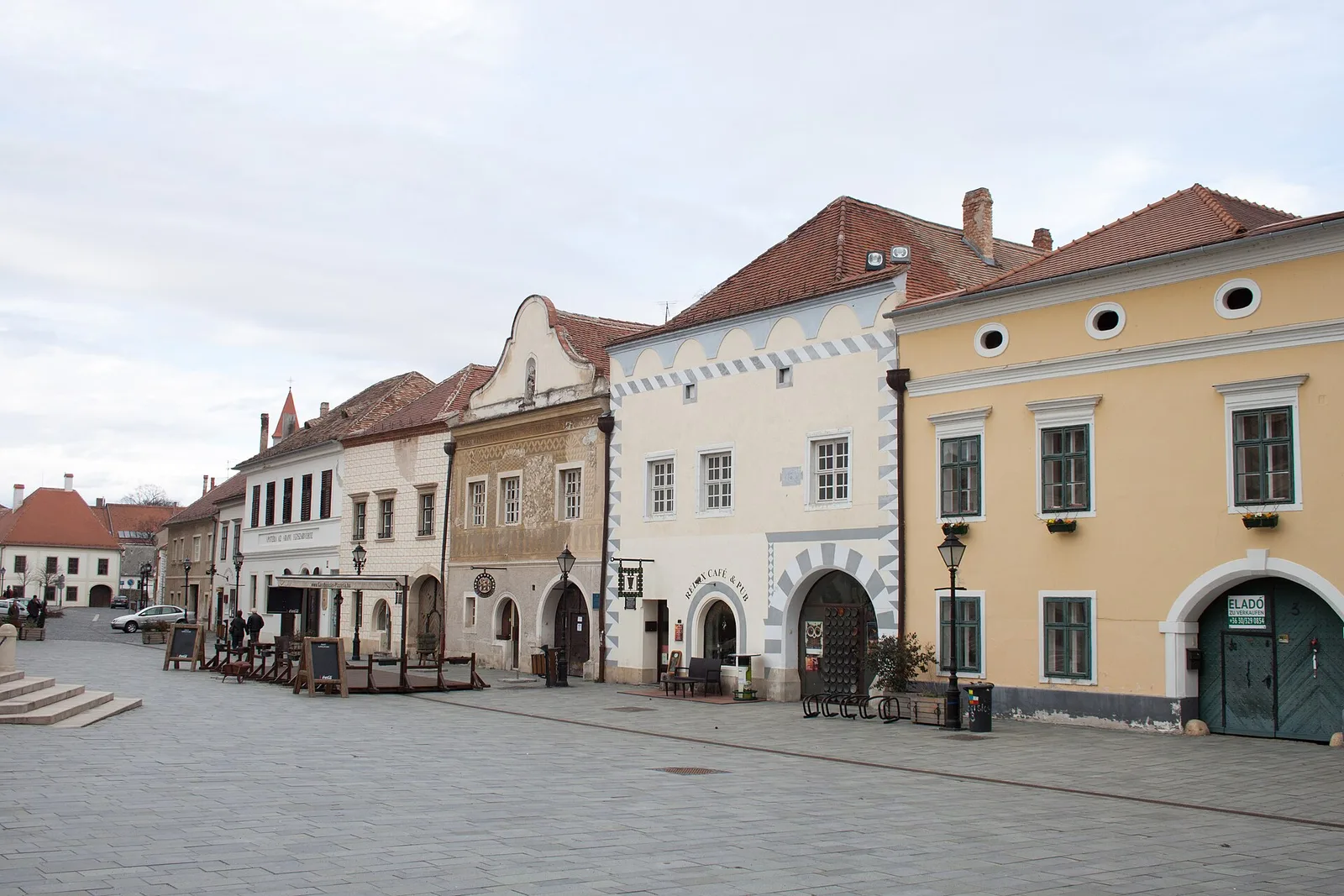
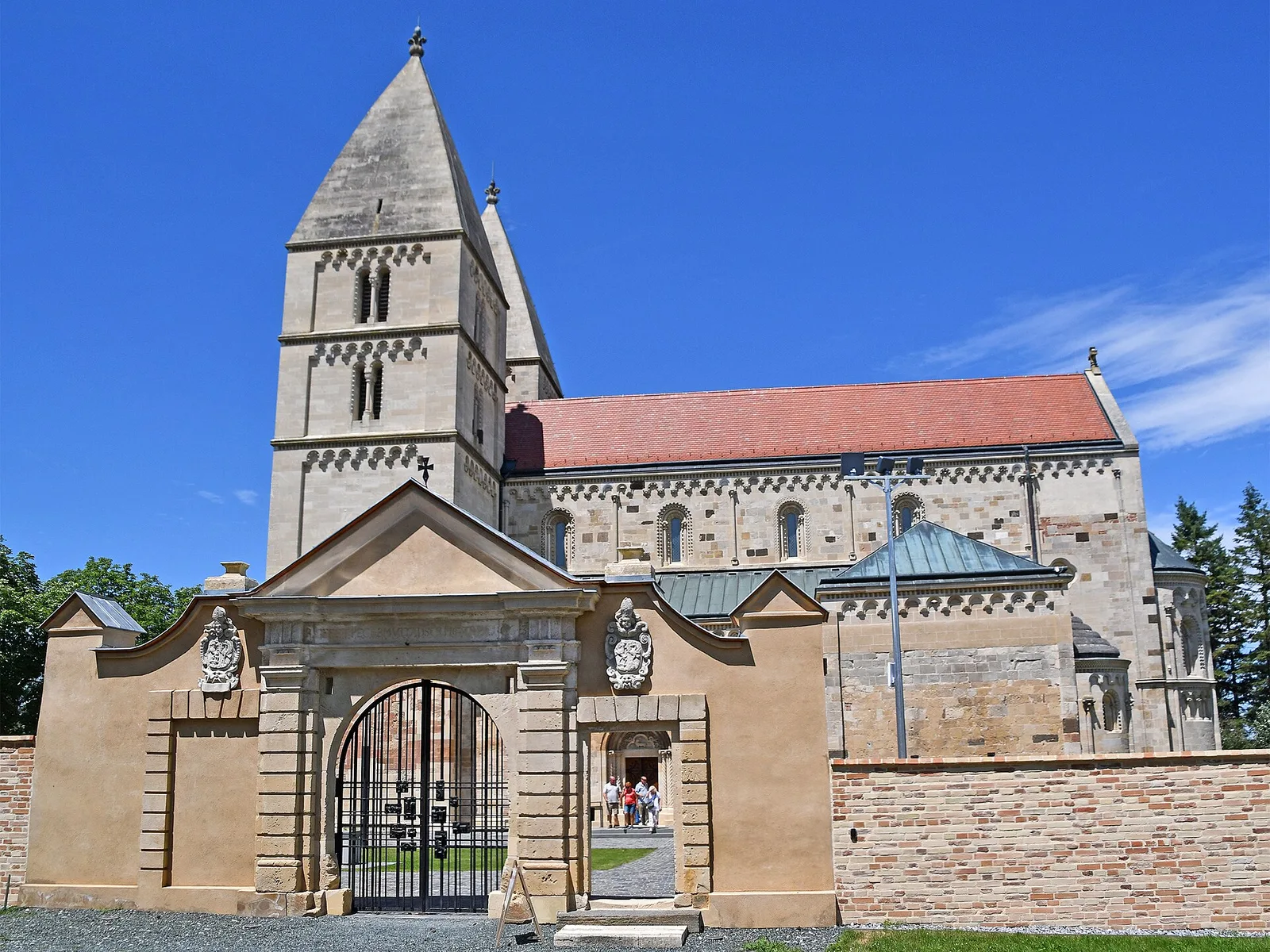
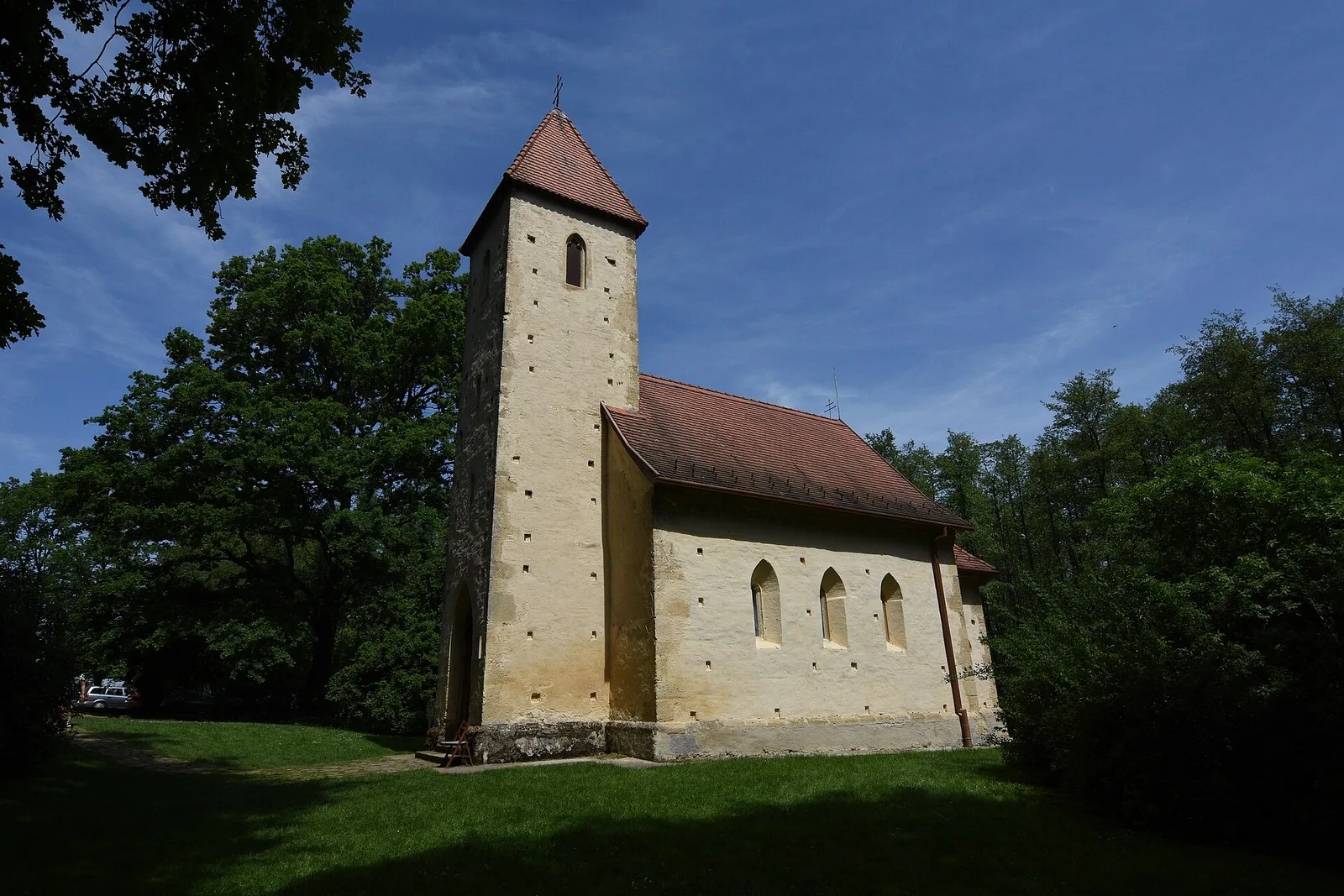
South of Kőszeg, the twin towers of Ják rise from the fields: the abbey church of Saint George, finished in the thirteenth century, is one of the finest Romanesque buildings in Central Europe, and its west portal is a deep stone funnel of apostles, lions and zigzag arches. Fifteen minutes on, Szombathely was Roman Savaria, the oldest town in Hungary; walk among the reconstructed columns of the Temple of Isis and the worn paving of the Amber Road in the ruin garden. The afternoon leads south-west into the Őrség, the ‘land of the guards’, a national park of pine and oak forest, hay meadows and hamlets scattered along the ridges. Stop at Velemér, where a small Gothic church alone in the woods keeps frescoes painted by Johannes Aquila in 1378, and arrive in Őriszentpéter by its Romanesque church on the hill. Ask for pumpkin-seed oil and dödölle at dinner. Public chargers are scarce in the Őrség, so top up fully at the fast hub on the southern edge of Szombathely and ask your guesthouse for a socket overnight.
Why stop hereWhy stop here: Őriszentpéter Romanesque church. Access: walk from the overnight — leave the car.
Hévíz
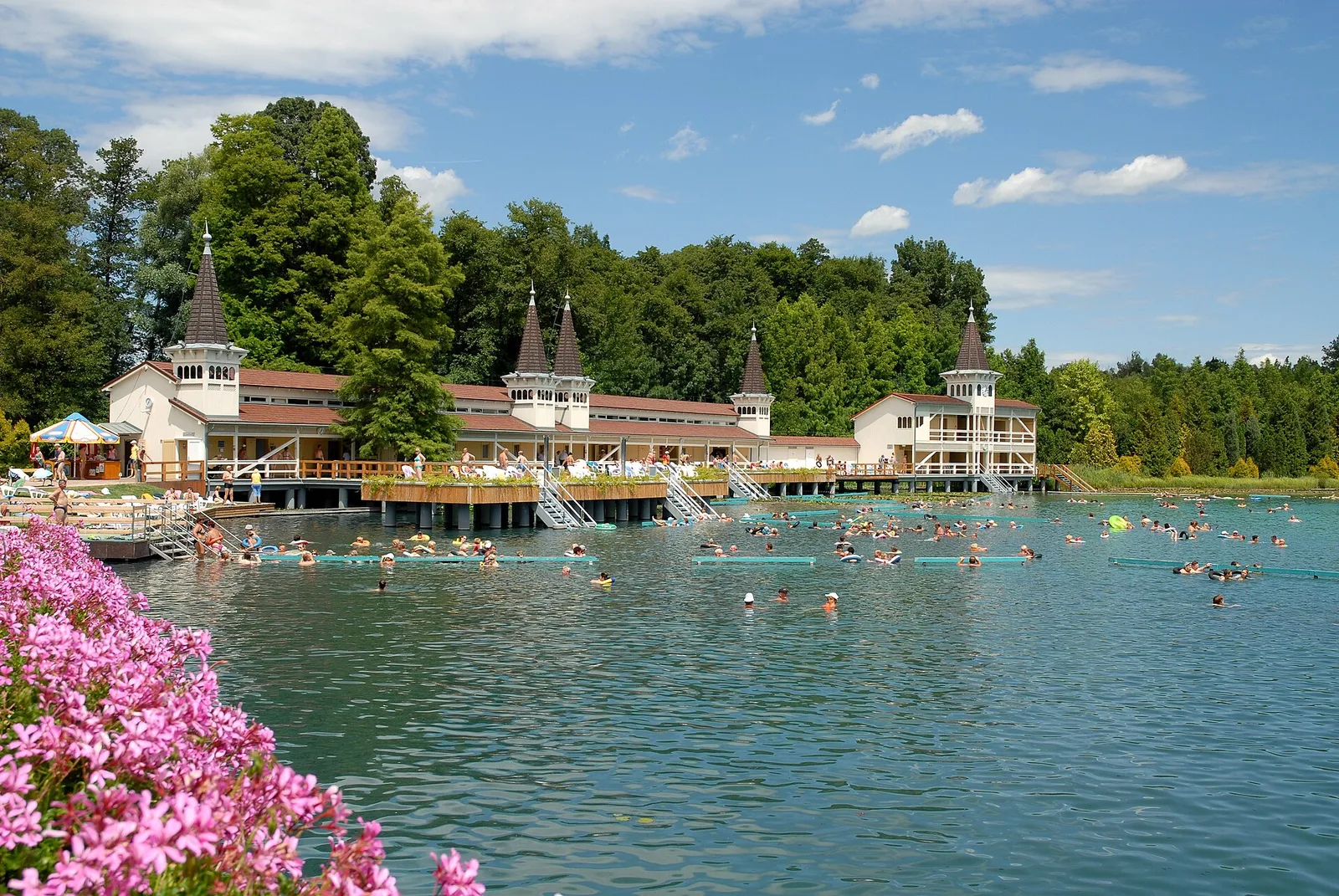
Spend the morning slowly in the Őrség. At Szalafő the Pityerszer open-air museum keeps log houses and thatched barns gathered around a yard just as they stood two centuries ago, and in Magyarszombatfa potters still throw black and ochre jugs on the wheel. Walk a stretch of the forest trails, where black storks feed in the streams and mushrooms crowd the pine needles after autumn rain. Then drive east through the green hills of Zala to Hévíz, the largest swimmable thermal lake in Europe: a spring rises from a cave at the bottom, the water stays warm enough to bathe even in winter, and red water lilies float among the swimmers around a wooden bathhouse on stilts. At sunset climb the Egregy hill above the town, where a small Árpád-era church stands among the vineyards. Charge at the 22 kW points in the centre of Hévíz or at your spa hotel.
Why stop hereCharge nearby: e-Mobi (e-töltőpont Hévíz) — typical arrival 40%, about 120 min to 80%. Why stop here: Lake Hévíz thermal lake, Egregy Árpád-era church. Access: walk from the overnight — leave the car.
Pápa
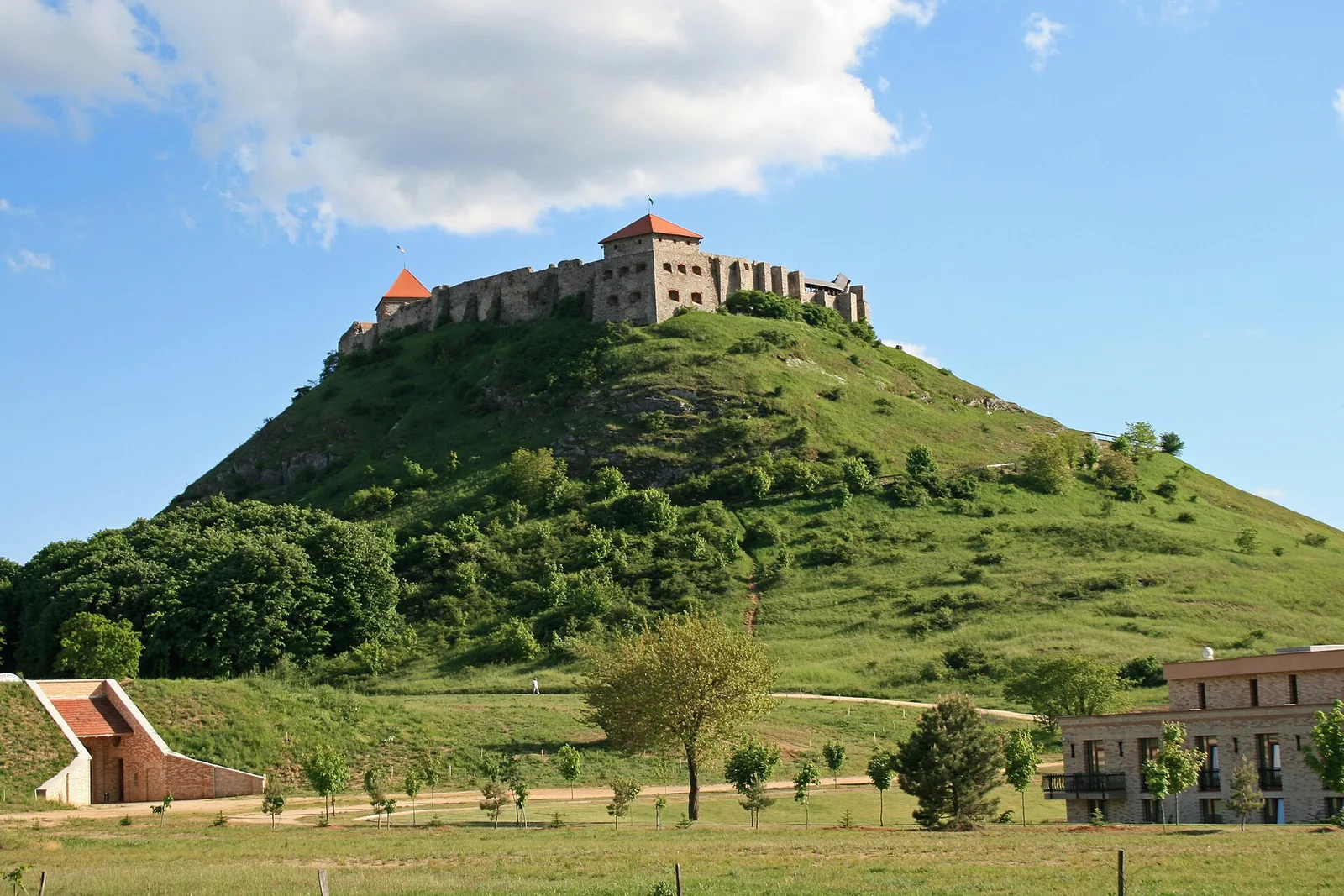
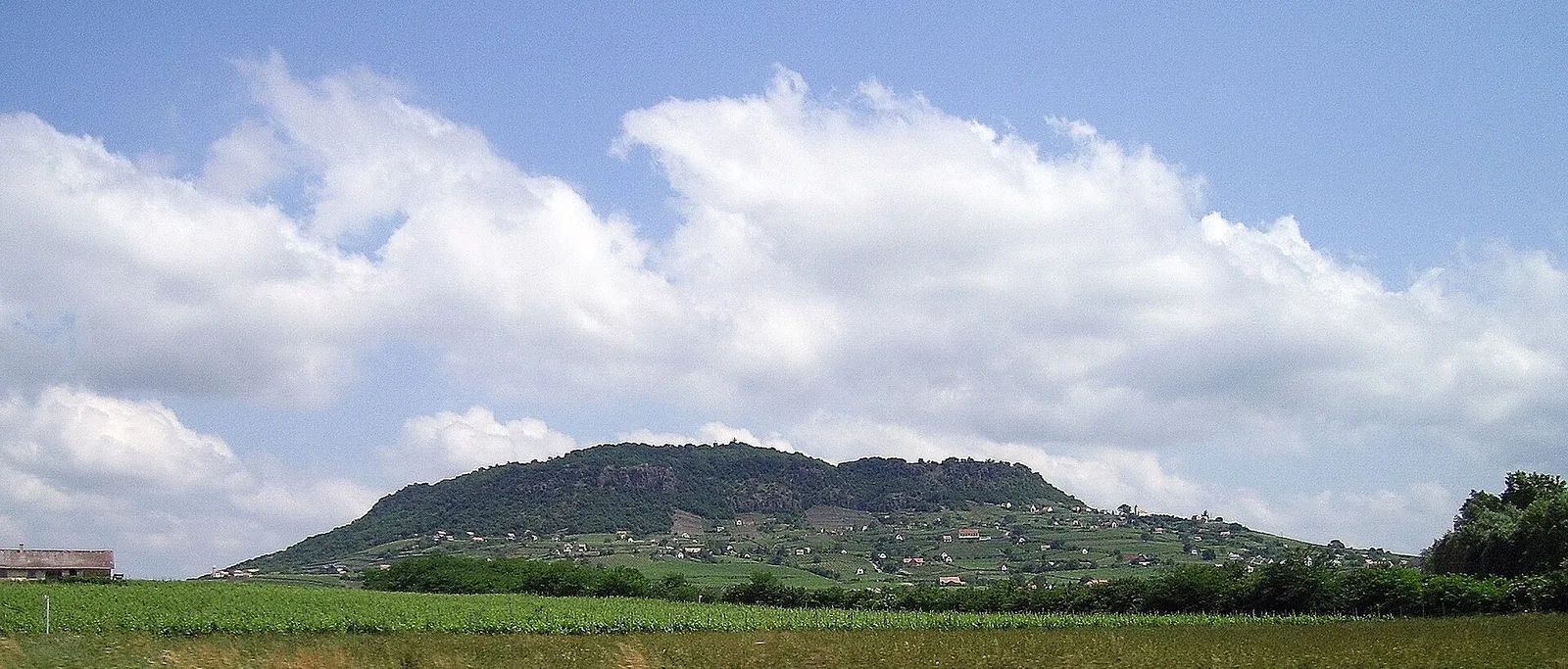
North of Hévíz the road climbs to Sümeg, where a castle of grey stone sits on a bare limestone hill above the town; walk up through its gate towers for the view over the Bakony and, on a clear day, a silver line of Lake Balaton, then come down to the parish church, whose walls Franz Anton Maulbertsch covered with frescoes in the 1750s. Continue across the fields to Somló, a lone volcanic hill standing like an island in the plain. Drive up between the terraces of the smallest wine region in Hungary, taste the fiery white Juhfark in a family cellar, and walk to the little chapel of Saint Margaret near the summit for the view in every direction. The day ends in Pápa, an old school town with a baroque Esterházy castle and the Blue-Dyeing Museum, where indigo cloth was printed in the same workshop for a hundred and seventy years. Charge at the fast charger beside the castle park in Pápa.
Why stop hereCharge nearby: E.ON (E.ON Pápa) — typical arrival 35%, about 35 min to 80%. Why stop here: Esterházy Castle Pápa, Blue-Dyeing Museum. Access: walk from the overnight — leave the car.
Budapest
The last day crosses the Bakony, a range of beech forest and limestone valleys. At Zirc the Cistercian abbey founded in 1182 keeps a library of carved oak and an arboretum where old trees shade the paths. Walk an hour into the narrow Cuha valley from Vinye, where the little railway threads through rock cuttings and tunnels above the stream and kingfishers flash along the water, before turning east past Veszprém onto the M7. Budapest welcomes you back along the Danube embankments; if there is time, end at the Fisherman’s Bastion as the light falls on the river and the Parliament. Charge at the IONITY hub at Budaörs, where the M7 meets the M1, before returning the car.
Why stop hereWhy stop here: Fisherman’s Bastion. Access: walk from the overnight — leave the car.
Places along the road
Quiet charging pauses
- TEA. in Tata — a calm stop on this leg, about 20 min.
- Shell Recharge in Győr — a calm stop on this leg, about 25 min.
- e-Mobi in Pannonhalma — a calm stop on this leg, about 90 min.
- e-Mobi in Fertőd — a calm stop on this leg, about 120 min.
- Mobiliti in Sopron — a calm stop on this leg, about 25 min.
- E.ON Drive in Szombathely — a calm stop on this leg, about 30 min.
- e-Mobi in Hévíz — a calm stop on this leg, about 120 min.
- E.ON in Pápa — a calm stop on this leg, about 35 min.
- IONITY in Budaörs — a calm stop on this leg, about 20 min.