
Old Castile: Segovia, the Duero and Burgos
Ten days across the high, wheat-gold heart of Spain: the Roman aqueduct and fairy-tale Alcázar of Segovia, walled villages like Pedraza and Sepúlveda above deep river gorges, the castles and cellars of the Ribera del Duero, Gregorian chant in the cloister of Silos, the Gothic lace of Burgos cathedral, the turquoise falls of Orbaneja del Castillo, Machado’s Soria and the caliphal walls of Gormaz. Fast chargers sit in the towns; the villages between them are short, unhurried hops.
Season: Best from May to June and September to October: green or golden fields, mild days. Summer afternoons on the meseta are hot; winter brings frost and occasional snow on the Somosierra and Urbión roads. The Laguna Negra road can be closed in snow, and in summer access may be by seasonal shuttle. Silos vespers follow the monastery timetable.
Ten days across the high, wheat-gold heart of Spain: the Roman aqueduct and fairy-tale Alcázar of Segovia, walled villages like Pedraza and Sepúlveda above deep river gorges, the castles and cellars of the Ribera del Duero, Gregorian chant in the cloister of Silos, the Gothic lace of Burgos cathedral, the turquoise falls of Orbaneja del Castillo, Machado’s Soria and the caliphal walls of Gormaz. Fast chargers sit in the towns; the villages between them are short, unhurried hops.
Day by day
Segovia
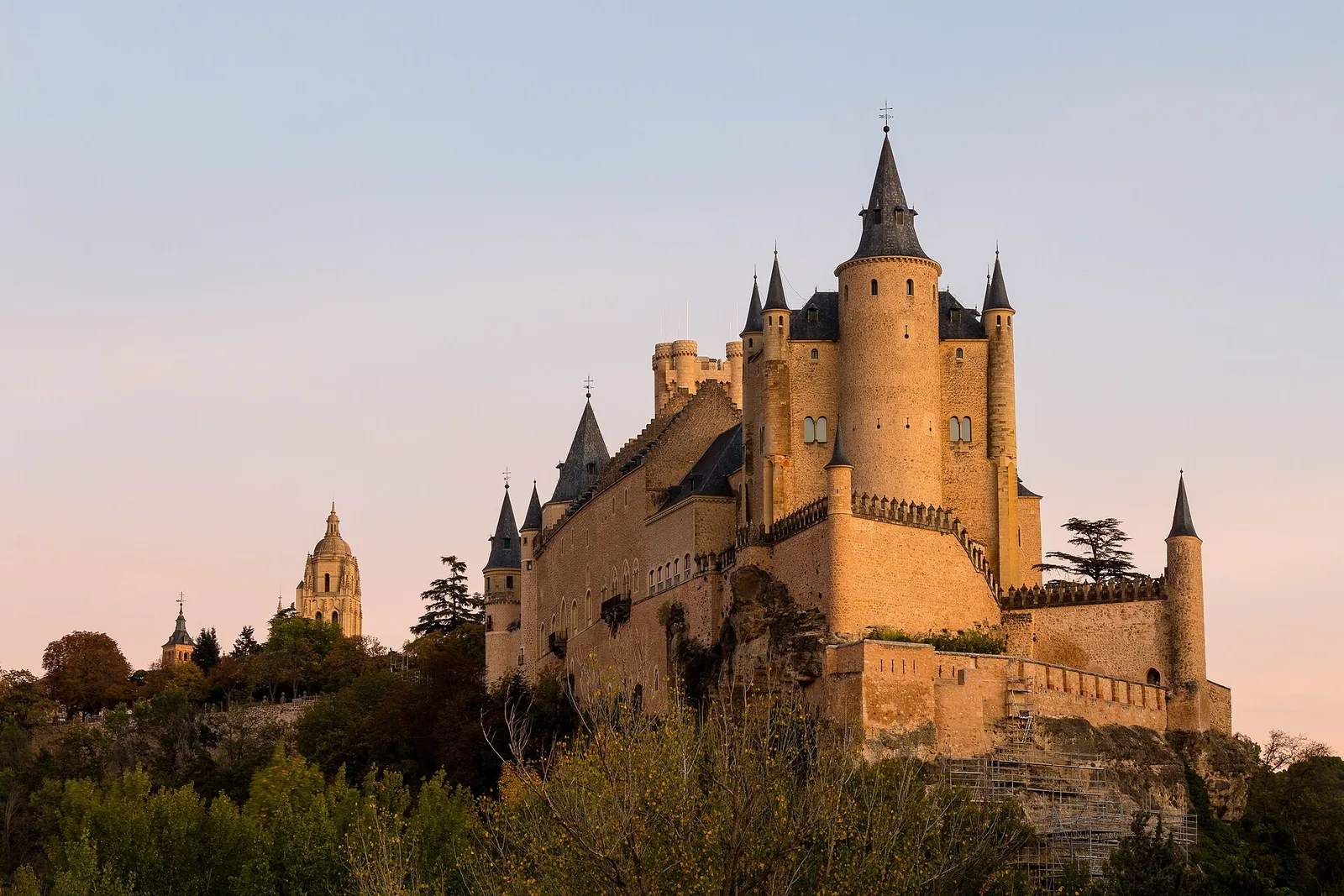
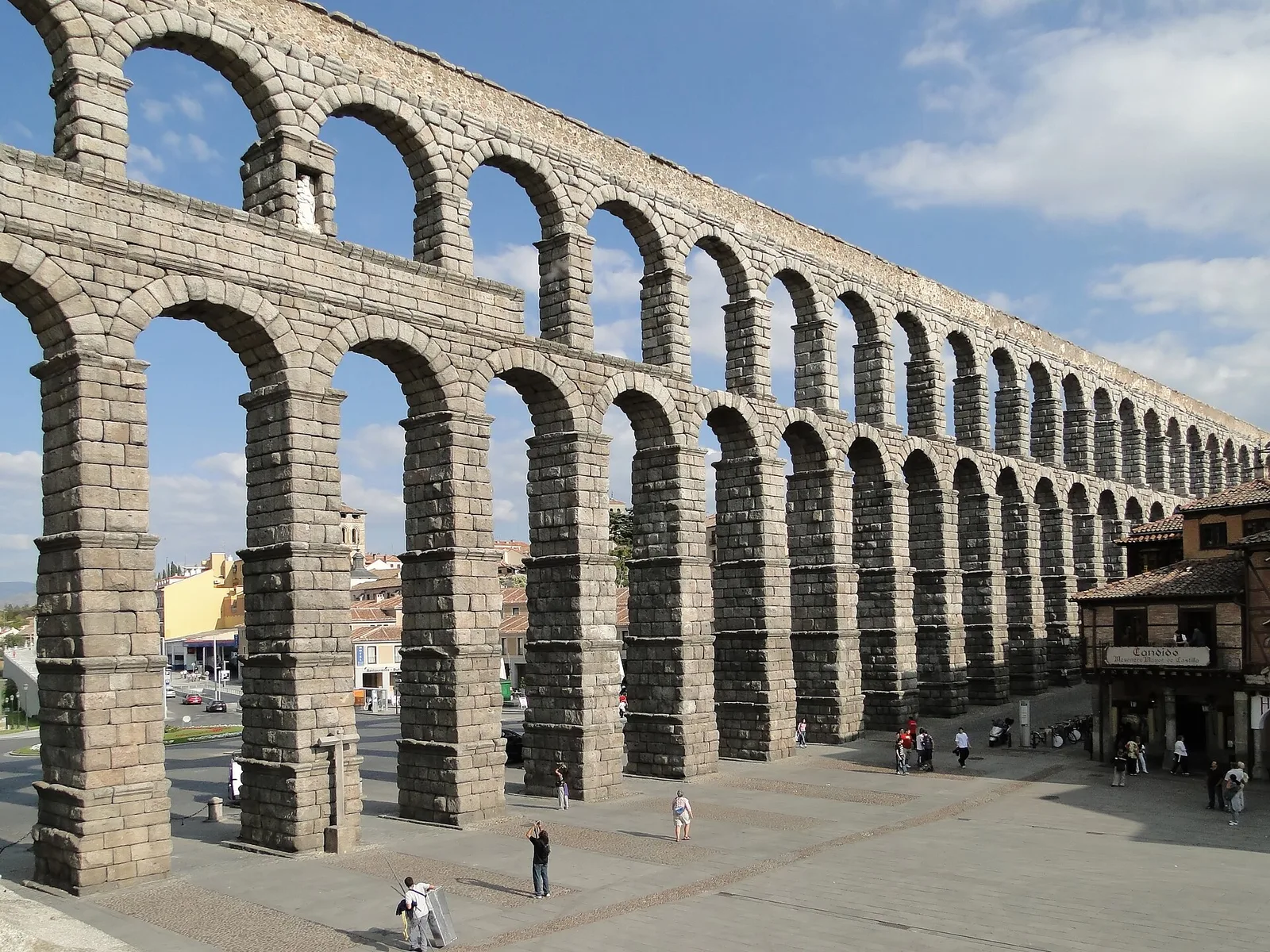
Begin under the aqueduct. Its granite arches rise almost thirty metres over the Plaza del Azoguejo, and not a drop of mortar holds them together; two thousand years later they still frame the sky. Walk up the Calle Real into the old town, past houses whose plaster is scratched into patterns, to the Plaza Mayor and the cathedral, the last great Gothic cathedral built in Spain, golden in the late light. At the far end of the rock the Alcázar stands like a ship’s prow between two rivers. For the best view of it, go down to the Pradera de San Marcos meadow at dusk. Supper is cochinillo, roast suckling pig, cut with the edge of a plate. Charge at the Moeve station on avenida Juan Carlos I.
Why stop hereCharge nearby: MOEVE (MOEVE Segovia) — typical arrival 30%, about 25 min to 80%. Why stop here: Aqueduct of Segovia, Segovia Cathedral, Alcázar of Segovia. Access: walk from the overnight — leave the car.
Sepúlveda
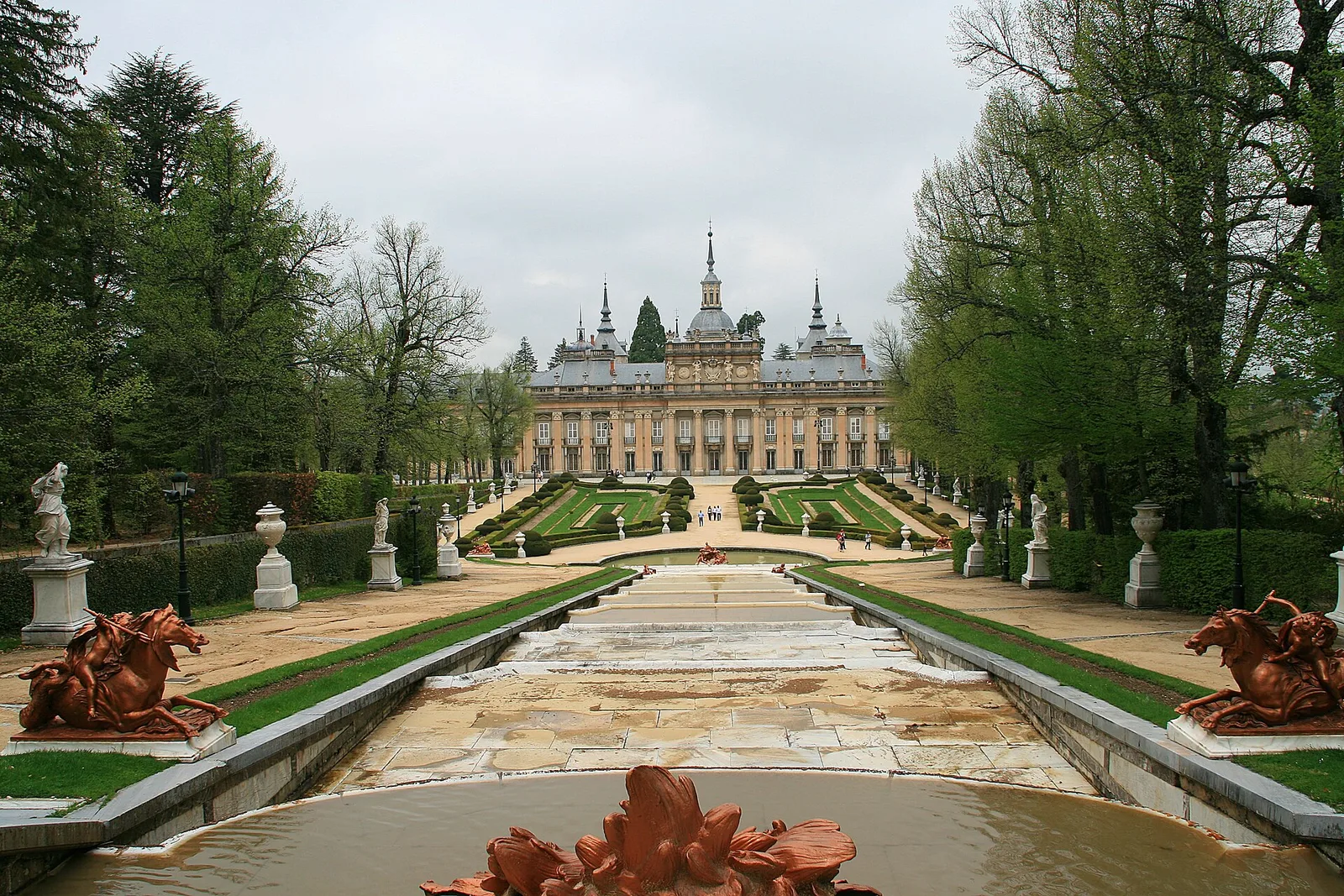
Ten minutes up the road, Philip V built La Granja de San Ildefonso in memory of Versailles: pink palace, clipped gardens climbing toward the Guadarrama, and fountains that play on set days in spring and summer. The Royal Glass Factory next door still blows glass. Top up at the Endesa charger on the CL-601, then cross the rolling sheep country to Pedraza, a walled village you enter through a single gate, with a porticoed square and a castle once owned by the painter Ignacio Zuloaga. Evenings there are silent enough to hear swifts. Sleep in Sepúlveda, strung along a ridge above the Duratón gorge, on a hotel socket.
Why stop hereWhy stop here: Sepúlveda. Access: walk from the overnight — leave the car.
Peñafiel
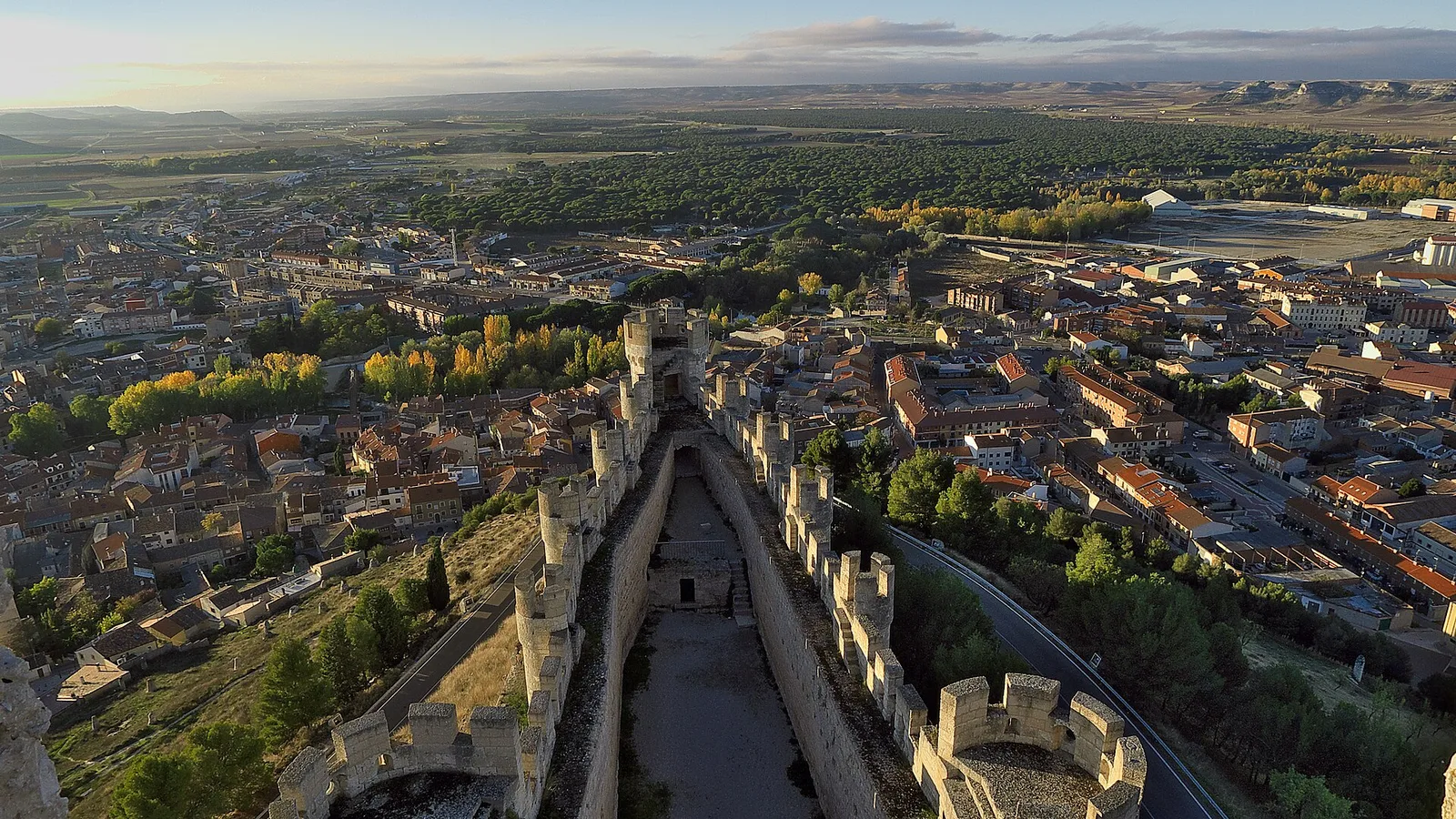
Morning in the Hoces del Duratón, where the river has cut a winding canyon into the limestone. From the car park near Villaseca, an easy, flat track of about a kilometre leads to the hermitage of San Frutos on the very lip of the cliff, with the green river looping far below and griffon vultures riding the air at eye level. Then west across pine and wheat to Cuéllar, a town of brick Mudéjar churches and a great castle; charge at the Iberdrola | bp pulse station on the Segovia road. End in Peñafiel, under a castle so long and narrow on its ridge that it looks like a stone ship moored above the Duero.
Why stop hereCharge nearby: qwello (qwello Peñafiel) — typical arrival 40%, about 60 min to 80%. Why stop here: Castillo de Peñafiel, Plaza del Coso, Bodegas Protos. Access: walk from the overnight — leave the car.
Aranda de Duero
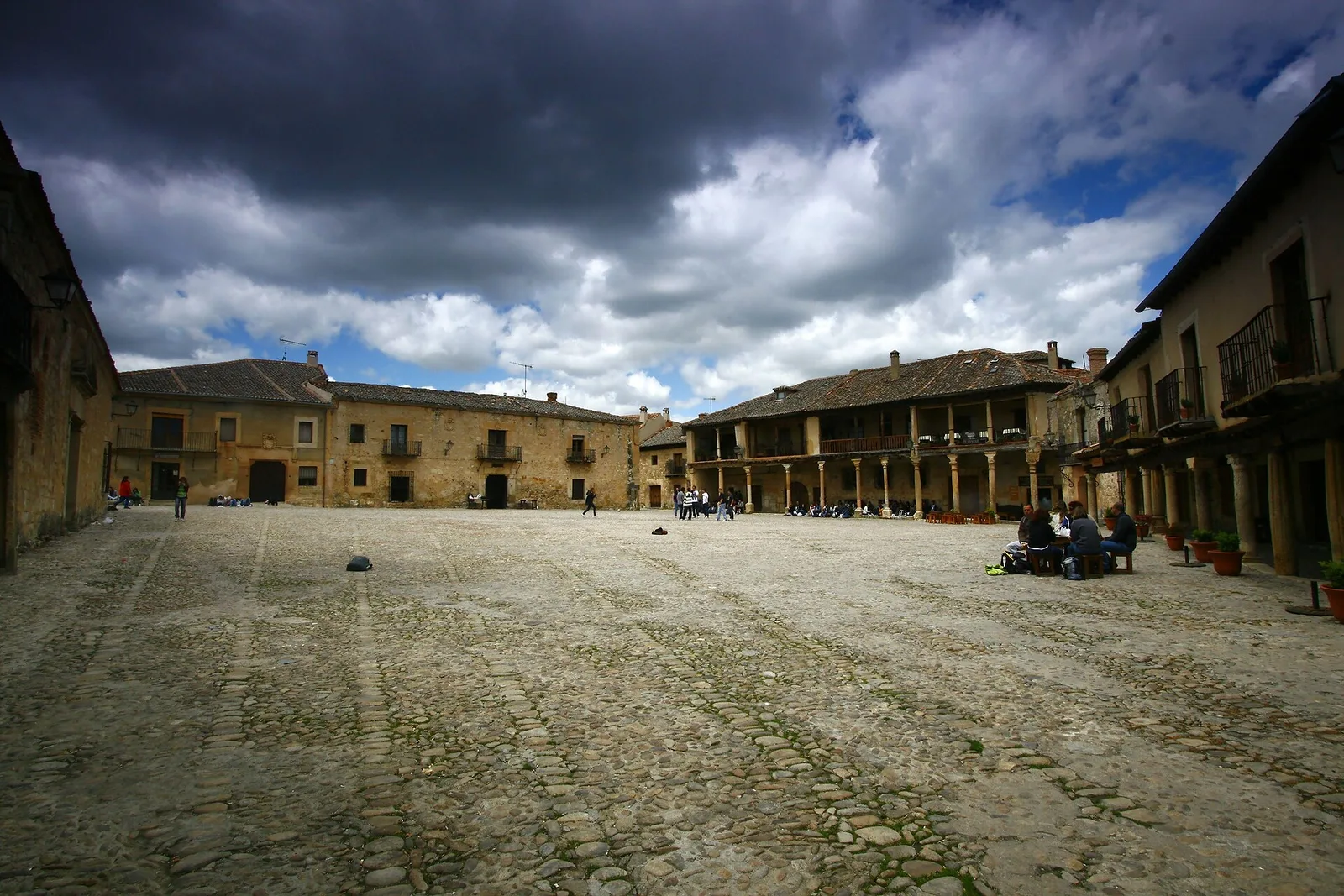
Climb to Peñafiel castle, which houses the provincial wine museum, and look down on the Plaza del Coso, a sandy square framed by wooden balconies where bulls still run during the August fiestas. Below the castle, the Protos winery rises under five arched roofs designed by Richard Rogers; book a tour and a tasting of Ribera del Duero tempranillo. Charge at the qwello point on the plaza before you go. East along the vineyards to Peñaranda de Duero, with a Renaissance palace, a castle on the hill and one of the oldest pharmacies in Spain. Aranda de Duero hides kilometres of medieval wine cellars beneath its streets; dine on lechazo, milk-fed lamb roasted in a wood oven. Charge at the Iberdrola station on calle de la Hispanidad.
Why stop hereCharge nearby: Iberdrola (Iberdrola Aranda de Duero) — typical arrival 45%, about 25 min to 80%. Why stop here: Peñaranda de Duero, Santa María la Real, Aranda. Access: walk from the overnight — leave the car.
Lerma
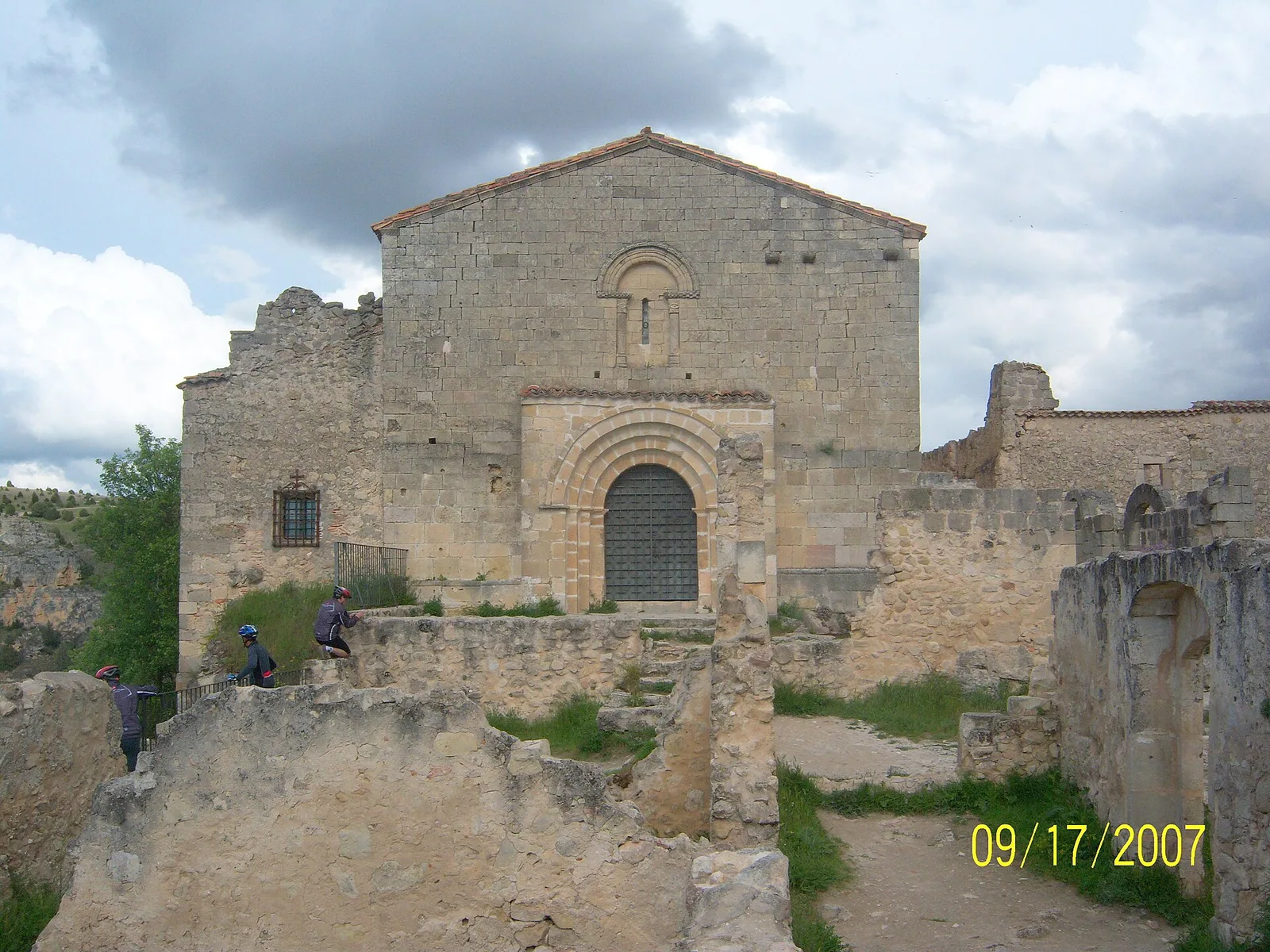
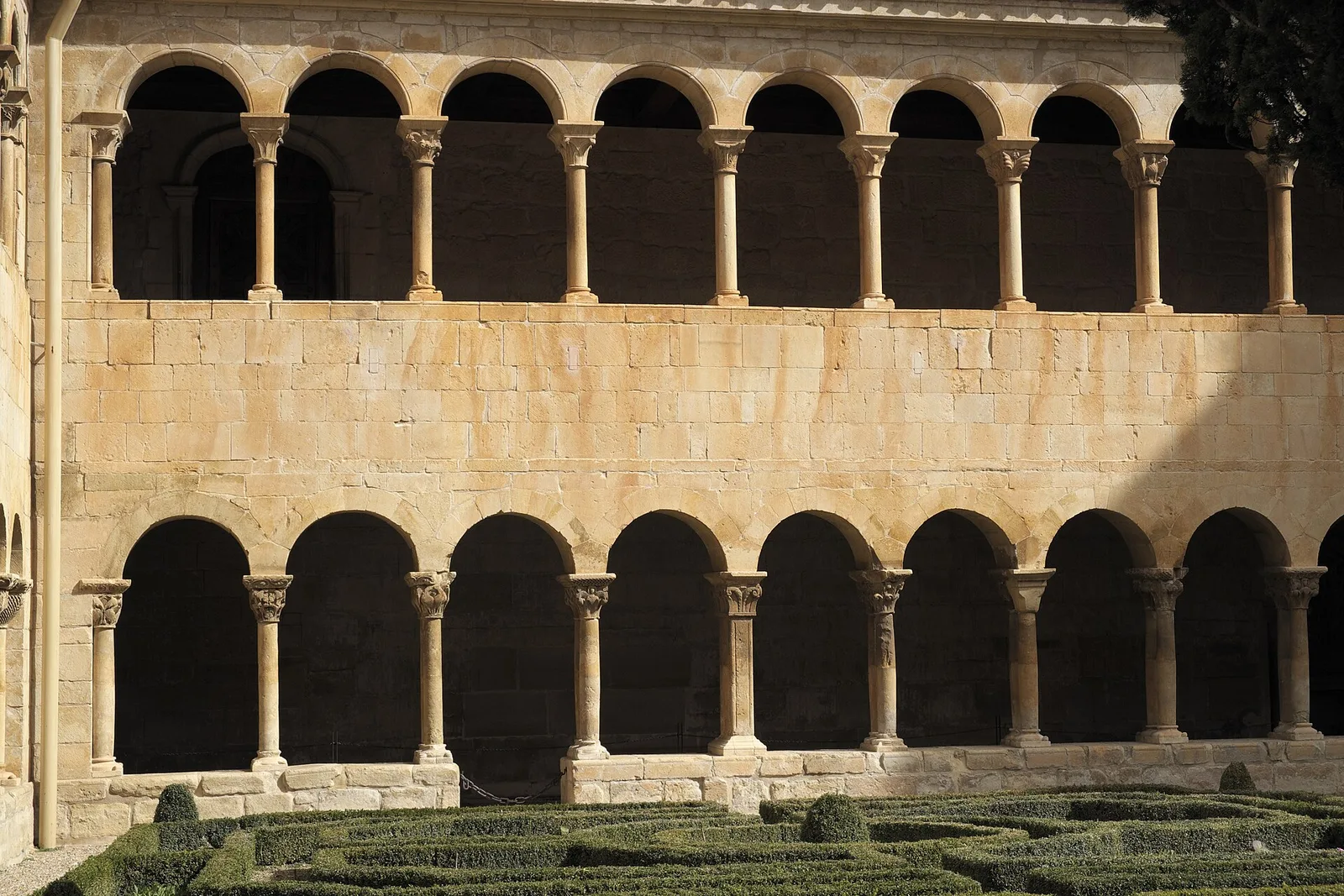
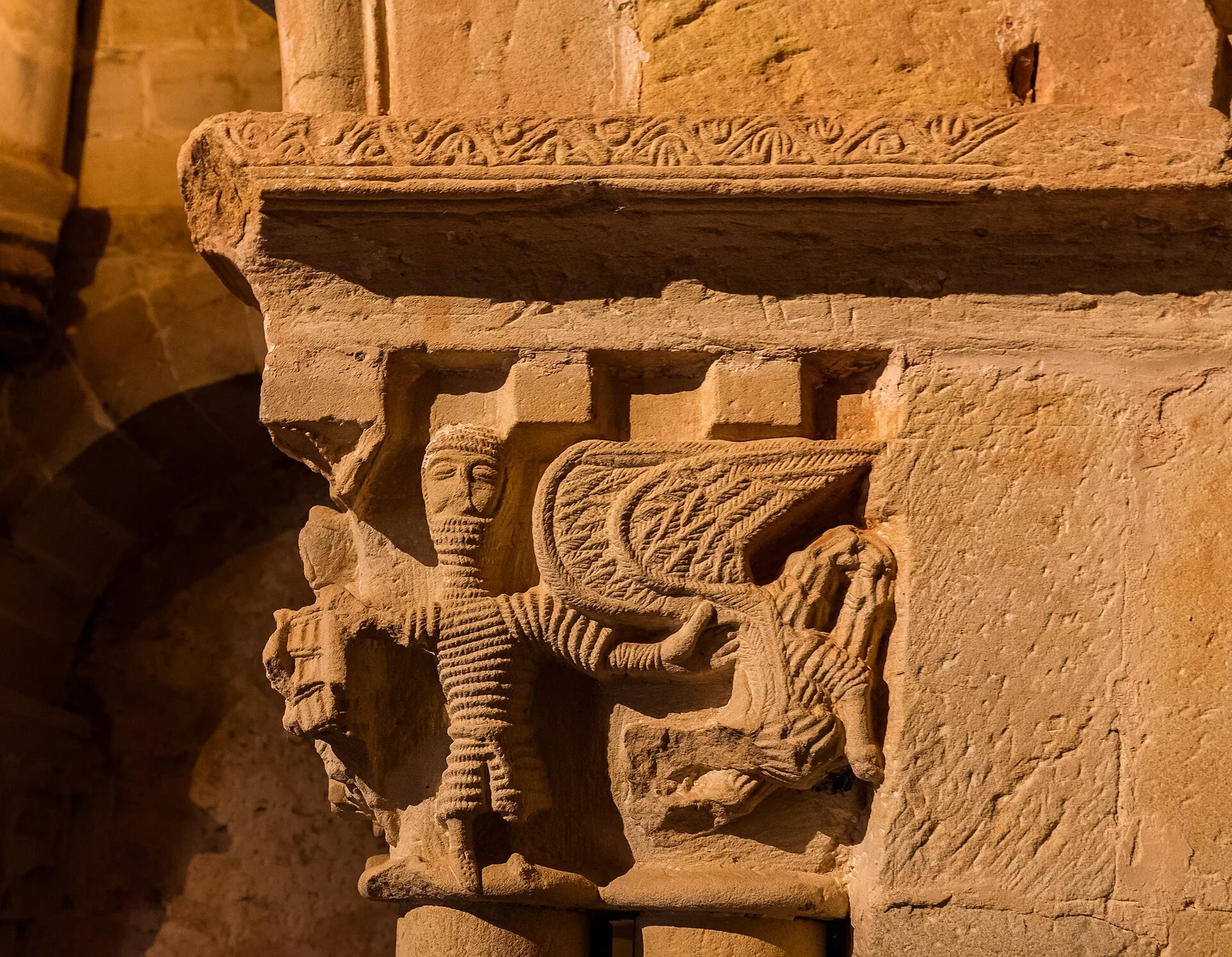
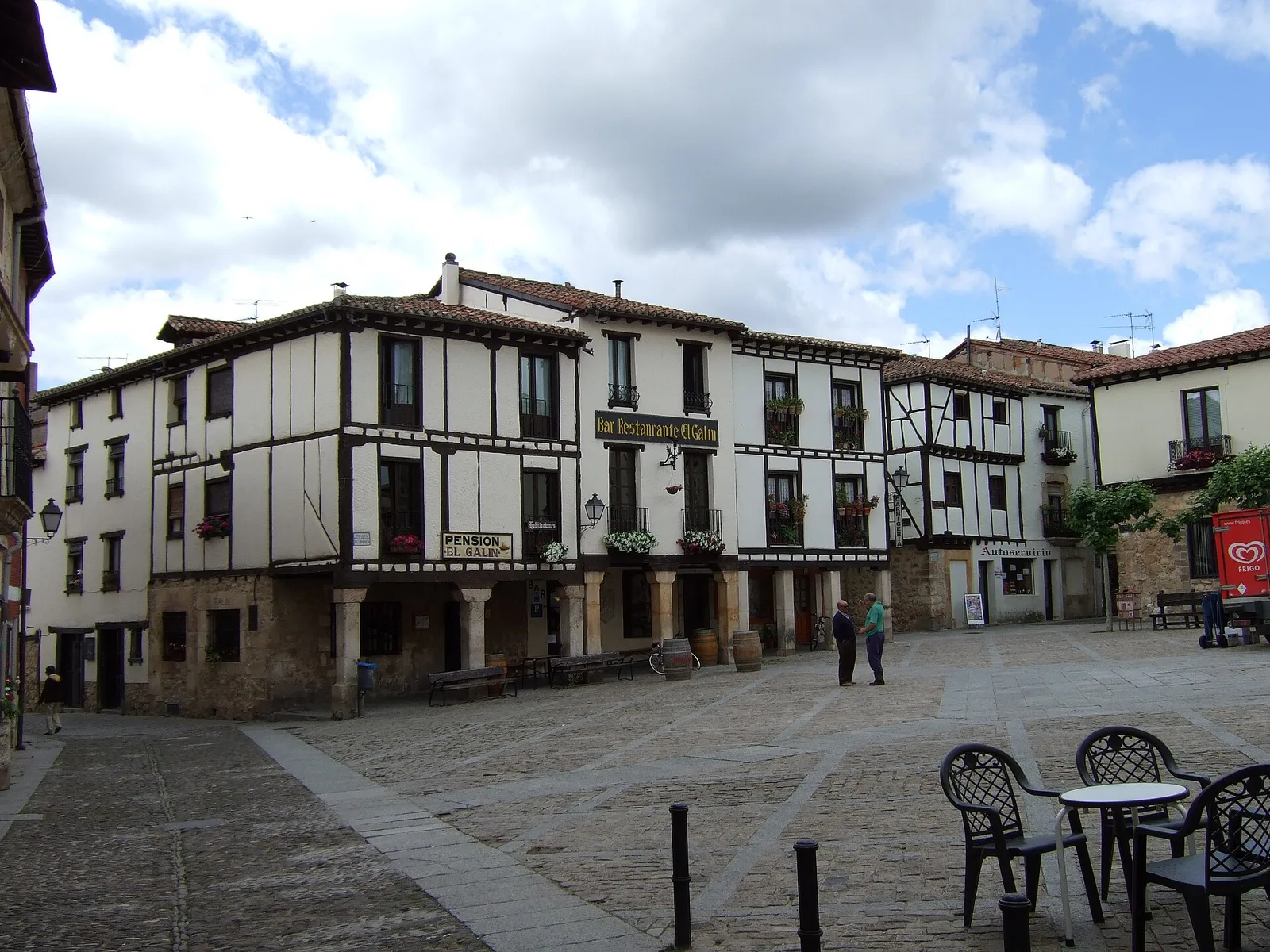
North-east onto quiet roads. Near Peñalba de Castro lie the ruins of Clunia, once one of the great Roman cities of the peninsula, with a theatre cut partly into the living rock and a view over empty fields. At Santo Domingo de Silos, time your arrival for vespers, when the Benedictine monks sing Gregorian chant; before that, walk the two-storey Romanesque cloister around its tall cypress and look closely at the capitals, carved with harpies, birds and tangled beasts. A few minutes away, footbridges thread the narrow limestone slot of the Desfiladero de La Yecla. Covarrubias, with its timber-framed houses, keeps the tomb of a thirteenth-century Norwegian princess. Sleep in Lerma, below the ducal palace that is now a parador; charge at the Tesla Supercharger on the Camino de Villalmanzo.
Why stop hereCharge nearby: Tesla Supercharger (Tesla Supercharger Lerma) — typical arrival 30%, about 25 min to 85%. Why stop here: Palacio Ducal de Lerma. Access: walk from the overnight — leave the car.
Burgos
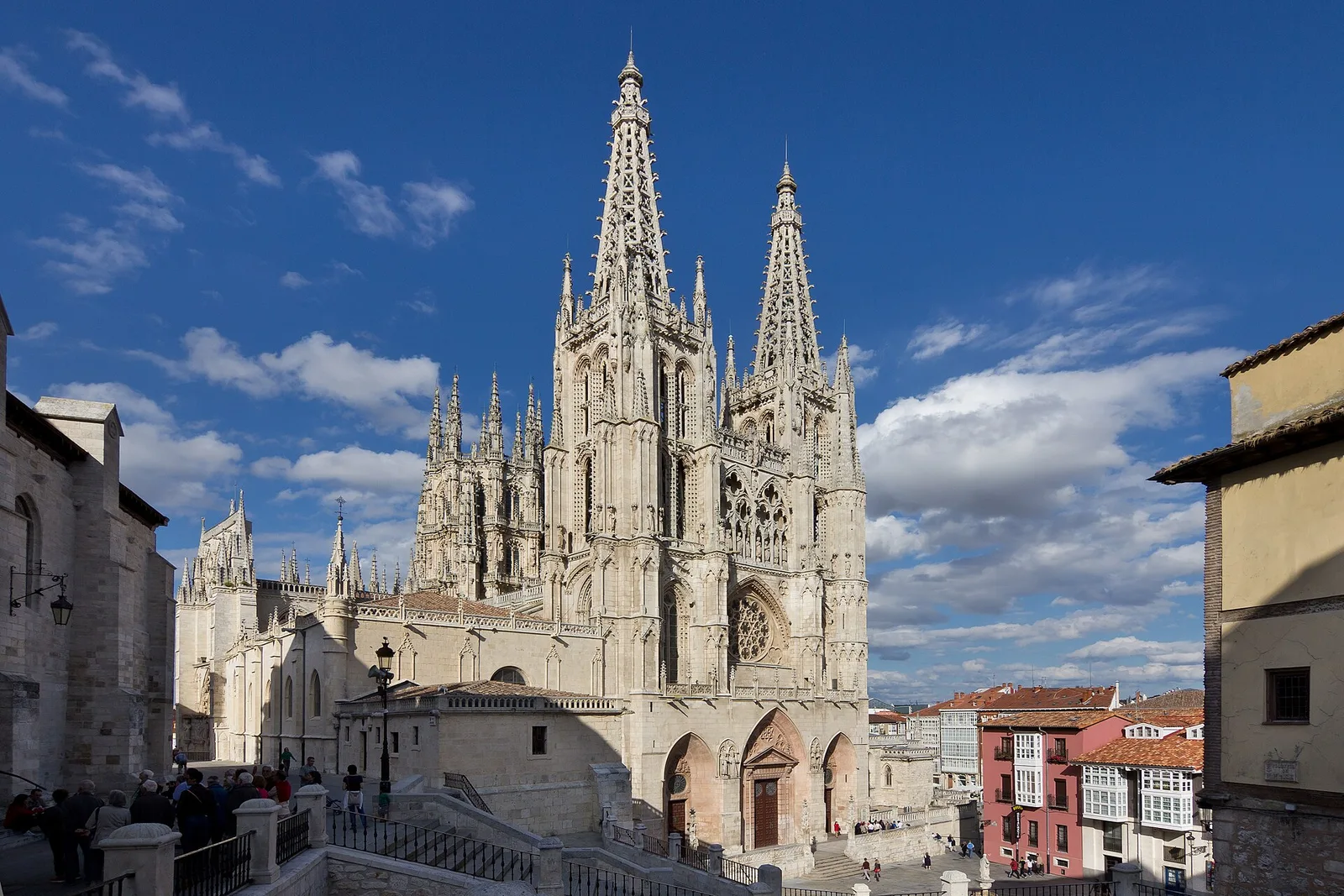
Half an hour north lies Burgos, and its cathedral, begun in 1221, is reason enough for the whole journey: spires of open stone lace, chapels heavy with gold, and El Cid buried with his wife Jimena beneath the star-vaulted crossing. High on one wall, the Papamoscas, a clockwork figure, opens its mouth as the hour strikes. Enter the old town through the Arco de Santa María, then drive out to the Cartuja de Miraflores for Gil de Siloé’s alabaster royal tombs, carved as finely as ivory, and to the royal convent of Las Huelgas. The Museum of Human Evolution tells the story of the Atapuerca finds nearby. At sunset climb to the castle-hill viewpoint above the cathedral roofs. Charge at the Zunder hub on avenida de la Paz, and try morcilla, Burgos black pudding made with rice.
Why stop hereCharge nearby: Zunder (Zunder Burgos) — typical arrival 25%, about 30 min to 90%. Why stop here: Burgos Cathedral, Arco de Santa María, Cartuja de Miraflores. Access: walk from the overnight — leave the car.
Burgos
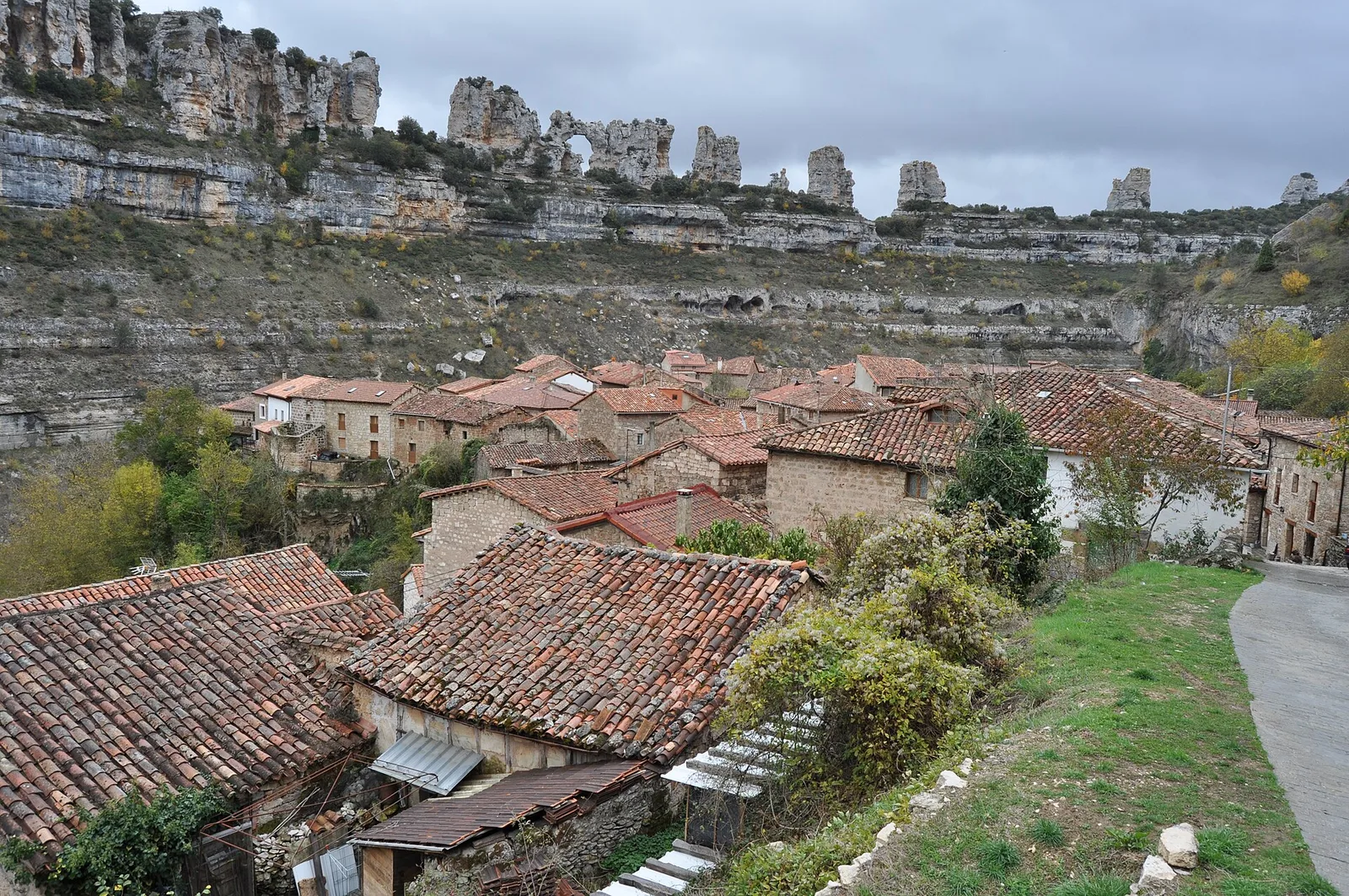
Leave Burgos with a full battery for a day loop to the north, where the meseta suddenly breaks open. The N-623 crosses the high, windswept Páramo de Masa and then plunges into the canyons of the young Ebro; stop at the viewpoints near Valdelateja, where the river winds between pale cliffs. At Orbaneja del Castillo a spring bursts from a cave above the village and tumbles down between the houses in turquoise steps and pools to the Ebro, under a crown of eroded rock towers. Continue east to Frías, one of the smallest towns in Spain to hold the title of city: a castle on a rock crest, houses hanging over the edge, and a fortified medieval bridge over the Ebro with a gate tower at its centre. Back to Burgos for the night.
Why stop hereCharge nearby: Zunder (Zunder Burgos) — typical arrival 25%, about 30 min to 90%. Why stop here: Burgos Cathedral, Arco de Santa María, Cartuja de Miraflores. Access: walk from the overnight — leave the car.
Soria
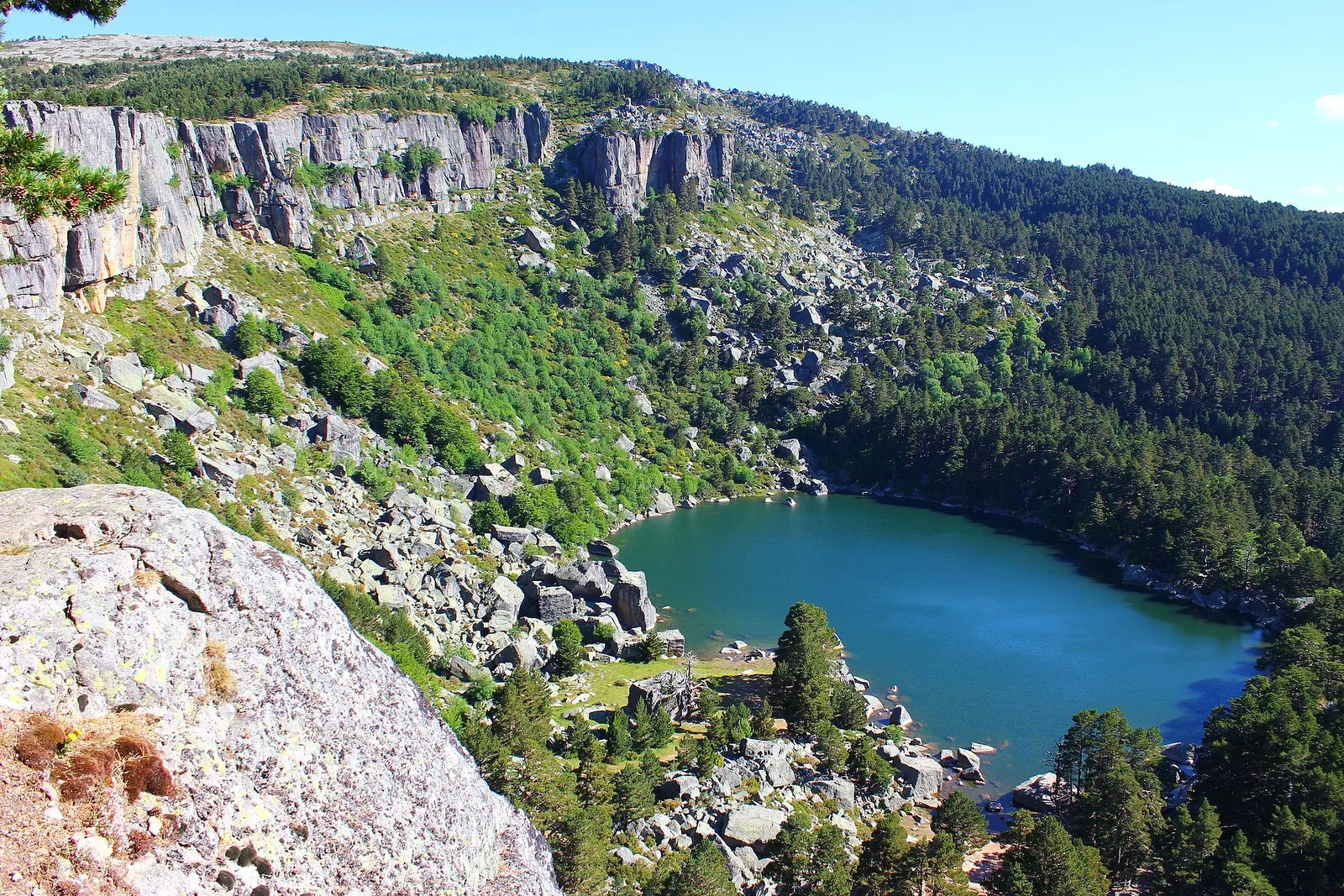
South-east through the Demanda hills into the pine forests of Urbión, among the largest in the peninsula. From Vinuesa a road climbs to the Laguna Negra, a dark glacial lake beneath granite cliffs that Antonio Machado set his grim ballad of Alvargonzález around; leave the car at the lower car park and walk the last stretch through the pines, or take the shuttle when it runs. Come down to Soria, the small, quiet city where Machado taught French and fell in love. Walk along the Duero to San Juan de Duero, whose roofless cloister is a puzzle of interlaced arches, then follow the riverside path to the hermitage of San Saturio, built into the cliff above the water. Charge at the PowerGo station on avenida de Europa.
Why stop hereCharge nearby: PowerGo (PowerGo Soria) — typical arrival 30%, about 30 min to 85%. Why stop here: San Juan de Duero, Ermita de San Saturio. Access: walk from the overnight — leave the car.
El Burgo de Osma
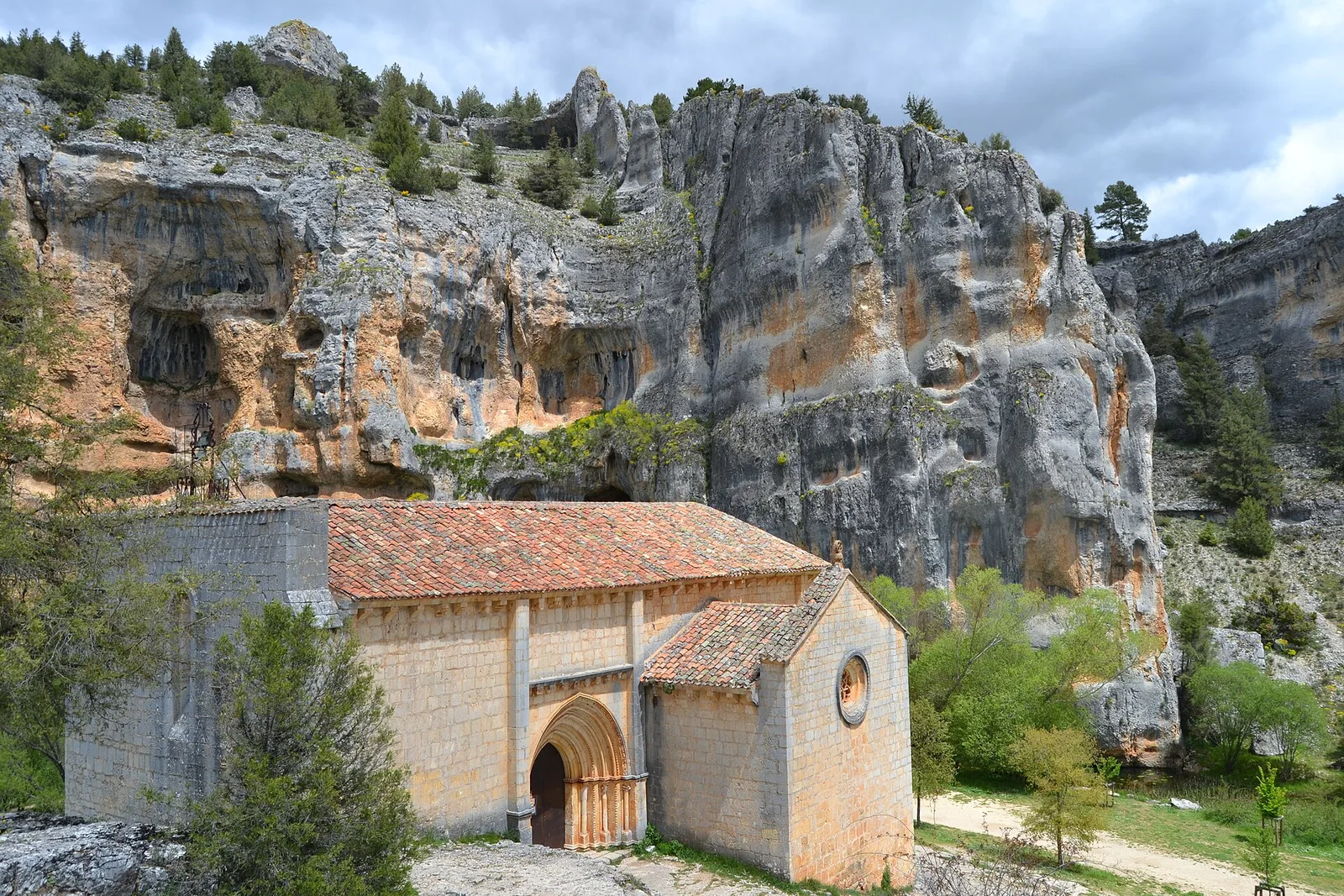
West across the juniper uplands to Calatañazor, a stone village on a crag where, legend says, the caliph’s general Almanzor lost his drum, meaning his luck, in 1002. Then Ucero and the Cañón del Río Lobos, a quiet limestone canyon. An easy, flat walk from the car park along the river reaches the Templar-era hermitage of San Bartolomé, standing alone at the foot of the cliffs, with griffon vultures circling overhead and a cave mouth in the rock opposite. End the day in El Burgo de Osma, a little episcopal town with a fine Gothic cathedral and an arcaded main street; order torreznos, crisp pork belly, with a glass of local red. Charge overnight at the Iberdrola station on avenida Juan Carlos I and leave with a full battery: the next fast charger on the route is back in Segovia.
Why stop hereCharge nearby: Iberdrola (Iberdrola El Burgo de Osma) — typical arrival 45%, about 60 min to 100%. Why stop here: El Burgo de Osma Cathedral. Access: walk from the overnight — leave the car.
Segovia
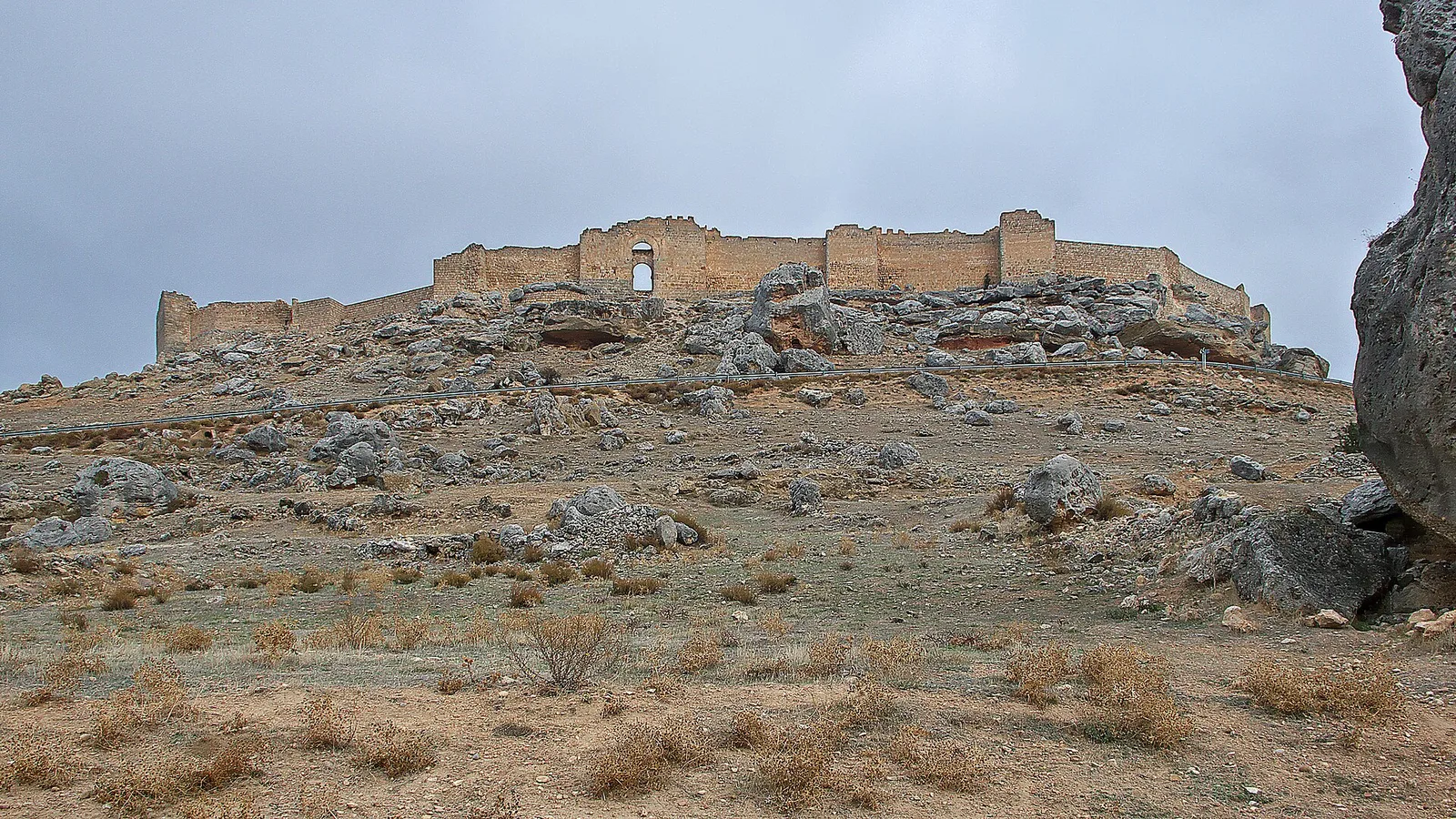
Ten minutes south, the caliphal fortress of Gormaz runs along its hilltop for more than a kilometre, built in the tenth century when the Duero was the frontier between Christian and Muslim Spain. Walk in through the horseshoe-arched gate and along the walls; on a clear day the view reaches the blue line of the Guadarrama, where you are heading. Cross to Ayllón, entered under a medieval arch, with an arcaded main square and the Gothic façade of the Contreras palace. Near Riaza, detour to the red villages of Madriguera and El Muyo, built of iron-dark stone that glows rust-red in the low sun. Then over the hills to Segovia, to see the aqueduct lit up at night, the same arches where the journey began.
Why stop hereCharge nearby: MOEVE (MOEVE Segovia) — typical arrival 30%, about 25 min to 80%. Why stop here: Aqueduct of Segovia, Segovia Cathedral, Alcázar of Segovia. Access: walk from the overnight — leave the car.
Places along the road
Quiet charging pauses
- MOEVE in Segovia — a calm stop on this leg, about 25 min.
- Endesa X Way in La Granja — a calm stop on this leg, about 20 min.
- Iberdrola | bp pulse in Cuéllar — a calm stop on this leg, about 25 min.
- qwello in Peñafiel — a calm stop on this leg, about 60 min.
- Iberdrola in Aranda de Duero — a calm stop on this leg, about 25 min.
- Tesla Supercharger in Lerma — a calm stop on this leg, about 25 min.
- Zunder in Burgos — a calm stop on this leg, about 30 min.
- PowerGo in Soria — a calm stop on this leg, about 30 min.
- Iberdrola in El Burgo de Osma — a calm stop on this leg, about 60 min.