
The Marche: the Conero, Frasassi and the Sibillini
Nine days in the quiet region between the Apennines and the Adriatic, where every hill wears a walled town. From Ancona and the white cliffs of the Conero the road turns inland past the Holy House of Loreto and Leopardi’s hill at Recanati, through the Verdicchio vineyards to the caves and gorge of Frasassi, then south by a Cistercian abbey and a turquoise mountain lake into the Sibillini, a range of legends and high pastures. It ends among the travertine squares of Ascoli Piceno and Fermo and the hill villages above the sea. Fast chargers wait in Ancona, Jesi, Macerata, Ascoli and on the coast; in the mountains plan on hotel sockets.
Season: Best from late April to June and from September to mid-October. In July and August the Conero beaches are full and the Due Sorelle boats sell out early, while Macerata stages opera in the Sferisterio. The Sibillini roads are open all year, but the high passes can close with snow from December to March, and several villages are still rebuilding after the 2016 earthquakes, so check trail and road notices in Montemonaco and Fiastra before you set out. Frasassi tours run all year at a steady fourteen degrees. Mountain climbs above Sarnano eat range; arrive in the Sibillini with a full battery.
Nine days in the quiet region between the Apennines and the Adriatic, where every hill wears a walled town. From Ancona and the white cliffs of the Conero the road turns inland past the Holy House of Loreto and Leopardi’s hill at Recanati, through the Verdicchio vineyards to the caves and gorge of Frasassi, then south by a Cistercian abbey and a turquoise mountain lake into the Sibillini, a range of legends and high pastures. It ends among the travertine squares of Ascoli Piceno and Fermo and the hill villages above the sea. Fast chargers wait in Ancona, Jesi, Macerata, Ascoli and on the coast; in the mountains plan on hotel sockets.
Day by day
Ancona
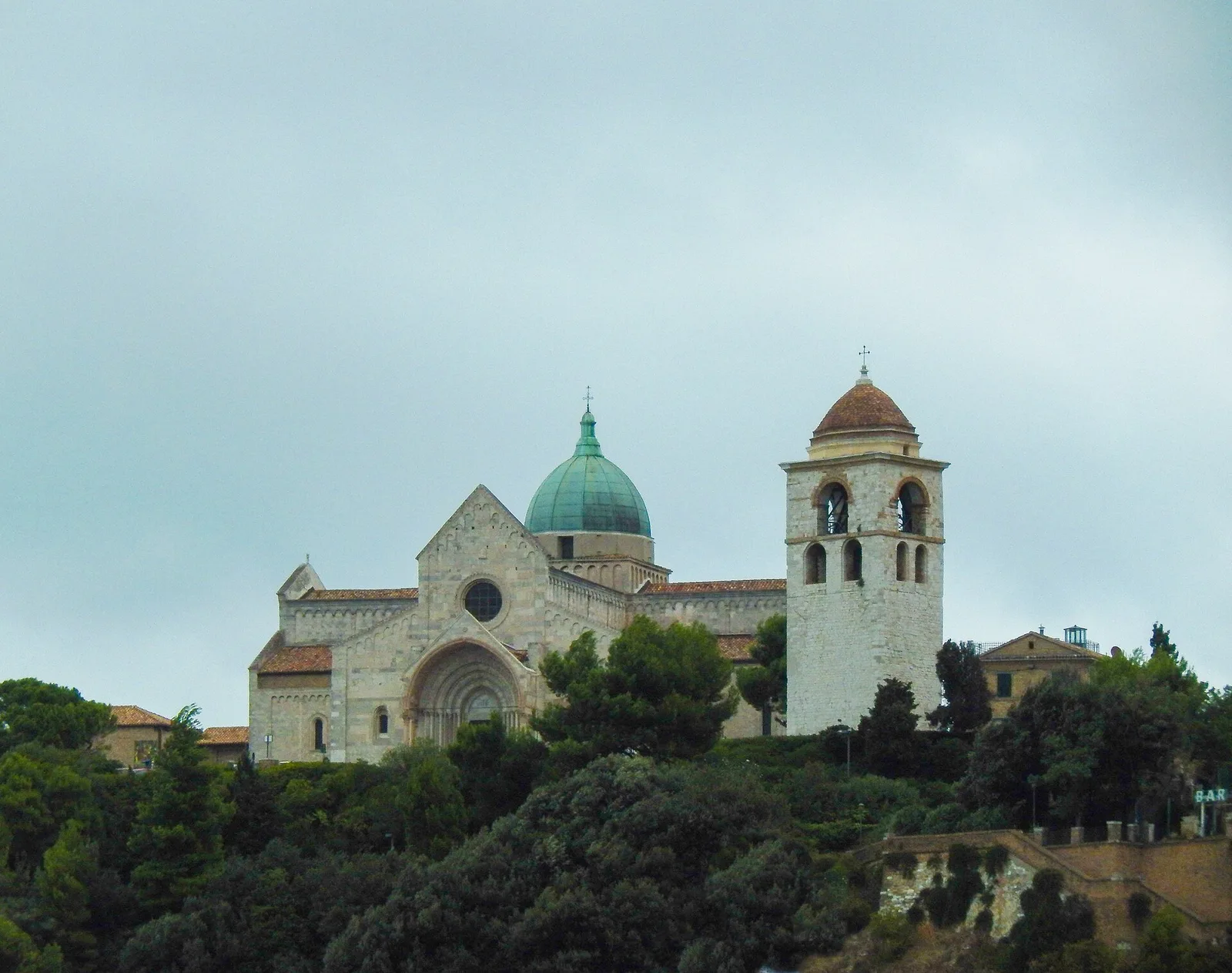
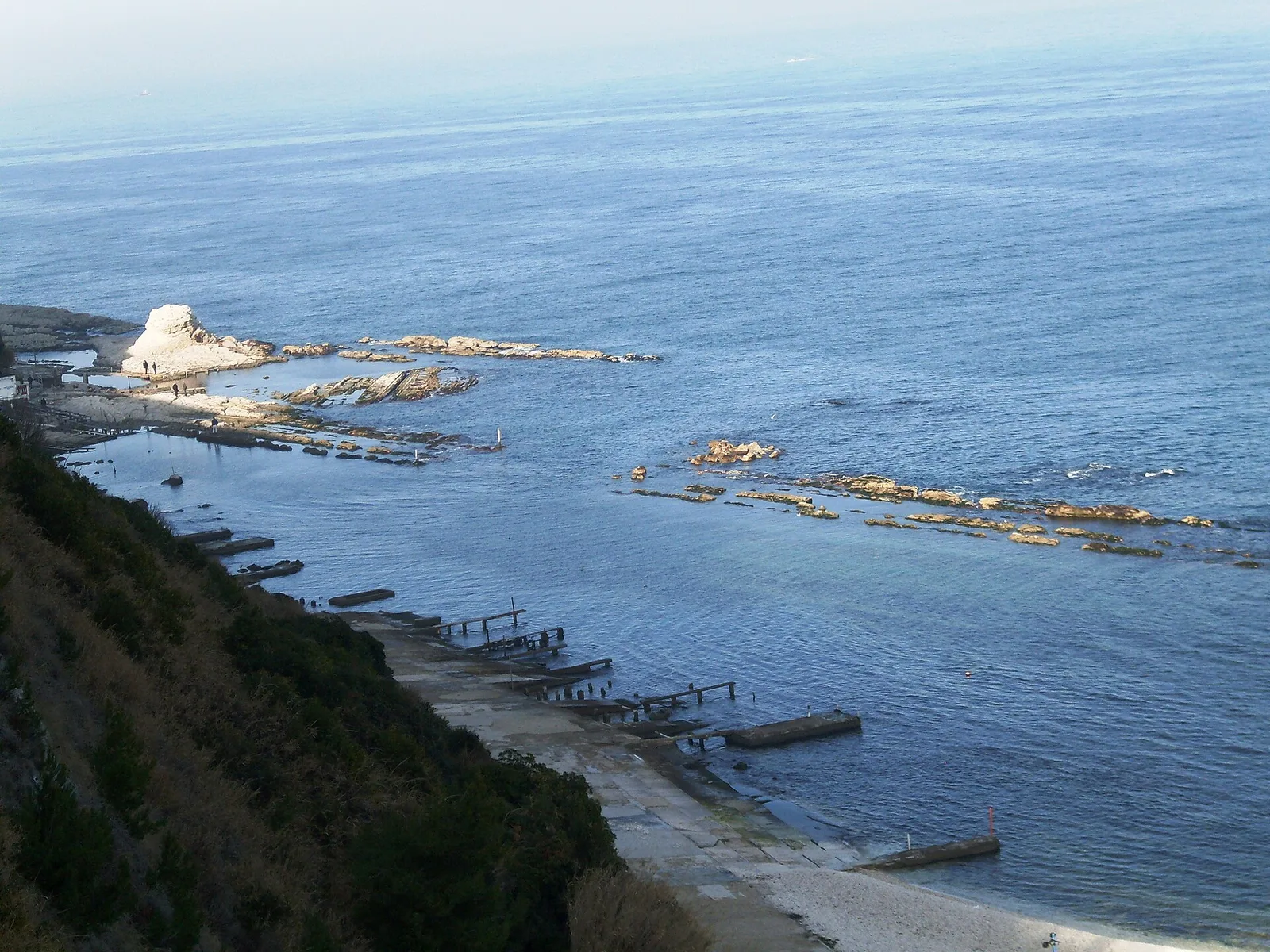
Ancona is a port city that faces the sunrise, built on an elbow of rock the Greeks named after it. Climb the Guasco hill to the cathedral of San Ciriaco, a Romanesque church on a Greek cross with red marble lions guarding the porch and the whole harbour spread below its terrace. Down by the water stand Trajan’s marble arch of 114 and the pentagonal Mole Vanvitelliana, a lazaretto built on its own island. At the end of the afternoon walk out to the Passetto, where white steps drop from the war memorial to a rocky shore lined with grottoes cut by fishermen. Dinner is brodetto, the fish stew of thirteen kinds. Charge at a city fast station before the coast.
Why stop hereCharge nearby: Enel X Way (Enel X Way Ancona Baraccola) — typical arrival 30%, about 30 min to 80%. Why stop here: Cathedral of San Ciriaco, Arch of Trajan, Mole Vanvitelliana. Access: walk from the overnight — leave the car.
Sirolo
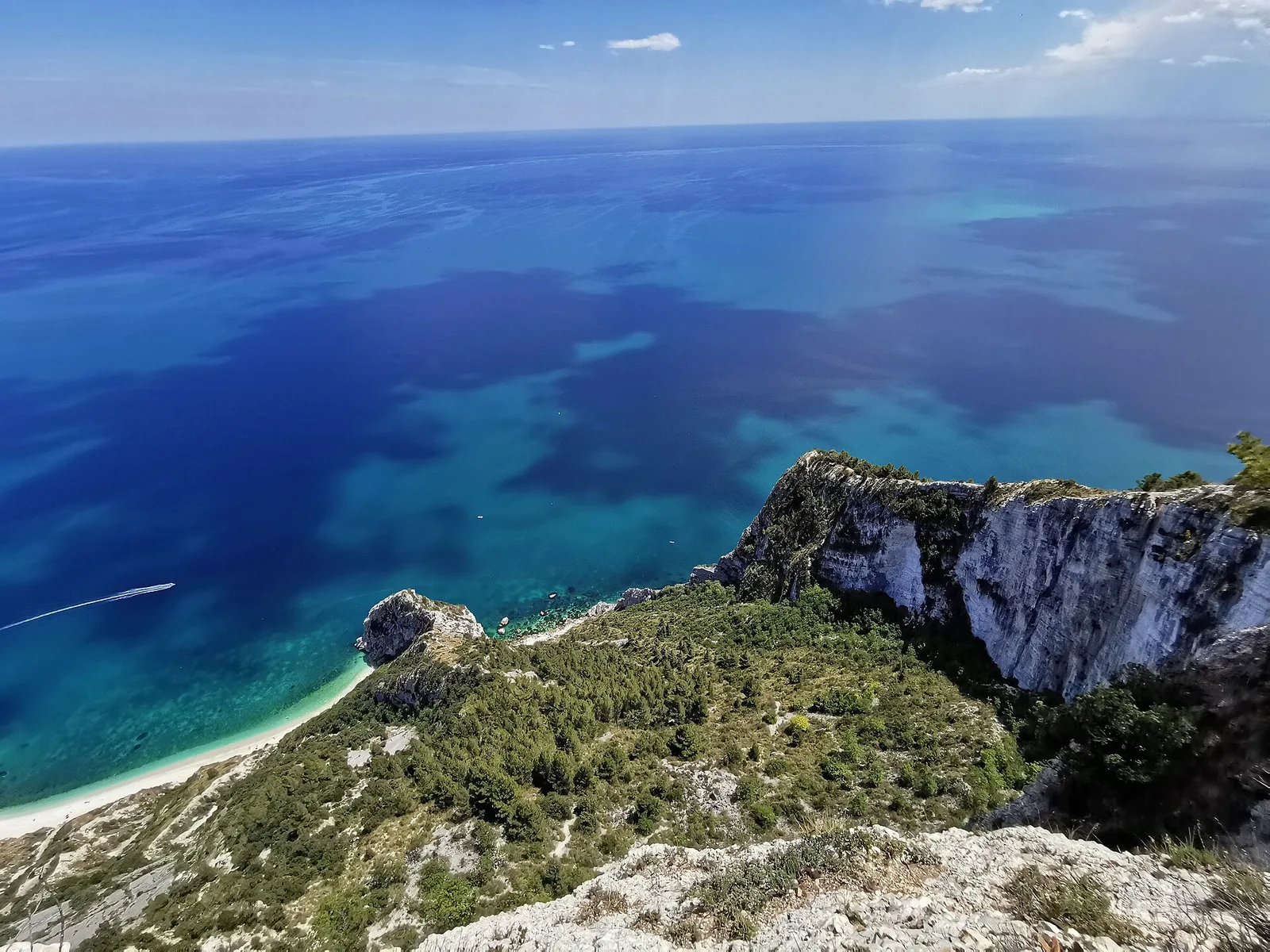
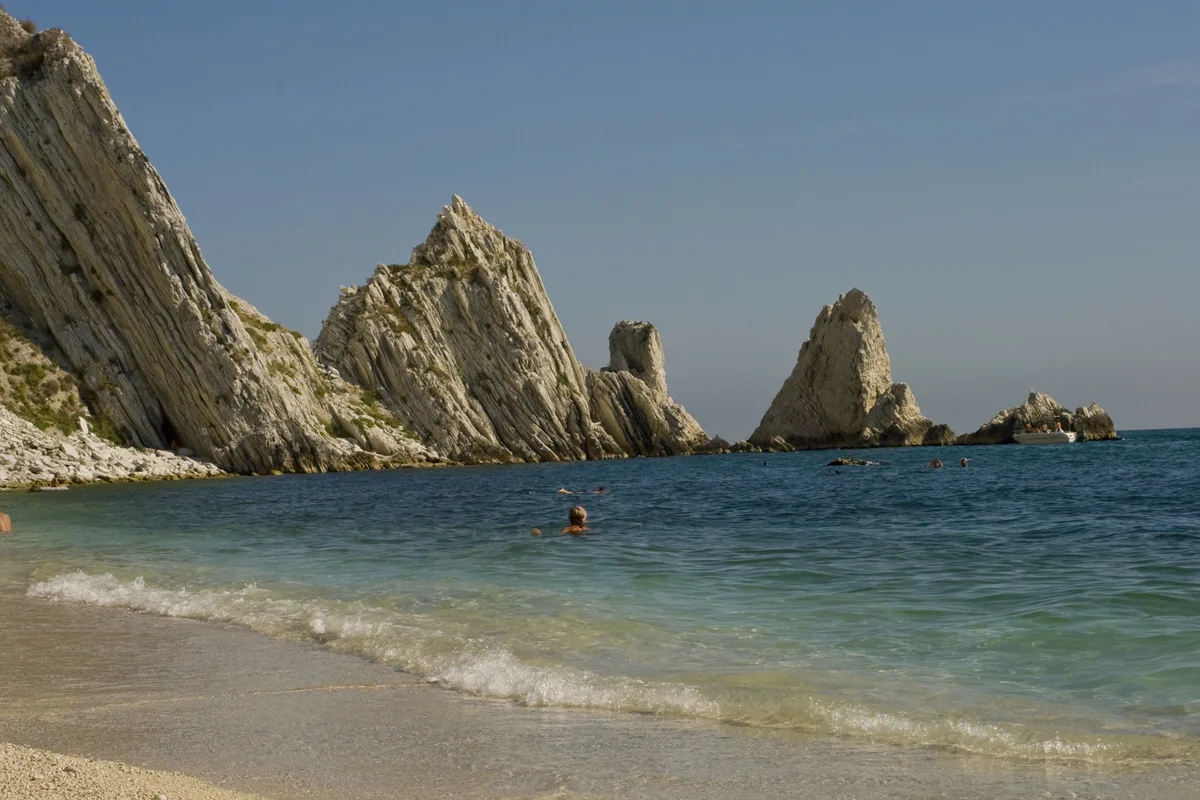
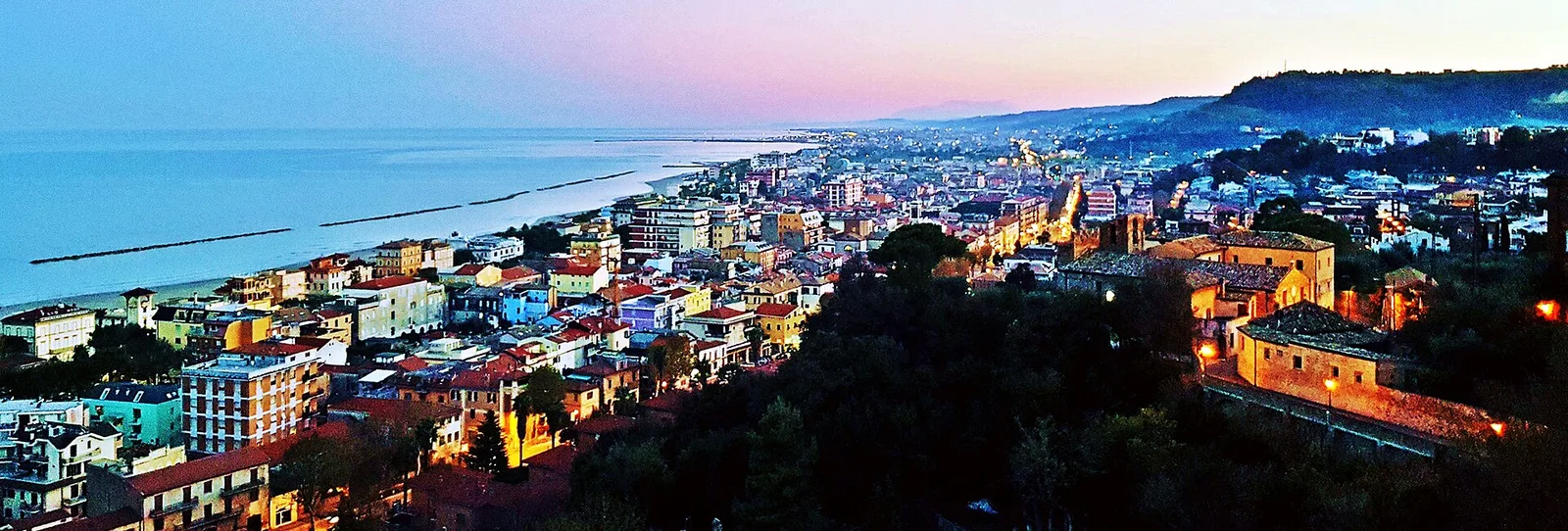
South of the city the coast suddenly stands up: Monte Conero, a block of white limestone and holm oak, is the only headland on the Italian Adriatic between Trieste and the Gargano. Take the narrow road down to Portonovo, a bay of pebbles and pines where the little Romanesque church of Santa Maria, eleventh century, stands alone above the shore. Order a plate of moscioli, the wild mussels of these rocks. Back on the panoramic road, pull off at the lay-bys over the cliffs, then drop to Sirolo, a pocket-sized hill town whose belvedere looks straight at the Due Sorelle, two sea stacks off a beach you can reach only by boat from Numana. Charge at the station in Numana; Sirolo hotels have sockets.
Why stop hereCharge nearby: Enel X Way (Enel X Way Numana) — typical arrival 45%, about 40 min to 80%. Why stop here: Sirolo belvedere, Due Sorelle beach. Access: walk from the overnight — leave the car.
Recanati
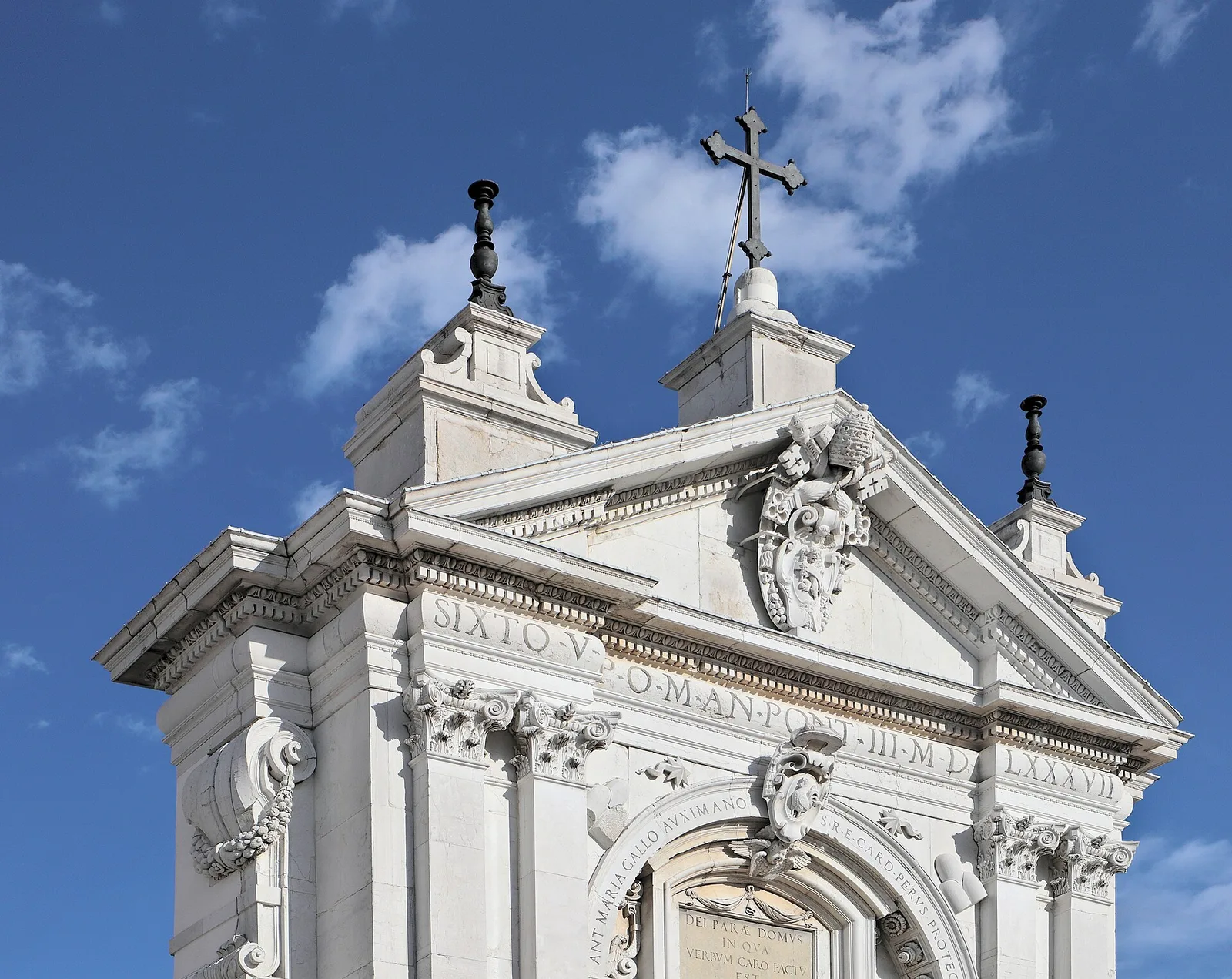
Loreto is only a few kilometres inland, but it feels like a different century. Pilgrims have walked for seven hundred years to the basilica, where a plain brick room said to be the house of the Virgin stands inside a marble screen carved to Bramante’s design. Next door in Castelfidardo, the town that taught Europe to make accordions, a small museum shows hundreds of them. Then up to Recanati on its long ridge. In Palazzo Leopardi the poet’s library is still as his father left it, and a few steps away the Colle dell’Infinito is the hill and the hedge of his most famous poem: look past it to the Sibillini on one side and the sea on the other. Charge at the fast station near Loreto.
Why stop hereCharge nearby: Ewiva (Ewiva Loreto) — typical arrival 50%, about 20 min to 80%. Why stop here: Palazzo Leopardi, Colle dell’Infinito. Access: walk from the overnight — leave the car.
Fabriano
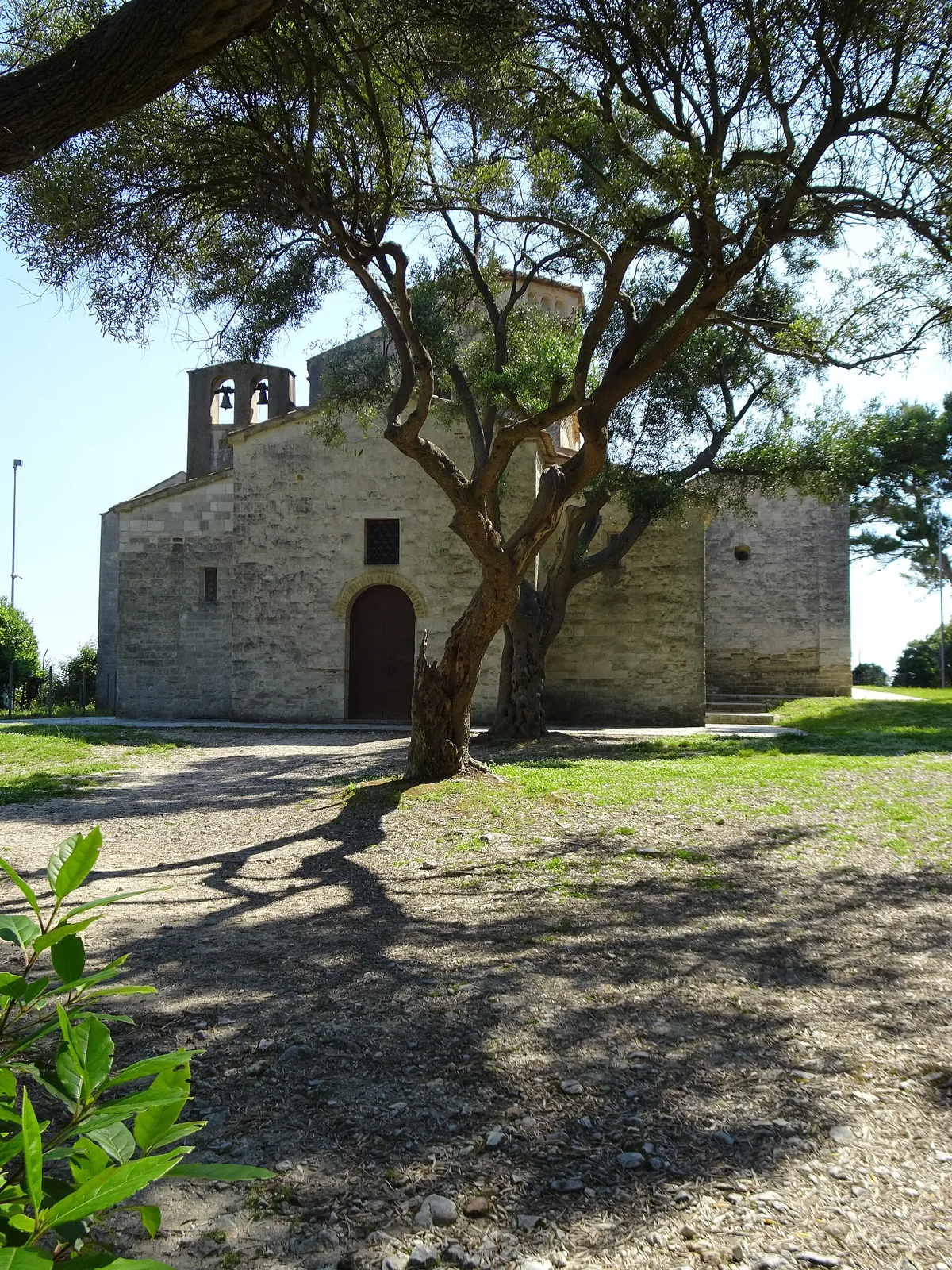
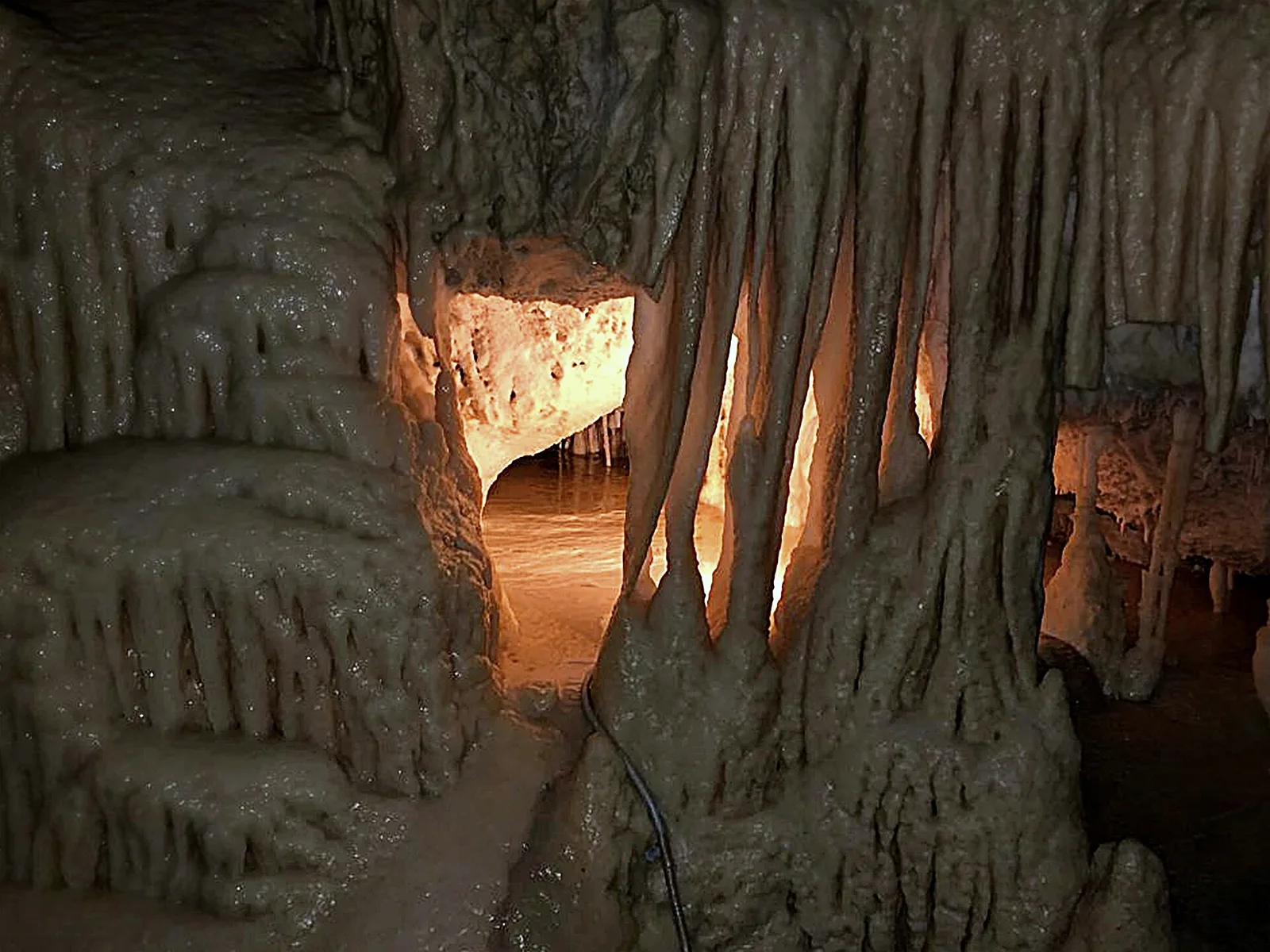
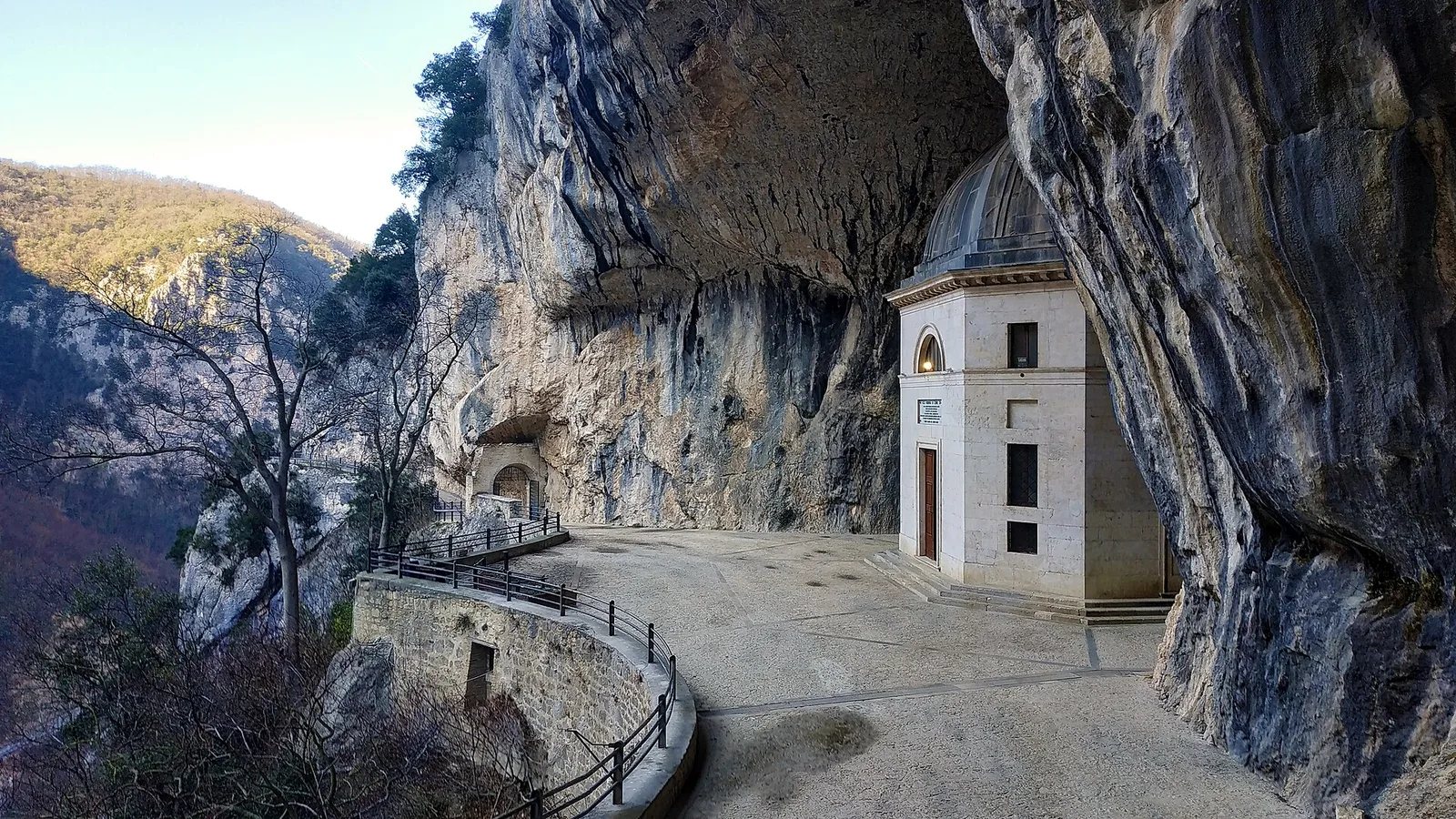
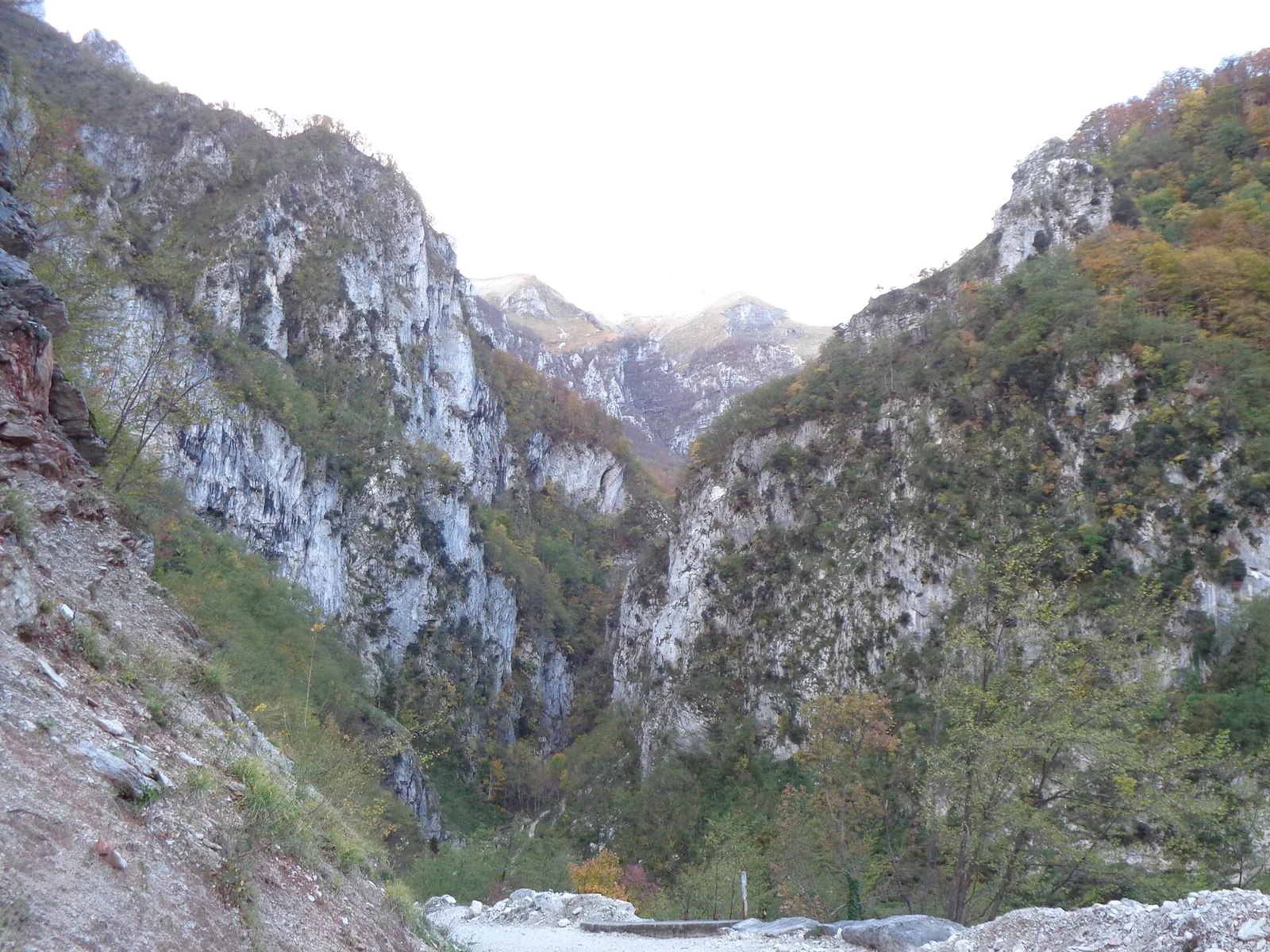
Turn inland to Jesi, a walled town where the emperor Frederick II was born in a tent on the square in 1194, then wind up through the Verdicchio hills, rows of vines on soft clay ridges with a castle village on every summit; Staffolo has a balcony over the whole valley and Cupramontana calls itself the capital of the wine. Beyond, the road enters the limestone gorge of the Gola della Rossa. The Frasassi Caves open into the Abisso Ancona, a chamber tall enough to hold a cathedral, at a steady fourteen degrees. Outside, the Romanesque abbey of San Vittore alle Chiuse sits by the river, and a fifteen-minute climb leads to Valadier’s octagonal temple built inside the mouth of a cave. Sleep in Fabriano, the paper town.
Why stop hereWhy stop here: Paper and Watermark Museum. Access: walk from the overnight — leave the car.
Sarnano
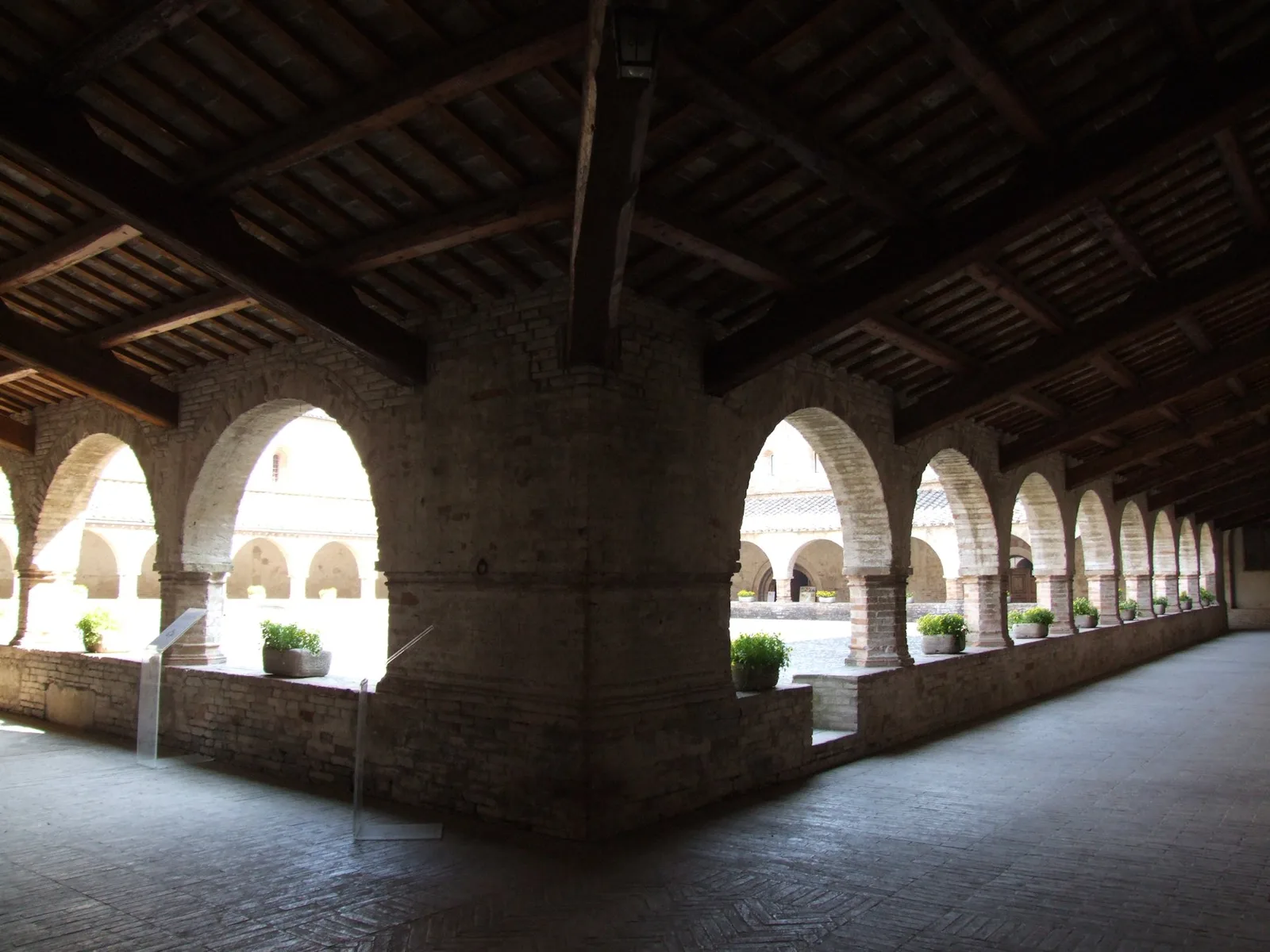
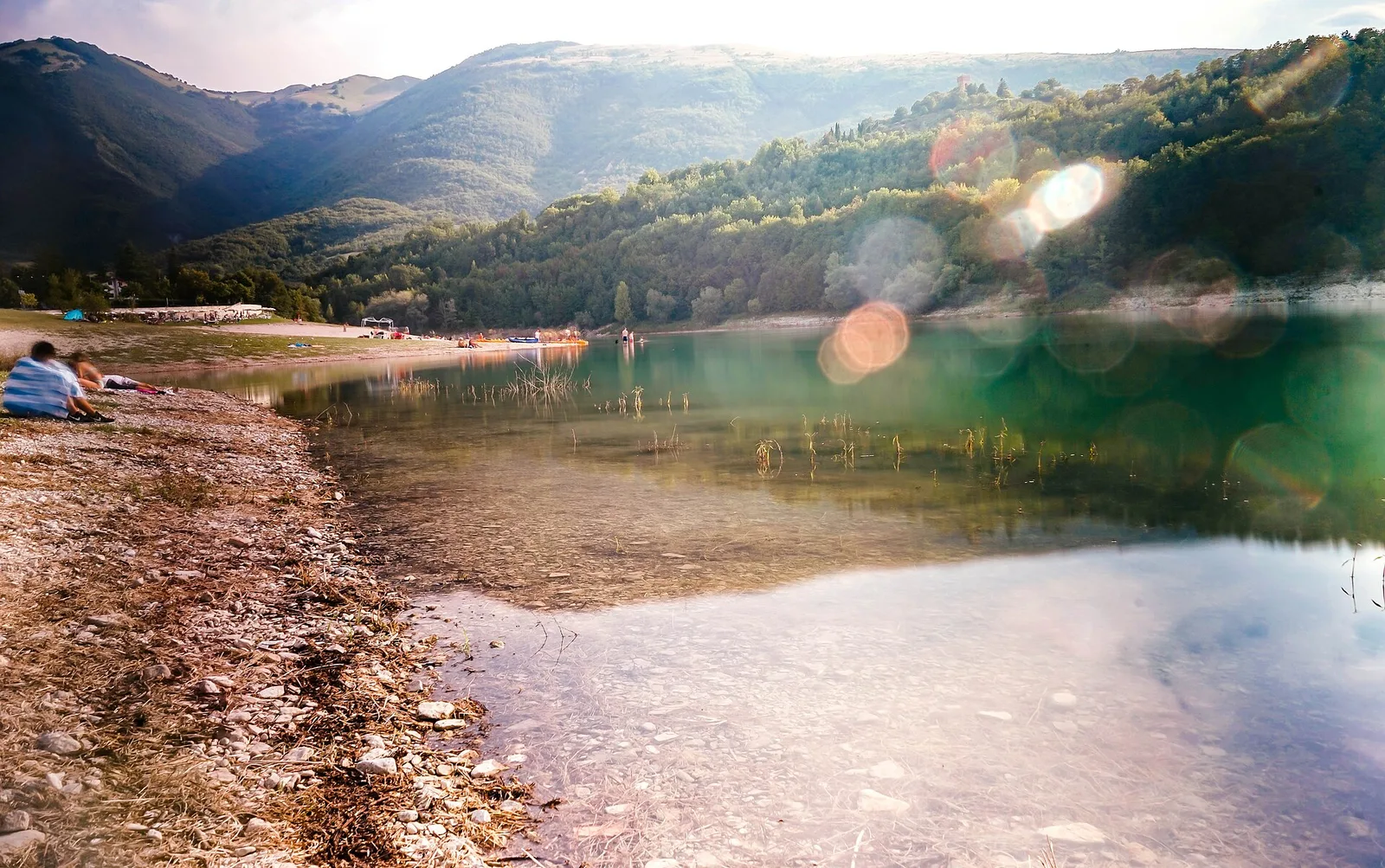
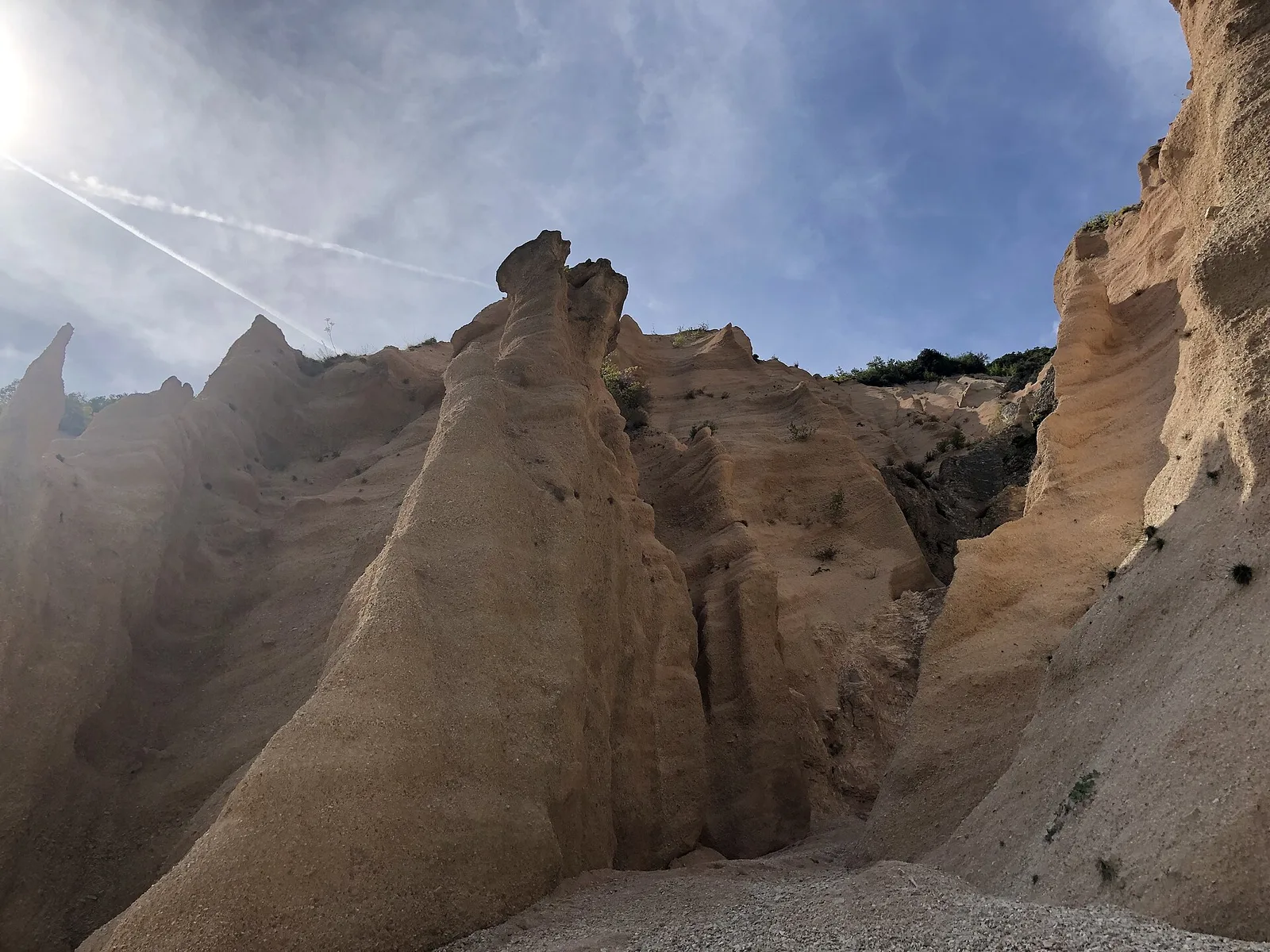
In Fabriano the paper museum still makes sheets by hand, with the watermarks the town invented, and it is worth an early hour before the road south. Through San Severino Marche, whose elliptical piazza is lined with arcades, reach the Abbadia di Fiastra, a Cistercian abbey of 1142 in a wooded reserve, its cloister quiet and its cellars once full of wine. Across the road lie the Roman theatre and amphitheatre of Urbs Salvia. Then the land rises: the Lago di Fiastra fills a mountain valley with water the colour of turquoise, and from the dam a path of about an hour leads to the Lame Rosse, red earth pinnacles standing in the woods like a small canyon. Arrive in Sarnano, a medieval village climbing its own hill.
Why stop hereCharge nearby: Enel X Way (Enel X Way Amandola) — typical arrival 35%, about 60 min to 90%. Why stop here: Sarnano old town. Access: walk from the overnight — leave the car.
Montemonaco
The Sibillini are mountains of stories: a prophetess was said to live in a cave under the summit of Monte Sibilla, and knights came looking for her. Leave Sarnano by the road to Sassotetto, which climbs in hairpins to open pastures with the whole range in front of you and the sea behind; the bends near the top have room to stop. Drop to Amandola and Montefortino, then follow the narrow lane to Rubbiano for the walk into the Gola dell’Infernaccio, a cleft so tight that the Tenna roars in shadow at midday, with a hermitage hidden in the beech woods beyond. Sleep in Montemonaco, a stone village on a balcony facing Monte Vettore. There is no fast charger up here; arrive full and use the hotel socket.
Why stop hereWhy stop here: Montemonaco belvedere facing Monte Vettore. Access: walk from the overnight — leave the car.
Ascoli Piceno
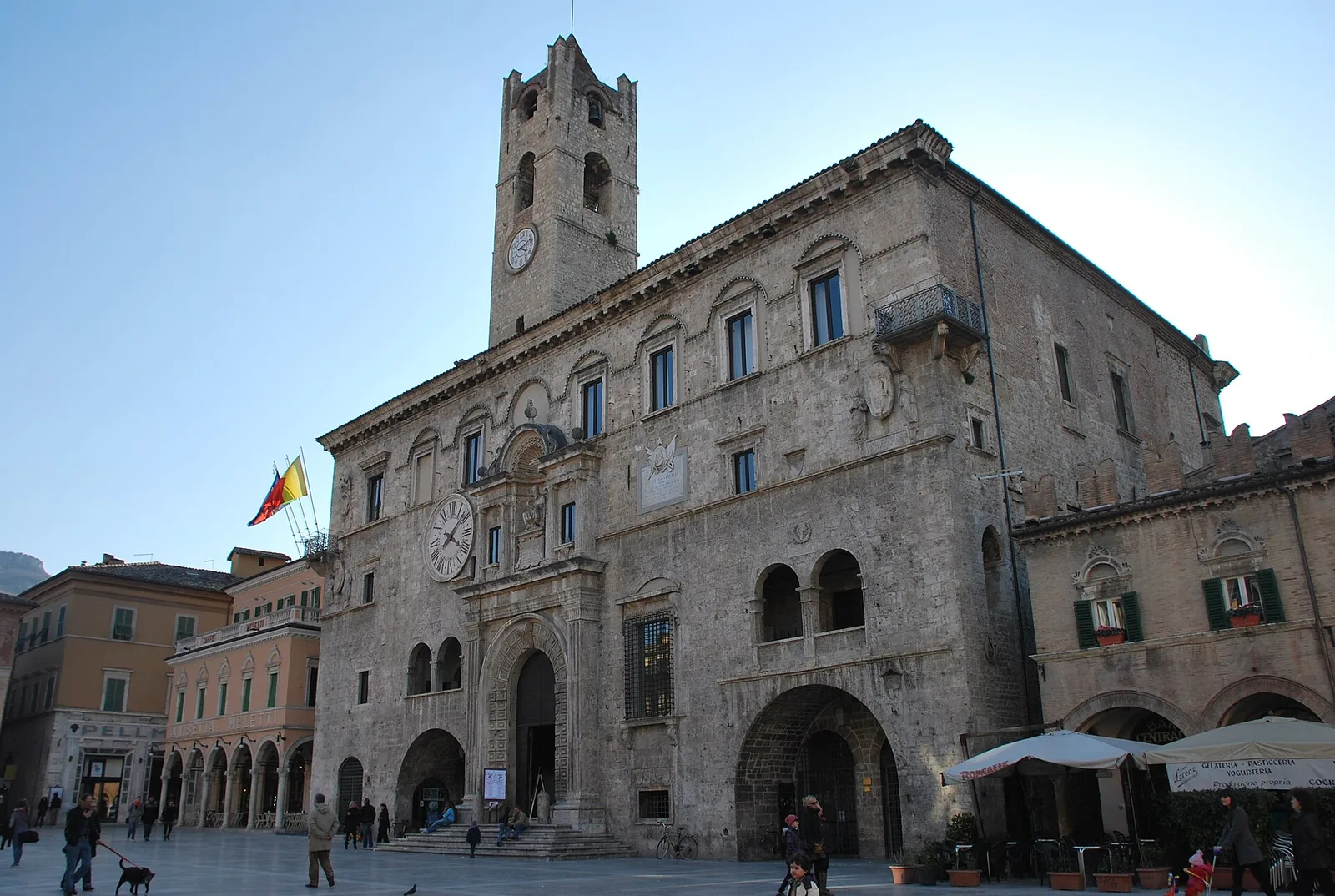
Come down from the mountains along the Aso valley and the Lago di Gerosa to Ascoli Piceno, a city built almost entirely of pale travertine, so that in the late afternoon it seems lit from within. The Piazza del Popolo is one of the most beautiful squares in Italy, paved like a marble floor and closed by the Palazzo dei Capitani and the flank of San Francesco. Take a coffee and an anisetta at Caffè Meletti, under its Art Nouveau ceilings, then walk to the Piazza Arringo and the cathedral, and down to the Roman bridge of Solestà over the Tronto. Eat olive all’ascolana, stuffed and fried, from a paper cone. Charge at the fast station on the edge of the old town.
Why stop hereCharge nearby: Enel X Way (Enel X Way Ascoli Piceno) — typical arrival 30%, about 35 min to 80%. Why stop here: Piazza del Popolo, Ascoli, Caffè Meletti, Roman bridge of Solestà. Access: walk from the overnight — leave the car.
Fermo
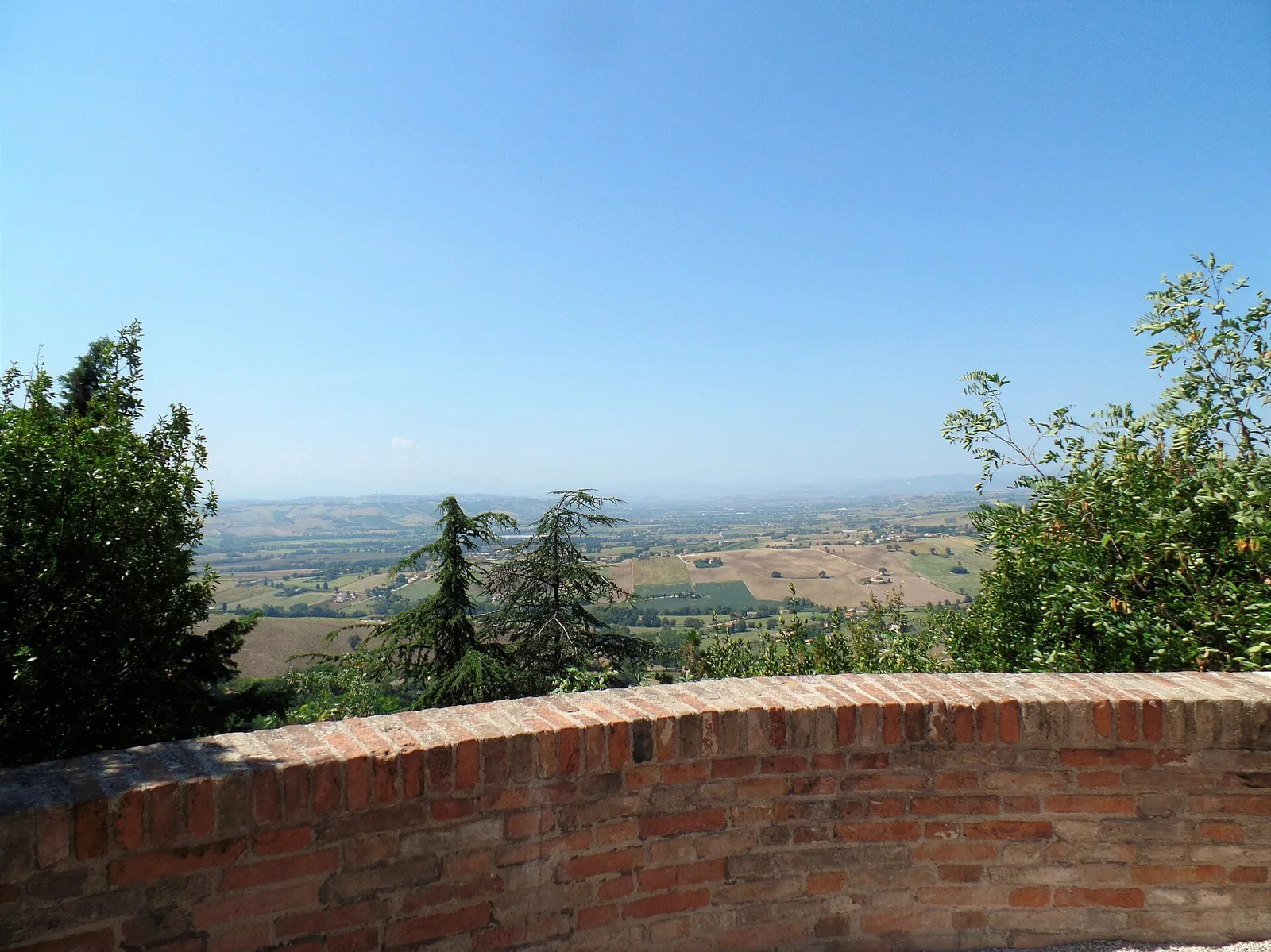
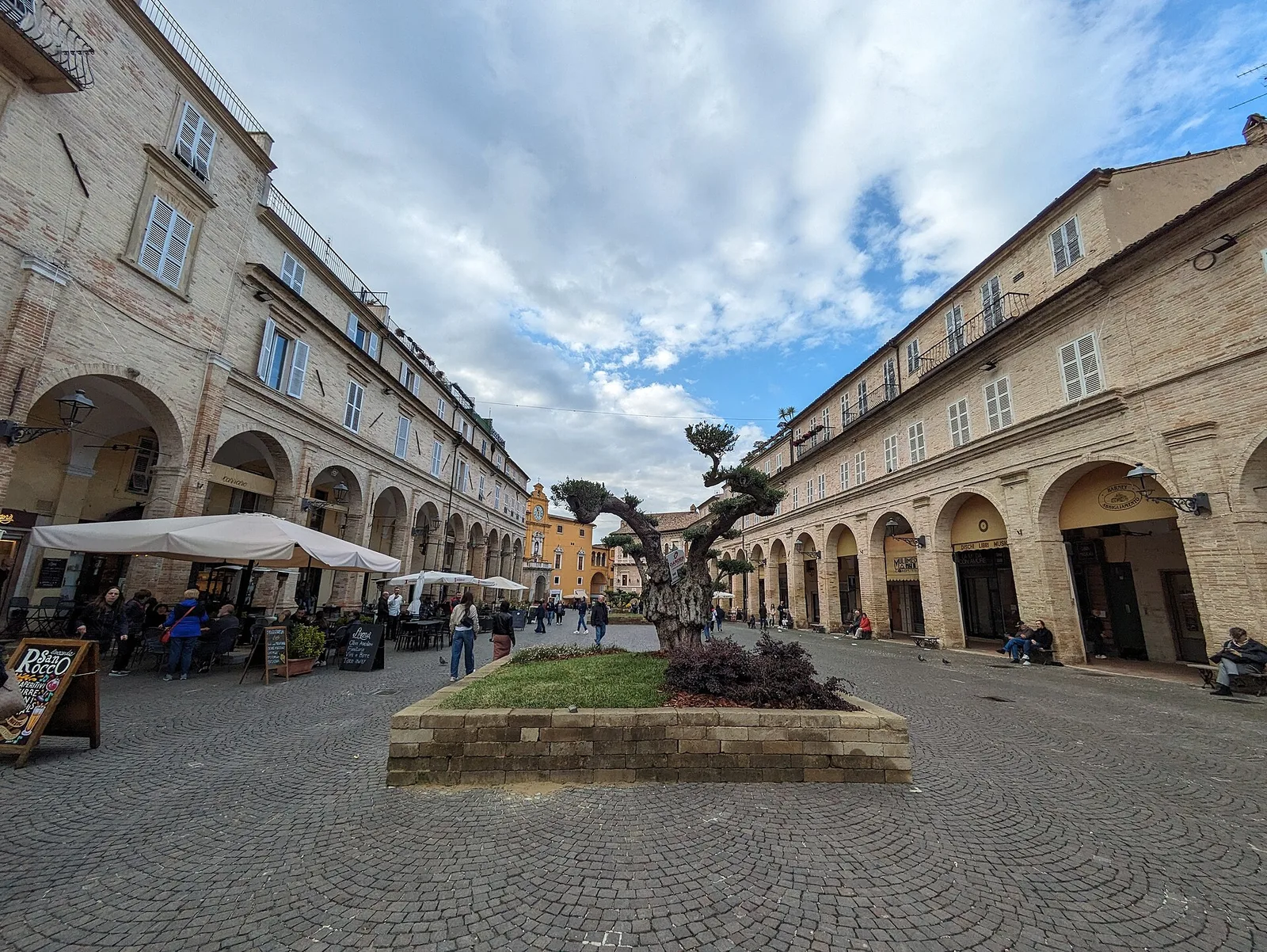
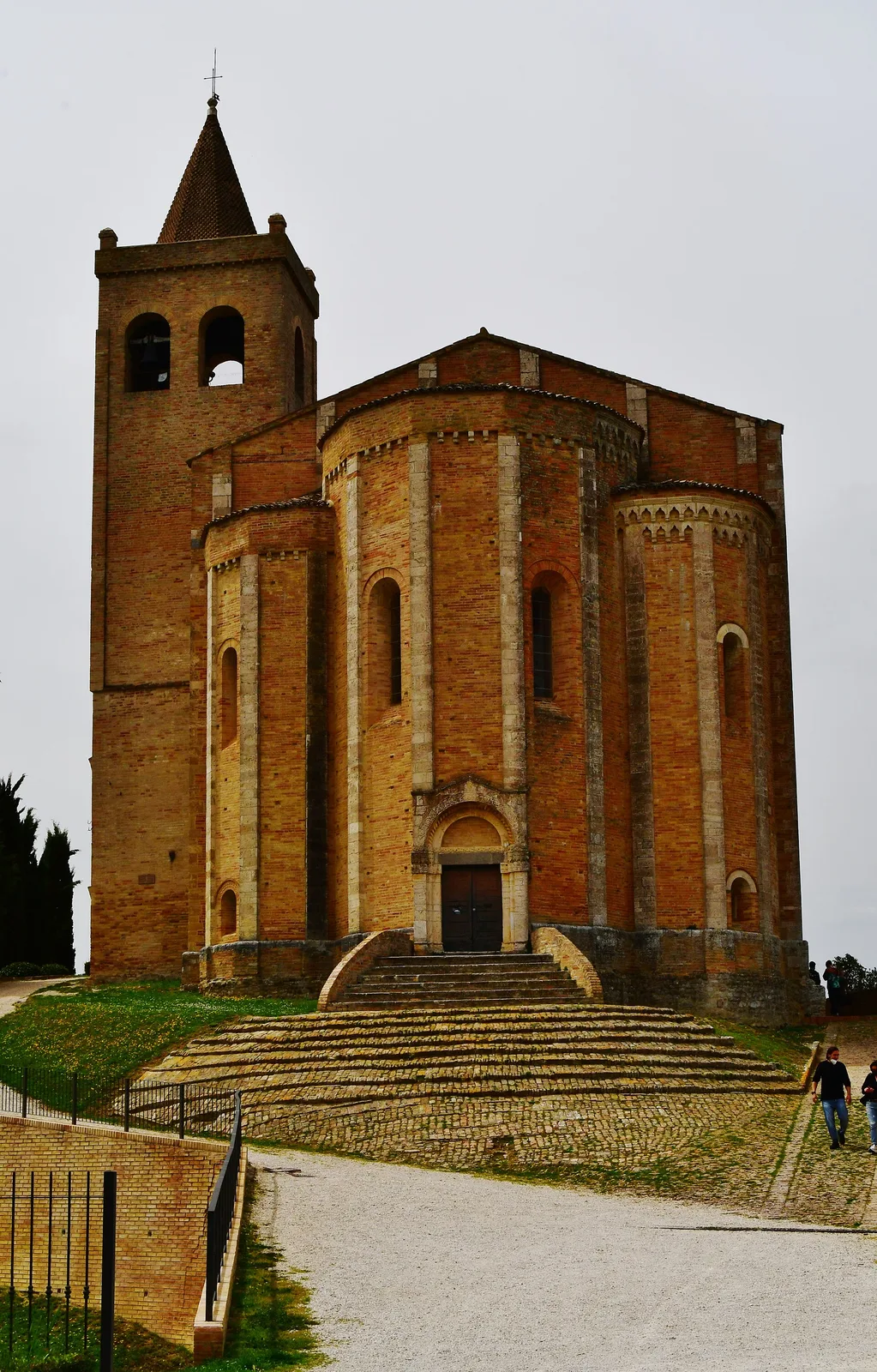
Today the road rolls over the last hills towards the sea, one balcony town after another. Offida is a lace town where women still work bobbins in their doorways; at its edge the brick church of Santa Maria della Rocca stands on a cliff above the valley. Ripatransone calls itself the belvedere of the Piceno, and its walls look over the Sibillini and the Adriatic at once; find the alley that is barely forty centimetres wide. Drop to the coast at Grottammare, then climb its old upper town for the view down the palm-lined shore. End in Fermo: under the arcades of the Piazza del Popolo, past the vast Roman cisterns, up to the cathedral lawn on the Girfalco, the highest terrace on this coast. Charge at the fast station below the town.
Why stop hereCharge nearby: Enel X Way (Enel X Way Porto San Giorgio) — typical arrival 40%, about 30 min to 80%. Why stop here: Piazza del Popolo, Fermo, Fermo Cathedral on the Girfalco, Roman cisterns. Access: walk from the overnight — leave the car.
Ancona
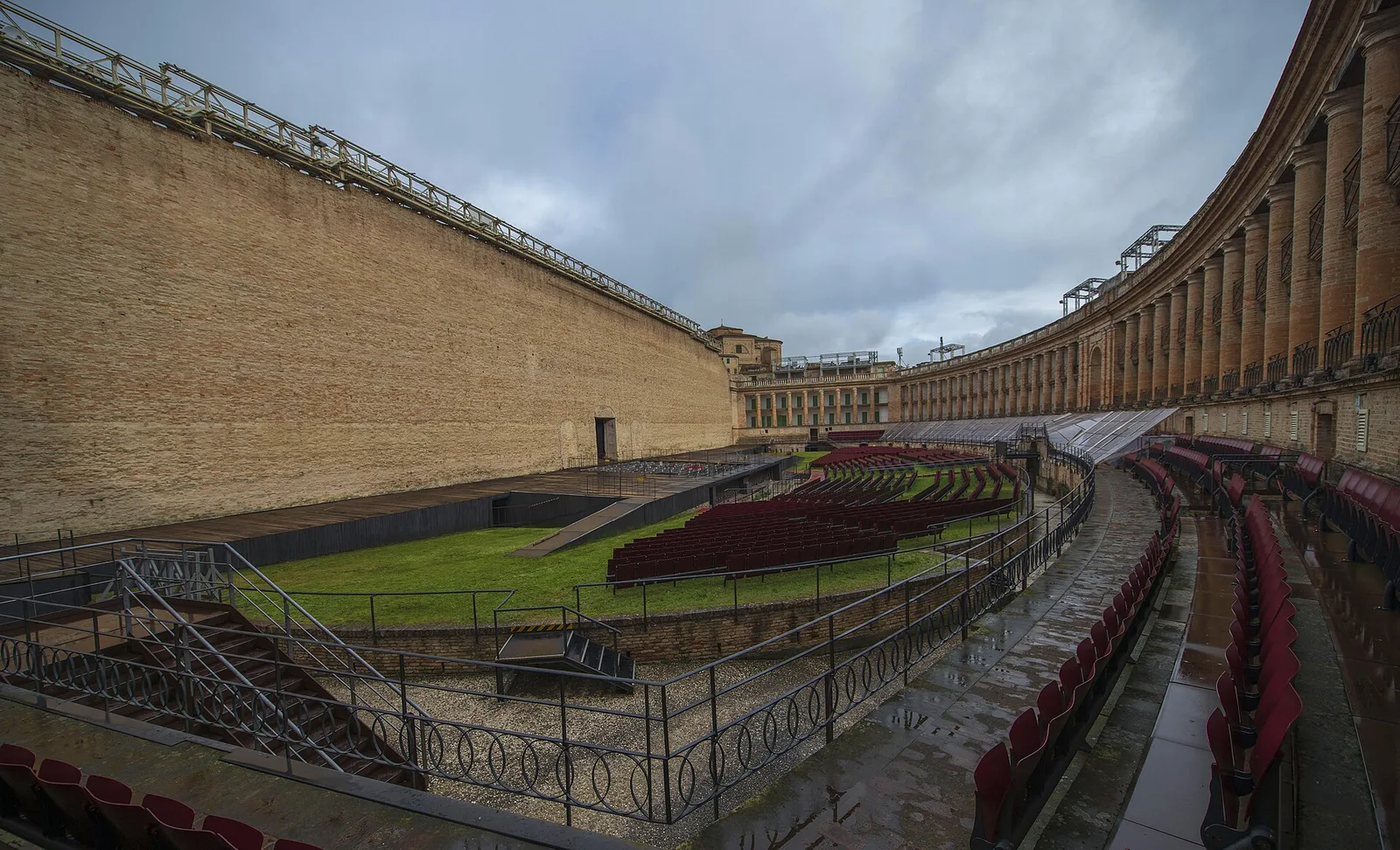
Before leaving Fermo, ask at the library in the Palazzo dei Priori to see the Sala del Mappamondo, a reading room of walnut shelves around a great globe drawn in 1713. Then cut inland to Macerata, a university town on a ridge, where the Sferisterio, a long neoclassical arena built for a ball game, now hosts opera on summer nights under the open sky. From there the road follows the Chienti valley back to the coast and runs north past Civitanova and the Conero to Ancona, where the trip began. If there is light left, sit on the steps of San Ciriaco again and watch the ferries leave for Croatia and Greece. Charge in Macerata, then once more in Ancona before the road home.
Why stop hereCharge nearby: Enel X Way (Enel X Way Ancona Baraccola) — typical arrival 30%, about 30 min to 80%. Why stop here: Cathedral of San Ciriaco, Arch of Trajan, Mole Vanvitelliana. Access: walk from the overnight — leave the car.
Places along the road
Quiet charging pauses
- Enel X Way in Ancona — a calm stop on this leg, about 30 min.
- Enel X Way in Sirolo — a calm stop on this leg, about 40 min.
- Ewiva in Recanati — a calm stop on this leg, about 20 min.
- Enel X Way in Jesi — a calm stop on this leg, about 25 min.
- Enel X Way in Macerata — a calm stop on this leg, about 45 min.
- Enel X Way in Sarnano — a calm stop on this leg, about 60 min.
- Enel X Way in Ascoli Piceno — a calm stop on this leg, about 35 min.
- Enel X Way in Fermo — a calm stop on this leg, about 30 min.
- Ionity in Civitanova Marche — a calm stop on this leg, about 20 min.