
Maastricht, the Limburg Hills, the Veluwe and the Hanseatic IJssel
Seven days through the Netherlands that most visitors never see: not the flat polders of the postcards but a country of cathedral towns, chalk hills, heather and old river trade. The loop leaves Utrecht beneath its Dom tower, crosses the great rivers to the moated castle of Loevestein and spends the evening in ’s-Hertogenbosch, where hidden canals run under the houses. The white village of Thorn leads down the Maas to Maastricht, a city of Roman bridges, bookshop churches and caves cut into Sint-Pietersberg. Beyond it the land finally rises: timber-framed farms in the Geul valley, the ruined castle of Valkenburg and the Three-Country Point on the highest hill of the European Netherlands. The road then follows the river north to Nijmegen and into the Veluwe, where Van Goghs hang in a forest museum and white bicycles wait for anyone, before the brick Hanseatic towns of Zutphen, Deventer and Kampen close the circle. Fast chargers are never far away, and many hotels add a socket for the night.
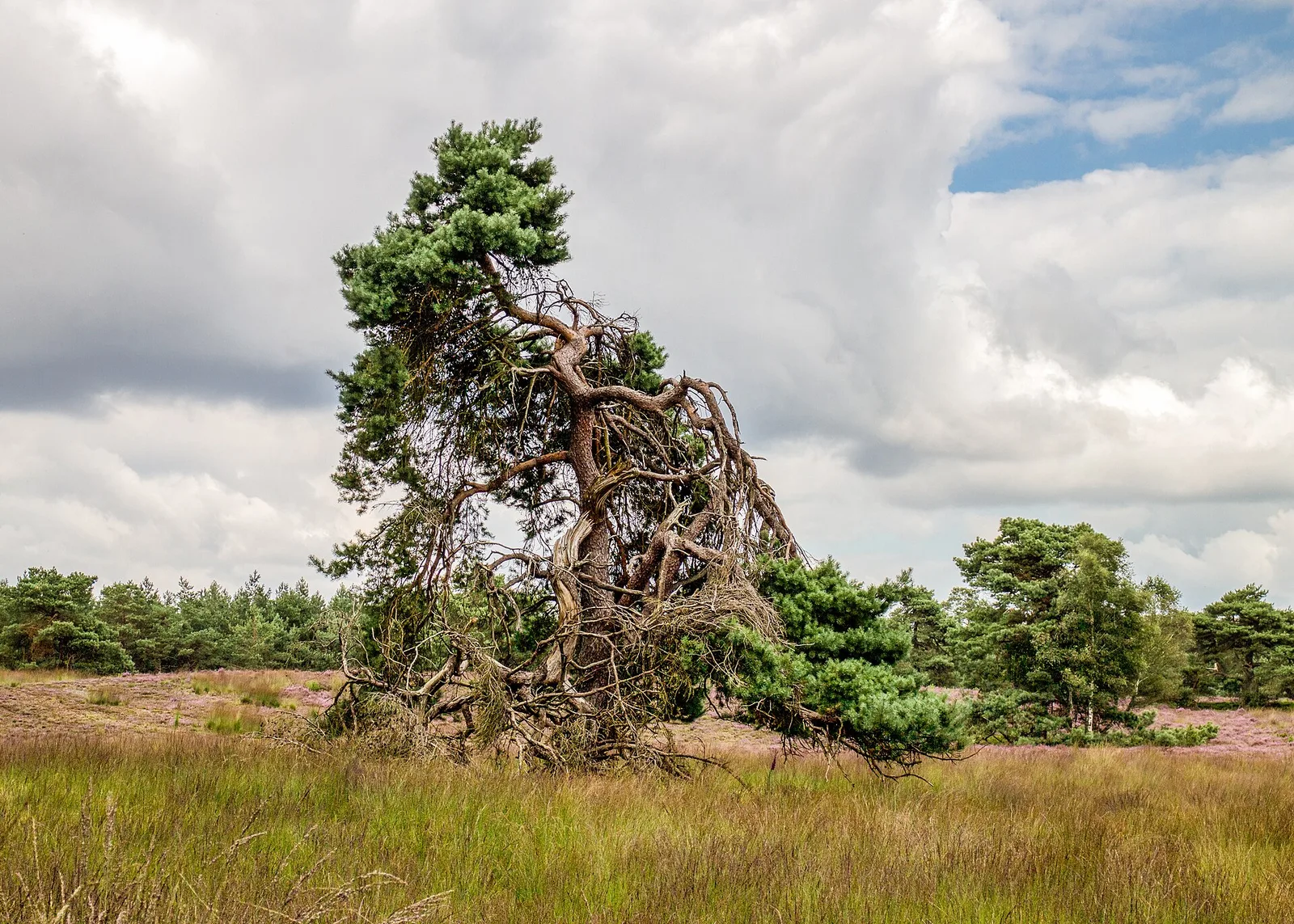
Season: Lovely from April to October. The orchards of South Limburg blossom in late April, the heather of the Veluwe turns purple from mid-August to mid-September, and in December Maastricht and Valkenburg open Christmas markets, the one in Valkenburg deep inside the marl caves. Winter is mild but short on daylight; book the Kröller-Müller Museum and Paleis Het Loo ahead in high season.
Seven days through the Netherlands that most visitors never see: not the flat polders of the postcards but a country of cathedral towns, chalk hills, heather and old river trade. The loop leaves Utrecht beneath its Dom tower, crosses the great rivers to the moated castle of Loevestein and spends the evening in ’s-Hertogenbosch, where hidden canals run under the houses. The white village of Thorn leads down the Maas to Maastricht, a city of Roman bridges, bookshop churches and caves cut into Sint-Pietersberg. Beyond it the land finally rises: timber-framed farms in the Geul valley, the ruined castle of Valkenburg and the Three-Country Point on the highest hill of the European Netherlands. The road then follows the river north to Nijmegen and into the Veluwe, where Van Goghs hang in a forest museum and white bicycles wait for anyone, before the brick Hanseatic towns of Zutphen, Deventer and Kampen close the circle. Fast chargers are never far away, and many hotels add a socket for the night.
Day by day
’s-Hertogenbosch
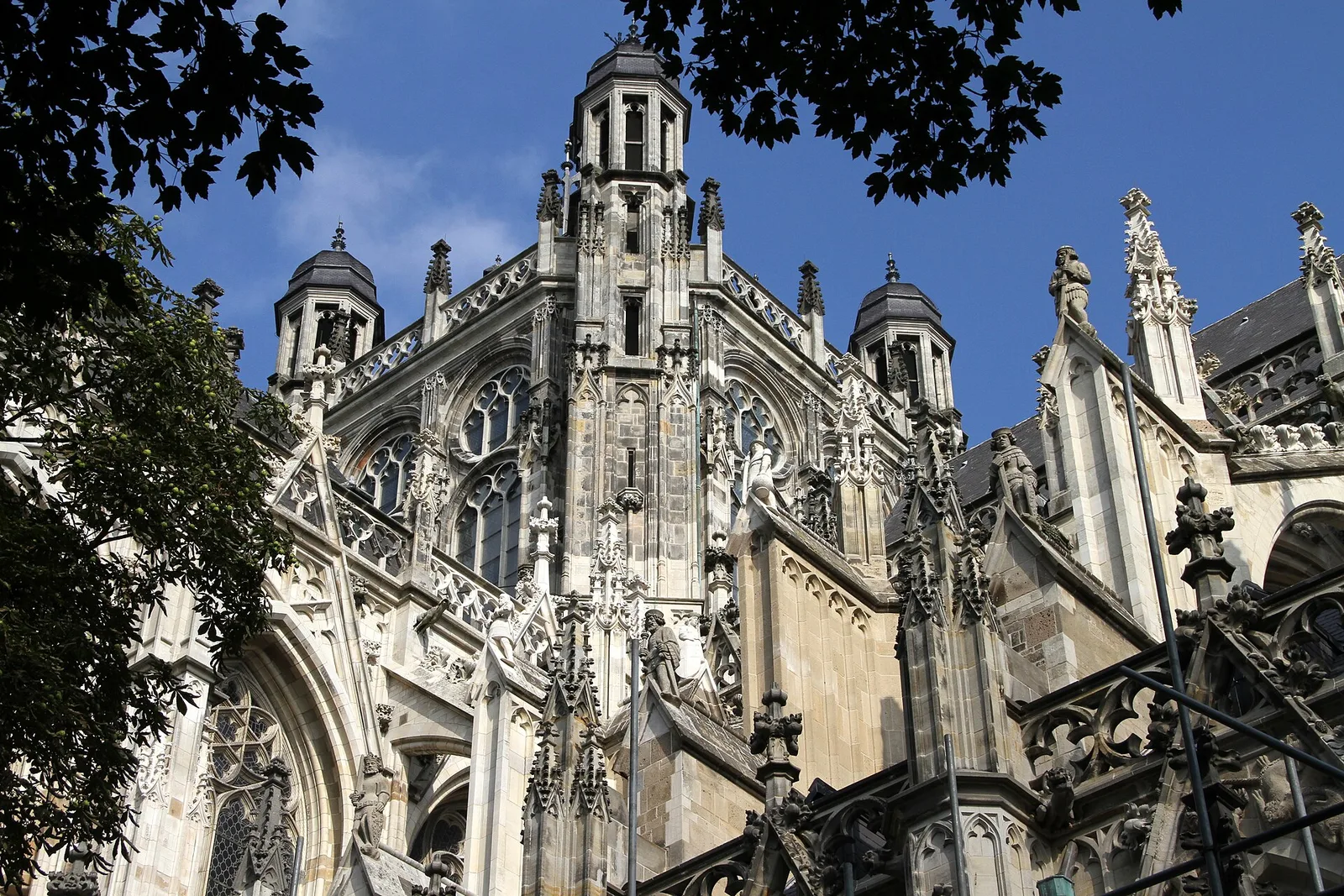
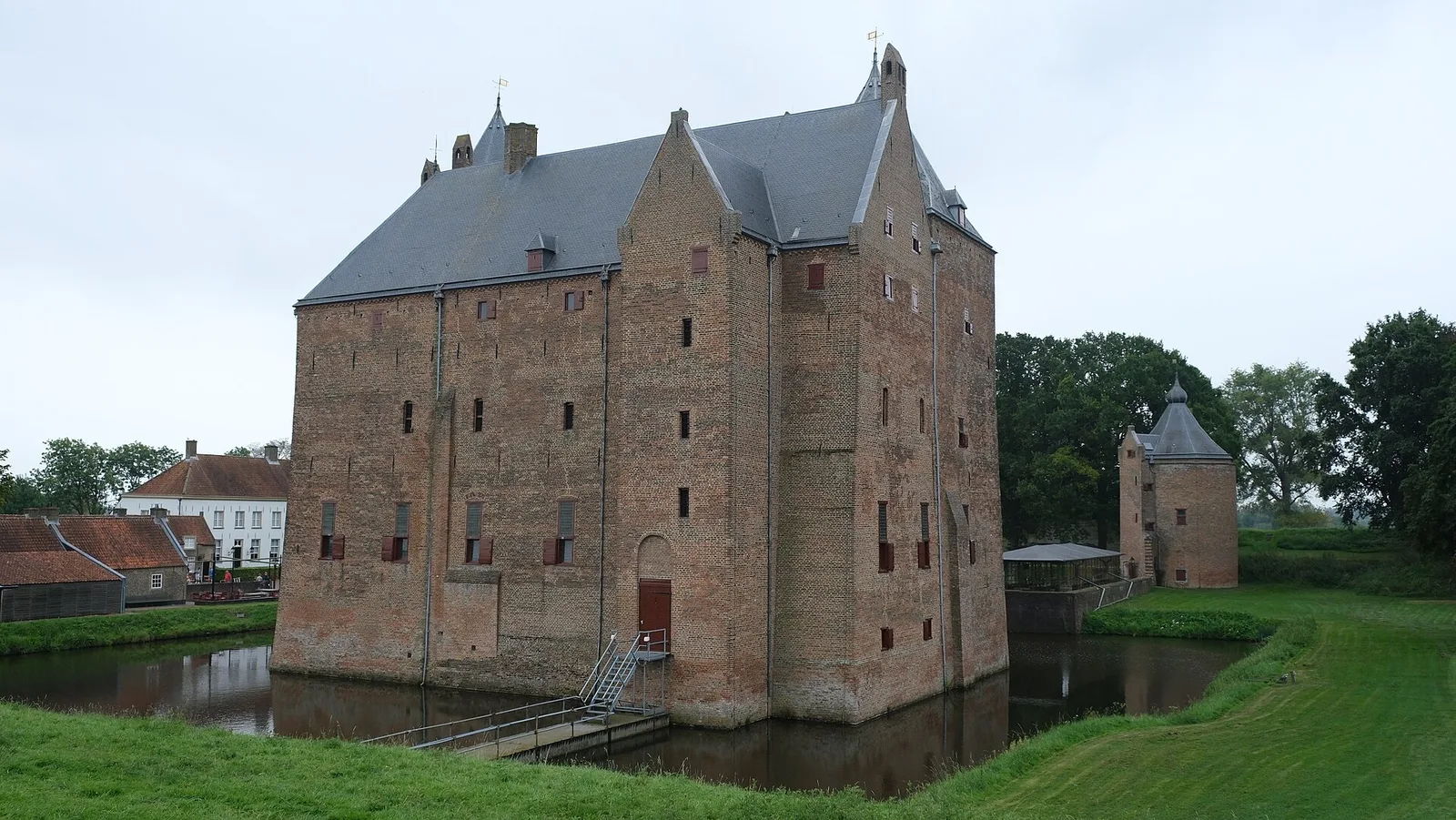
Begin early under the Dom tower in Utrecht, whose 465 steps look out across the whole flat heart of the country, then drive south over the Lek and the Waal. Where the Maas and the Waal meet, Loevestein Castle stands inside star-shaped ramparts and moats: the fortress from which Hugo Grotius escaped in 1621, hidden in a chest of books. In the late afternoon arrive in ’s-Hertogenbosch. Look up at the stone musicians and little monsters climbing the flying buttresses of St John’s Cathedral, then take a small open boat through the Binnendieze, a stream that slips beneath houses and bridges in near darkness. End the day with a Bossche bol, the town’s chocolate-glazed cream bun.
Why stop hereCharge nearby: Shell Recharge (Shell Recharge ’s-Hertogenbosch) — typical arrival 45%, about 20 min to 80%. Why stop here: St John’s Cathedral, Binnendieze boat trips. Access: walk from the overnight — leave the car.
Maastricht
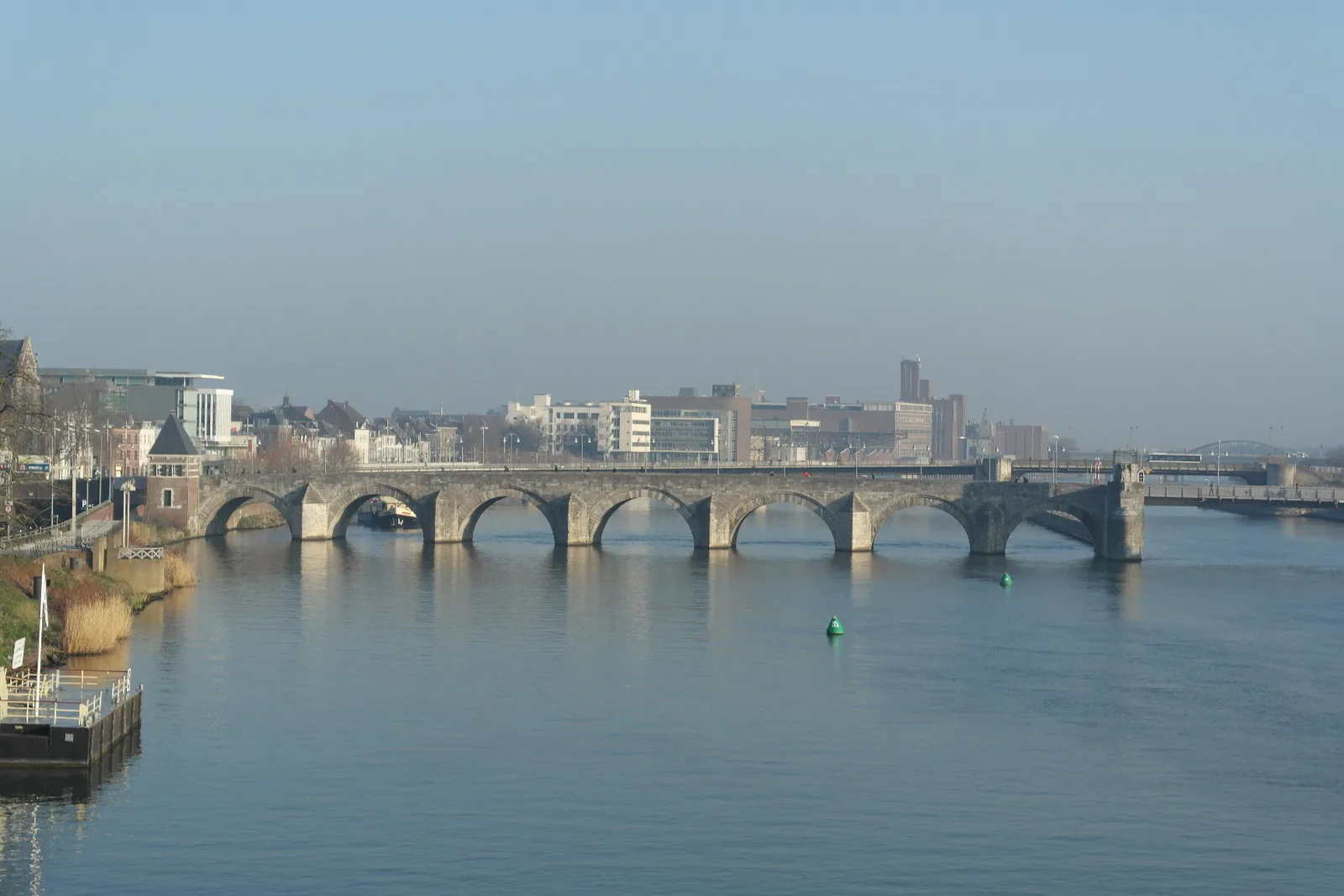
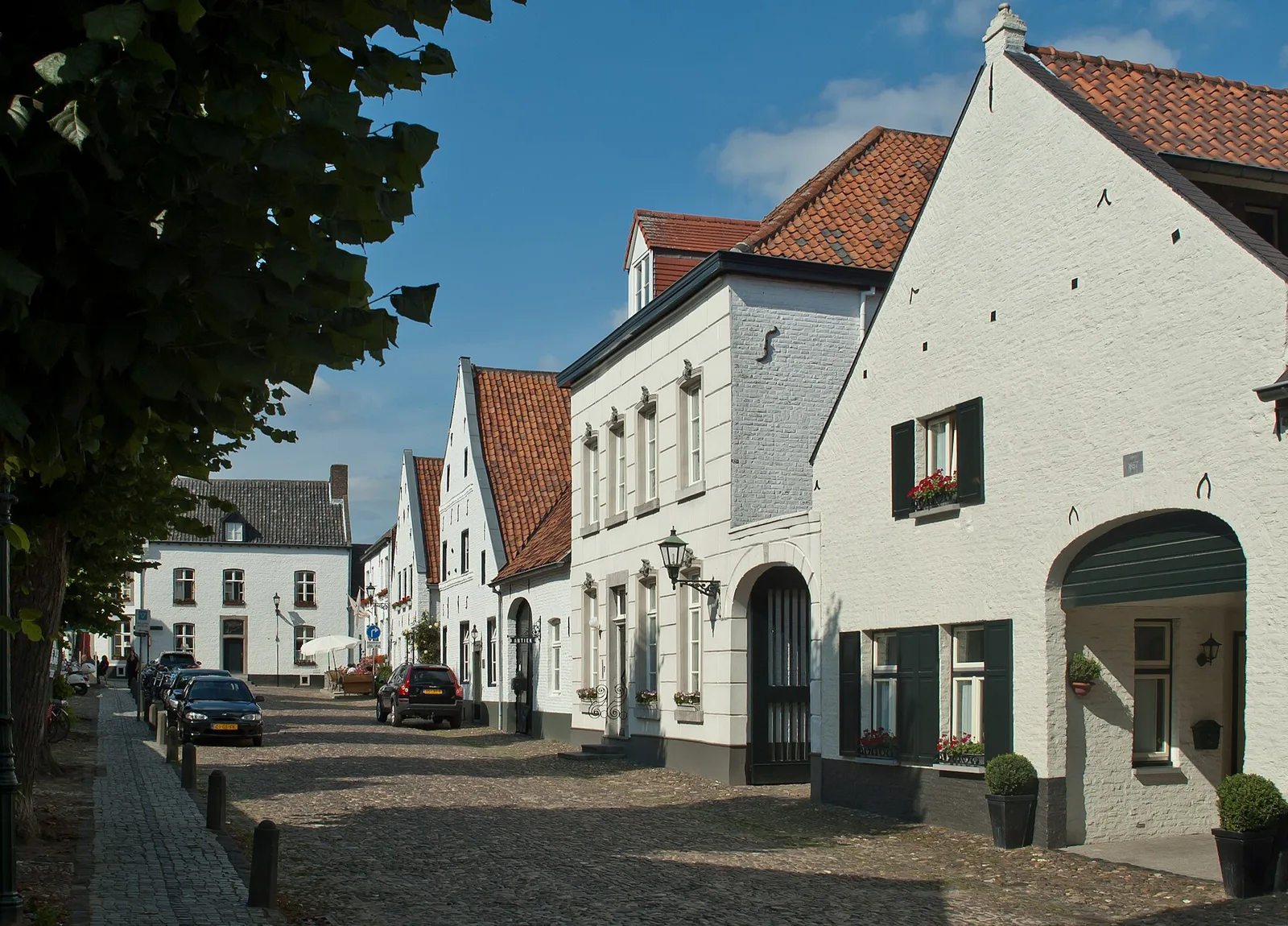
Leave Den Bosch through Brabant countryside of poplars and brick farms and follow the Maas south into Limburg. Thorn, the ‘white town’, was for eight centuries a tiny principality ruled by noble abbesses; its whitewashed houses and cobbled lanes lead to an abbey church full of baroque altars, and on a quiet morning the only sound is your own footsteps. Continue past the river lakes, where old gravel pits have become still water and reed beds, and reach Maastricht by late afternoon. Walk across the Sint Servaasbrug, the oldest bridge in the Netherlands, as the sun sets behind the towers of the old town, and choose a terrace on the Onze Lieve Vrouweplein for the evening.
Why stop hereCharge nearby: Tesla Supercharger (Tesla Supercharger Maastricht) — typical arrival 35%, about 25 min to 80%. Why stop here: Vrijthof and the Basilica of Saint Servatius, Boekhandel Dominicanen, Helpoort and the city walls. Access: walk from the overnight — leave the car.
Maastricht
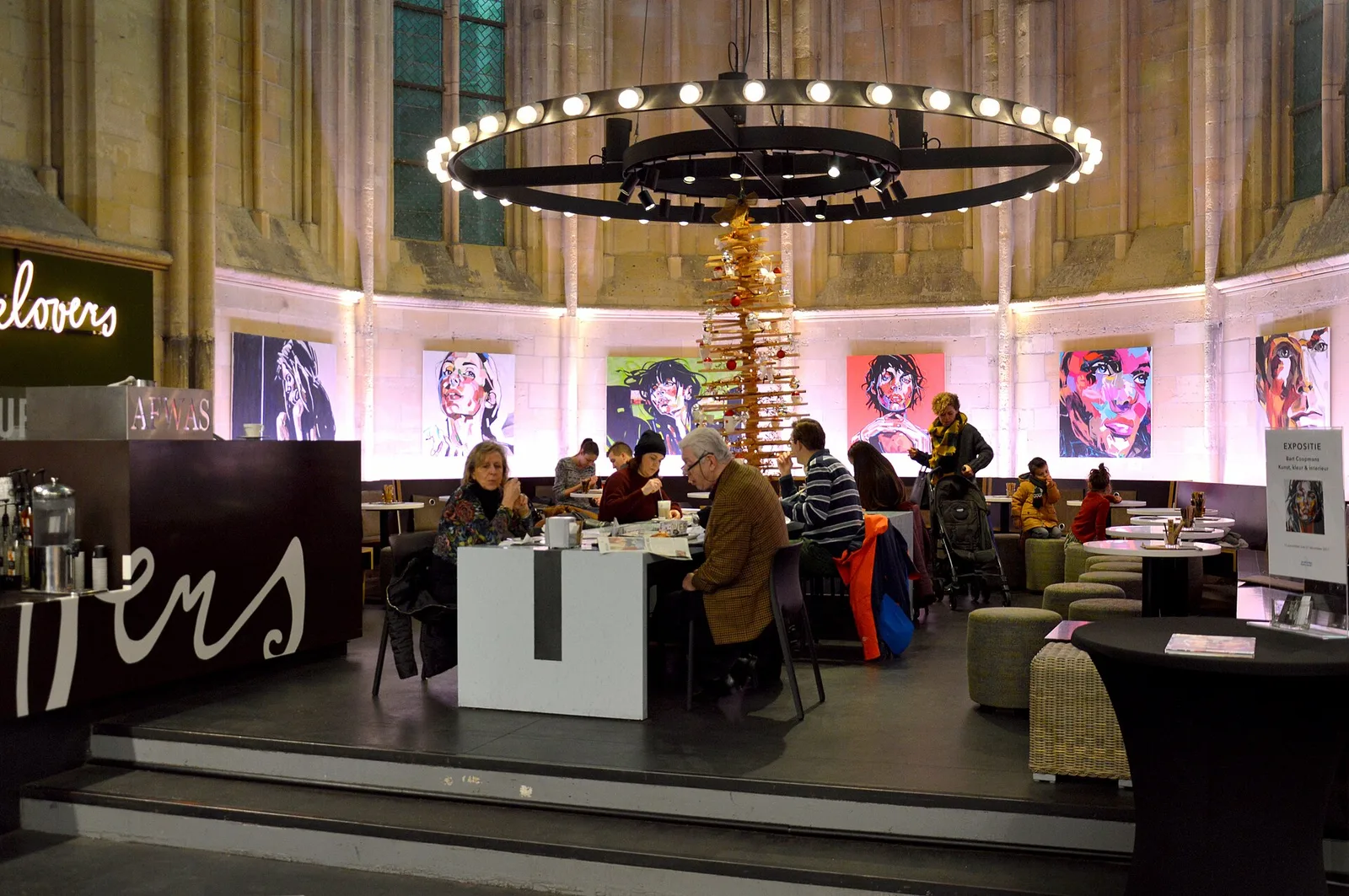
Give Maastricht a whole day on foot. Start on the Vrijthof, between the Romanesque Basilica of Saint Servatius and the red tower of Saint John’s, and step into the Dominicanen, a Gothic church turned bookshop where reading tables stand beneath painted vaults. Follow the medieval walls past the Helpoort, the oldest surviving town gate in the country, to the green banks of the Jeker. In the afternoon climb Sint-Pietersberg to Fort Sint Pieter and go down with a guide into the North Caves, a labyrinth carved by generations of marl cutters, where wartime shelters and charcoal drawings still mark the walls. Come back into town for a slice of Limburg vlaai and an evening among the cafés of the Markt.
Why stop hereCharge nearby: Tesla Supercharger (Tesla Supercharger Maastricht) — typical arrival 35%, about 25 min to 80%. Why stop here: Vrijthof and the Basilica of Saint Servatius, Boekhandel Dominicanen, Helpoort and the city walls. Access: walk from the overnight — leave the car.
Valkenburg
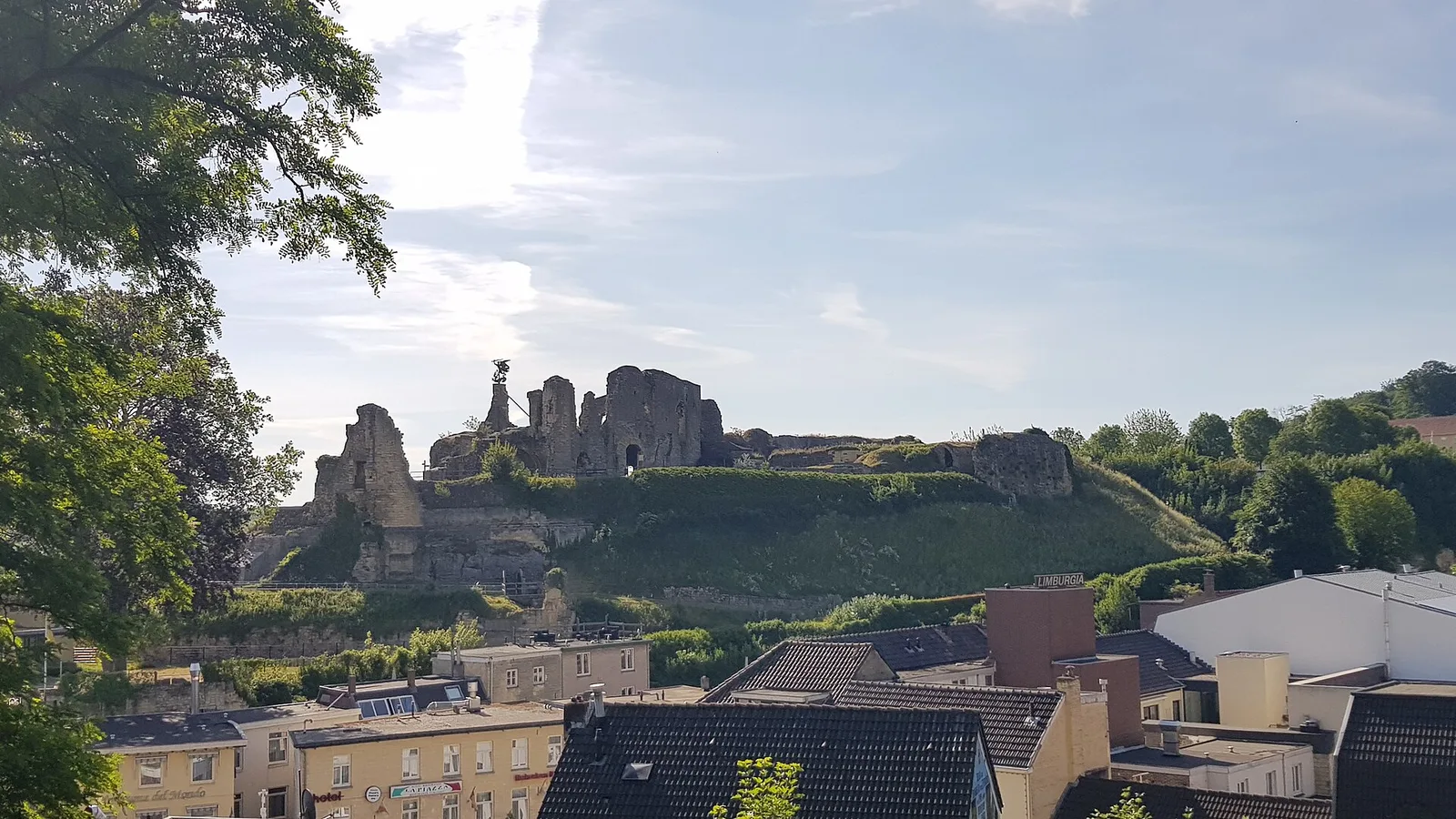
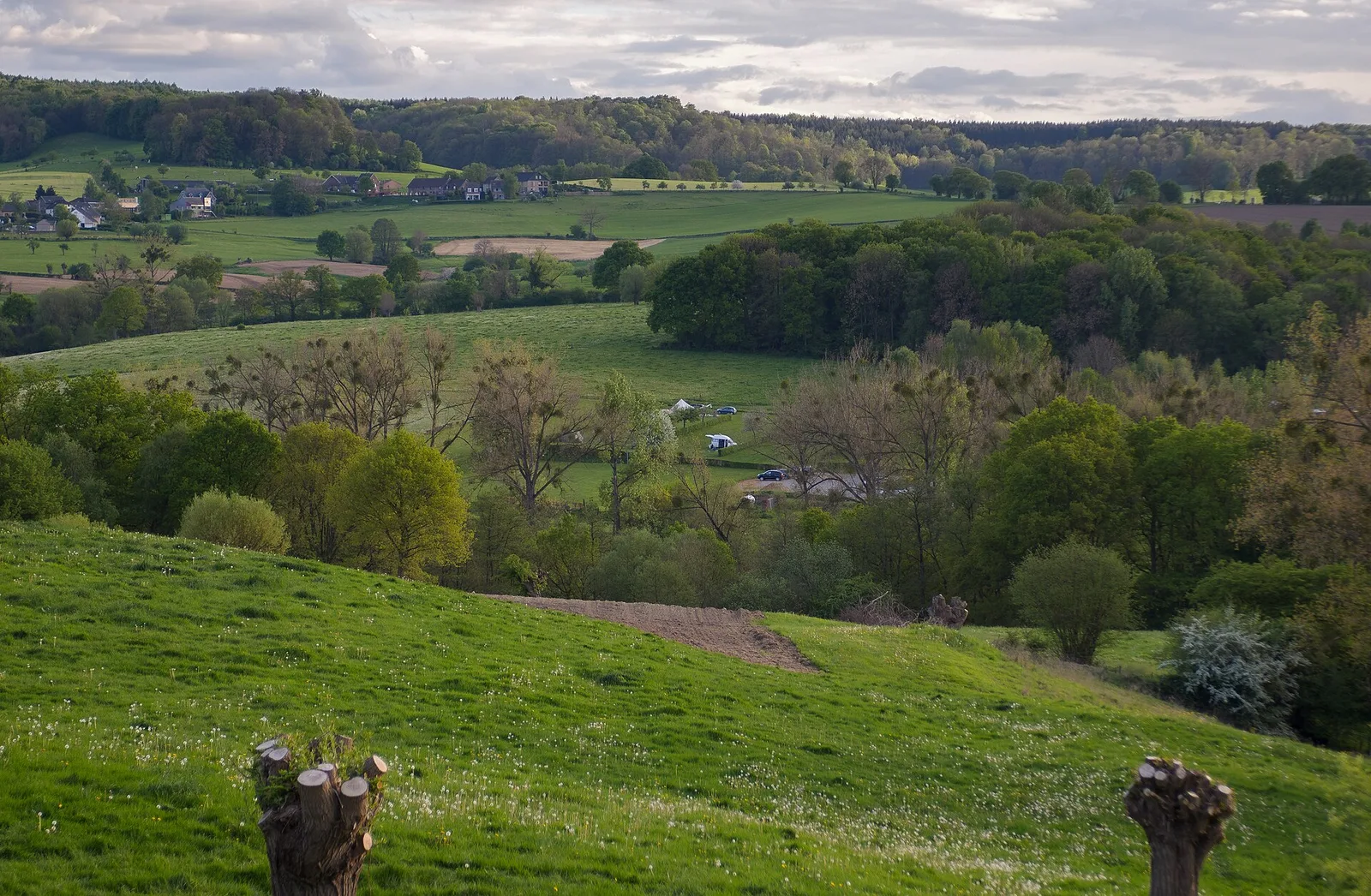
Today the Netherlands changes its shape. East of Maastricht the road climbs into the Heuvelland, a country of sunken lanes, orchards and timber-framed farms. Stop in Gulpen and at the monastery of Wittem, then drive the narrow road down to Epen in the Geul valley, where meadows run up to beech woods and cattle graze between old water mills. Continue to the Vaalserberg, at 322 metres the highest point of the European Netherlands, where Belgium, Germany and the Netherlands meet at a single stone and a lookout tower opens the view towards Aachen. Spend the evening in Valkenburg beneath the only hilltop castle ruin in the country, and walk the passages of the old marl caves that run under the town.
Why stop hereCharge nearby: Shell Recharge (Shell Recharge Valkenburg) — typical arrival 40%, about 25 min to 80%. Why stop here: Valkenburg castle ruin and marl caves. Access: walk from the overnight — leave the car.
Nijmegen
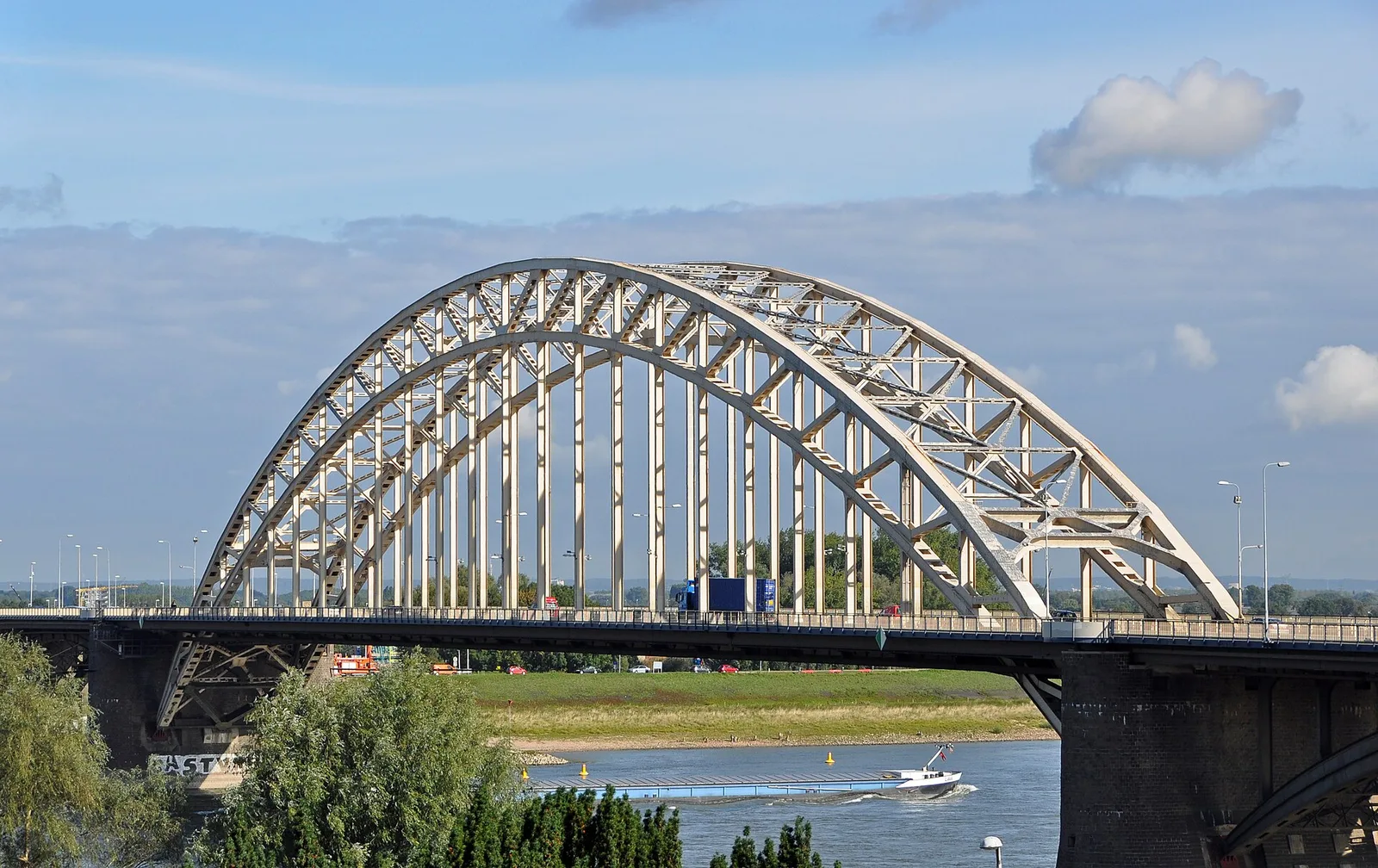
Head north along the Maas to Roermond, where the Romanesque Munsterkerk and the quiet squares of the old town are a calm counterpoint to the busy outlet at its edge. Further on, the Maasduinen National Park stretches along the river between pine forest, inland dunes and heath; a short walk from the park edge leads to fen pools where dragonflies hunt on summer afternoons. Late in the day reach Nijmegen, which claims to be the oldest city in the Netherlands, born as a Roman camp above the river. Climb the Valkhof park to the ruins of the imperial palace and its little Carolingian-era chapel, look down on the broad Waal and the arch of its bridge, then end the day on the Waalkade among the river cafés.
Why stop hereCharge nearby: Shell Recharge (Shell Recharge Nijmegen) — typical arrival 35%, about 25 min to 80%. Why stop here: Valkhof park and the imperial chapel, Waalkade riverfront. Access: walk from the overnight — leave the car.
Apeldoorn
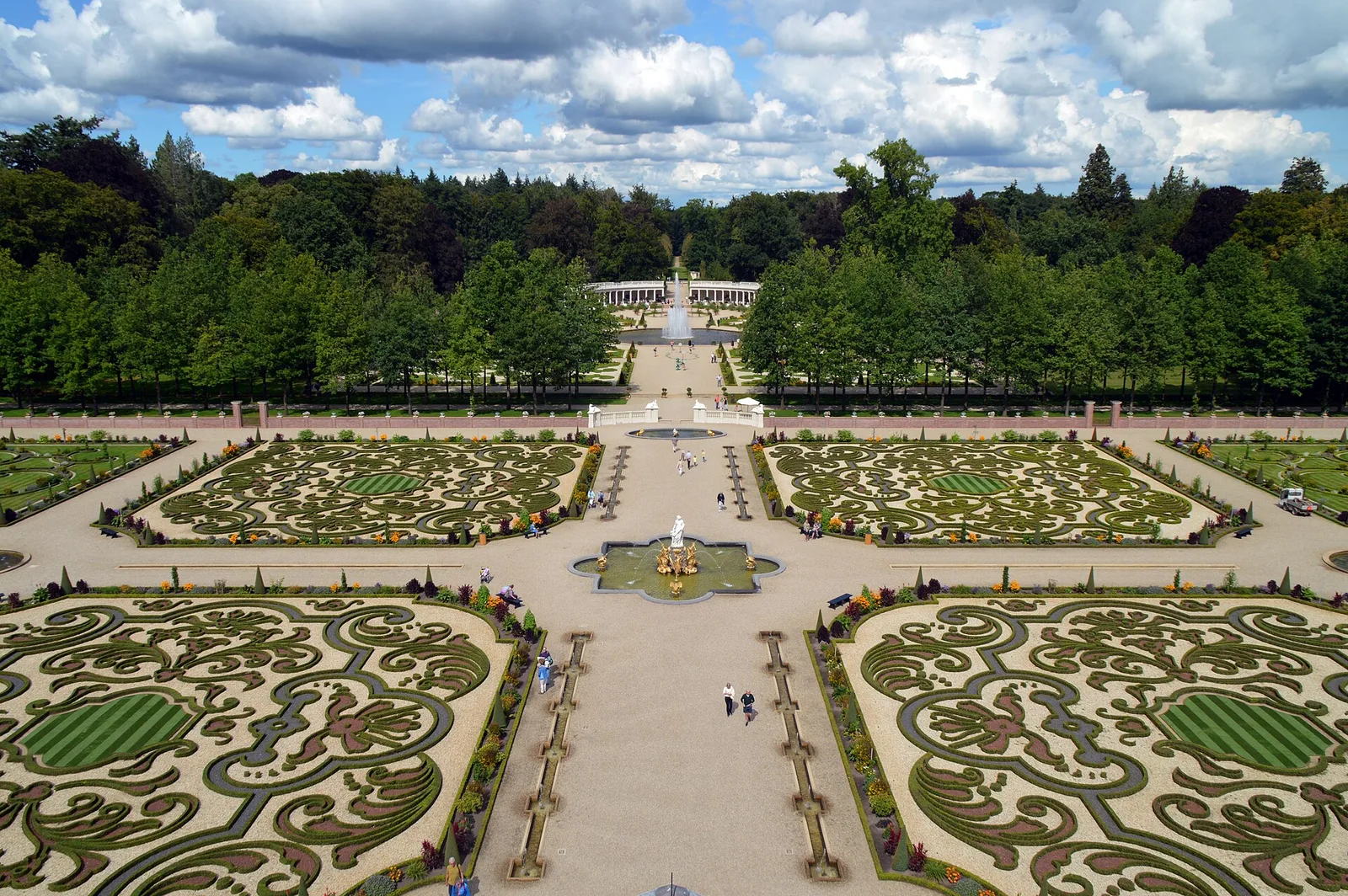
Drive into the Veluwe, the largest landscape of forest and heath in the country. In the Hoge Veluwe National Park, take one of the free white bicycles and ride through heather and drifting sand to the Kröller-Müller Museum, where some ninety paintings by Van Gogh hang beside one of Europe’s largest sculpture gardens in the woods. In the afternoon the road climbs to the Posbank in the Veluwezoom, a moraine ridge where purple heather rolls down towards the IJssel valley and shaggy highland cattle graze on the slopes. End in Apeldoorn at Paleis Het Loo, the hunting palace of William III and Mary II, whose restored baroque gardens lie in perfect symmetry in front of the house.
Why stop hereCharge nearby: IONITY (IONITY Apeldoorn-Zuid) — typical arrival 40%, about 20 min to 80%. Why stop here: Paleis Het Loo. Access: walk from the overnight — leave the car.
Utrecht
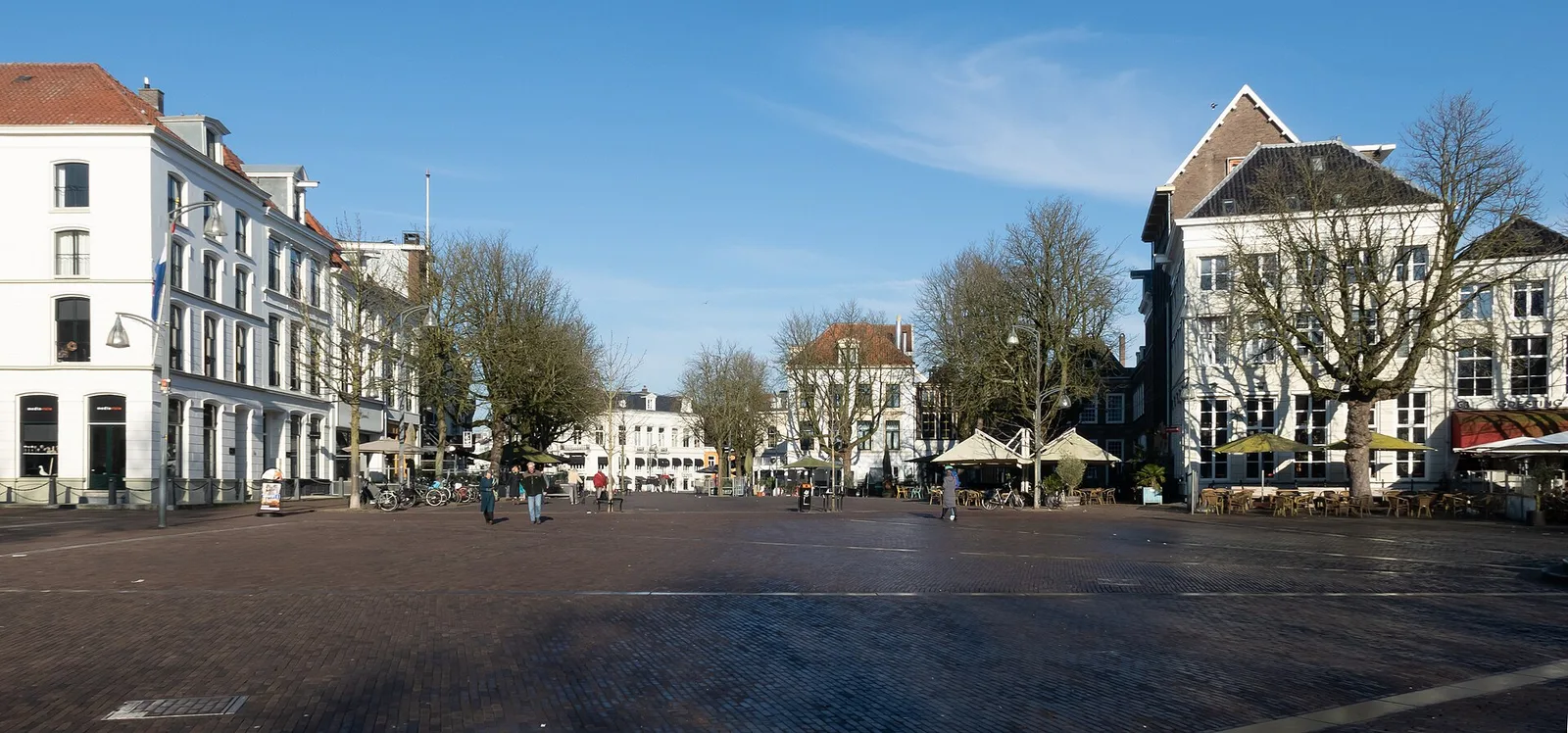
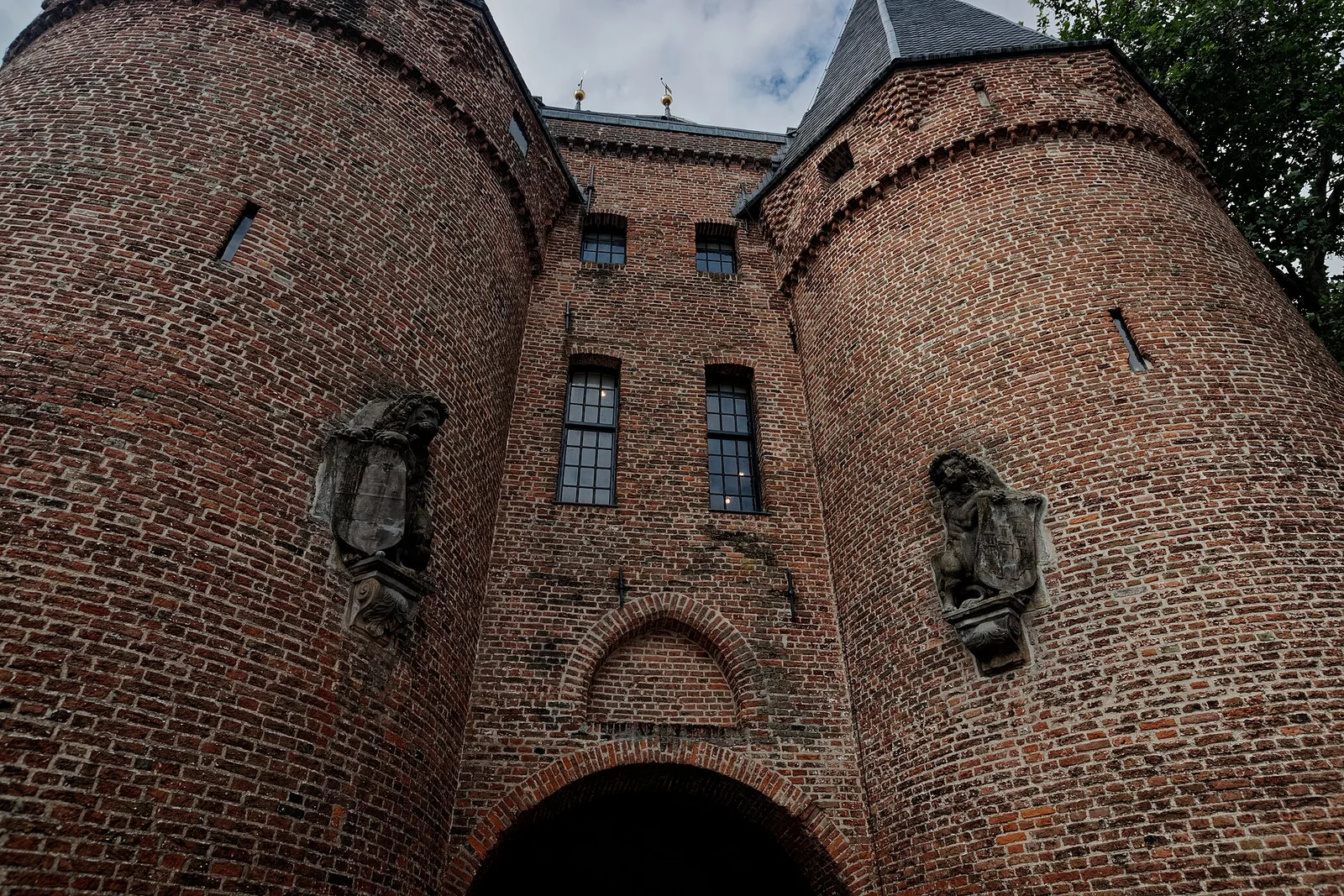
The last day follows the IJssel, the river of the Hanseatic merchants. In Zutphen the Walburgiskerk keeps the Librije, a medieval library in which the books are still chained to their desks. Deventer, a few kilometres north, gathers its gabled merchant houses around the Brink, and its narrow Bergkwartier climbs to a church with two towers. Kampen faces the river with a long skyline of gates and towers; walk through the Koornmarktspoort and along the quay where cogs once loaded grain for the Baltic. Then turn west across the young polders of Flevoland and back to Utrecht in time for dinner beside the old canals, whose wharf cellars sit below the street at water level.
Why stop hereCharge nearby: TotalEnergies (TotalEnergies Utrecht) — typical arrival 30%, about 25 min to 80%. Why stop here: Dom Tower. Access: walk from the overnight — leave the car.
Places along the road
Quiet charging pauses
- Shell Recharge in ’s-Hertogenbosch — a calm stop on this leg, about 20 min.
- Fastned in Thorn — a calm stop on this leg, about 20 min.
- Tesla Supercharger in Maastricht — a calm stop on this leg, about 25 min.
- Shell Recharge in Valkenburg — a calm stop on this leg, about 25 min.
- LEAP24 in Roermond — a calm stop on this leg, about 20 min.
- Shell Recharge in Nijmegen — a calm stop on this leg, about 25 min.
- IONITY in Apeldoorn — a calm stop on this leg, about 20 min.
- IONITY in Kampen — a calm stop on this leg, about 20 min.
- TotalEnergies in Utrecht — a calm stop on this leg, about 25 min.