
Funen and the Wadden Sea: Egeskov, Ærø, Møgeltønder and Ribe
Eight days through the gentle south of Denmark, where the island of Funen rolls in beech woods and cornfields down to an archipelago of small green islands, and the west coast of Jutland melts into the tidal flats of the Wadden Sea. The loop starts in Odense, the town of Hans Christian Andersen, visits the moated Renaissance castle of Egeskov and the harbour town of Faaborg, and takes two ferries, one of them silently electric, to Ærø and on to Als. From the battlefield of Dybbøl the road crosses the marshes of the border to the lime-lined street of Møgeltønder, drives onto the endless beach of Rømø and reaches Ribe, the oldest town in Scandinavia. The rune stones of Jelling, the castle of Kolding and the bridge over the Little Belt bring you back to Funen. Fast chargers wait everywhere, from harbour car parks to motorway service areas, and most inns lend a socket overnight.
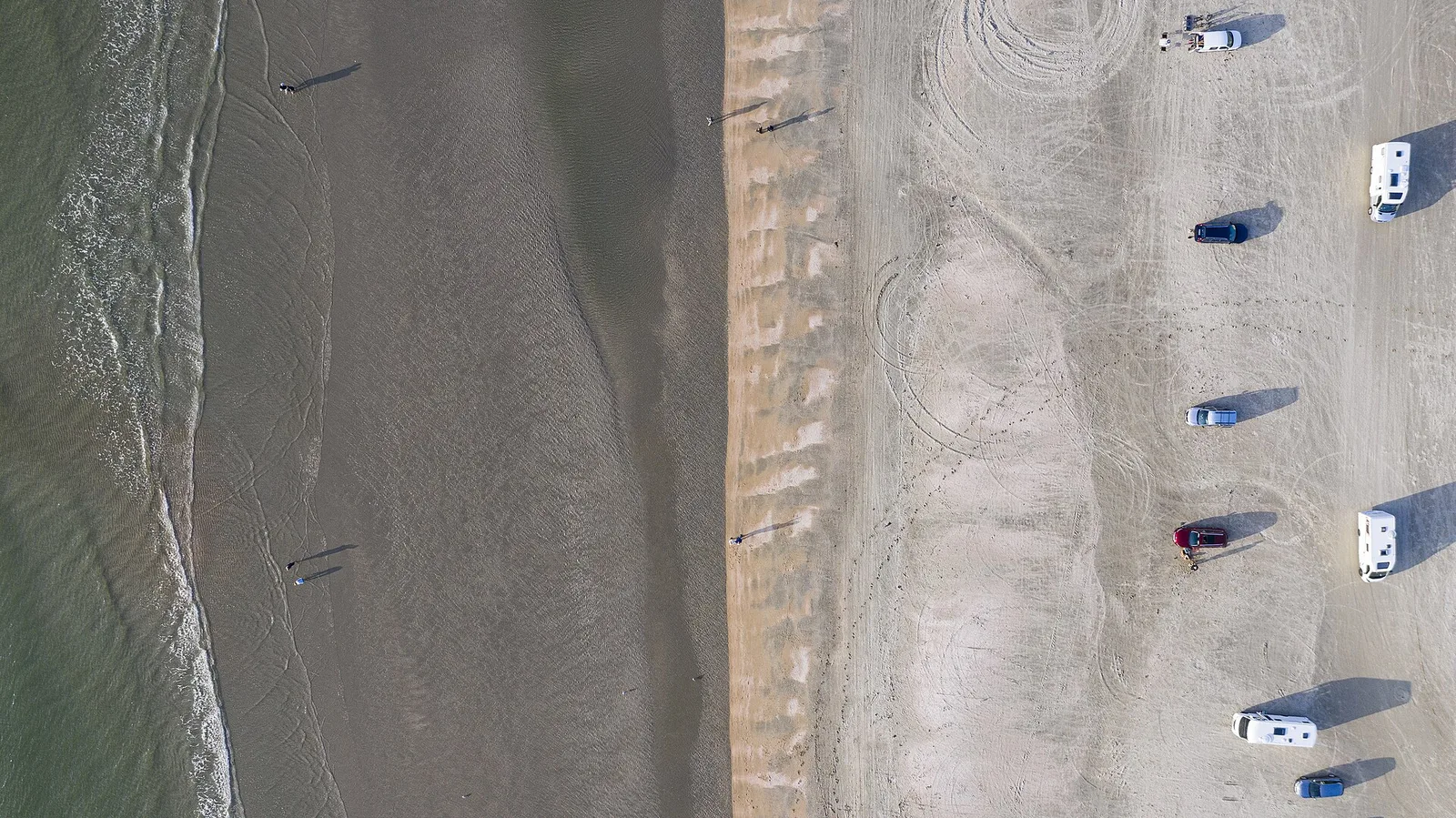
Season: Best from May to September, with late April and early October quieter and often bright. The sort sol, the ‘black sun’ of vast flocks of starlings swirling over the marshes near Tønder and Ribe at dusk, is at its finest in March and April and again from mid-September into October. The Ærø ferries carry few cars, so reserve both crossings, especially in summer. On the Wadden Sea always check the tide table: the beach at Lakolk on Rømø is open to cars, but keep to the marked tracks and away from soft sand, and autumn storms can close the island roads. Winter is mild but dark by four in the afternoon, and many island cafés close until Easter.
Eight days through the gentle south of Denmark, where the island of Funen rolls in beech woods and cornfields down to an archipelago of small green islands, and the west coast of Jutland melts into the tidal flats of the Wadden Sea. The loop starts in Odense, the town of Hans Christian Andersen, visits the moated Renaissance castle of Egeskov and the harbour town of Faaborg, and takes two ferries, one of them silently electric, to Ærø and on to Als. From the battlefield of Dybbøl the road crosses the marshes of the border to the lime-lined street of Møgeltønder, drives onto the endless beach of Rømø and reaches Ribe, the oldest town in Scandinavia. The rune stones of Jelling, the castle of Kolding and the bridge over the Little Belt bring you back to Funen. Fast chargers wait everywhere, from harbour car parks to motorway service areas, and most inns lend a socket overnight.
Day by day
Odense
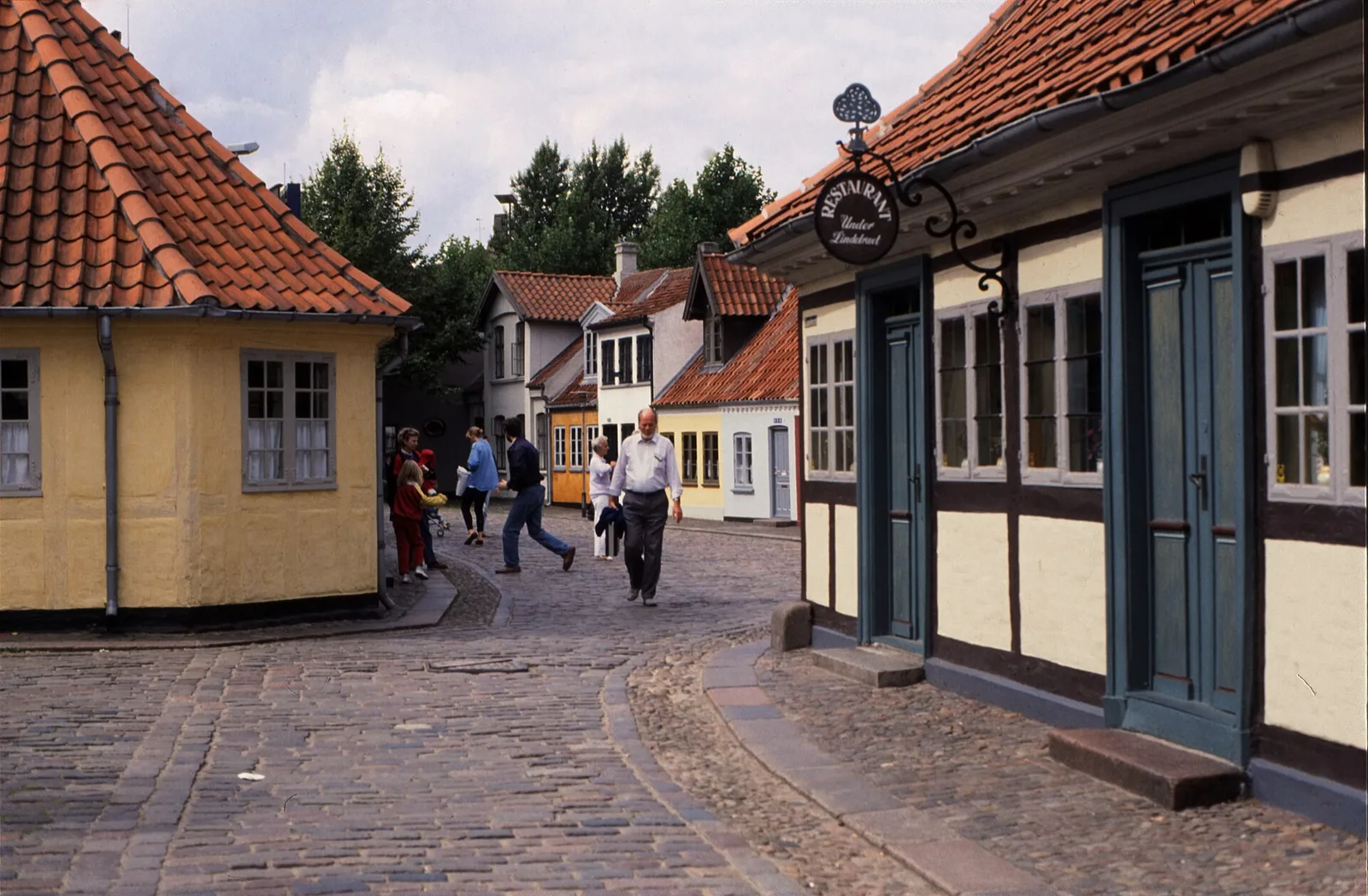
Odense is the town of Hans Christian Andersen, and it tells his story with a light touch. Start in the old quarter, where low yellow and pink houses lean over cobbled lanes and the corner house of his birth still stands, then walk into the H.C. Andersen House, a museum of timber pavilions and hidden gardens by Kengo Kuma, where the fairy tales unfold around you in sound, light and shadow. Look into Saint Canute’s Cathedral, whose crypt holds the bones of a king murdered in a church nearby in 1086, and follow the river path through the Munke Mose park, where little boats drift under the willows. In the afternoon drive five minutes to the Funen Village, an open-air museum of thatched farms, a smithy, a windmill and a village pond, where farm animals graze behind the hedges. Charge at the fast charger close to the city centre.
Why stop hereCharge nearby: Clever (Clever Odense) — typical arrival 30%, about 20 min to 80%. Why stop here: H.C. Andersen House, Saint Canute’s Cathedral, The Funen Village open-air museum. Access: walk from the overnight — leave the car.
Svendborg
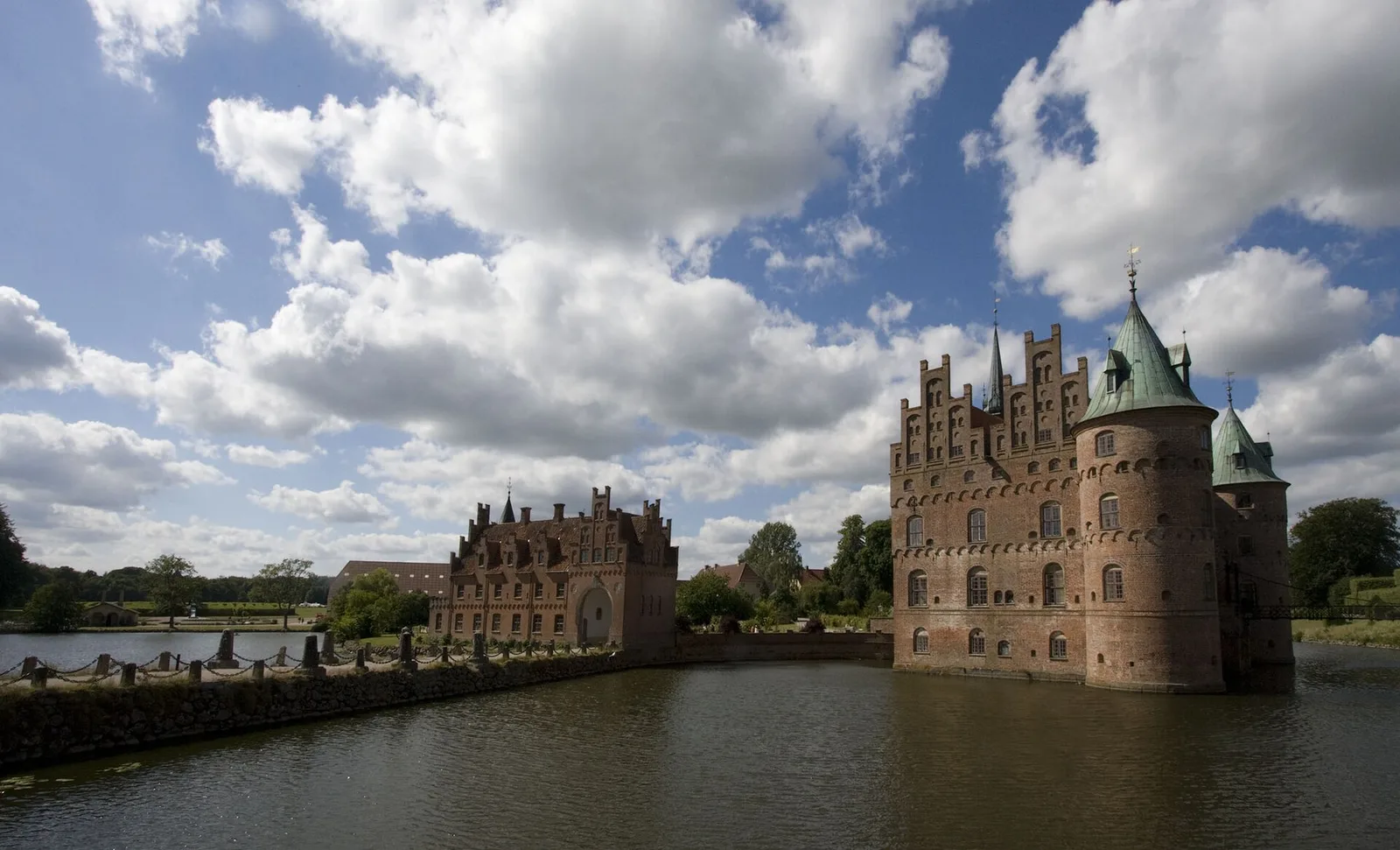
South of Odense the island softens into hills and beech woods. Egeskov, a Renaissance castle of red brick rising straight out of its moat, has stood on a foundation of oak piles since 1554; walk its gardens of clipped hedges and fuchsias, lose yourself in the maze and climb the treetop walk for a view over the towers and the moat. Continue to Faaborg, a little harbour town of crooked lanes around a bell tower, where the Faaborg Museum keeps the luminous paintings of the Funen artists who worked here a century ago. Before you leave, drive up into the Svanninge Hills, the ‘Funen Alps’, for the view over the South Funen Archipelago, a scatter of green islands in a silver sea. Spend the evening in Svendborg, where old wooden schooners lie along the quay and the ferries leave for the islands. Charge at the fast chargers in Faaborg or by the harbour in Svendborg.
Why stop hereCharge nearby: Clever (Clever Svendborg) — typical arrival 35%, about 25 min to 80%. Why stop here: Svendborg harbour and schooners, Voderup Klint. Access: walk from the overnight — leave the car.
Ærøskøbing
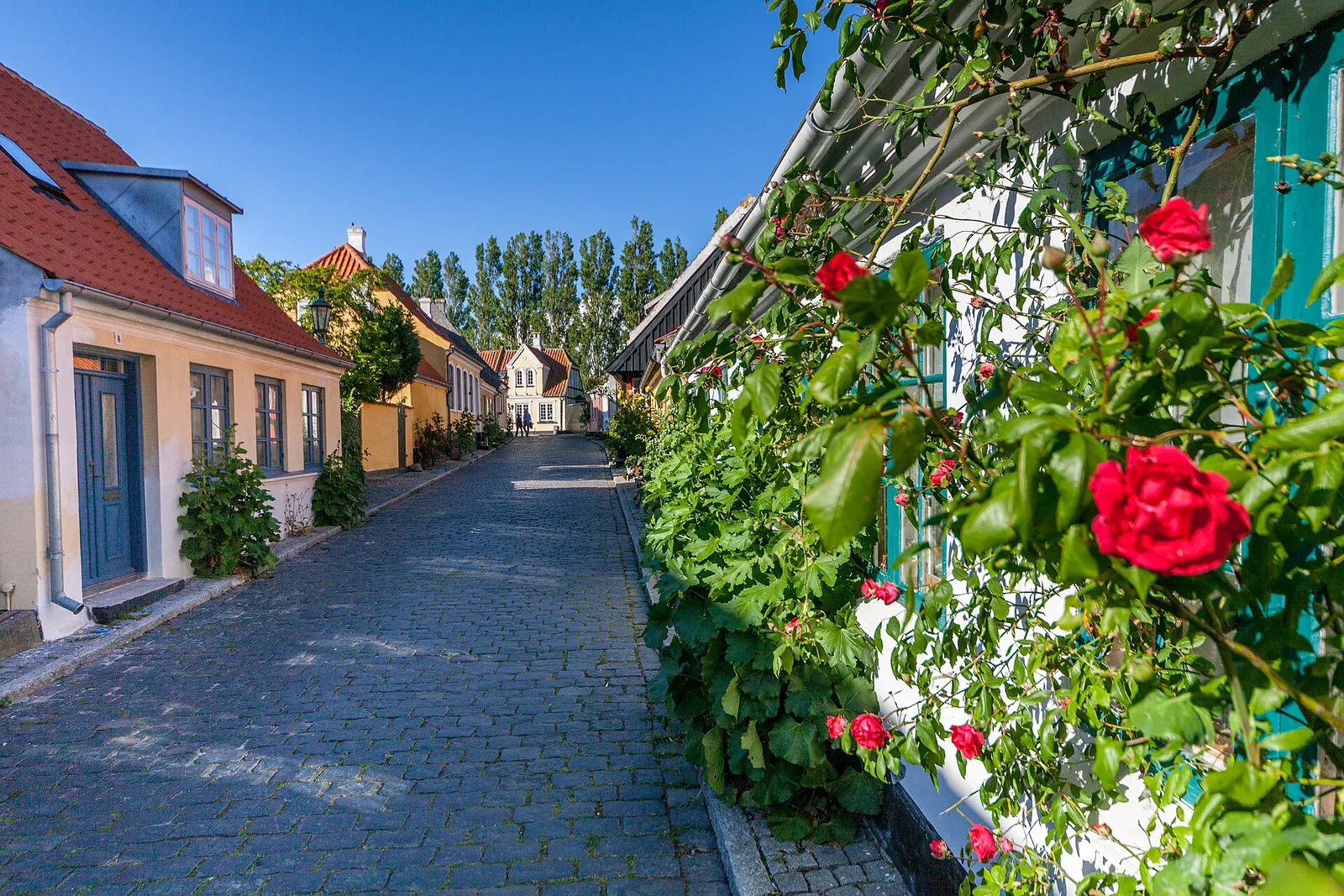
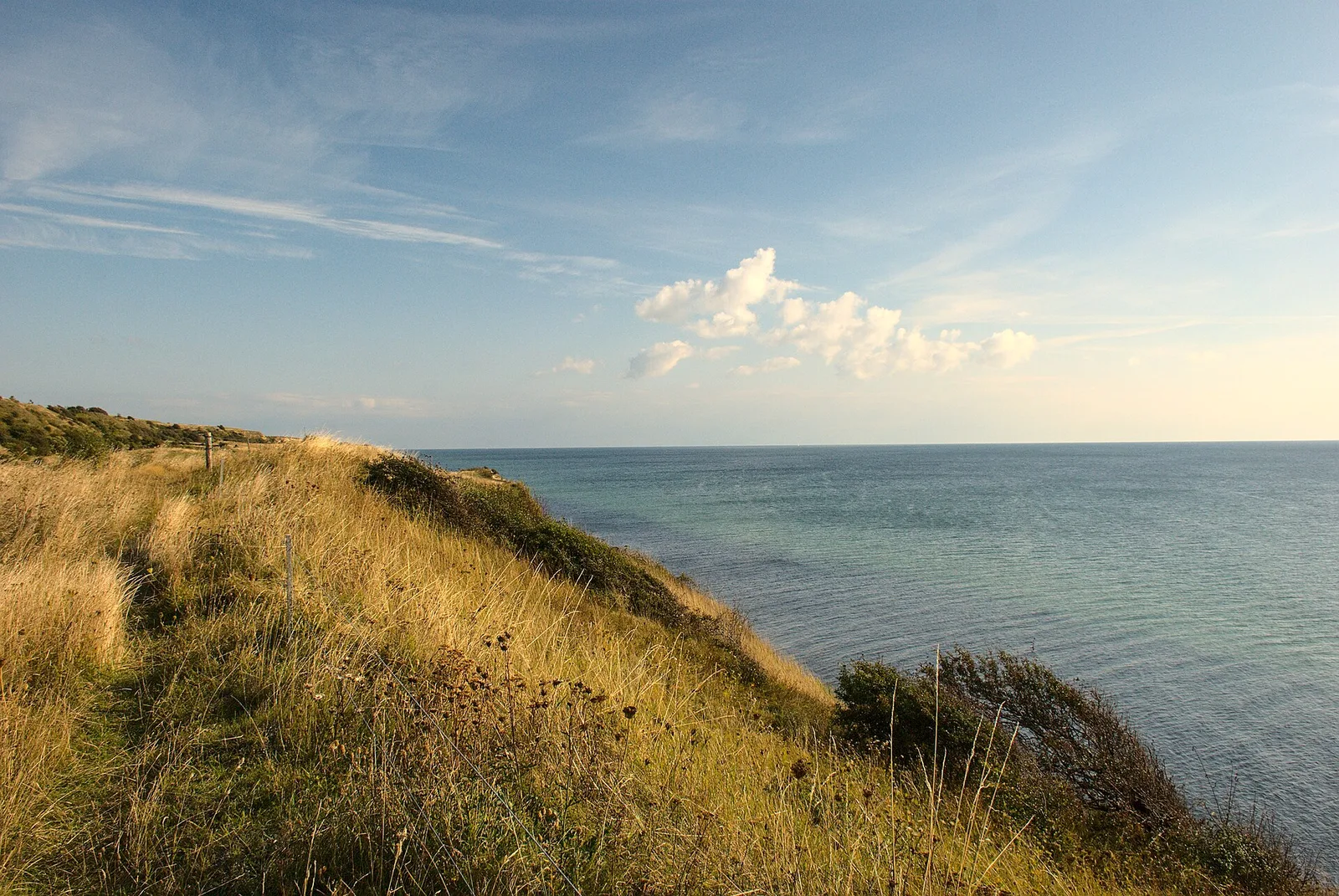
Take the morning ferry from Svendborg to Ærøskøbing, an hour and a quarter between low islands where eider ducks bob in the wake. Ærøskøbing has hardly changed since the eighteenth century: cobbled streets of half-timbered merchants’ houses in ochre, blue and green, hollyhocks by every door, and a museum of ships in bottles built by an old sailor known as Bottle-Peter. Drive the length of the island on narrow roads between barley fields and windmills; at Voderup Klint the clay cliffs step down to the sea in great grassy terraces, one of the finest viewpoints in southern Denmark. Back in town, walk out to the row of painted bathing huts on the beach at sunset, when the sky over the water turns pink and the church bell rings across the roofs. Charge at the fast charger by the harbour in Ærøskøbing.
Why stop hereCharge nearby: Clever (Clever Ærøskøbing) — typical arrival 40%, about 25 min to 85%. Why stop here: Ærøskøbing old town, Voderup Klint, Bathing huts at Vesterstrand. Access: walk from the overnight — leave the car.
Sønderborg
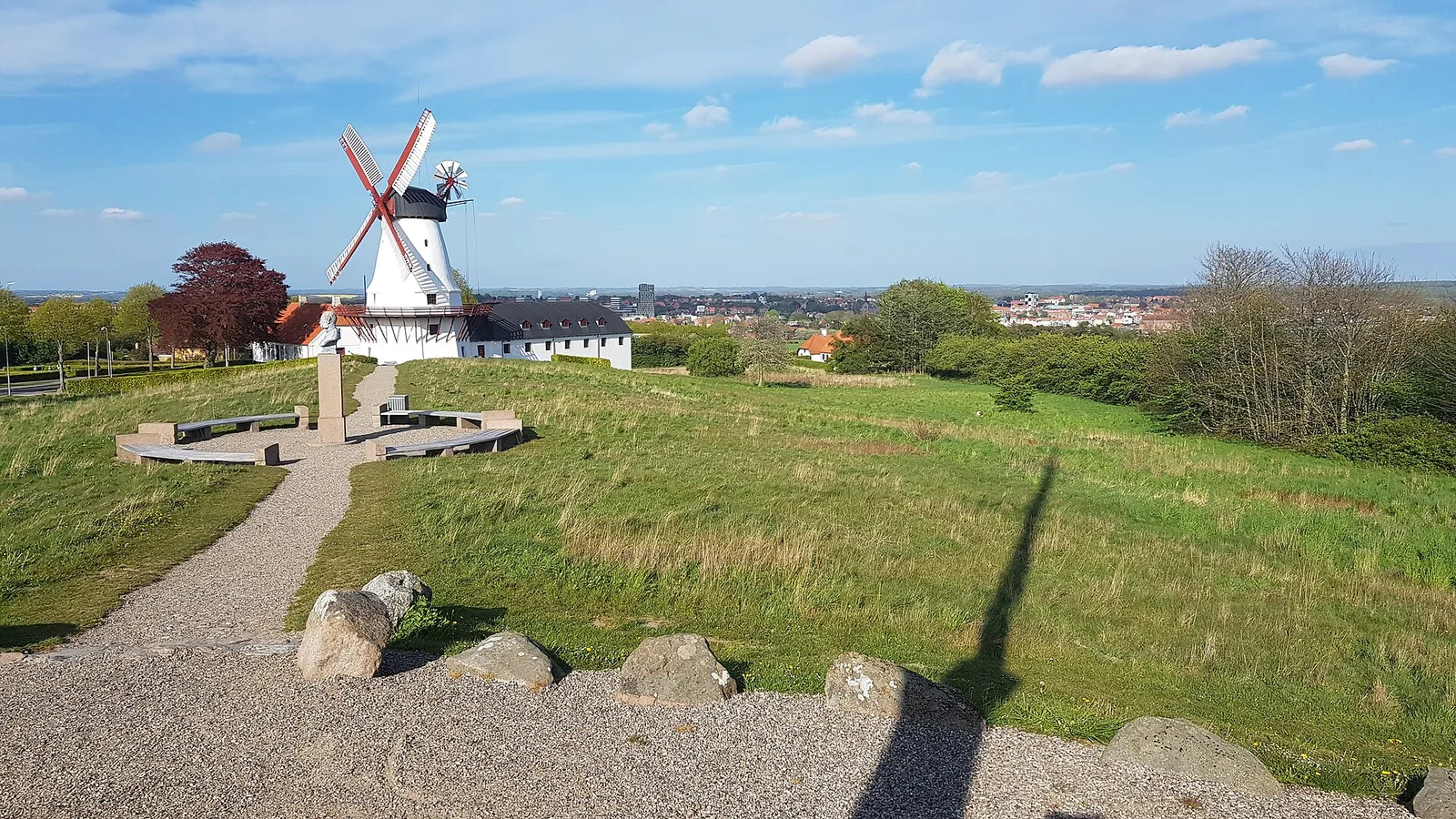
Leave Ærø from Søby on Ellen, one of the first large all-electric ferries in the world, which glides almost silently for an hour across the water to Fynshav on the island of Als; book your car space ahead. Drive through the orchards of Als to Sønderborg, where the castle on the harbour tells the story of the borderland between Denmark and Germany. Just across the bridge, the Dybbøl ridge saw the decisive battle of 1864: walk among the restored earthworks and the history centre to the white Dybbøl Mill, rebuilt after every bombardment and now a national symbol, and look out over the sound and the roofs of the town. In the evening stroll the long promenade by the water as the sailing boats come in. Charge at the fast chargers in the centre of Sønderborg.
Why stop hereCharge nearby: Clever (Clever Lynlader Sønderborg) — typical arrival 35%, about 20 min to 80%. Why stop here: Voderup Klint, Sønderborg Castle, Dybbøl Mill and the 1864 earthworks. Access: walk from the overnight — leave the car.
Tønder
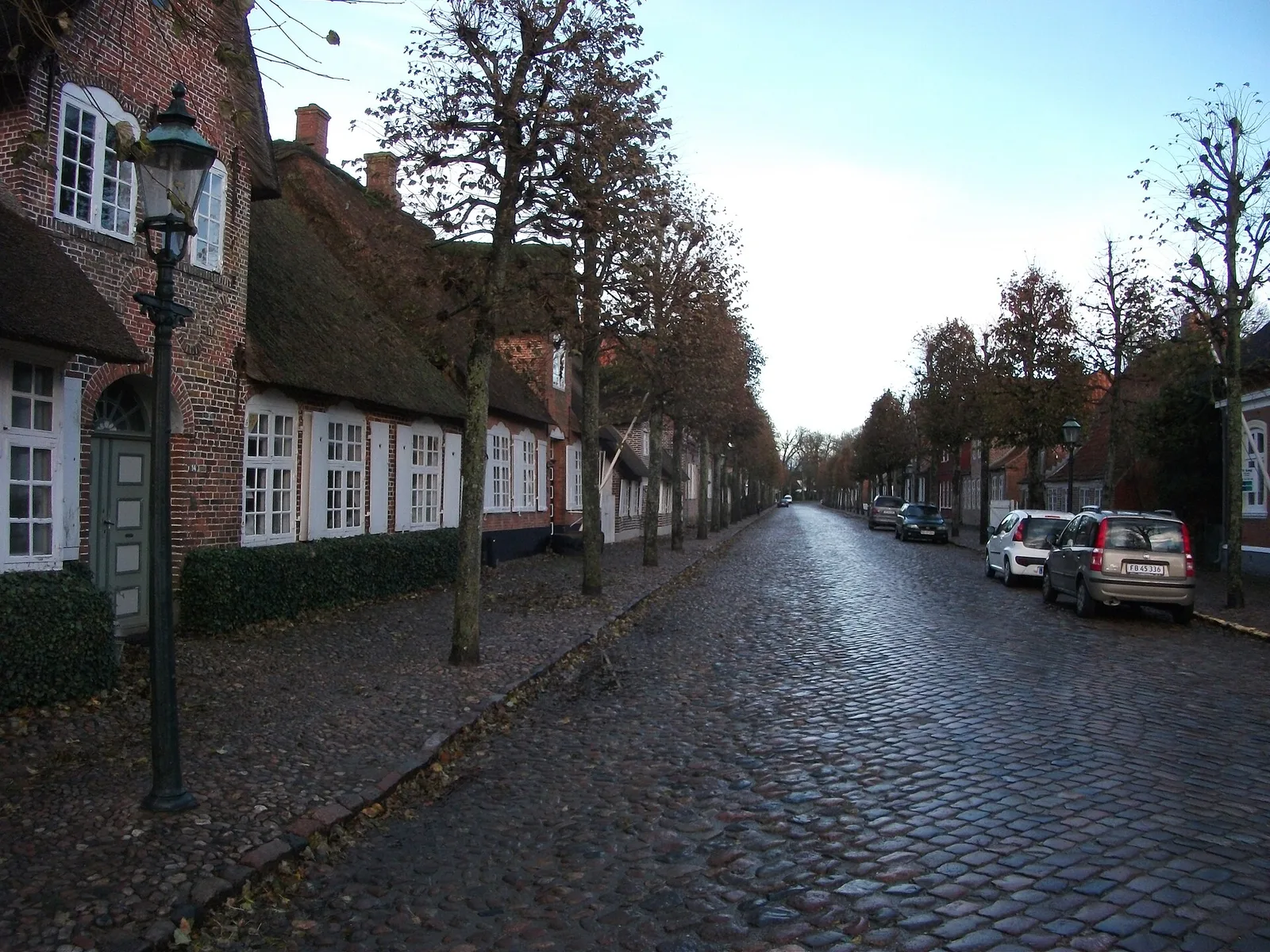
Leave Als by the bridge and follow the shore of the Flensburg Fjord to Gråsten, where the royal summer palace opens its gardens when the family is away. West of the motorway the land flattens into the marsh, crossed by dikes, drainage canals and red-brick farms under heavy thatch. Tønder is an old lace-making town of gabled merchants’ houses, and five minutes away Møgeltønder may be the loveliest village street in Denmark: Slotsgade runs under a double row of lime trees, past cobbled pavements and low thatched houses, to the gates of Schackenborg Castle, and the village church hides a richly painted and gilded interior. In the evening drive out to the dike at Højer and its old sluice, and in spring or autumn wait for the sort sol, when vast flocks of starlings swirl over the reeds before dropping into them for the night. Charge at the fast charger in the centre of Tønder.
Why stop hereCharge nearby: E.ON (E.ON Tønder) — typical arrival 30%, about 30 min to 85%. Why stop here: Voderup Klint, Slotsgade and Schackenborg Castle, Tønder old town. Access: walk from the overnight — leave the car.
Ribe
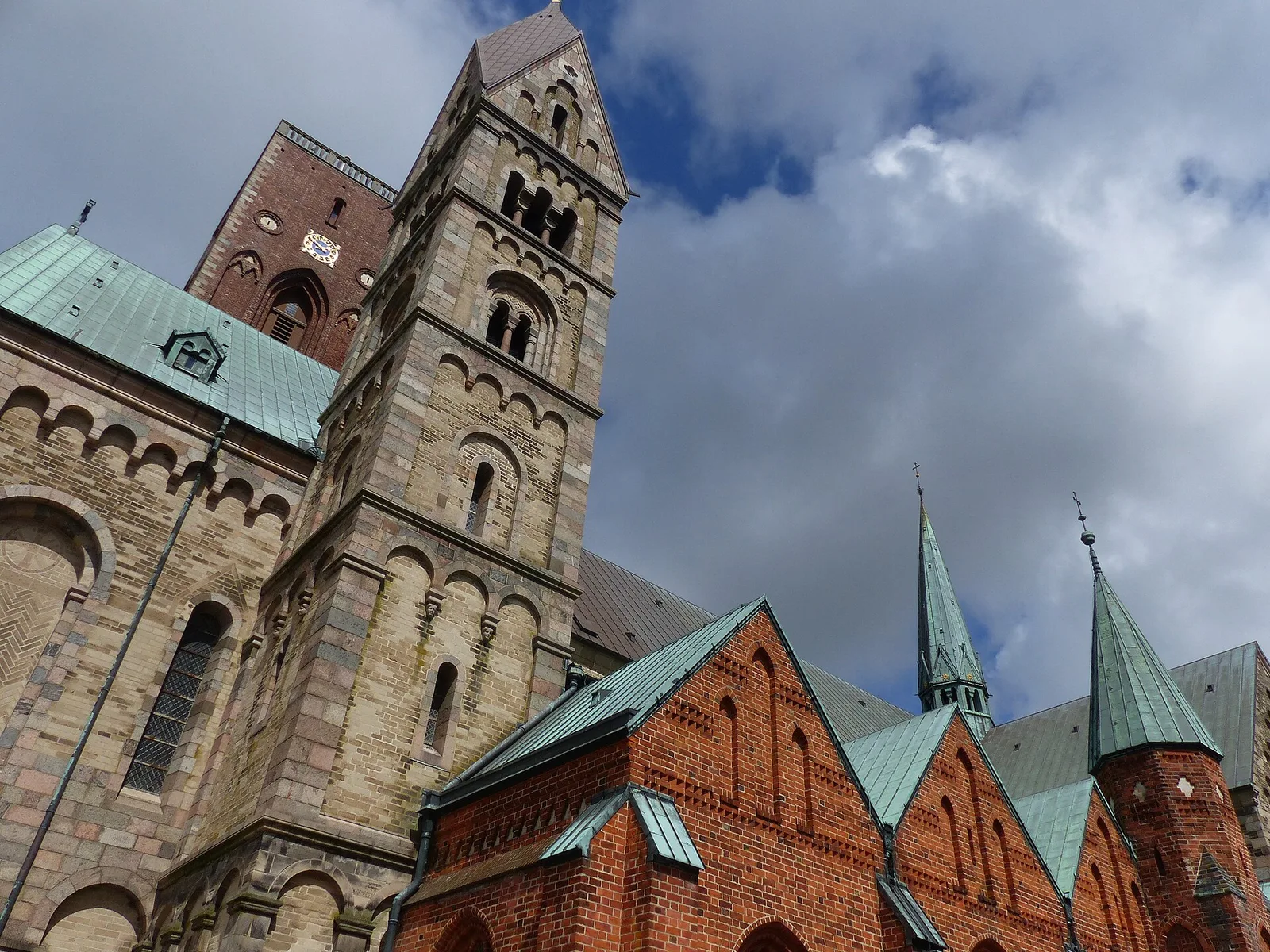
Cross the long causeway to Rømø, where sheep graze the salt meadows and the island ends in a beach so wide that at Lakolk you drive straight onto the sand and park beside the sea; kites hang over the water and the horizon is almost empty. In the village of Toftum the Commander’s House recalls the whaling captains who sailed from here to Greenland, and the churchyard at Kirkeby keeps their carved gravestones. Back on the mainland, stop at the Wadden Sea Centre at Vester Vedsted, a long thatched building that explains the tides, the seals and the migrating birds of this UNESCO coast, and plug in while you visit. End in Ribe, the oldest town in Scandinavia, which grew from a Viking-age market in the early eighth century; climb the tower of the cathedral for the view across the marsh, and on summer evenings follow the night watchman on his rounds through the crooked lanes, singing the old verses by lantern light. Charge at the fast charger on the edge of Ribe’s old town.
Why stop hereCharge nearby: Clever (Clever Lynlader Ribe) — typical arrival 30%, about 25 min to 80%. Why stop here: Voderup Klint, Ribe Cathedral. Access: walk from the overnight — leave the car.
Vejle
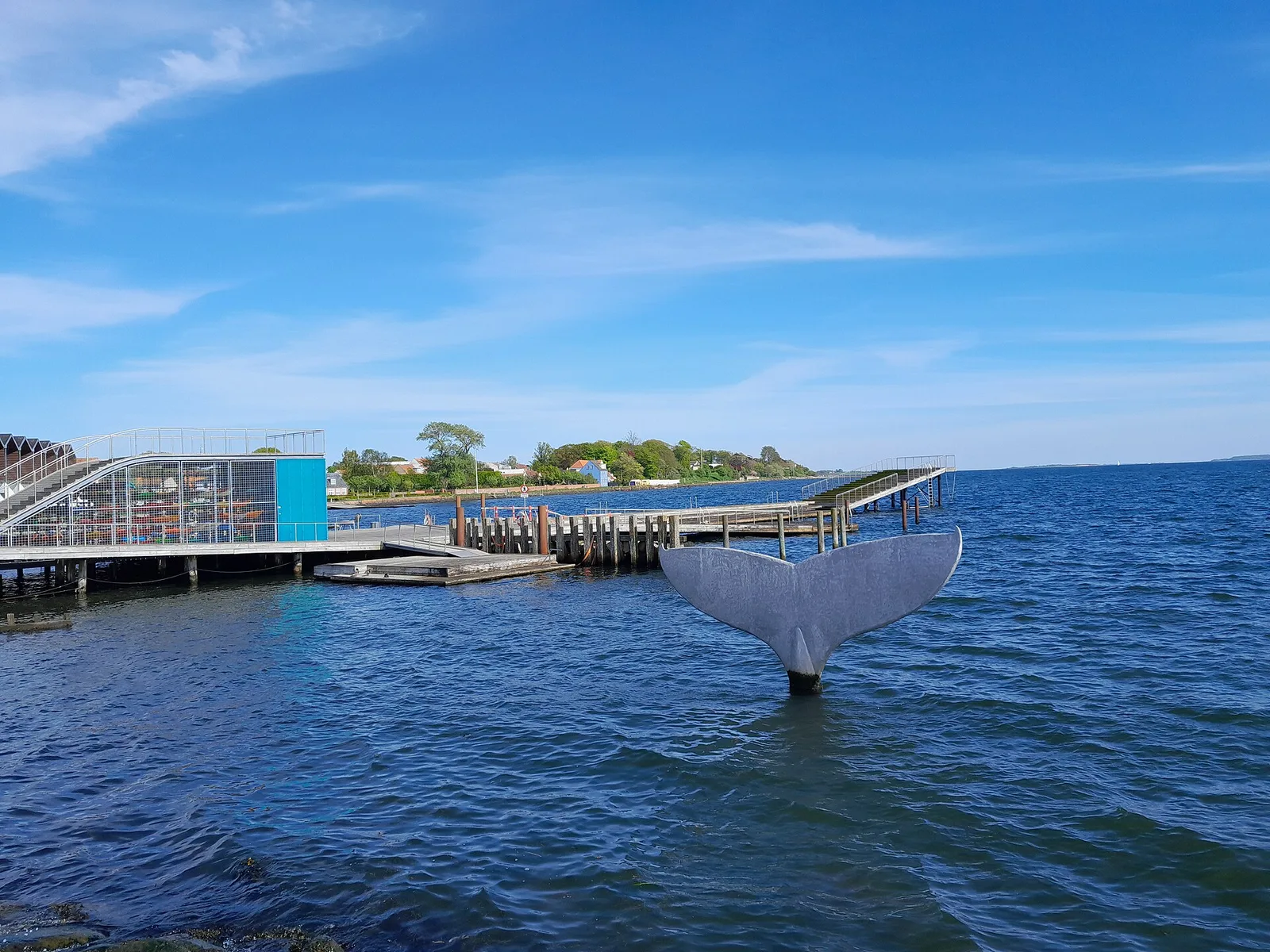
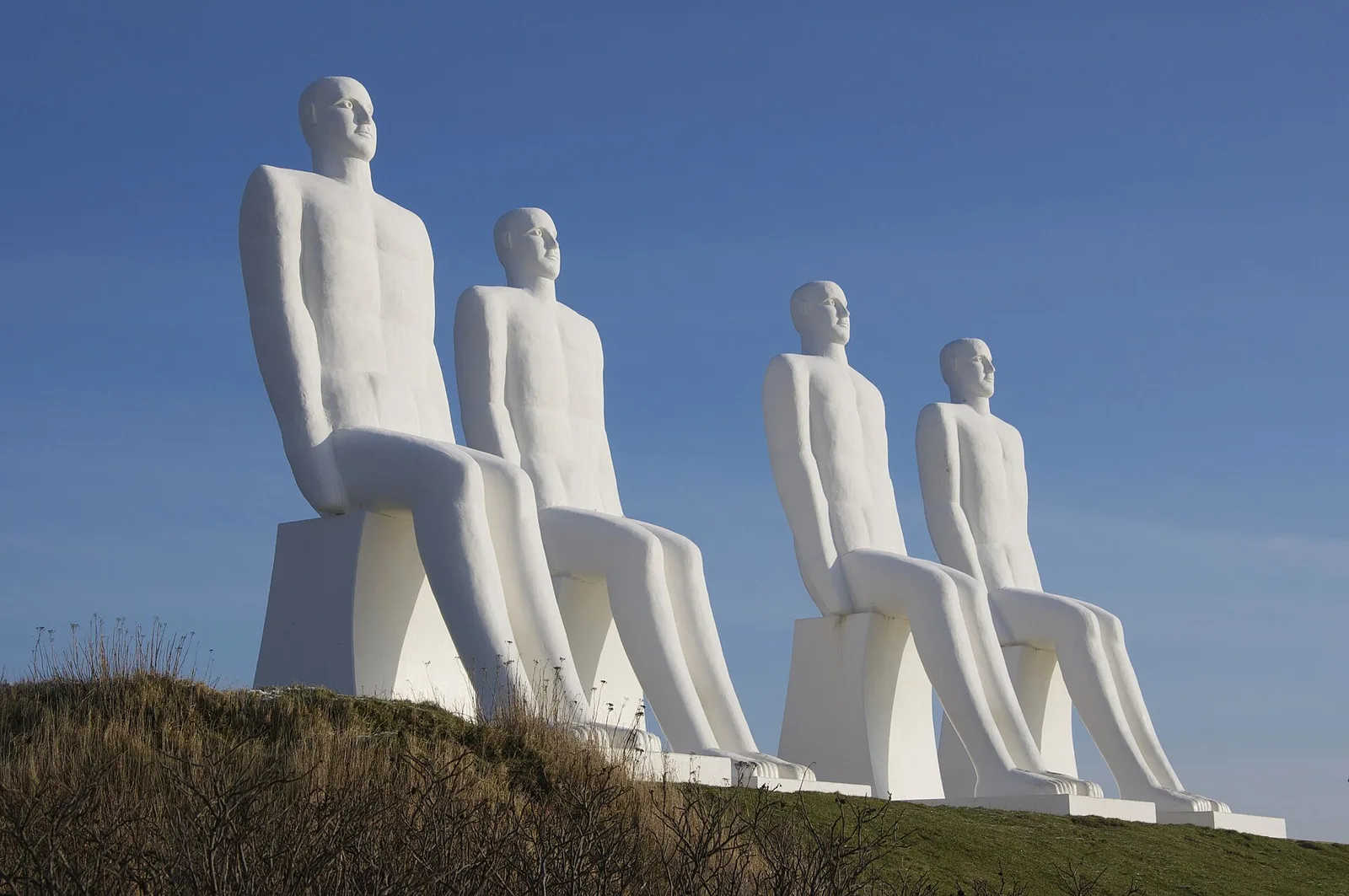
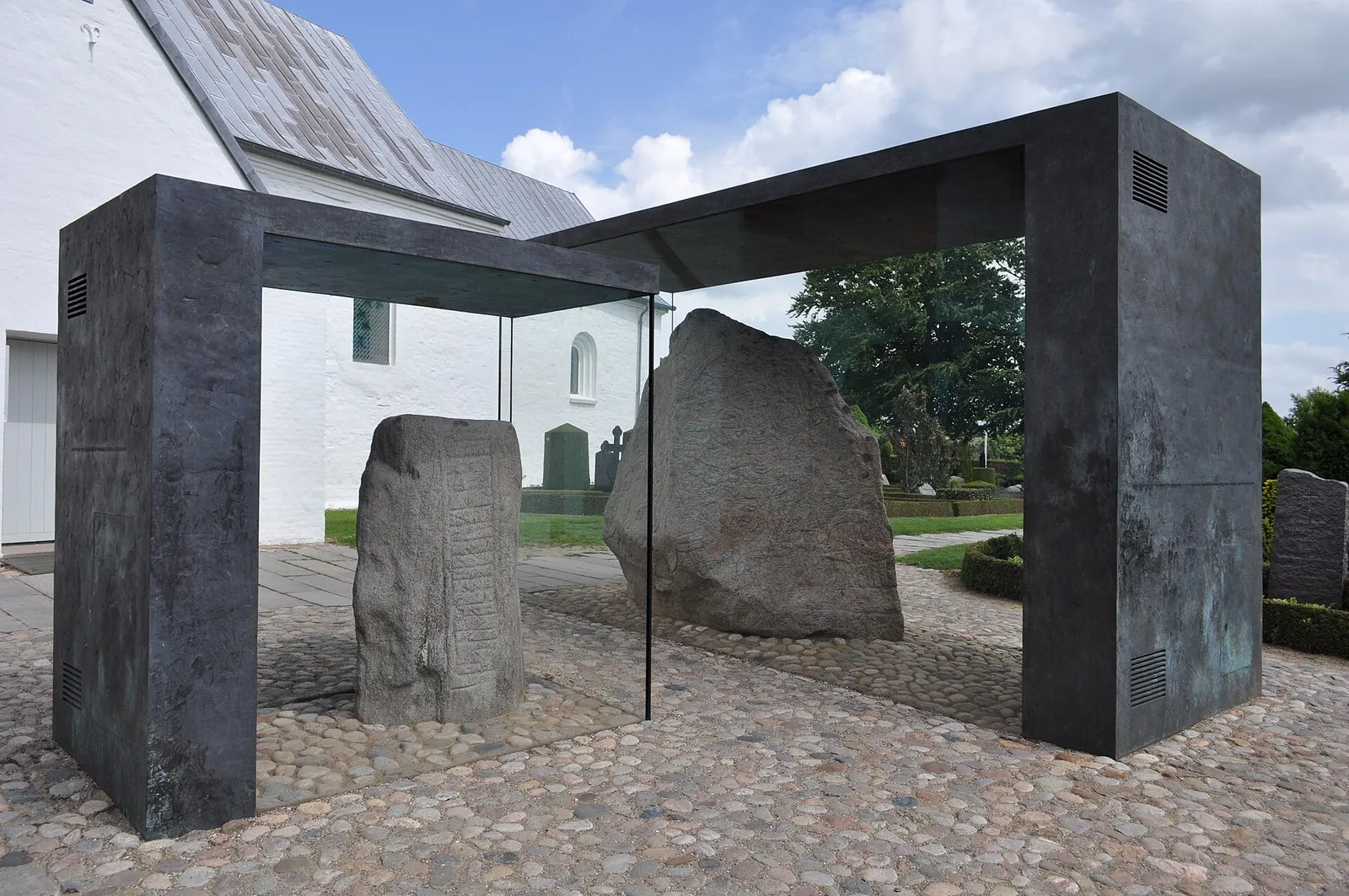
Drive north along the marsh to Esbjerg and out to the shore at Sædding, where Man Meets the Sea, four white seated figures nine metres tall, gaze silently over the flat water towards the islands; it is a strange and moving sight in low morning light. Then turn inland across the heath and plantations of central Jutland to Jelling, the cradle of the Danish kingdom. Between two great burial mounds stand the rune stones of King Gorm and of his son Harald Bluetooth, who carved on his that he ‘made the Danes Christian’; white posts in the grass trace the outline of a vast palisade and a stone ship, and the free museum beside the church tells the story without hurry. Twenty minutes on, Vejle lies at the head of its fjord between steep wooded slopes; walk down to the harbour, where Fjordenhus, a brick building by Olafur Eliasson, rises straight out of the water. Charge at the fast chargers on the way into Vejle.
Why stop hereCharge nearby: Q8 (Q8 Vejle) — typical arrival 30%, about 20 min to 80%. Why stop here: Fjordenhus. Access: walk from the overnight — leave the car.
Odense
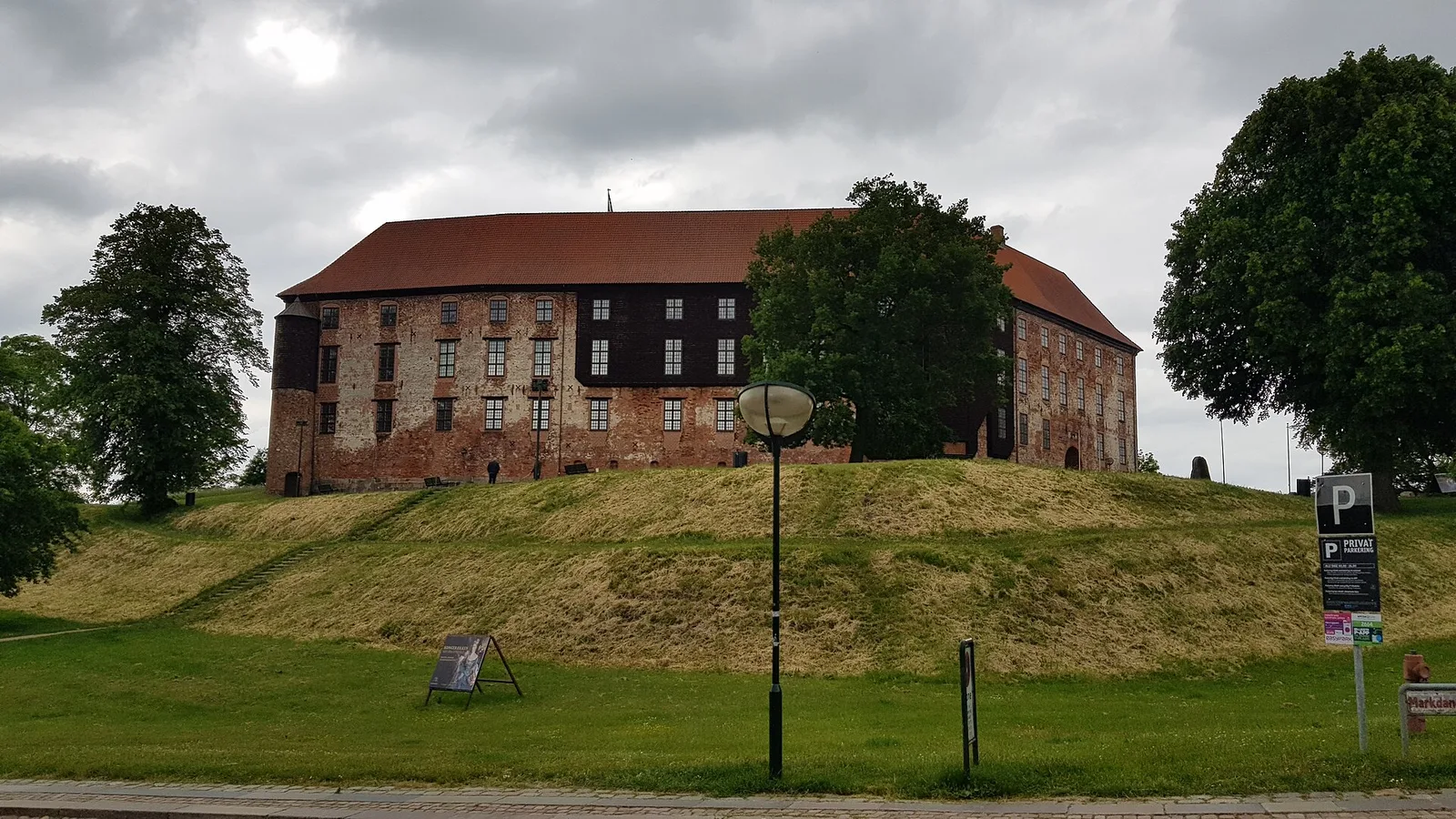
The last day closes the loop through the gentle east of Jutland. In Kolding, Koldinghus, a royal castle burned out in 1808, has been brought back to life with wooden walkways and stairs threaded through its ruined walls, so that you climb through the centuries to the tower and the view over the town lake. Just south, Christiansfeld is an eighteenth-century town founded by the Moravian Brethren and now on the UNESCO list: plain yellow houses around a church hall, a cemetery where every gravestone lies flat and equal in the grass, and old bakeries that still sell spiced honey cakes. At Middelfart, walk over the arch of the old Little Belt Bridge of 1935, sixty metres above the strait, roped to the steel, with porpoises often surfacing in the current below. Plug in at the fast charging hub on the edge of Middelfart before the last half hour across Funen to Odense.
Why stop hereCharge nearby: Clever (Clever Odense) — typical arrival 30%, about 20 min to 80%. Why stop here: H.C. Andersen House, Saint Canute’s Cathedral, The Funen Village open-air museum. Access: walk from the overnight — leave the car.
Places along the road
Quiet charging pauses
- Clever in Odense — a calm stop on this leg, about 20 min.
- Clever in Svendborg — a calm stop on this leg, about 25 min.
- Clever in Ærøskøbing — a calm stop on this leg, about 25 min.
- Clever in Sønderborg — a calm stop on this leg, about 20 min.
- E.ON in Tønder — a calm stop on this leg, about 30 min.
- Clever in Ribe — a calm stop on this leg, about 25 min.
- Q8 in Vejle — a calm stop on this leg, about 20 min.
- Norlys in Middelfart — a calm stop on this leg, about 20 min.