
First drive of the VW ID. Tiguan: Here’s how the ID.4 successor drives
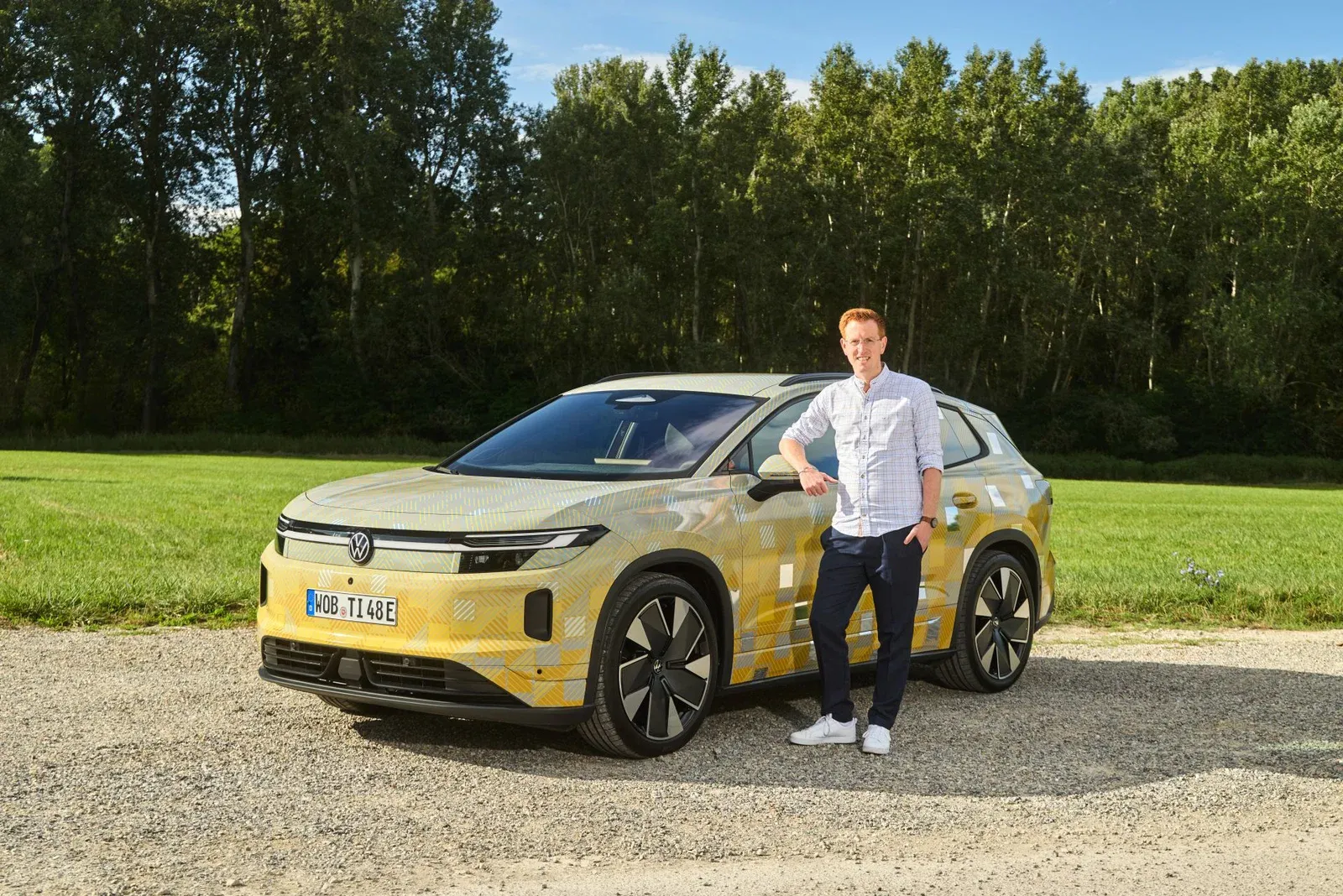
Volkswagen is bringing back its well-known model names to the electric vehicle world. Following the ID. Polo and ID. Cross, the successor to the ID.4 now also bears a name familiar to millions of customers: VW ID. Tiguan. This new naming approach extends to one of the brand’s most popular models at all — the SUV.
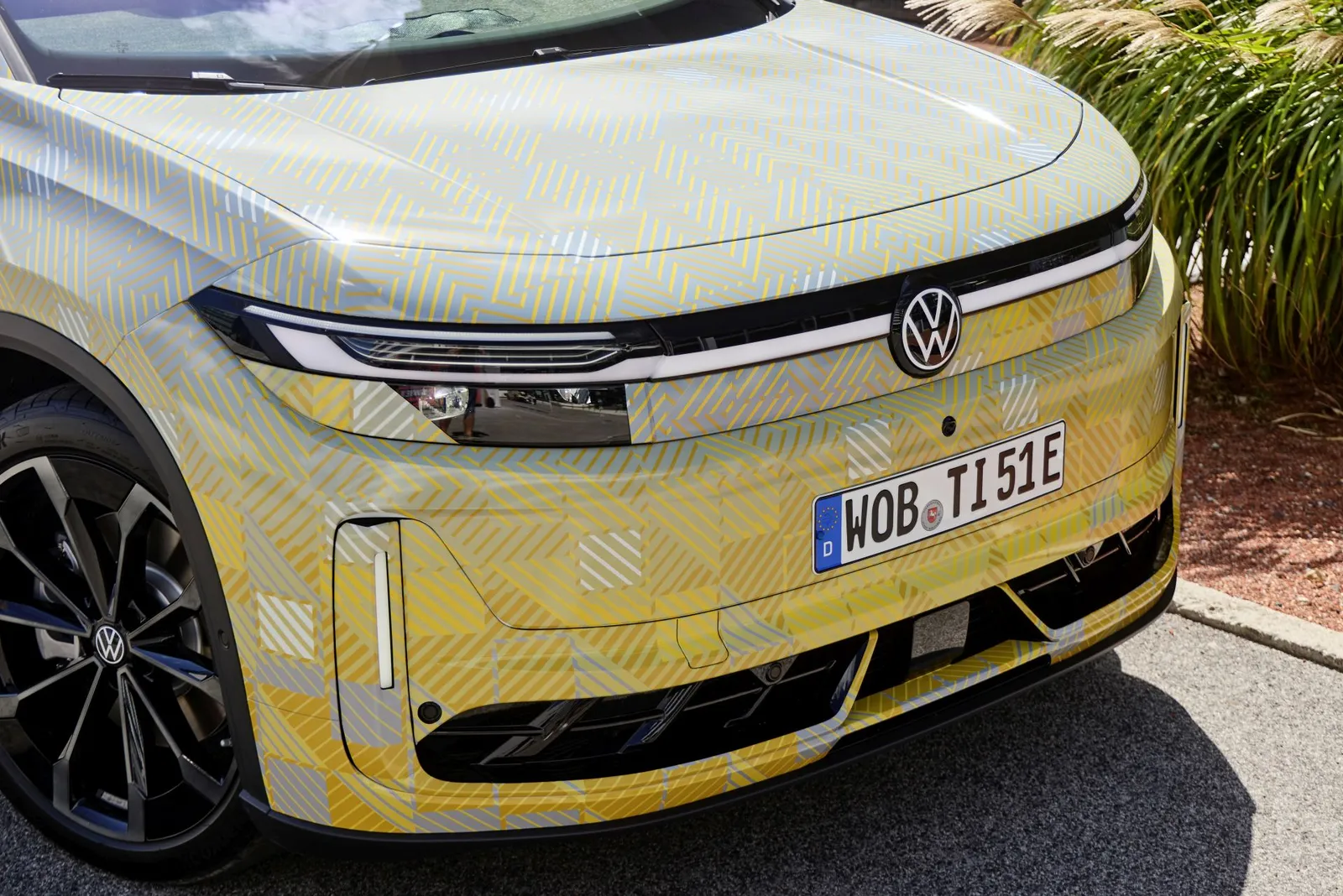
The world premiere is scheduled for October. At the event showcasing the ID. Polo in Vienna, a camouflaged prototype was already on display, marked with the letters TI, for a roughly one-hour drive through the city and its surroundings. Speculations about the final model name were already circulating at that time.
The return to the name makes sense from the customer’s perspective. Those who previously wanted to drive a Tiguan but in electric form found an technically comparable option in the ID.4, yet one that lacked the connection to the model they were familiar with. The ID. Tiguan fills this gap without mixing a combustion engine platform with electric technology. Volkswagen describes it as a combination of MEB and Tiguan DNA: range and fast charging from the Modular Electric Drive Toolkit combined with the features that made the combustion engine version a bestseller—safety, comfort, and a design that never dates. Within the ID. family, this car positions itself as the bigger brother of the ID. Cross.
The fact that the preceding ID remains is no coincidence. It marks the difference between an independent electric vehicle and a gasoline-powered model that has been electrified. For customers, this means a simple answer to the question about their car, while for Volkswagen it provides a way to introduce Tiguan’s existing customer base to electric power without confusing them with new terminology.
Familiar components are recombined and more widely applied in the VW ID. Tiguan.
Volkswagen relies on components that have already proven themselves within the group under the hood, combining them into three performance levels with two battery sizes. The entry level features a 140 kW (190 HP) rear-wheel drive system paired with a 58-kWh LFP chemistry battery, identical to that in the ID.3 Neo. It is available in the Trend, Life, and Style trims and is said to offer up to 450 kilometers of range according to WLTP standards.
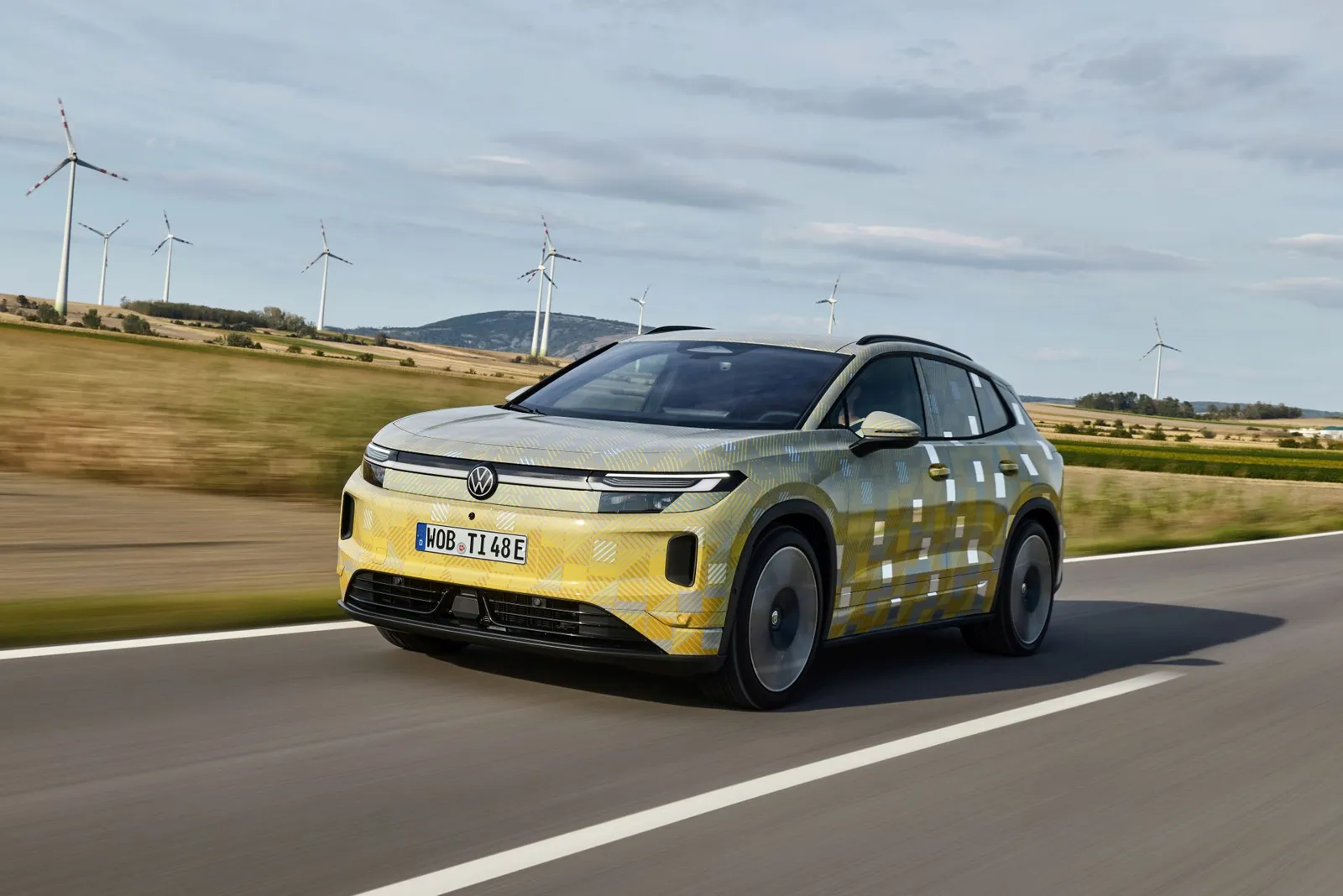
The E-motor APP550, known from the ID.7 with 210 kW (286 hp), paired with a 77-kWh NMC battery, is standard on the R-Line and available as an option for the Life and Style trims. Volkswagen claims a range of up to 600 kilometers. The all-wheel-drive version adds a second electric motor on the front axle, delivering 220 kW (299 hp) and a range of up to 560 kilometers.
The performance figures reflect this tiering without any sporting ambitions: 8.5 seconds to reach 100 km/h for the base model, 6.6 or 6.3 seconds for the two 77-kWh versions, with top speeds of 160 or 180 km/h. According to the manufacturer, all these figures are projections based on a near-production study, as reported in Vienna.
For many Tiguan customers, the decision to buy isn’t made at the traffic light but sometimes at the hitch. The gasoline version (with a towing capacity of 2,300 kg) has been used for years as a tow vehicle for campers, horse trailers, and bike racks, and it is in this area that the ID.4 has had to fall short so far. The ID. Tiguan makes up for this: the towing capacity increases to 1.8 tons with the smaller engine and two tons with the two more powerful variants. The load-bearing capacity rises from 75 to 90 kilograms, as even two modern e-bikes on the rear rack could exceed the old limit. Those who have preferred the Tiguan to the electric car due to its towing power now lose that advantage.
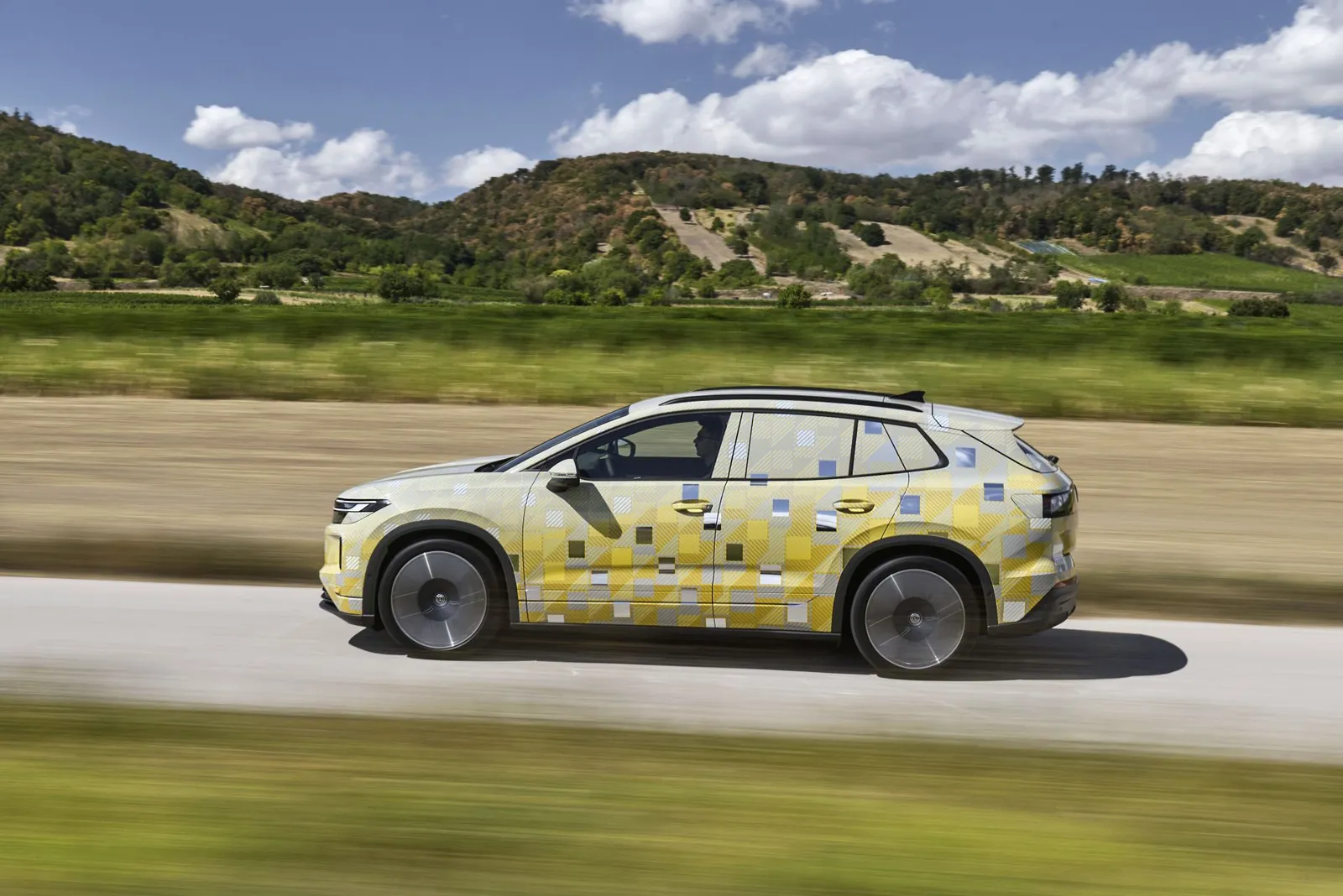
In terms of charging technology, it becomes clear where reusing proven components reaches its limits. The 58-kWh battery can be charged at up to 105 kW and is said to reach 80 percent charge in about 26 minutes. The 77-kWh battery achieves a peak charging rate of 165 kW and takes roughly 29 minutes for the same charge level. The current ID.4 can still be charged at up to 183 kW with the same battery. AC charging remains limited at home via the wallbox to a maximum of 11 kW.
Lower peak charging power, but longer time at that level
The lower value is a decision, not a weakness. According to Volkswagen, new homologation regulations impose higher requirements on battery lifespan. The higher the charging peak, the greater the stress on the cells and the faster the aging process. Therefore, engineers had to find a compromise between peak charging power, charging time, and compliance with regulations, with the clear requirement of reaching 80 percent in under half an hour from 10 percent.
The solution is lower peak values, along with a charging curve that remains above 100 kW for a longer period. Volkswagen is aware that a lower peak charging power will draw criticism in the technical specifications. They state that under these constraints, they have extracted the best possible performance from the existing battery.
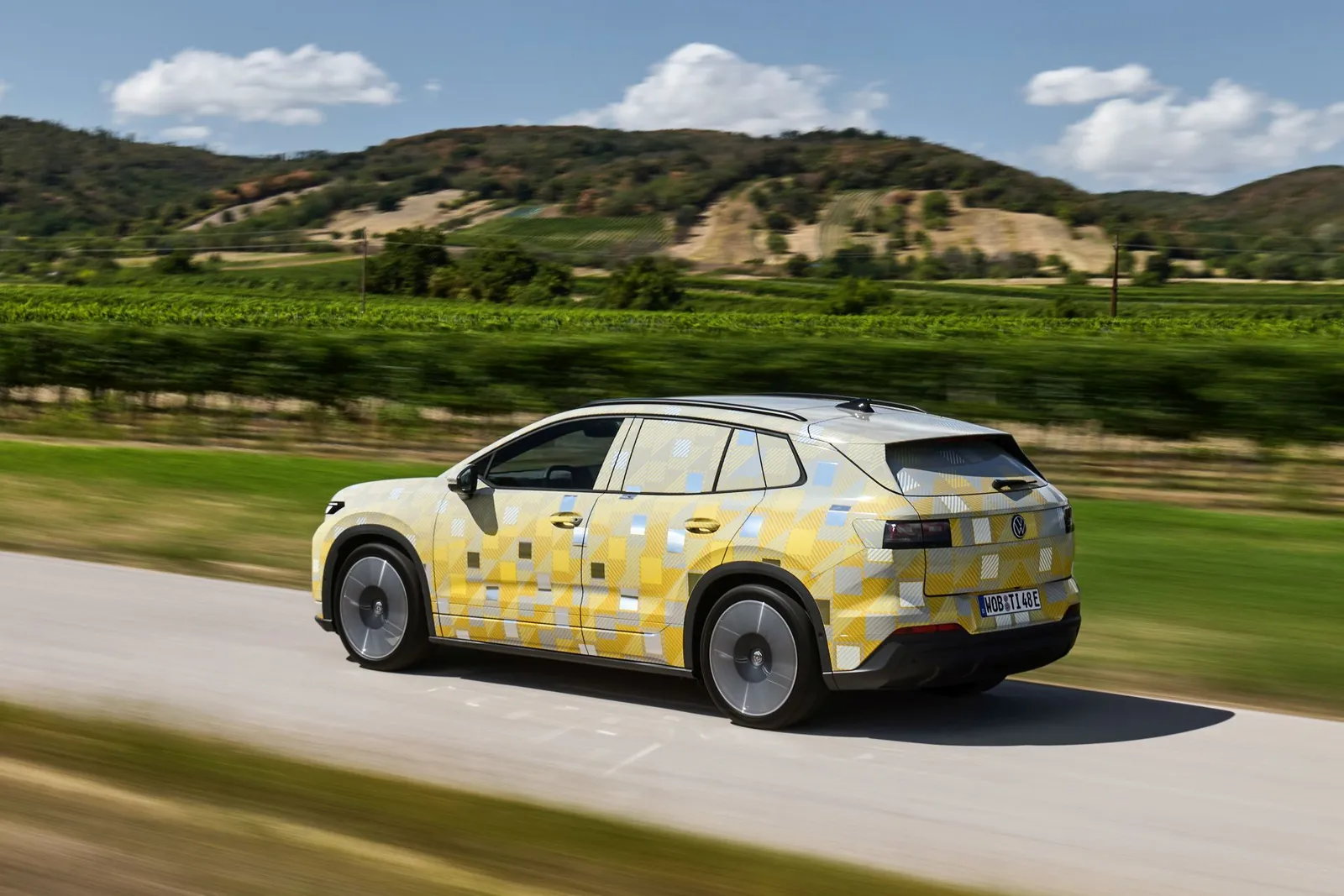
In practice, the compromise is likely to be less significant than the numbers on paper suggest. The charging time remains at the same level as the previous model. And those standing by the charging station feel a plateau rather than a peak.
At the same time, this shifts the question of how the ID. Tiguan defines itself in competition. When it comes to efficiency and charging performance, vehicles like the Tesla Model Y—competitors in this class as compact SUVs—remain the benchmark, with Chinese manufacturers now also entering this space but typically offering lower prices. Volkswagen counters with elements that cannot be listed in a spec sheet: suspension tuning, perceived quality, and service network coverage. Whether this package justifies the price gap can only be determined once the list prices are announced at the world premiere.
A new feature is Vehicle-to-Load, which allows external devices to be powered by the vehicle’s battery. The platform has already supported two-way charging into the home grid since software version 3.5. Regarding Vehicle-to-Grid, it’s clear that this has been possible for some time. It is also available since version 3.5, but it isn’t explicitly mentioned. In this setup, the car does not control feeding into the public grid; instead, the home’s energy management system handles it, with the car communicating only with the domestic system.
A Hour in and Around Vienna with the VW ID. Tiguan
A version of the Style model with rear-wheel drive, 210 kW of power, and a 77-kWh battery was available for the test drive, an early production car just months before launch. Some components are not yet finalized, and no reliable estimate can be made for fuel consumption after one hour. However, the short drive was sufficient to get an idea of the suspension, drivetrain, and brakes.
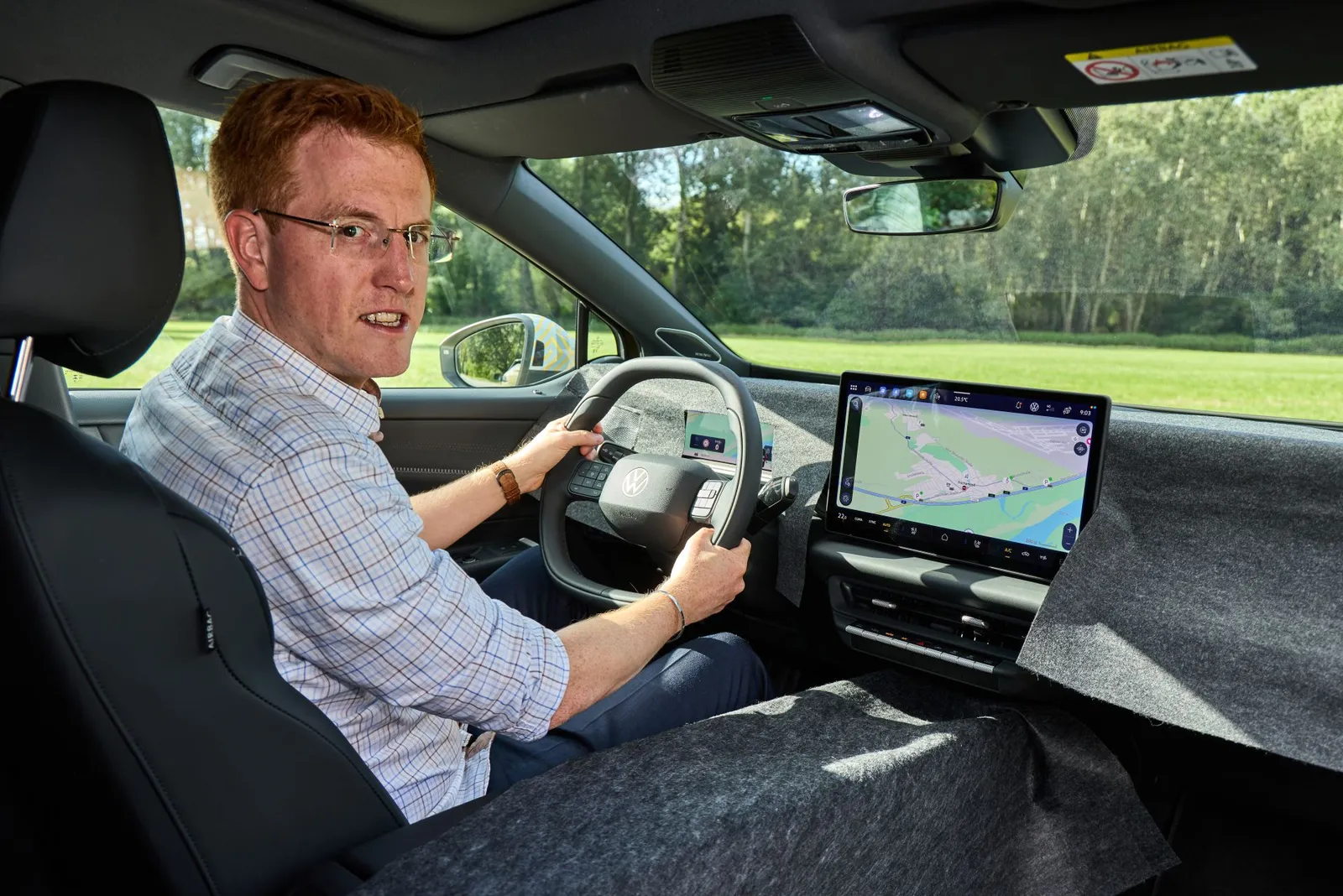
It begins in the city center, where the most noticeable improvement over the ID.4 becomes apparent: the ID. Tiguan handles potholes and cobblestones with significantly greater comfort than its predecessor, without appearing sluggish. The One-Pedal-Driving feature, known from newer ID models, is also effective in heavy traffic and is now available for the first time in the ID.4’s successor. The car can decelerate to a stop, with regenerative braking allowing for precise control. When the brake pedal is needed, the transition from regenerative braking to mechanical braking is barely noticeable. A new brake booster combined with adjusted software makes this possible, and compared to the ID.4, this represents a clear improvement, even though the underlying platform remains the same and not everything can be reinvented. In roundabouts and when parking, the progressive steering demonstrates its comfortable characteristics.
Page: smooth handling with minimal steering effort.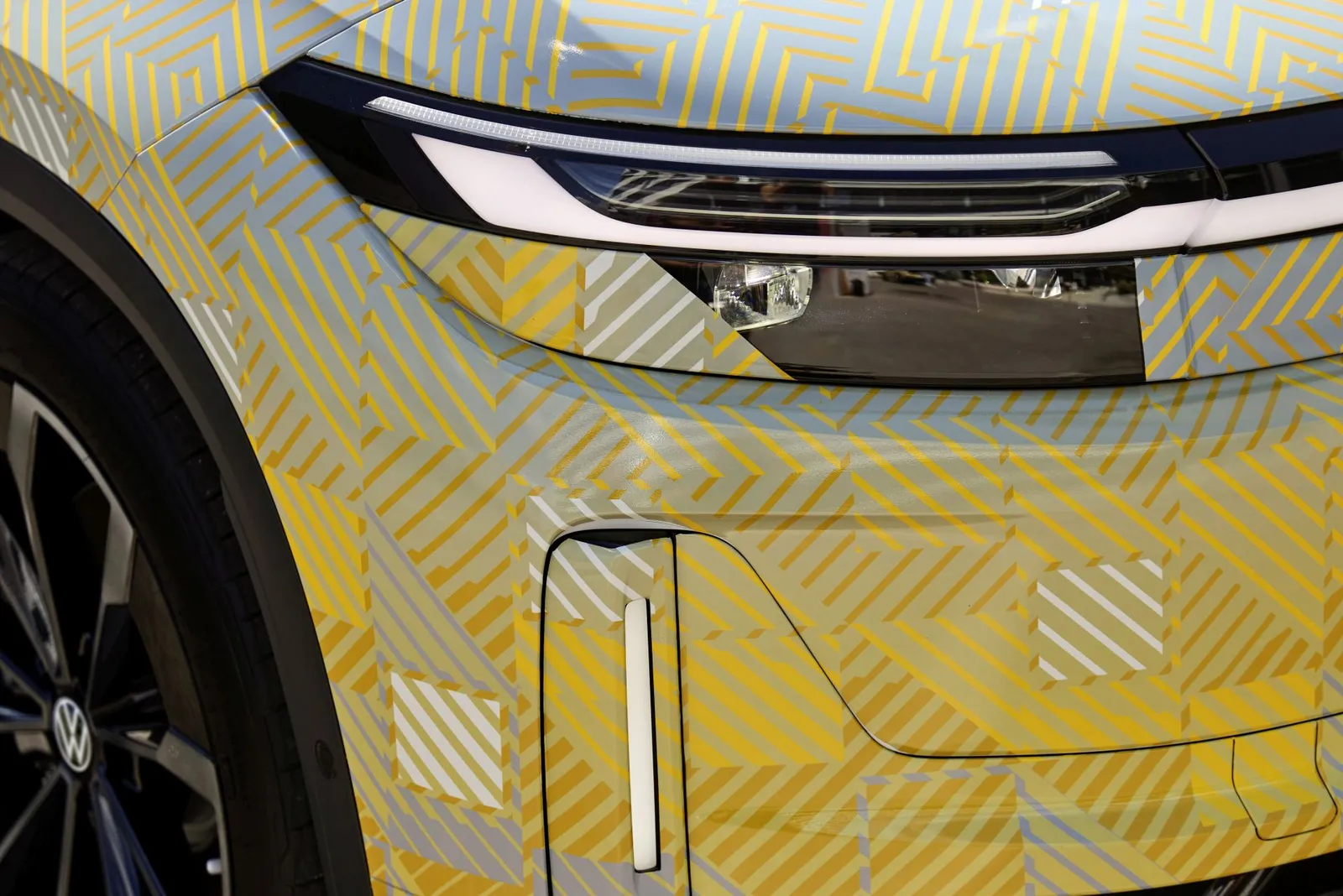
The vehicle’s character remains unchanged on long-distance drives. The APP550 accelerates smoothly and linearly, with strong power from a standstill, but less intensity at speeds above 80 km/h during intermediate sprints. The steering feels somewhat indirect here, which fits the vehicle’s overall orientation. On short highway sections, the cabin stays quiet, with only the rolling noise of the 21-inch wheels audible on rough asphalt. Back in the city, the impression from the beginning is confirmed: the car doesn’t push hard; it rather glides.
This restraint appears to be a deliberate choice when looking at the technical specifications. With 220 kW in four-wheel drive, the peak power output for a car of this size is modestly chosen, and the suspension is tuned for comfort rather than maximum sportiness. Both factors leave room for a more sporty version. However, following the current naming logic, it’s unlikely the vehicle will be called a GTX anymore, and a coupe version modeled after the ID.5 also seems improbable given its already flat-looking silhouette and the Škoda Enyaq Coupé. What Volkswagen actually plans with the ID. Tiguan will become clear in October.
Disclaimer: Volkswagen invited us to Vienna, Austria, to test drive the VW ID. Tiguan. This does not affect our honest opinion expressed here.