
First drive of the Mazda CX-6e: Mazda’s electric car from China
Throughout its long history, the automaker from Fuchu has never embraced fleeting trends. On the contrary, Mazda consistently cultivates its own unique approach to propulsion with reliability and a calm, Far Eastern demeanor. While competitors flocked to electric vehicles, the Japanese engineers developed new piston engines. After all, whether it’s batteries or hydrogen, it will take some time before we’re all driving on electricity. Mazda coined the term “Multi Solution” for this philosophy—meaning prepared for every scenario.
And since innovative approaches marked by technical sophistication have always defined the brand’s identity, the introduction of the third electric model after the MX-30 and 6e could only come at a time when there is a growing resurgence in interest in hybrid powertrains everywhere, with many even calling for an immediate phase-out of internal combustion engines. However, with fuel prices well above two euros, the electric CX-6e might arrive at just the right moment.
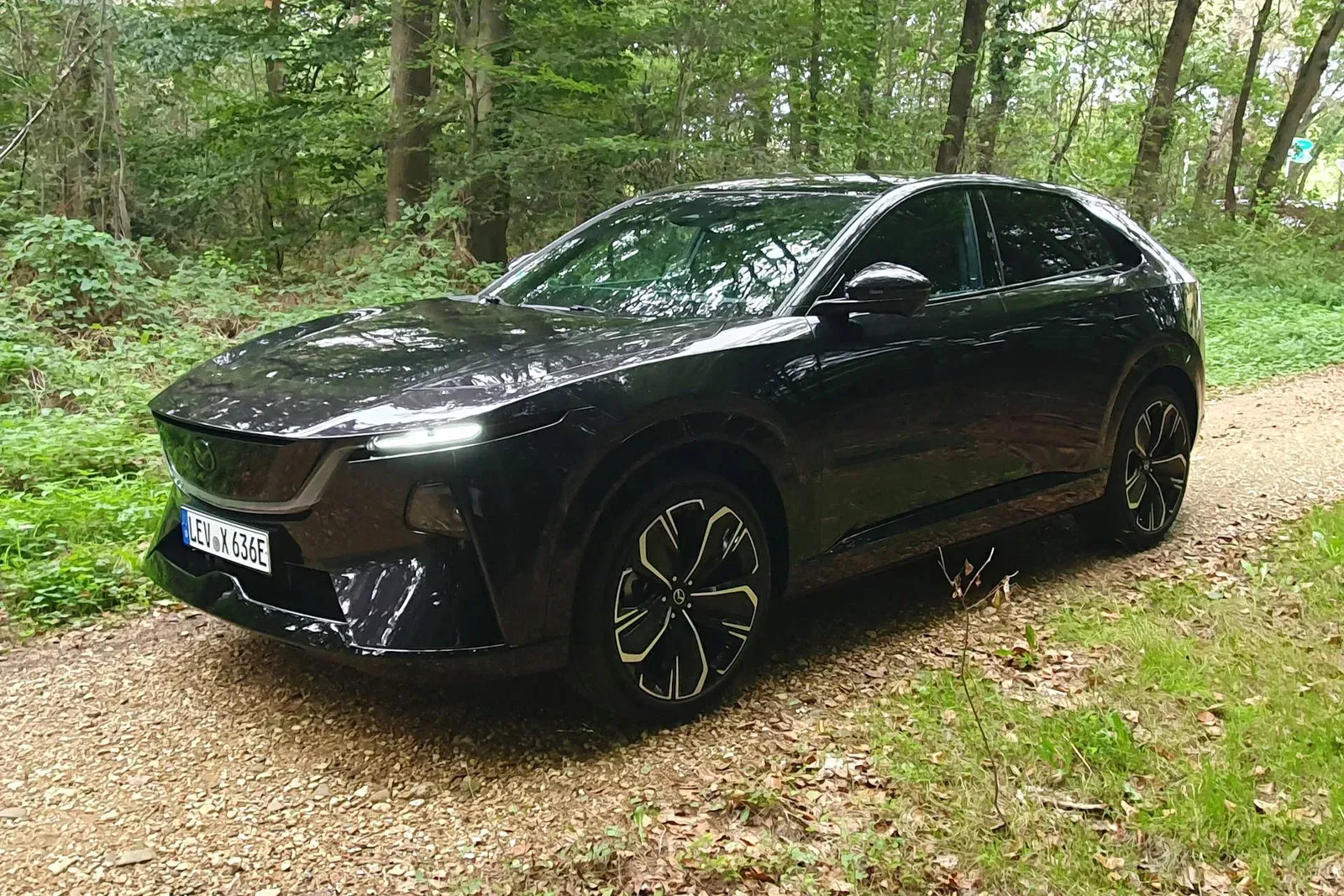
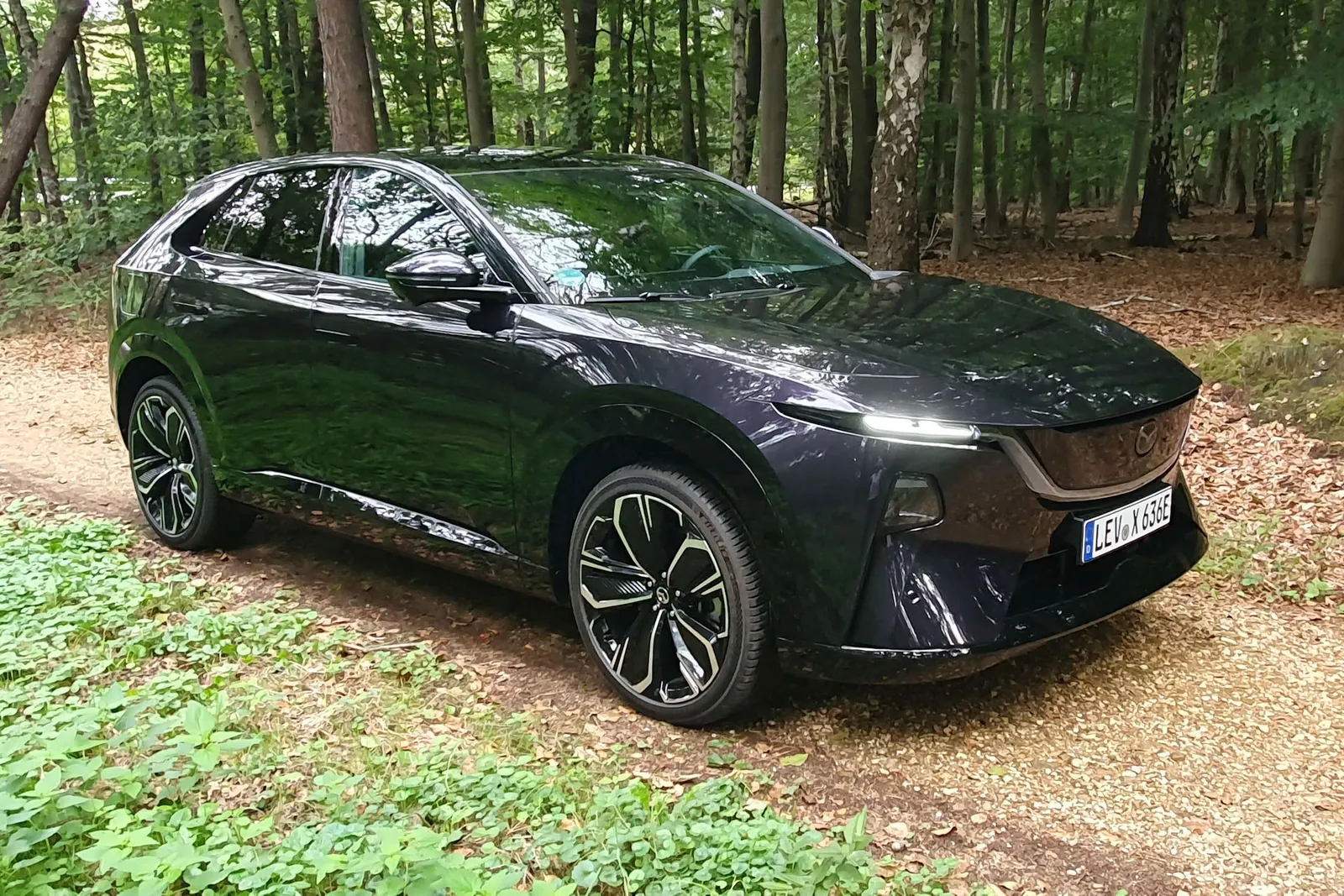
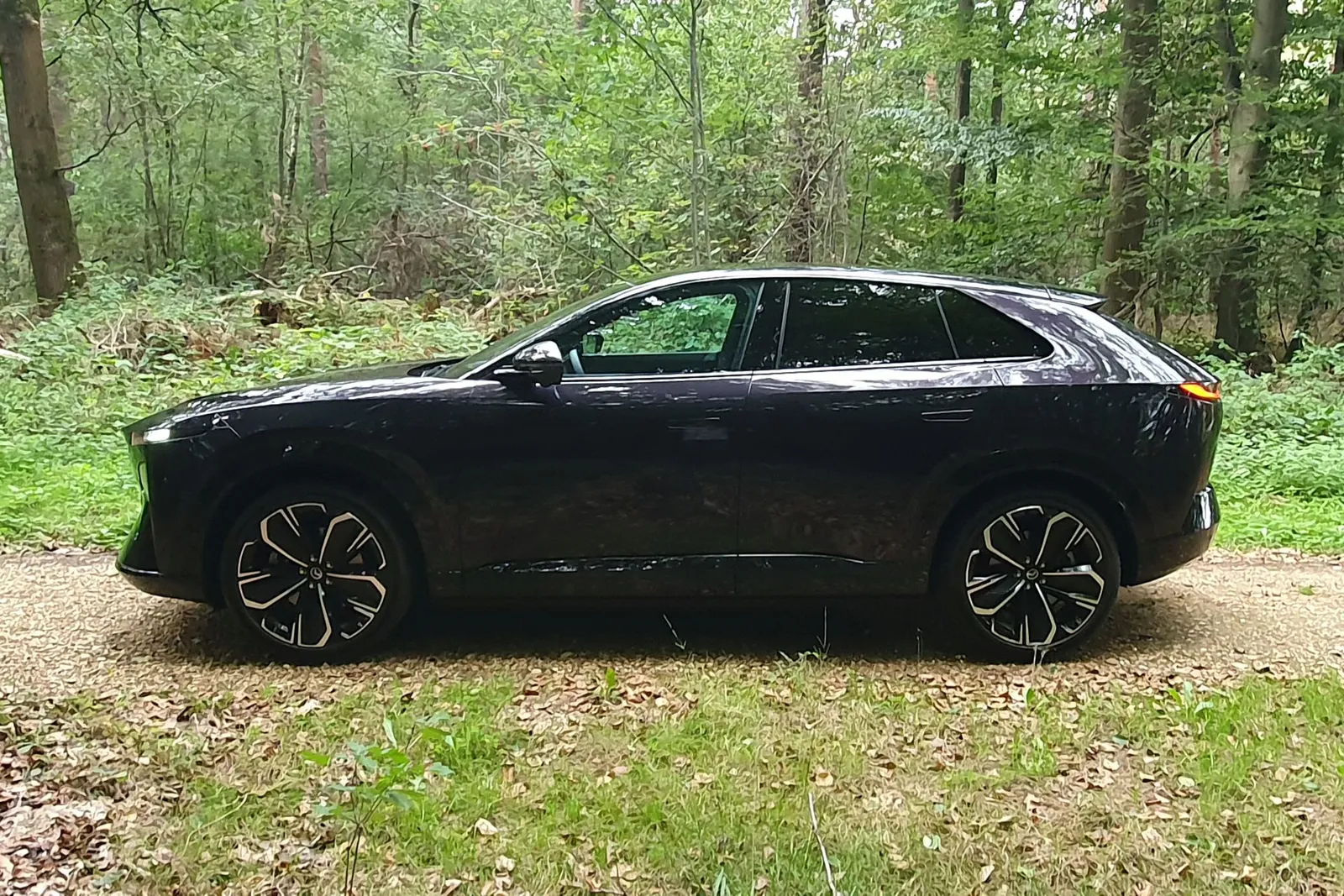
Solid engineering has been elegantly integrated into the Mazda. It’s delightful to see another spacious electric vehicle that doesn’t give the impression of being designed for at least medium-heavy off-roading just because large batteries can more easily be concealed in bulky frames. Officially labeled a crossover, the sleek Mazda CX-6e, with its 4.85 meters in length, could just as well be considered a slightly elevated GT version. While other vehicles feature chaotic lighting patterns created by sharp edges, folds, and grooves, here reflections play gracefully against the softly curved sides. Completed with a Nightfall Violet paint finish that shifts between black and purple depending on the lighting, the overall appearance is perfect. It’s hard to package electric mobility more attractively than this.
The collateral benefits of its sleek design: During initial test drives, the official fuel consumption of 18.9 kWh per 100 kilometers turns out to be far from utopian. It truly pays off not just visually when you don’t put a solid barrier in the wind’s path. A horizontally slotted hood at the front and roof channels on the rear pillars—features typically found in supercars—help facilitate its particularly smooth flow. It’s definitely a testament to attention to detail.
Mazda CX-6e: 24 minutes to reach 10 to 80 percent battery charge
Those who expect sheer power upon seeing this vehicle will find Mazda’s “rightsizing” philosophy a bit discouraging. There is no all-wheel drive or significantly high horsepower; instead, it features traditional rear-wheel drive with 190 kW (258 hp), enabling a range of up to 484 kilometers thanks to 78 kWh of energy from a lithium-iron-phosphate battery. This is sufficient for a standard acceleration time under eight seconds and a top speed of 185 km/h. Most people don’t need more in everyday use.
The package is completed by a solid charging capacity. The CX-6e can draw 200 kW at fast chargers, filling the battery from 10% to 80% in 24 minutes. In other words, a 15-minute coffee break allows for an additional 240 kilometers of range. At a home 11-kW wall charger, it takes eight and a half hours to fully charge the battery. A heat pump is standard equipment.
Mazda makes no compromises in the passenger cabin, which features a glass roof covering over one square meter. This is likely done to dispel any doubts about its origin. After all, the CX-6e is part of a joint venture with the Chinese brand Changan and is entirely manufactured in Nanjing, China. Yet skeptics can rest assured, as there are ample examples of fine materials and high-quality construction, showing Mazda’s bold push into the premium segment. In Fuchu, they place particular emphasis on the oriental craftsmanship of their Takumi masters.
The change in the cockpit is more of a habit to adjust to. While Mazda resisted the overwhelming trend toward touch controls nicely with the CX-80, the CX-6e’s control panel features buttons only on the steering wheel, with window lifters being the exception. This follows the Japanese concept of the beauty of empty space, giving it a wonderfully minimalist look, but it still requires reaching for the large 26-inch display even for adjusting mirrors or wiper speed. Some may like this, but it’s not mandatory. The excessive distractions from every action prompt immediate warnings from the attention assistant. Those annoyed by fumbling around are best to rely on voice control. Although the voice often can’t help, it at least tries much harder to be helpful.
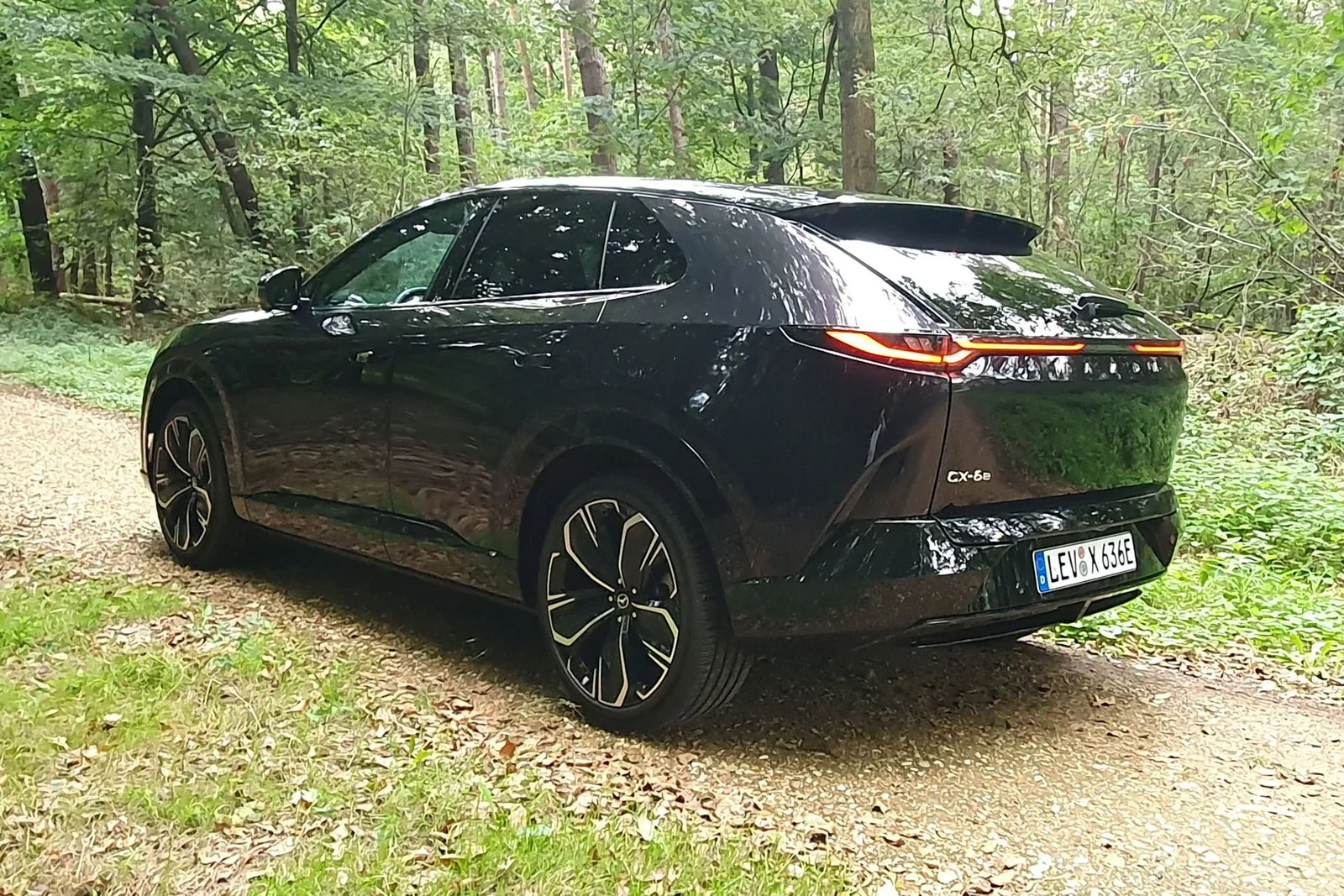
With a length of nearly five meters, it offers ample space at both the front and rear for heads and knees. Even getting into the second row doesn’t require compromising on its sleek design. For those who prefer transporting cargo over passengers: there’s 468 liters of cargo space behind fully seated passengers, and with the rear seats folded down, the CX-6e can hold over 1.4 cubic meters. Beneath the hood, there’s also a spacious trunk area of 80 liters—and for those who still need more space, the vehicle can tow up to 1.5 tons at the rear.
Little buttons in the Mazda CX-6e’s cockpit
Lovers of smooth driving experiences have always fared well with Mazda thanks to its firm damping and precise handling. This remains largely true for the CX-6e, though the steering resistance should be set to “Sport” mode. Fortunately, the engineers at Mazda’s European R&D center in Oberursel managed to avoid the “chariot” feeling even with wheels up to 21 inches in size. Combined with the well-designed seats and customizable head-up display, it truly evokes what Mazda calls “Jinba Ittai” – the sense of unity between horse and rider.
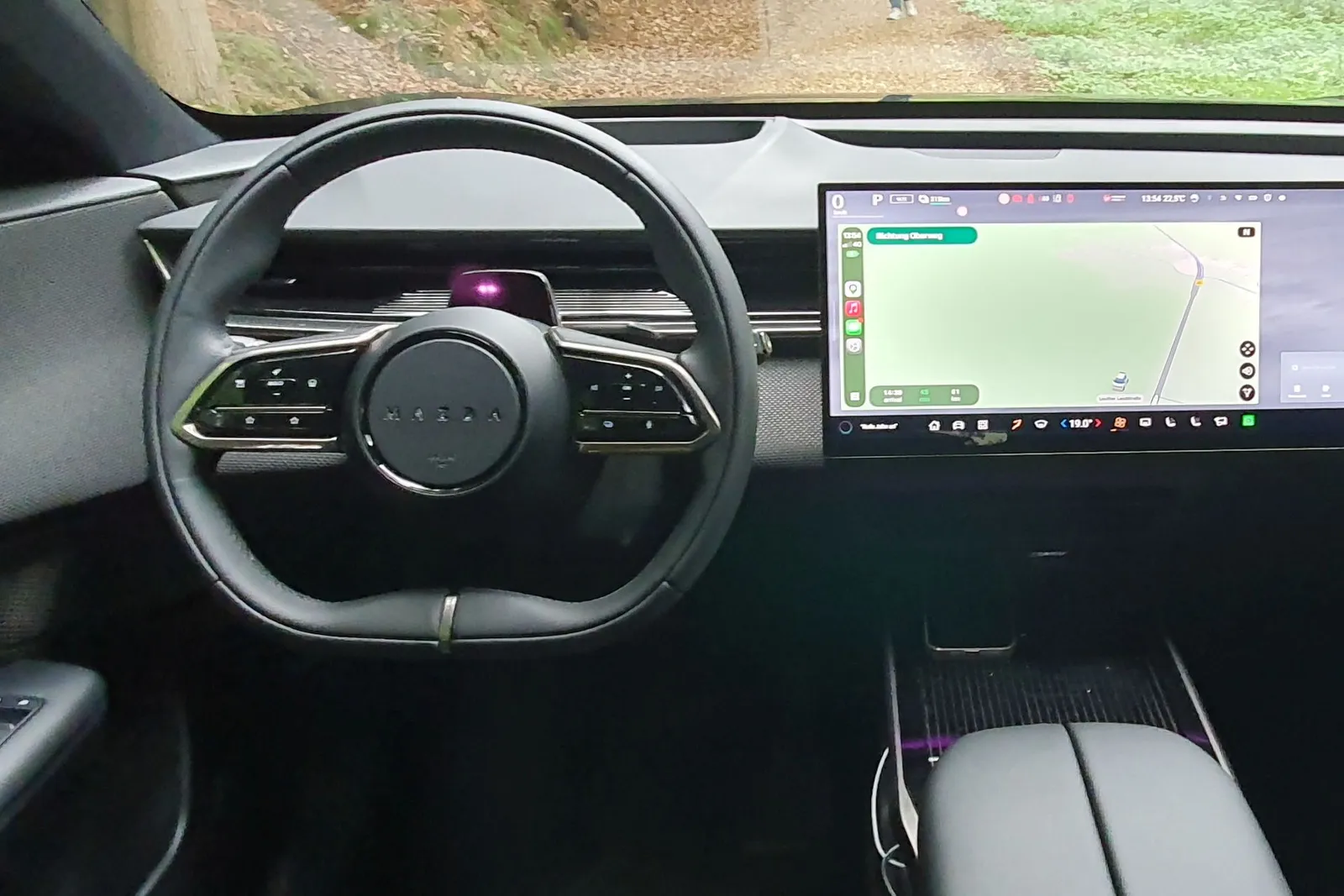
This is however compromised by various minor issues. The turn signal belongs to the type that doesn’t lock into place, so it tends to stay on when you don’t want it to — and vice versa. What’s even more annoying is that although there’s a button for drive mode on the steering wheel, there’s no display anywhere. Those who want to know exactly what mode is selected must switch to the corresponding screen menu, at the risk of criticism from the “eye watcher.” Alternatively, you can briefly press the pedal. If the vehicle weighing over 2.1 tons picks up speed gradually, it’s likely in “Normal” mode; if it moves a bit faster, it’s probably in “Sport” mode. The fact that the trunk release button has been moved to the wiper arm as a pressure-sensitive button might seem like a gimmick given current temperatures. It’s hard to imagine how this design would function after a frosty night with sleet.
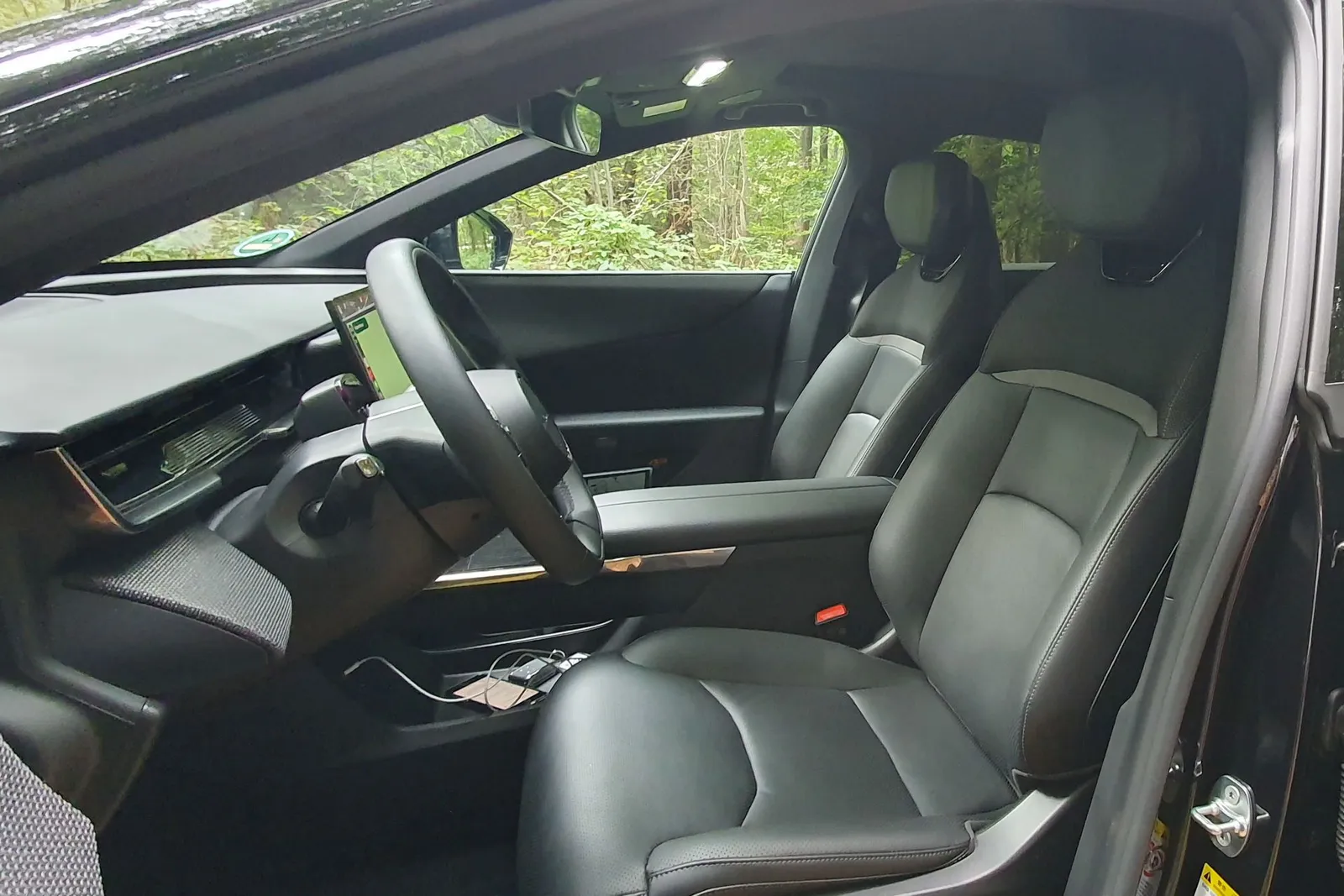
There’s nothing to criticize about what truly matters. As expected in this class, the CX-6e maintains speed, following distance, and lane position, monitors oncoming traffic and blind spots, assists in traffic jams, and brakes in emergencies. Beyond that, it features various extras such as an air-conditioned cargo tray, a 360-degree monitor, and a digital key. Digital exterior mirrors are also available upon request. Smart feature: the Bluetooth-enabled speakers in the front headrests, which deliver targeted sound while passengers in the back sleep peacefully.
The CX-6e starts at 49,990 euros, with Mazda charging an additional 3,000 euros for the top Takumi Plus version. That’s a lot of money, but it does come with a solid car as well. Even though Mazda aims to sell 7,000 units in Germany next year, the competition against purely Chinese rivals won’t be easy at all.