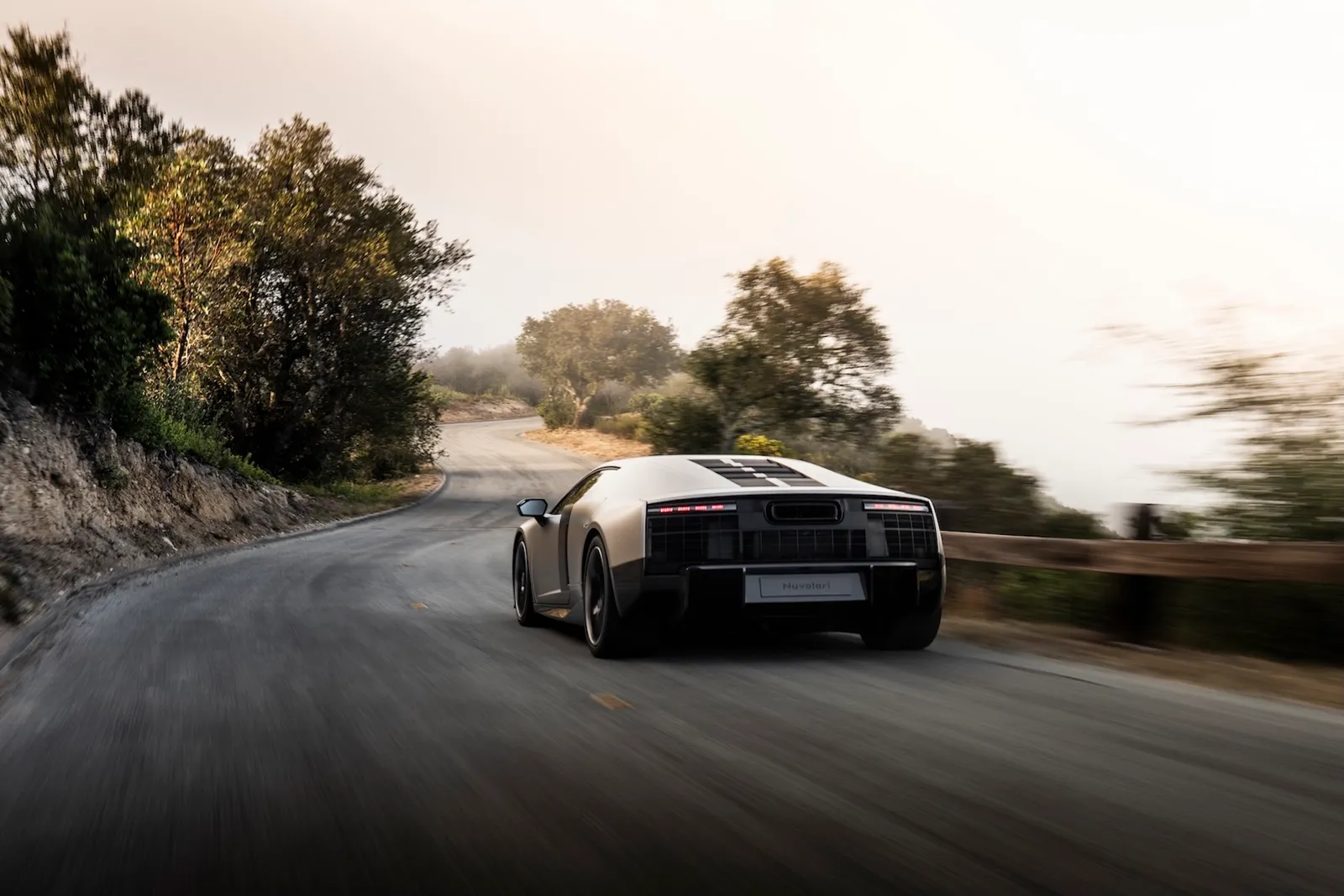
First Drive of the Audi Nuvolari Plug-in-Hybrid: Brotherly Love
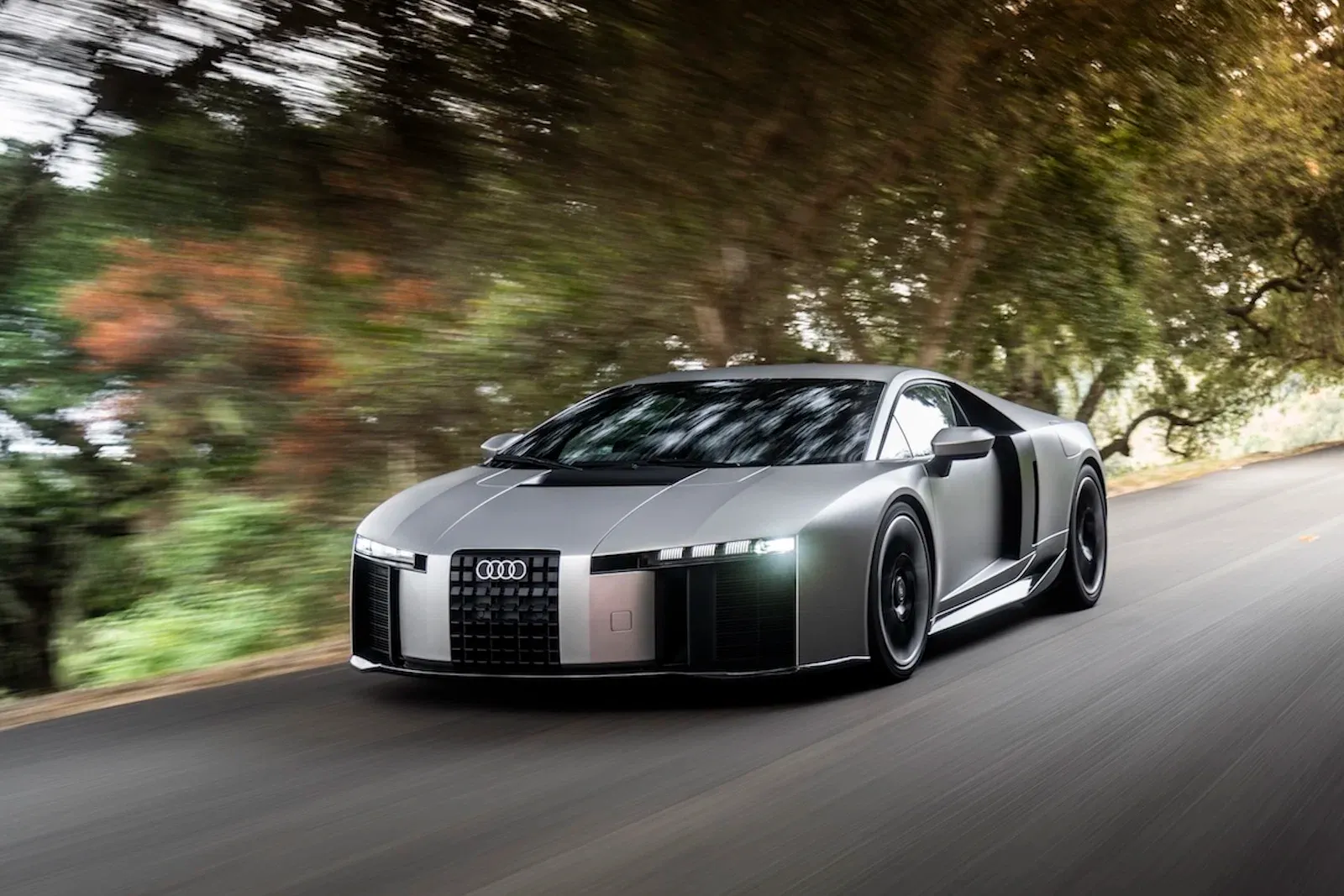
For decades, Audi offered spectacular sports cars in its portfolio for enthusiasts. Those who preferred something more subdued fell in love with the stylish convertible and coupe versions of the A4 or A5. For those seeking more dynamics and a more assertive presence, the TT and R8 sports cars provided that experience—models that some competitors have since discontinued due to lack of demand.
Yet without any sports cars in its portfolio, the Ingolstadt-based company feared for its hard-earned image, which had suffered greatly recently. As a result, the Lamborghini Temerario was transformed into the spectacular Audi Nuvolari through considerable effort—more powerful than its platform counterpart and more eye-catching than ever. The only downside: only 499 units of this hybrid sports car will be produced, and at a price of 590,000 euros, it is twice as expensive as its counterpart from Sant’Agata Bolognese.
Undoubtedly, the Nuvolari is a standout design. Its S-shaped air intake at the front generates downforce, reduces lift at higher speeds, and improves cooling for the powertrain. A key component of the active aerodynamics system is the retractable rear wing, which controls downforce and drag in three configurations: closed, low load, and high load. “Every external element serves a clearly defined aerodynamic purpose, from the front splitter lip to the rear diffuser. And everything is exactly as it appears, whether made of carbon fiber or aluminum, both on the outside and inside,” explains Gael Buzyn, head of Audi’s Advanced Design Center in Malibu.
The monolithic design of the Nuvolari is one aspect, but without a powerful engine, this supercar cannot truly be called such. Here, Audi’s engineers have further enhanced the already impressive Lamborghini, equipped with a 920 horsepower engine. The combination of a 4-liter V8 and three electric motors delivers both stunning performance and impressive sound. Alongside the 588 kW / 800 horsepower / 730 Nm turbocharged engine, there are three electric motors: one integrated into the dual-clutch transmission and two mounted on the front axle to provide all-wheel drive. Each of these electric motors generates 110 kW / 150 horsepower, resulting in the 1.8-ton two-seater delivering a total of 736 kW / 1001 horsepower on the road or racetrack, providing extraordinary acceleration even at full throttle.
The hybrid system is powered by a lithium-ion battery with a capacity of only 7.3 kWh, unfortunately hidden in the cardan tunnel. A purely electric range of ten kilometers is hardly noteworthy; its main purpose is to provide rapid energy supply to the electric motors along with corresponding regenerative braking. Those who push it to its limits can accelerate this 590,000-euro sports car from a standstill to 100 km/h in 2.6 seconds.
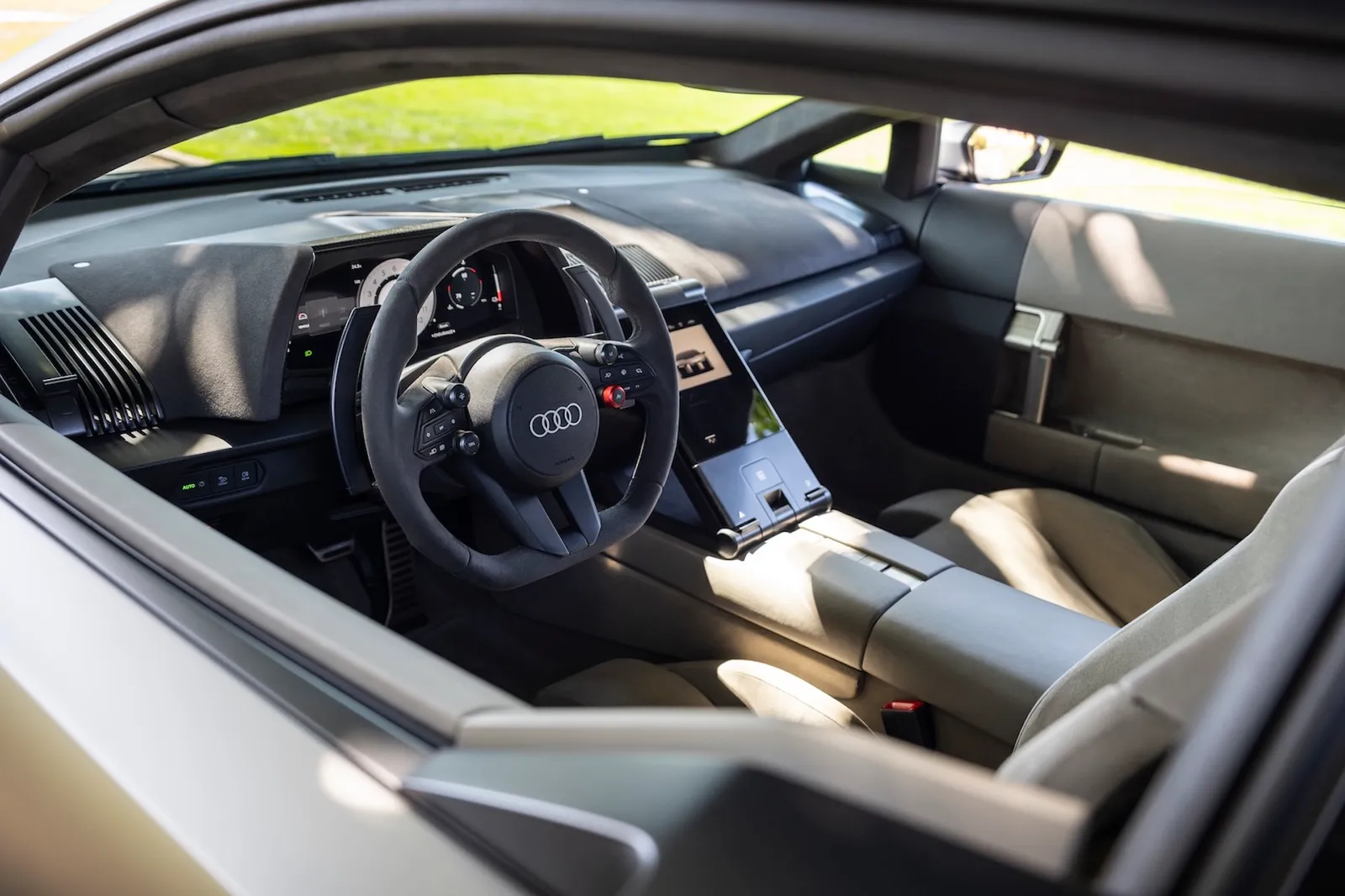
But the 4.74 meter long Nuvolari is designed not only to roar but also to excel with an advanced suspension system. To achieve this, the onboard electronics process data such as steering angle, acceleration, yaw rate, and traction in fractions of a second, calculating the distribution of torque, braking force, and aerodynamics. The torque from the V8 turbo engine and the three axial flow motors is distributed variably in both longitudinal and transverse directions, while the brakes reduce slip and an active aerodynamics system ensures optimal downforce. The high-performance braking system, featuring ten pistons at the front (420 × 40 mm) and four pistons at the rear (410 × 32 mm), delivers maximum braking performance on a track like Laguna Seca.
However, no matter how aggressively Nuvolari brakes at high speeds, what’s even more impressive is the tremendous thrust generated by its four engines, producing around 1000 horsepower that propels the vehicle forward – accompanied by a powerful sound that should excite the driver at maximum RPMs and leave unsuspecting passersby shaking their heads.
The thin Alcantara steering wheel fits comfortably in the pilot’s hands as they glance at small displays, allowing them to guide the all-wheel-drive vehicle with unusual ease across the road. In Dynamic, Dynamic+, and Track driving modes, the rear wing rises, while the system switches to a flat position on straightaways to optimize top speed and stability. The drag-reduction system, known from Formula 1, can be activated via a button on the steering wheel. For precise handling, the wing automatically retracts in fast turns, enabling active aerodynamics to improve driving performance.