
DS No. 7: Comfort comes first, peace does not follow
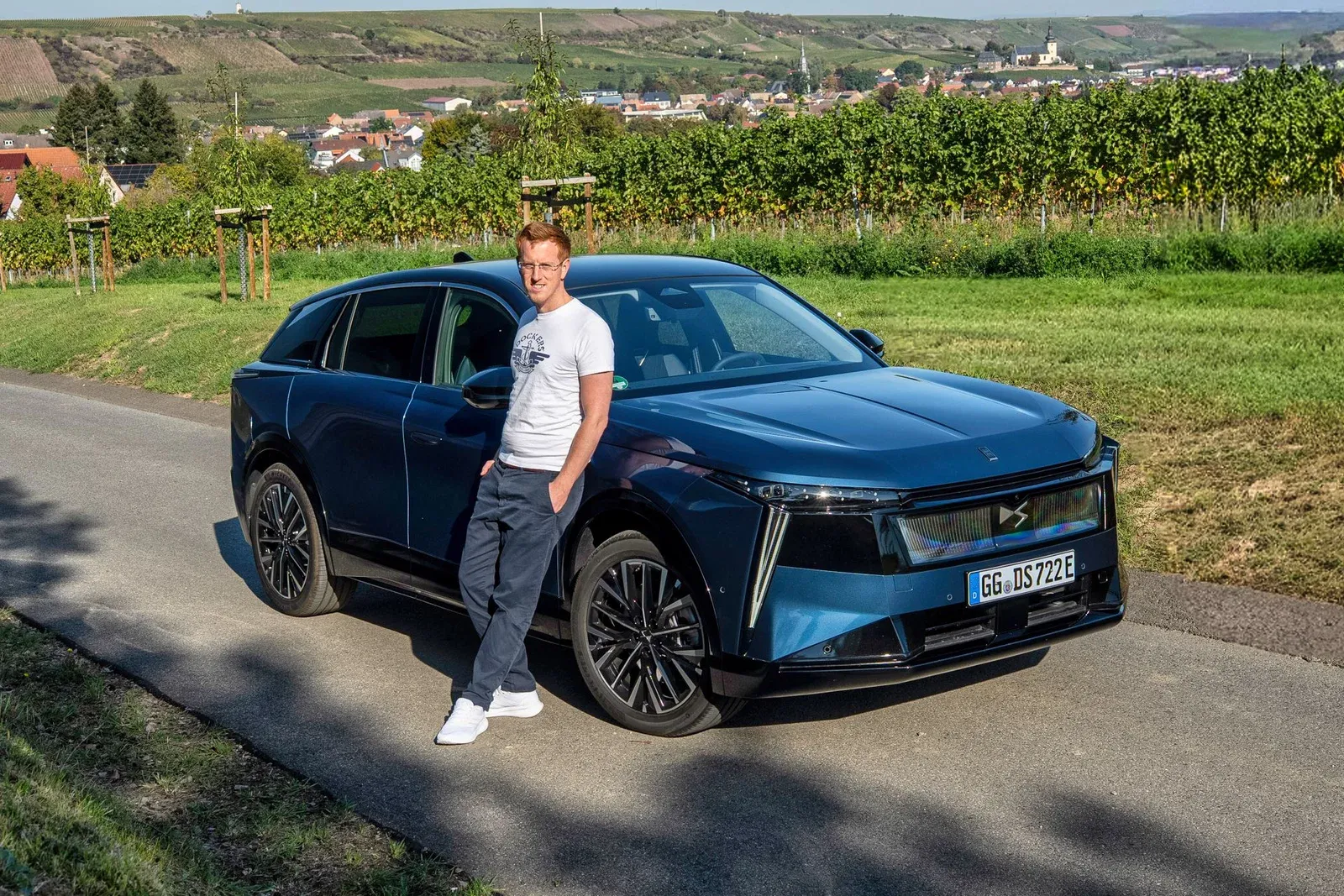
In the vineyards of Rhineland-Palatinate, the thermometer read 23 degrees, and as the sun shone over the rows of vines, Dorothea Knell, Head of PR at Stellantis Premium Brands Germany, welcomed us with a wink in the “seventh heaven.” This event was special for DS Automobiles, as with the DS N°7, the young Parisian brand is revamping a model completely for the first time in its history—specifically its most important one. After all, the DS 7 was the brand’s first car developed independently in 2018 and accounted for around 70 percent of DS sales in Germany last year.
The pressure to perform is accordingly high, especially since the market launch coincides with a strategic realignment, as explained on site by Thomas Goldboom, Managing Director of DS Automobiles Germany. While DS remains an independent brand, its management is moving closer to Citroën in order to benefit from the sister brand’s dealer network. “We aim nothing less than tripling our dealer network in Germany,” said Goldboom, who also wants to double the service network so that the brand, which has been heavily focused on corporate clients, becomes more accessible to private individuals as well.
Knell put it bluntly as to what all this means for the vehicle: “Comfort comes first; these aren’t the most sporty engines we offer.” It was with that expectation that I got into my test car, a N°7 Étoile E-Tense FWD equipped with a 73.7-kWh battery and 169 kW (230 hp), painted in Topas Blue, with interior trim made of Eternal Blue Alcantara.
More length, more glass, more light
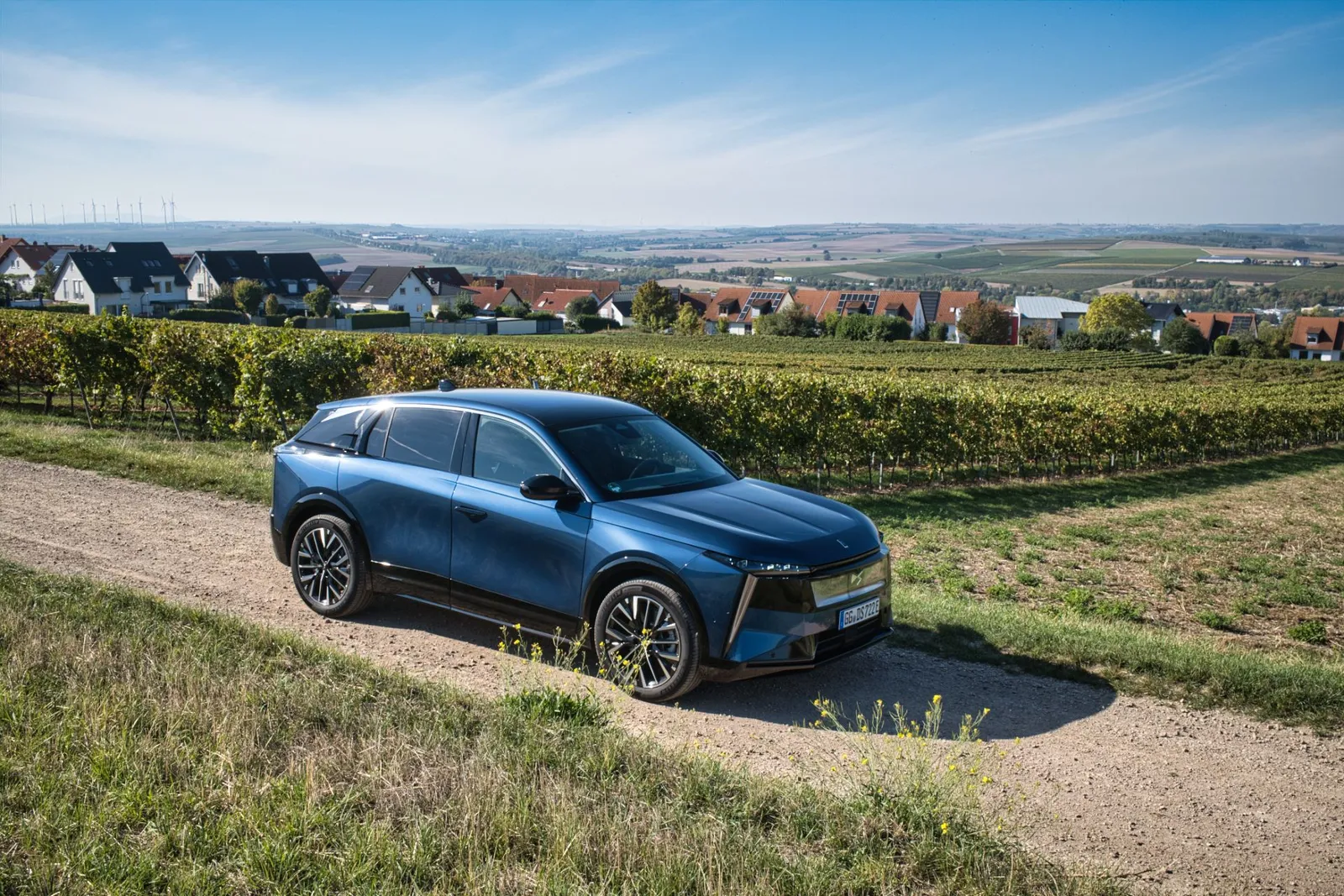
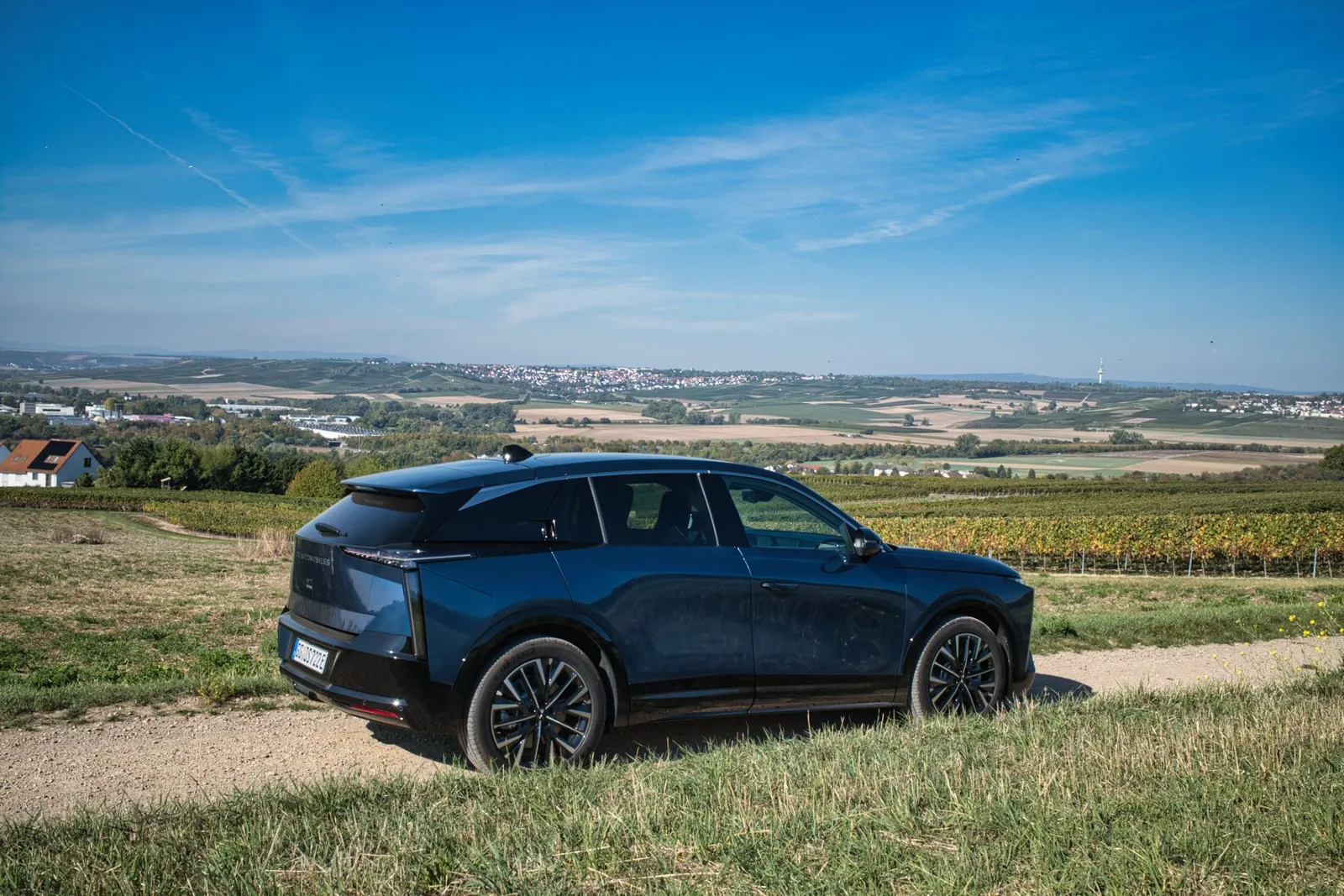
Even upon first glance, it’s evident that the N°7 appears longer than its predecessor, and this impression is accurate: with unchanged widths of 1.90 meters and heights of 1.63 meters, the body length has increased by about seven centimeters to 4.66 meters, while the wheelbase has grown by five centimeters to 2.79 meters. Sylvain Champomier, Product Manager for DS N°7 at DS Automobiles in Paris, described the biggest challenge in development as finding a balance between an aerodynamic roof shape and interior space. The result is a cw value of 0.26 along with a slightly curved roof line that transitions into a spoiler on the trunk lid.
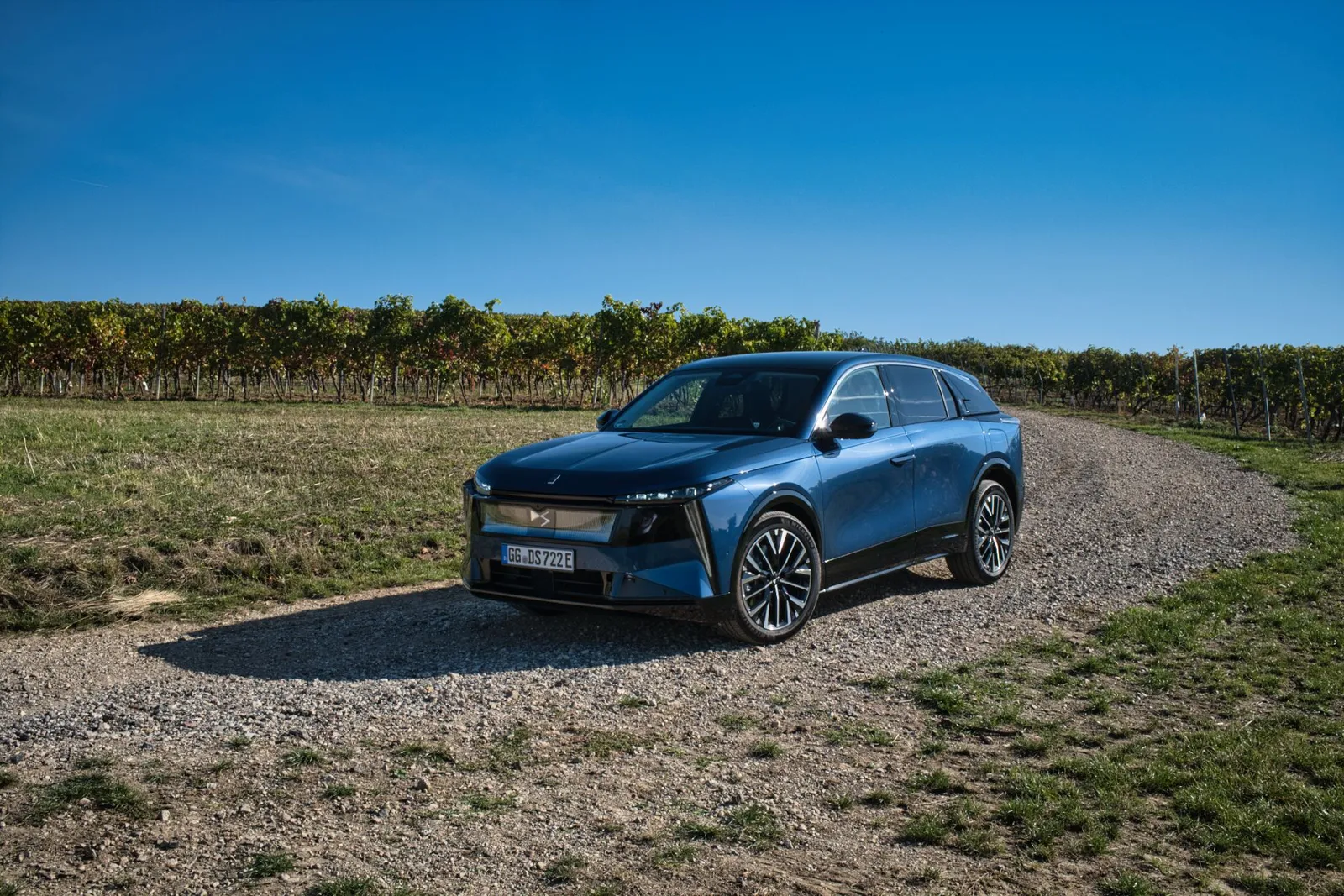
The front and rear feature the lighting signature introduced by DS with the N°8, allowing the illuminated grille Luminascreen and the V-shaped daytime running lights Light Blade to make the car recognizable from a distance. On the 20-inch Lyrae wheels, the N°7 stands out confidently without appearing loud, a effect further emphasized by the dark blue tone.
When the door is opened, this line continues inside the cabin. Knell spoke about what lies at the core of the brand: “It’s about finesse, it’s about beautiful materials that we bring into the vehicle.” This refers to details such as the Clous-de-Paris engraving from watchmaking, brushed aluminum inserts, and the Alcantara material itself, which is 68 percent made from recycled materials. That this commitment goes beyond mere rhetoric is evident in the craftsmanship, as seams, joints, and transitions are neatly executed, with nothing appearing to have been added later.
The seats that truly impressed me the most were those found only in the base Pallas version, which have fabric upholstery with Alcantara or nappa leather on top. The optional lounge seats, which offer multiple adjustment options, include heating, cooling, and massage functions. In colder weather, they also provide neck warming, which helps reduce the load on the cabin heating system and thus saves fuel. After the drive, there was nothing to criticize about them—on the contrary.
Large Display, Shorter Distances in Daily Use
From the driving seat, the eye is first drawn to the unusual steering wheel, whose X-shaped spokes have a distinctive appearance but actually provide excellent grip. Behind it lies a 10-inch dashboard, while in the center sits a 16-inch touchscreen running the DS Iris 2.0 system. What’s new here is the integration of ChatGPT into the voice control, which aims to enable more natural conversations with the car.
I tried out the navigation, voice control, and enhanced head-up display, and everything worked without me having to search for functions for long. Apple CarPlay and Android Auto operate wirelessly, along with four USB-C ports and over-the-air updates. Convenient too are small shortcuts such as a dedicated button on the seat side that directly opens the seat menu, or a button that turns off those assistive warnings activated by EU regulations every time the vehicle starts after two seconds of pressing, which can be set once in advance.
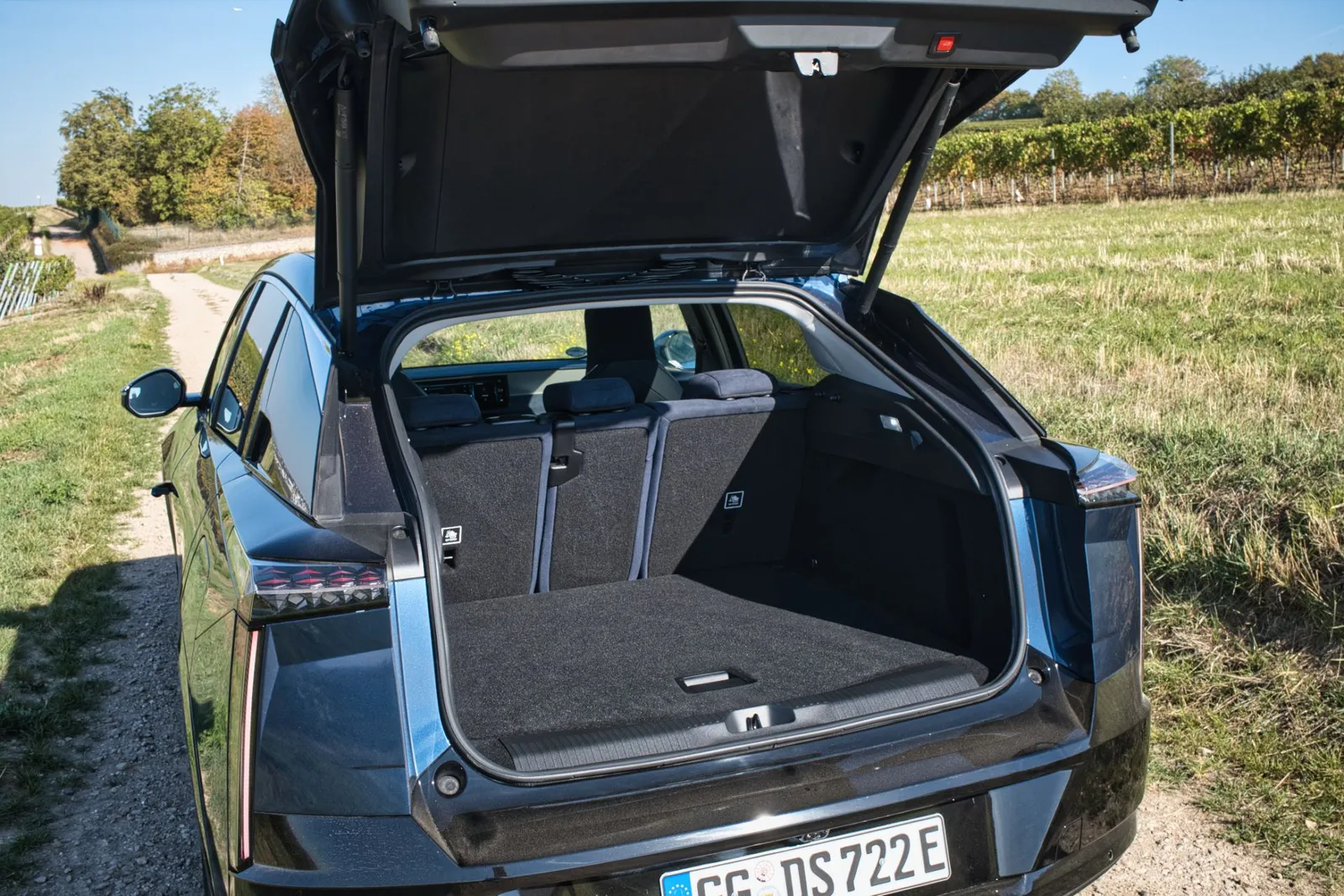
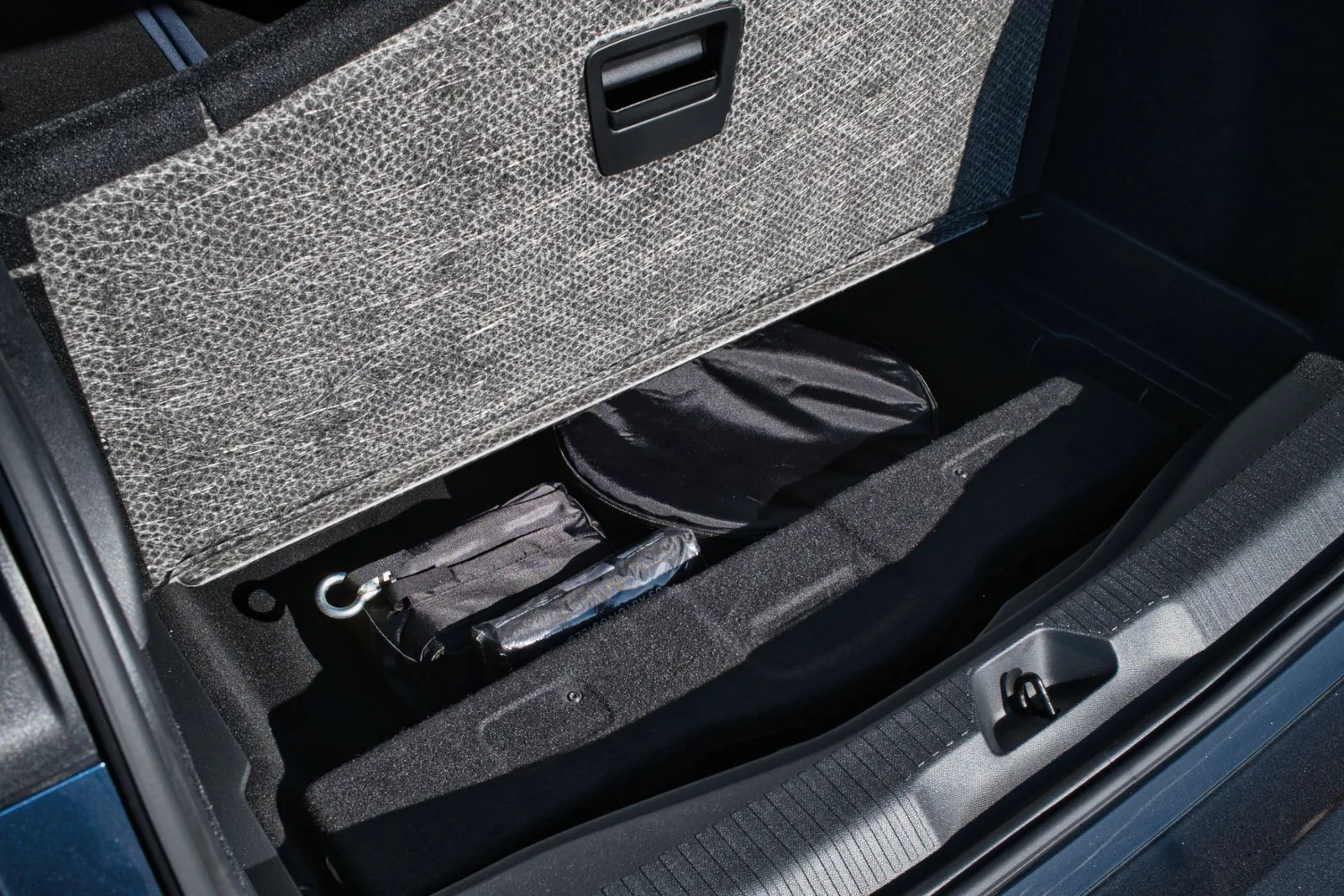
A lot has changed behind the front seats as well, with the rear doors becoming longer, the side windows expanding by 30 percent, and the optional panoramic roof growing by 40 percent. The trunk holds 560 liters; with the Focal sound system in the test vehicle, it’s 545 liters. When the rear seats are folded down, up to 1570 liters are available, which is quite good for a car of this length. That’s the status quo—what really matters is how well the N°7 performs on the road.
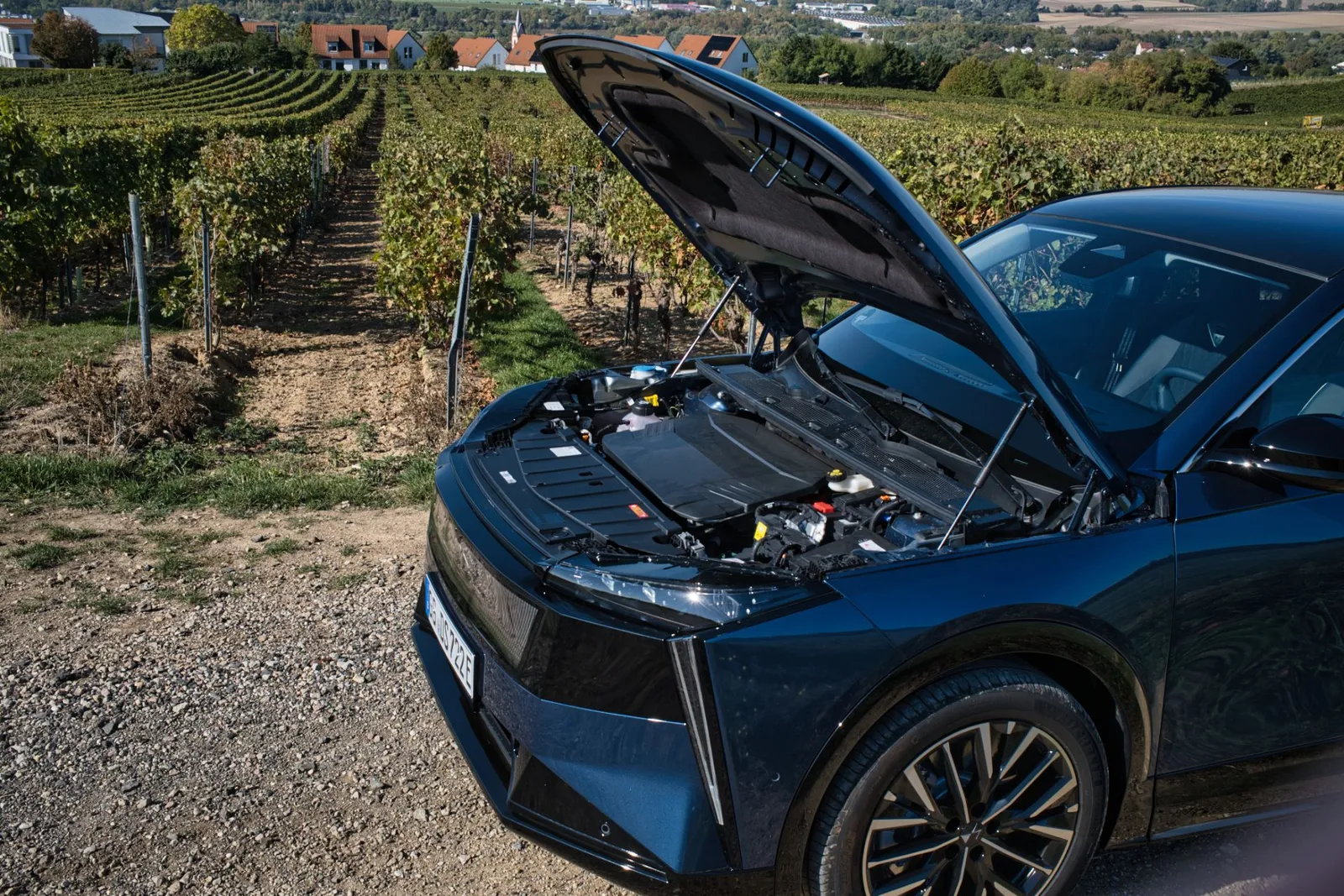
Gentle suspension, precise steering, audible sound experience
The answer to this was a route of about 100 kilometers, starting near Oppenheim, passing through Nieder-Olm, heading south on the A63 until just before Kirchheimbolanden. Over 35 kilometers of this were on the highway, most of which had no speed limit, before it returned toward the Rhine via partly winding country roads through the wine villages, passing by Gundersheim, Westhofen, and Bechtheim.
The propulsion is provided by a front-mounted engine with 169 kW and 343 Newton meters of torque, which can temporarily deliver 191 kW via a boost function when the battery is above 90 percent charged. According to the specifications, the N°7 reaches 100 km/h in 7.7 seconds and has an electronic speed limit at 190 km/h. I tested it in Normal and Sport modes, leaving regenerative braking on automatic; those who want more control can select one of three levels using the steering wheel paddles or activate one-pedal driving through a button on the center console. Incidentally, this feature exerts quite strong braking force when the driver releases the accelerator pedal.
On this mix of highway stretches and vineyard curves, it became even clearer just how well the steering and suspension work together. The steering provides the perfect balance of firmness and ease, while the suspension deserves closer examination because my test vehicle lacked the camera-based Active Scan Suspension, which is available in the Étoile only when paired with a large battery or all-wheel drive. Even without this electronic assistance, the N°7 handles smoothly and remains precise in its suspension response.
The noise level, however, was less convincing—it was higher than I expected, even though the Étoile comes standard with acoustic glass on the windshield and all side windows. I suspect the 20-inch tires contribute to this, so anyone who values quietness should pay close attention during the test drive.
Consumption Between the Spec Sheet and the Vineyard
When I put the N°7 back down, the onboard computer showed 95 kilometers driven, with an average of 19.2 kWh per 100 kilometers and an average speed of 42 km/h. The battery was at 54 percent, and the estimated range displayed was 217 kilometers. The conditions were good, with 23 degrees, sunny weather, and the air conditioning running only intermittently.
For my configuration, DS reports a WLTP fuel consumption of 16.8 kWh and a range of 520 kilometers, so my figures are well over 14 percent higher. This is understandable since a significant portion of the journey was on open highway roads. I didn’t charge en route, so the following data comes from the manufacturer. The N°7 uses 400-volt technology and charges at a maximum of 160 kW, which may sound modest compared to 800-volt vehicles at first, but DS focuses on the shape of the charging curve. With a 97.2-kWh battery, the power is said to remain roughly constant at 160 kW between 20 and 55 percent charge, meaning it takes 27 minutes to go from 20 to 80 percent, while the smaller battery in my test vehicle takes about half an hour for the same amount of charge.
Where possible, Plug & Charge simplifies the charging process, and for drivers who travel in all weather conditions, battery preconditioning along with the standard heat pump are important. The wall charger comes standard at 11 kW three-phase, while the 22-kW onboard charger costs an additional 700 euros and was also included in my car.
The true long-range version remains the Long Range model with 180 kW and a WLTP range of up to 740 kilometers. Champomier emphasized that real-world highway range is more important than the standard test cycle, estimating around 480 kilometers from 100 to 0 percent charge at a speed of 130, and claimed that up to 200 kilometers can be added in ten minutes using a fast charger.
Many assists onboard, but not all reliable
Back on the highway, it was time for the assistance systems to demonstrate their capabilities. The Étoile comes standard equipped with DS Drive Assist 2.0, which combines a distance control system with stop-and-go functionality, a lane-keeping assistant, and an adaptive cruise control that adjusts the speed before curves, roundabouts, and speed limits. This package is further enhanced by adaptive pixelvision headlights, a 360-degree camera, and a digital rearview mirror that can switch between mirror view and camera feed.
I was particularly eager to test the semi-automatic lane change feature, which requires simply tapping the turn signal at speeds between 70 and 140 km/h. The car then uses radar to check if there’s enough space before switching lanes automatically. In practice, however, no consistent pattern could be observed—sometimes it worked and other times it didn’t, with no apparent reason. This isn’t reliable, and for a feature that requires trust, that’s a serious issue.
As an option, the Absolute Tech Pack was also available, which includes DS Night Vision—a infrared camera in the front bumper that can detect people and animals based on their body heat from up to 300 meters away and mark them on the dashboard. Naturally, it wasn’t possible to test this in bright sunlight, though according to DS, over 20 percent of customers of the previous model chose this feature.
DS N°7: Comfort Comes at a Price
A look at the price list shows that all of this comes with a cost. The entry model in this series is the Hybrid Pallas, priced at 47,700 euros with 107 kW of power. Electric versions start at 56,300 euros, the model with a larger battery begins at 61,700 euros, and the all-wheel-drive version costs 66,600 euros. Meanwhile, the limited launch edition La Première goes up to 78,450 euros. Those who place an order between October 15 and November 25, 2026, will also receive a fuel or charging voucher worth over 1,000 euros.
My DS N°7 Étoile E-Tense FWD starts at 62,650 euros, while the version with Topas Blue paint, panoramic roof, 22-kW onboard charger, Absolute Tech Pack and Absolute Comfort Pack — which includes the Focal sound system, lounge seats, as well as a heated steering wheel and windshield — is listed at 70,200 euros. This is a lot of money for a compact SUV with a smaller battery, but it does come equipped with features that are rarely found in this segment.
Against this backdrop, it becomes clear why DS deliberately positions the N°7 between compact and large SUVs, offering a sense of space and materials typical of higher-class models. Champomier cited his own simulation, which showed that the long-range version can cover long distances at 130 km/h with a single charge stop, while competitors like the Tesla Model Y would need an additional one. This remains a manufacturer’s calculation, but it clearly shows where DS is aiming.
What remains after 95 kilometers
What stands out is how well the N°7 delivers on its promises, as the seats, steering wheel, and suspension work together seamlessly—even without the camera-based suspension system that was absent in this test vehicle. Additionally, there is clean, high-quality interior construction, and the controls functioned smoothly during testing without any issues.
I would wish for two things differently: a noise level that matches a car that is so committed to comfort, and an automatic lane change system that either works reliably or clearly signals when it doesn’t. I would recommend the N°7 to everyone who prefers to get there safely while driving rather than taking risks, and who is willing to pay a bit more for the quality materials and atmosphere. Those who regularly drive long distances on highways should opt for the larger battery, as it is there that the brand’s focus on comfort truly shines through.
Disclaimer: DS Automobiles invited us to the vineyards of Rhinehessen to experience the DS N°7. However, this does not affect our honest opinion expressed here.