
BYD Sealion 7 review. Is it truly a killer for the Tesla Model Y?
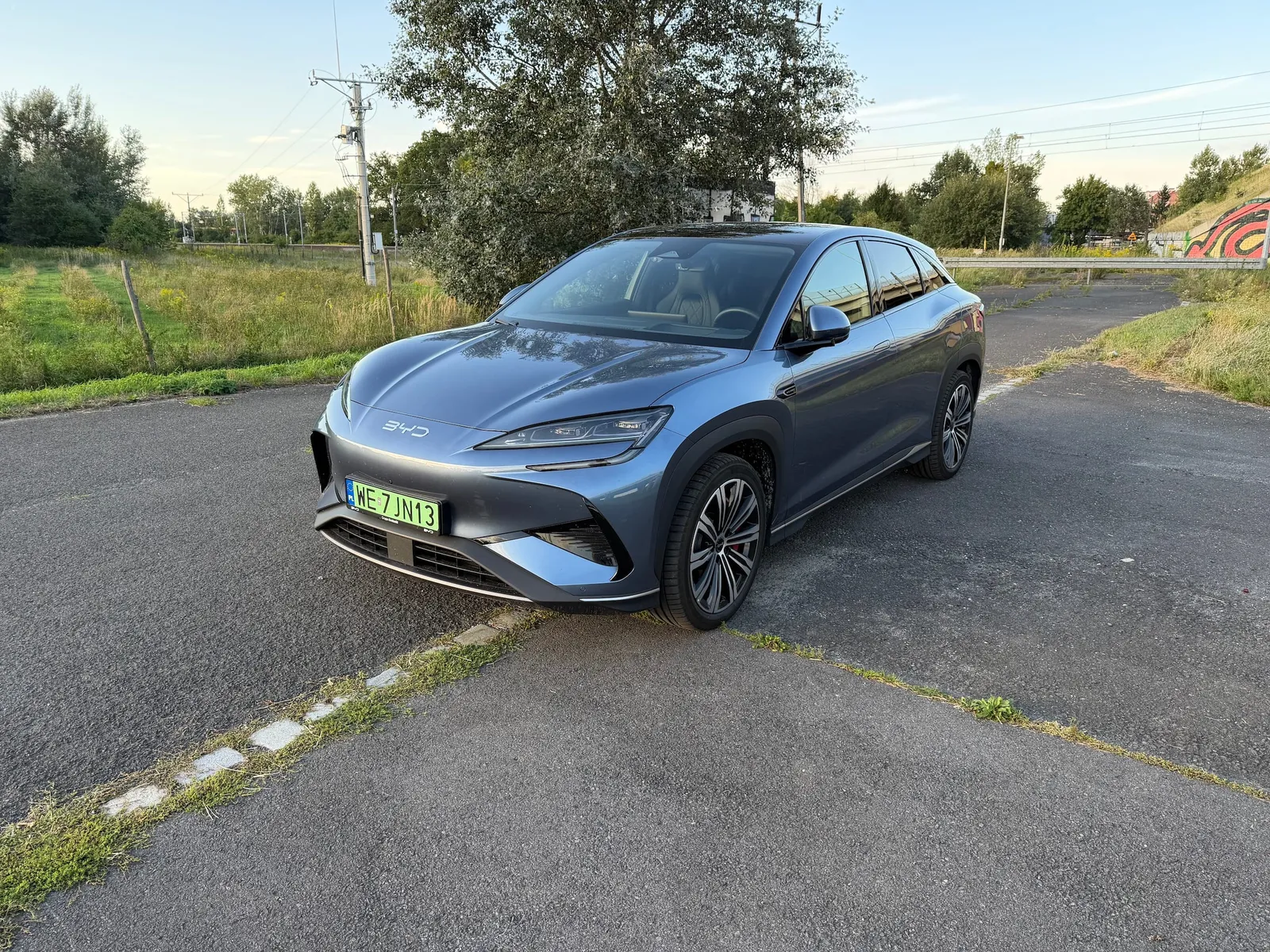
The BYD Sealion 7 quickly earned the label of “Tesla Model Y killer” when it entered the Polish market. After a few days driving this car, I now understand where such titles came from. And I must admit that it offers a lot compared to my Tesla Model Y. Is it better in every aspect? Of course not. But there are several areas where BYD truly surprised me positively.
Table of Contents
Show
Hide
Below are my impressions from a few days of driving the Sealion 7. It covers the exterior, interior, space, technology, driving comfort, energy consumption, charging, and of course whether it’s truly a car that can compete with the Tesla Model Y. The model tested is the Excellence AWD variant, which at the time of writing costs 212,000 PLN on sale in Poland, instead of 247,900 PLN.
BYD Sealion 7 Specifications
Dimensions: 4830 x 1925 x 1620 mm
Weight: 2435 kg
Battery: 91.4 kWh, LFP BYD Blade
Power: approximately 530 HP
Maximum DC charging power: 230 kW
Additional features: V2L, Head Up Display
Exterior design
As for the exterior, it features a fairly classic shape typical of Chinese cars. I must admit that I really like it. However, when looking at the Sealion 7 from the outside, it’s hard to say it was designed directly as a response to the Tesla Model Y. Tesla has a much more unified and sleek silhouette, while BYD went for a slightly sportier approach here.
At the front, we have aggressive headlights that, according to my son, resemble a somewhat menacing look. There’s some truth to that. The hood and the entire front section of the car are very nicely sculpted. On the sides, it’s more classic in style, though we do have pull handles that appear when approaching with a key or after unlocking the car. It’s an interesting solution by the way, as China is increasingly introducing regulations regarding such handles for safety reasons. So it’s possible that sooner or later a similar trend will reach Europe as well.
The rear also looks really good, though it’s a bit more rugged than the Tesla Model Y. Overall, however, the Sealion 7 is a car that can definitely be appealing, and I don’t have any major complaints about its styling.
Interior and Space
Once you get inside, it becomes clear very quickly that there’s no shortage of space here. Under the hood lies a fairly spacious trunk. It may not be as large as in a Tesla, but you can easily fit a few items there that you don’t want to pack in the main trunk. For me, things like sand toys, children’s toys, rain boots, and other similar items ended up there. And it’s for such uses that the trunk performs very well.
The main trunk is truly large. For daily driving and shopping, there’s no issue at all with space. Even on a family trip, there should be no reason to complain. Under the shade curtain, four or even five cabin-sized suitcases placed vertically on the side fit comfortably. If we arrange them horizontally, there will naturally be even more space. There’s also some extra room in front of the suitcases, closer to the lid. We have plenty of space under the floor as well. We can lift it up to gain an additional about 15 cm of depth, and underneath that there’s another quite deep storage compartment. This is the perfect place for charging cables and other items we don’t want visible.
As for the interior design itself, it’s also really good. It’s safe to say this meets the standard seen in premium cars from other brands. The seats are covered with a pleasant leather-like material, they’re heated and ventilated, and both the driver’s and passenger’s seats have electric adjustment. I don’t feel like I’m sitting in a car that tries to cut costs on every piece of equipment.
Technology and Infotainment
The steering wheel is easy to use, though it comes with BYD’s standard set of buttons. There’s also a wireless charger for one phone with a power output of up to 50 W. Importantly, it has an automatic cooling function, so the phone shouldn’t get too hot during charging.
The driver is faced with a display showing the most important information. Unfortunately, just like in the BYD Atto 2 I tested earlier, we have rather limited options for checking energy consumption here. We can see the last 50 kilometers or the average consumption over the entire vehicle’s usage period. I miss the ability to check consumption for a specific route. For me, this is one of the downsides of this system, especially since such information can be truly useful in an electric vehicle.
We also have a head-up display and a large central infotainment screen that we can rotate. When set vertically, it somewhat resembles the setup found in the Tesla Model S, but only when using the car’s built-in Google-based map. With Apple CarPlay or Android Auto, the screen remains horizontal. On the other hand, BYD has a really nice solution here, as we can display maps from CarPlay or Android Auto on the driver’s screen as well. Of course, we won’t get navigation directions on the head-up display like with native navigation, but the map itself can appear on the driver’s screen. And that is a truly big advantage.
The system itself doesn’t work as smoothly as Tesla or even the Ioniq 5 I’m testing currently, but it’s not bad either. I didn’t feel like I was constantly fighting with lag. The responsiveness could be better, but overall it’s not something that disqualifies the car.
A downside, however, is the translation. Not all elements of the system are translated into Polish, and some still appear in English. In my opinion, it looked better in the BYD Atto 2. This is a bit unfortunate because the car itself is already very well prepared for European users, and such details can ruin the overall impression.
Everything at your fingertips
In the center tunnel, we have features such as the gear selector, emergency lights button, vehicle start button, driving mode switch, regen level adjustment, and Auto Hold. It’s this regenerative braking system that gives me some issues. We have a standard and strong mode, but both are quite weak in my opinion. The regen function practically doesn’t work here at all, and we can completely forget about One Pedal Driving. As a Tesla user, this is very noticeable to me.
A really nice addition, however, is the ambient lighting. In some modes, it’s even too intense and can cause significant glare, especially on the dashboard in front of the passenger. The children, on the other hand, were thrilled with it, so it seems the function ultimately serves its purpose.
We can’t complain about the lack of space for small items either. There’s a fairly large shelf with USB C ports under the center tunnel, plenty of space in the armrests, and enough additional storage compartments. All daily items can be easily stored somewhere without having to worry about where to fit another cable, phone, or children’s trinkets.
Back seat
The back seat is also very comfortable and spacious. The problem only arises when we install two child seats facing forward. In my case, someone of my build size doesn’t have much chance of comfortably taking the middle seat. The car then becomes somewhat suitable for four people, unless the fifth passenger is someone really slim.
If there are no child seats, the situation obviously looks completely different. When I adjust the driver’s seat to my position, I can sit in the back as a passenger without any problem and still have plenty of space for my legs. In this regard, the Sealion 7 performs really well and is an excellent family car.
Riding Comfort
As for driving itself, the Sealion 7 is a truly comfortable car. The suspension is very pleasant and definitely more comfortable than in my Tesla Model Y. This is one of the things I noticed right away after switching from a Tesla.
The car is large and weighs 2435 kg, but this doesn’t pose a significant issue during normal driving. It’s very pleasant to drive in the city, and comfort is also high on longer routes. It’s precisely for this reason that the Sealion 7 suits me well. It doesn’t try to be a sports car by force; instead, it focuses more on comfort and smooth travel over distance.
Energy Consumption and Battery
The Sealion 7 is equipped with a 91.4 kWh LFP BYD Blade battery. A large battery is very useful here because the car isn’t exactly lightweight. A weight of 2435 kg inevitably affects energy consumption.
While driving in the city, my energy usage was around 16 to 18 kWh/100 km. On highways, the situation is quite different, with consumption rising to about 24 to 28 kWh/100 km. Given this weight and size, however, it’s not particularly surprising.
The large battery partially compensates for this higher consumption. Additionally, we have the LFP technology here, which allows for more flexible use of the battery’s wide capacity range. We can charge it to 100 percent with little resistance and utilize most of the available capacity. The downside is, of course, the greater weight, but even in such a car, we’re already dealing with a very heavy vehicle.
Charging and V2L
The situation is further improved by fast charging with a power of up to 230 kW. With such a large battery, this is extremely important because the ability to quickly recharge significantly enhances the comfort of driving. Unless Polestar introduces charging at 1000 kW soon, in which case 230 kW will suddenly seem like a phone charger. For now, however, 230 kW is indeed a reasonable value.
We must also not forget V2L, or Vehicle to Load. Thanks to this feature, the car can function like a huge battery that powers other devices when needed. During a blackout, we can connect appliances such as a refrigerator, gas stove, or other devices we want to keep running using the appropriate equipment. Everything can be configured from within the car.
Is it worth buying a BYD Sealion 7?
After spending a few days with this car, I have to say one thing: BYD has created a really great car.
If someone is looking for a family-friendly electric vehicle that offers plenty of space, a large trunk, a frunk, a comfortable interior, good amenities, a large battery, fast charging, and V2L, then the Sealion 7 should definitely be on their list of cars to consider.
The biggest drawbacks for me are mainly related to the software. There is no full translation, insufficient details on energy consumption, and it lacks One Pedal Driving. Even the regenerative braking works far too weakly for my standards.
However, most drivers likely won’t use these features as frequently as I do. For many people, it will be more important that the car is comfortable, spacious, well-equipped, and has a large battery.
I am really satisfied with this car. Driving in the city is comfortable, and it’s also very pleasant on longer routes, with the large battery eliminating the need to constantly look for a charger.
Is the Sealion 7 then a threat to the Tesla Model Y?
After a few days of driving, I understand why it was named that way. However, I wouldn’t say BYD simply beat Tesla. It’s rather a very strong alternative to the Model Y, which is better than Tesla in several aspects.
And that’s exactly why the Sealion 7 is a car that’s truly worth checking out if you’re looking for a family electric vehicle.
Order your Tesla and take advantage of the bonuses for purchasing through the referral link!