
The BYD Atto 2 isn’t such a scary little car from China as it’s often portrayed.
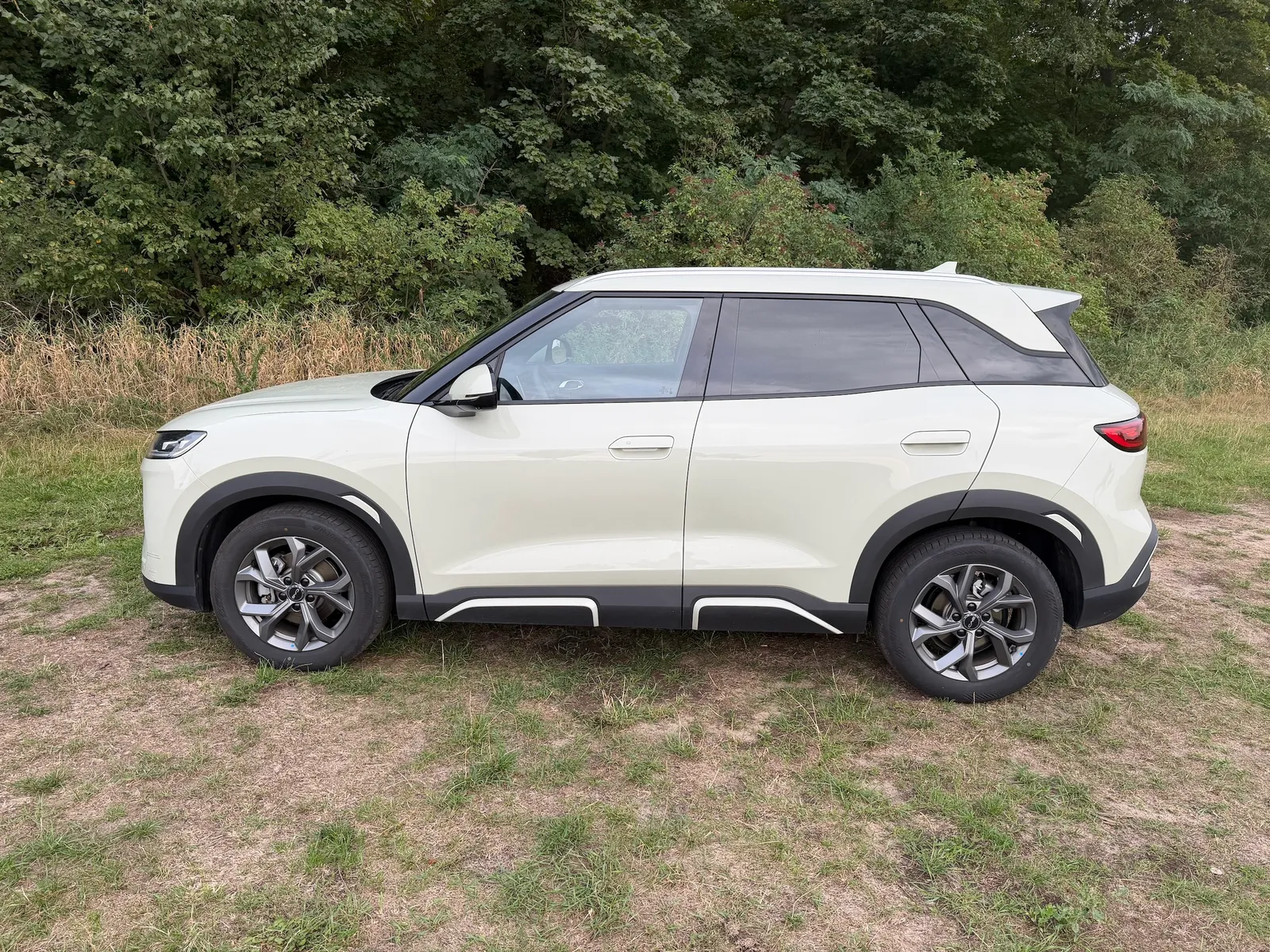
The BYD Atto 2 in the Comfort version is the first Chinese electric car I’ve had the chance to test. But it won’t be the last. Since it was the first one, I focused my testing on what many people worry about: quality, compatibility, and how everything works in everyday use. And it’s quite good!
Table of Contents
Show
Hide
BYD Atto 2 Specifications
Battery capacity: 64.8 kWh
Battery type: BYD Blade (LFP)
Max DC charging power: 150 kW
Range (WLTP): 430 km
Consumption (WLTP): 17.4 kWh/100 km
Weight: 1720 kg
Dimensions: 4310 x 1830 x 1675 mm
Price of the tested version (at time of publication): 132,300 PLN gross
Active version (smaller battery and weaker equipment): 113,100 PLN gross
Boost version (smaller battery, different equipment): 116,000 PLN gross
The Atto 2 looks… normal
External aspects
The BYD Atto 2 is a B-segment urban electric vehicle that looks very pleasant from the outside. Being somewhat of a crossover and SUV due to its size, it has a nicely designed front end that doesn’t resemble the rather angular electric cars released recently at first glance. The attractive lights with air intakes below even give it a slightly “sportsy” vibe.
Unfortunately, there’s no trunk under the hood, though space for one isn’t lacking, so I assume those interested can easily invest in gadgets from China that will increase our trunk space.
If we look at the car from behind, the first comparison that comes to mind might be the Mercedes GLB. The trunk lid is positioned quite vertically, with a nice light strip right below the windshield.
What’s inside?
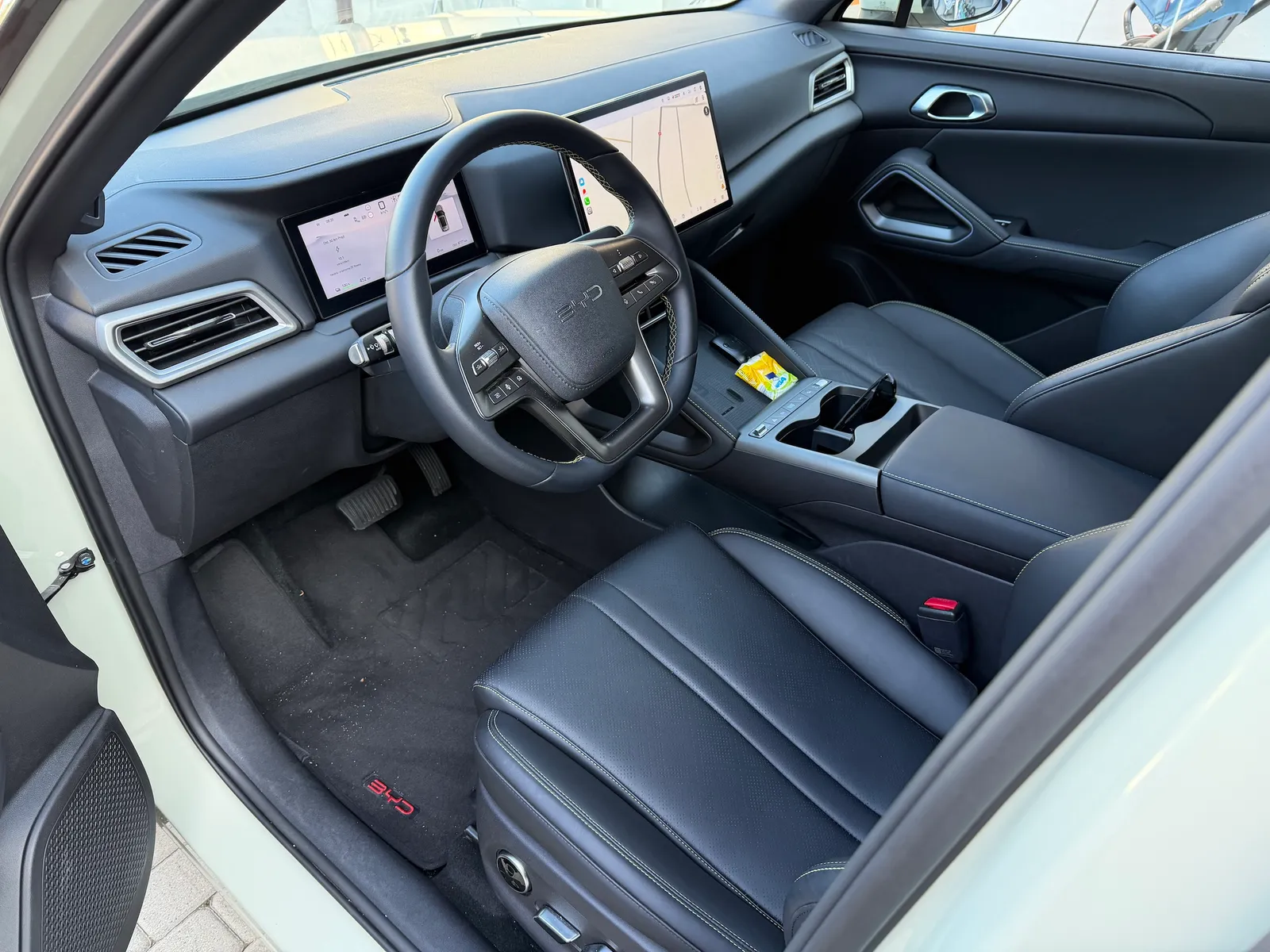
The interior of the BYD Atto 2 makes it a truly comfortable car for daily commutes and even longer trips. The driver’s seat is very comfortable. Both the steering wheel position and the passenger seat can be adjusted electronically, though the steering wheel itself requires manual adjustment. In front of us is a rectangular 8.8-inch display that shows us the most important driving parameters, with a 12.8-inch infotainment screen in the center.
The central console offers plenty of space for items. Below the phone holder, which comes with a 1,500 W charger featuring cooling functionality, there is enough room for a bag or other items that everyone keeps in their car. Additionally, there’s a deep pocket under the armrest for more miscellaneous items.
As for the rear seat, there’s also quite a bit of space there. Being 185 cm tall, I can sit comfortably behind someone else without my knees hitting the back of the seat in front of me. The same goes for children sitting in car seats; they had plenty of space as well. However, like in many cars produced these days, traveling with 5 people might not be the most comfortable option, but it’s not impossible. It’s doable if you really want to.
A nice addition is the glass roof with automatic opening and closing, along with a “bonus” feature. I’m not sure if this is always included or only in my unit. It refers to a device for breaking windows and cutting seat belts in case of an accident.
What about the trunk?
As for the trunk, it has 450 liters of cargo space and two floor levels. For daily driving, the “standard” floor configuration is more than sufficient, and if we want to pack more, removing the floor cover provides even more usable space. You might not be able to fit a bicycle trailer, but packing for a family vacation shouldn’t be a problem.
Infotainment System
My friends have had a BYD Seal U DM-i for over a year, and I remember the early days with this brand in their possession. The system’s translation was poor—the assistant spoke a bit Polish, a bit Czech, and a bit English, so it was most convenient to use the English-language version of the software. In my BYD Atto 2, the situation was completely different.
All elements are well translated, the assistant speaks in Polish though in a robotic voice, and the whole system works quite responsively. We have wireless Apple CarPlay and Android Auto here, but the built-in navigation based on Google Maps is not the worst either, although functionally it lacks information about traffic controls, accidents, etc. However, it can guide us to charging stations according to our settings and clearly show where we can “theoretically” reach with a certain battery level.
What’s missing in the system for me is information about energy consumption throughout the route and since charging, etc. We can view the consumption for the last 50 kilometers, along with a graph of that consumption, or the overall consumption for the entire journey. It’s a shame…
Energy consumption in the BYD Atto 2 is surprisingly good
I was truly surprised here. The test unit of the Atto 2 had a battery capacity of 64.8 kWh, which is 10 kWh less than my Tesla’s. Yet, the trip to and from Warsaw required only one stop for charging.
At a speed of 120 km/h, my average energy consumption was around 18 kWh/100 km, while at 140 km/h it was about 20 kWh/100 km. This gives a range of around 300 km on the highway. In the city, the consumption is even better.
For typical urban and suburban driving, my energy consumption was between 10-13 kWh/100 km, meaning I could easily cover 500-600 km without needing to recharge. It’s amazing.
What has troubled me, and still does, is that I’m currently testing the Sealion 7’s recirculation system. Though it’s better to say there’s practically no recirculation, as this car has two modes: Standard and High. In the Standard mode, the car behaves like a conventional vehicle that brakes using its engine, while in High mode it acts like a hybrid. There’s also no One Pedal Driving feature here, which is one of the best aspects of driving electric vehicles.
The charging performance is good
According to the specifications for my version of the BYD Atto 2, it can charge at up to 155 kW, and it only takes 25 minutes to go from 10% to 80% charge. I can confirm these values through practical use. Another major advantage is the car’s charging curve, which delivers over 100 kW of power even after the battery reaches 70% charge.
Who is this car for?
If I had to answer briefly, I would say it’s for everyone. With such capabilities and equipment, the BYD Atto 2 can easily serve as a first car for most Poles. Driving around the neighborhood will be a pleasure, and its costs will be minimal. Occasional longer trips won’t pose much of a problem either. A 20/30-minute stop to recharge after driving 250 km is beneficial for keeping the legs active and giving the driver a break.
The conclusion is that there’s no need to fear Chinese cars, though when it first enters the Polish market, its software might still have some issues.