
BMW iX3 50 xDrive review: Can the hype hold up in real life?
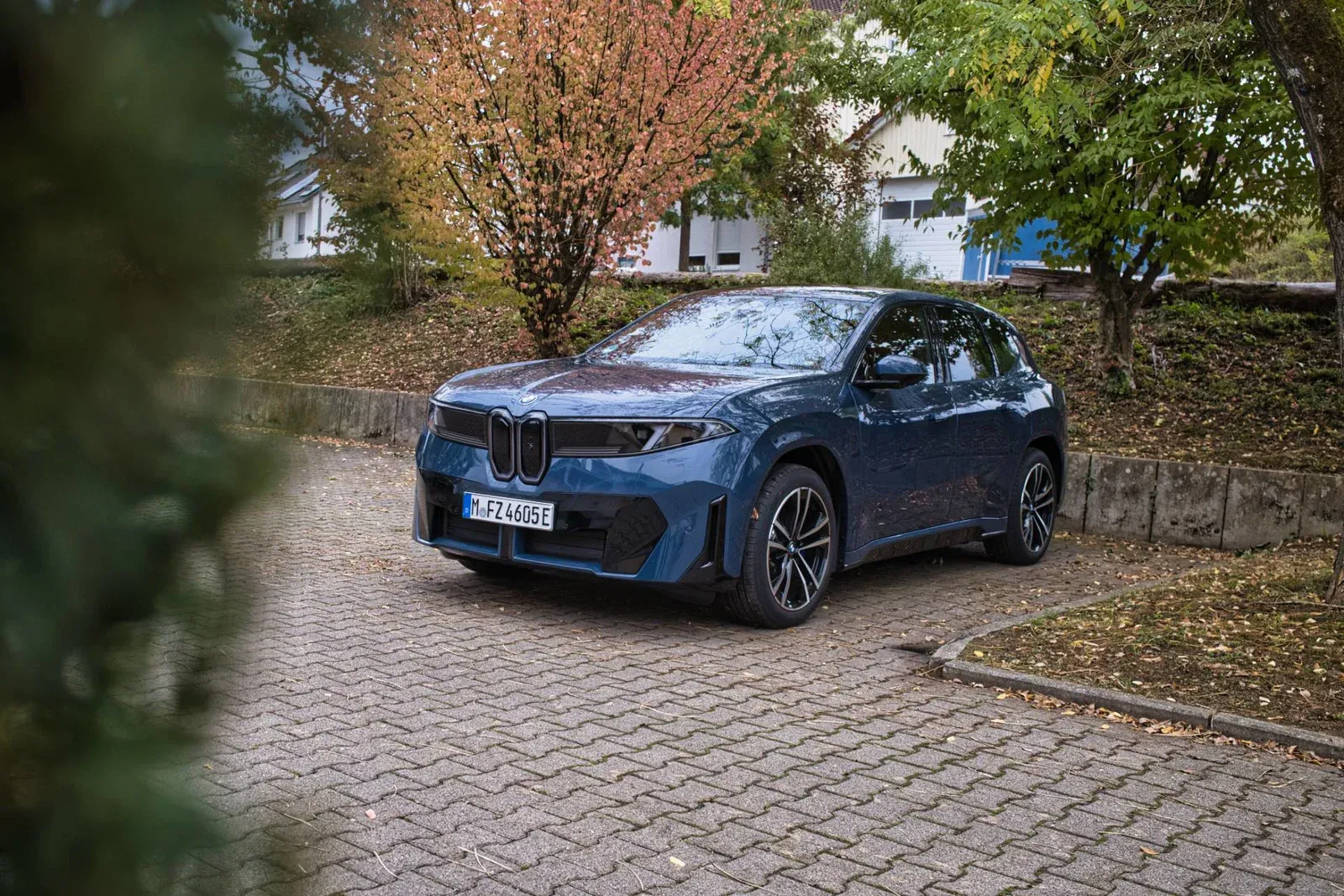
Before getting behind the new BMW iX3, one question dominated my mind: How much of the praise surrounding the first model in this new class over the past months would remain relevant in real-world use? Few electric cars have been discussed in such detail even before delivery, so I approached the past two weeks, during which BMW provided me with the iX3 50 xDrive, with skepticism. Additionally, there’s a personal connection: we drove the predecessor for a year, so my expectations were also shaped by that experience.
In total, that’s about 750 kilometers, roughly divided equally between urban driving, rural roads, and highways. The temperature ranged from 12 to 22 degrees, and I mainly charged at home. This context also includes what this test doesn’t cover: winter driving conditions, fast charging, and the more sporty driving modes were not part of the evaluation. The sport driving mode was only used temporarily, if at all.
Technically, the iX3 represents a new beginning. It is the first series model based on the New Class platform and the first BMW equipped with 800-volt technology, manufactured at the new plant in Debrecen, Hungary. In the 50 xDrive version, two electric motors, one per axle, work together to deliver 345 kW (469 horsepower) and 645 Newton meters of torque. The battery has a net capacity of 108.7 kWh, and according to BMW, this range varies from 666 to 806 kilometers under WLTP conditions depending on the configuration.
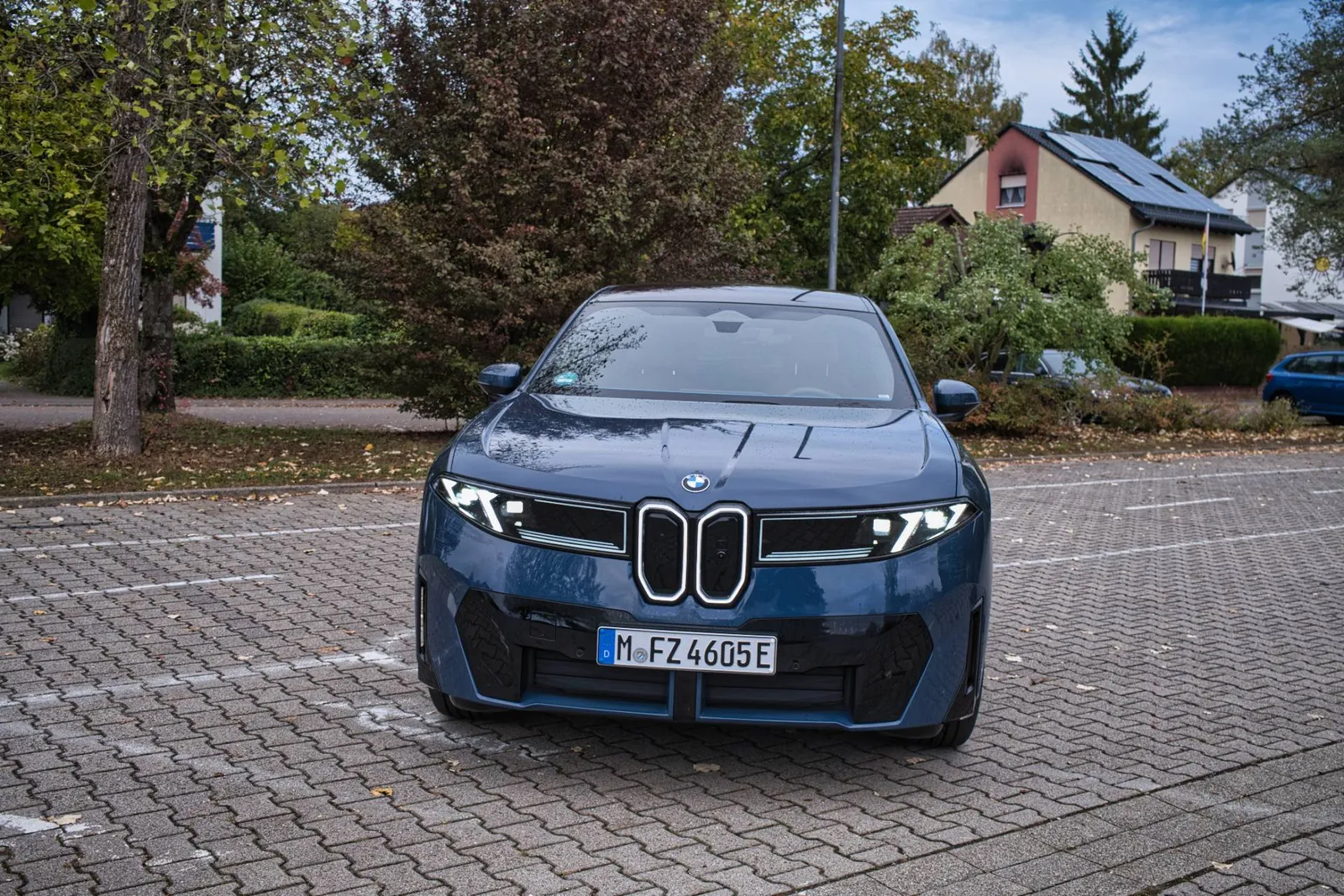
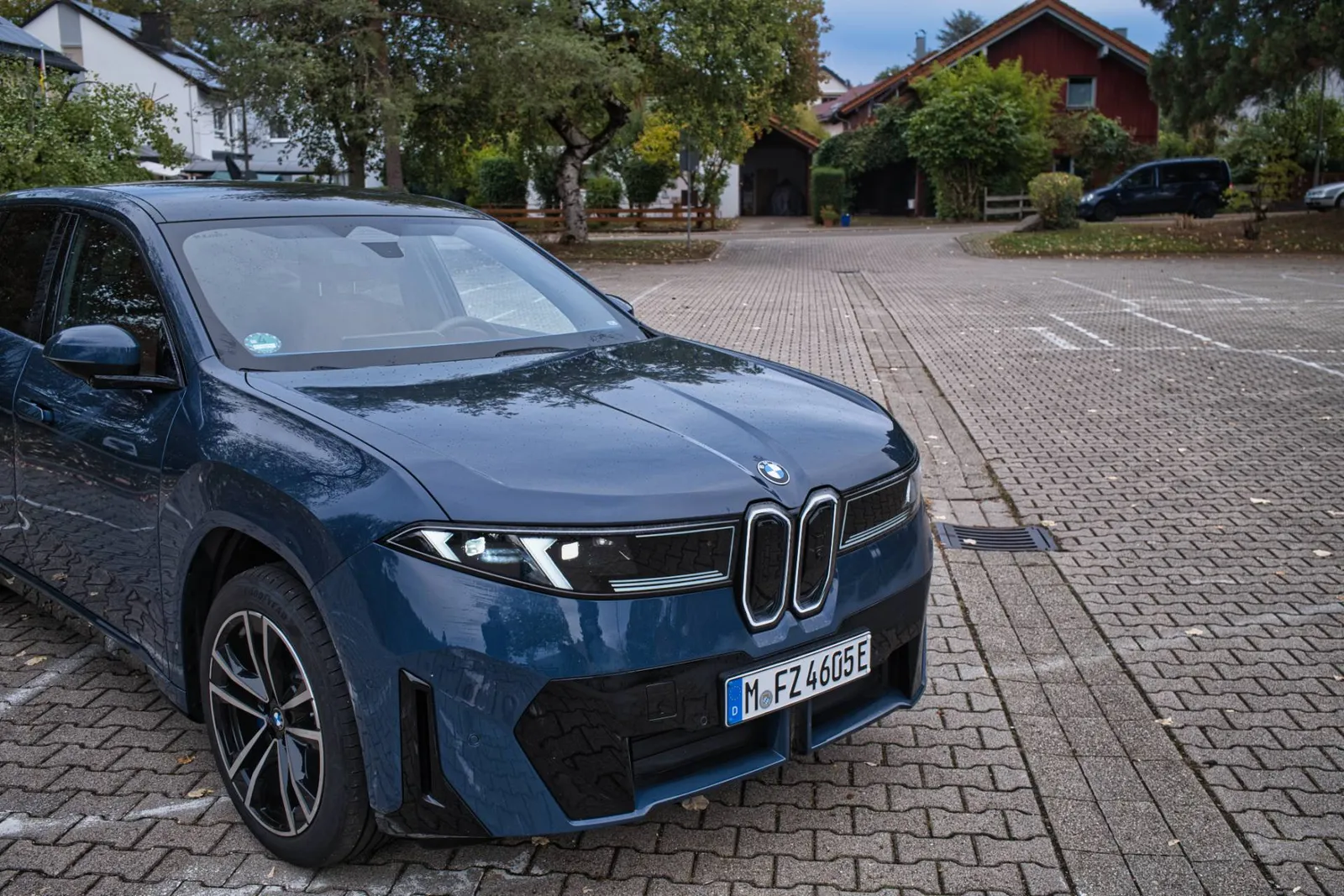
With a length of 4.78 meters, a width of 1.90 meters, and a wheelbase of 2.90 meters, the iX3 fits within the typical mid-size SUV category. My test vehicle was painted in Ocean Wave Blue metallic and came equipped with the M Sport package, including 20-inch wheels with a double-spoke design. At the front, the narrow, upright kidney grilles stand out, glowing here thanks to the Iconic Glow exterior package. This package also includes adaptive lighting features such as glare-free high beams and dynamic cornering lights.
BMW iX3: Plenty of space ahead and behind, few compromises
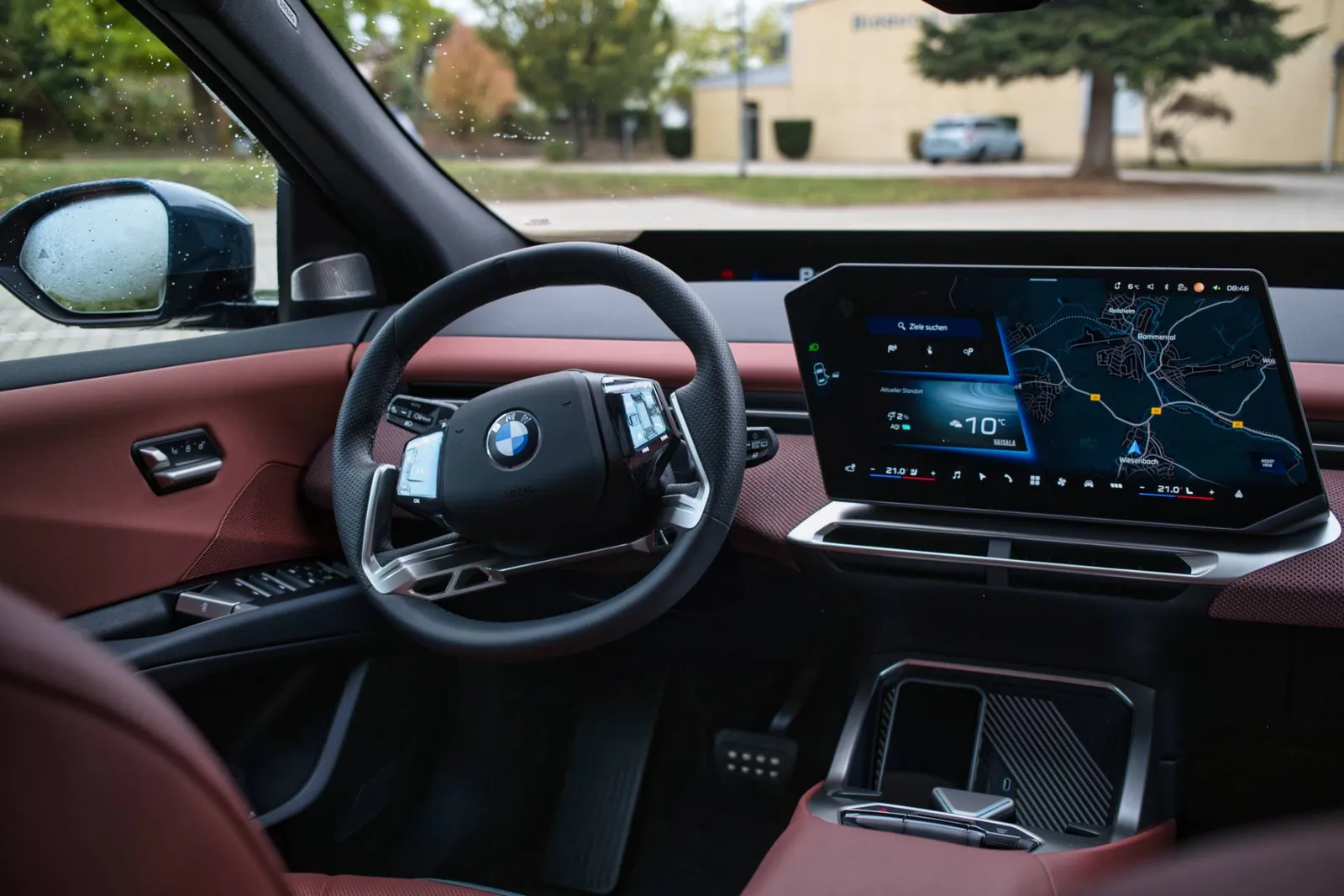
Inside, the clean design continues. The Contemporary interior design in Castanea Bicolor appears organized and well-finished, with it being easy to see where everything is located. A panoramic roof with climate-controlled glass spans above, though it cannot be opened.
At the front, the iX3 offers plenty of space, and I remained comfortable even during longer trips. This is enhanced by the optional multifunctional seats available for 860 euros, which include features such as a lumbar support and a massage function. We used the various massage programs in different ways, and thanks to the stored seat profiles, everyone can quickly find their preferred setting again after switching to the driver’s seat.
No one needs to compromise in the back seat either. With a height of 1.85 meters, I had plenty of space there without having to adjust my position. The comfort was also good for passengers on longer trips.
We made regular use of the trunk, which is quite spacious. According to the manufacturer, it holds 520 liters, and up to 1750 liters when the rear seats are folded down. An additional 58 liters are available under the hood, where we kept only the charging cables. Those who want to tow a trailer can pull up to 2000 kilograms.
Panoramic Vision is impressive, but the steering wheel is less so
Before my first drive, I would have dismissed Panoramic Vision as just a gimmick. BMW projects content across the entire width of the windshield, eliminating the need for a traditional dashboard. With every kilometer, my perspective changed, as all relevant information was readily visible at a glance. The display can be customized, allowing me to keep an eye on whatever interested me at the moment, such as the current music, energy consumption, or route planning.
The test vehicle is equipped with a 3D head-up display, which proved to be a useful aid for navigation. I didn’t necessarily need it, as Panoramic Vision and the central display already cover most functions. Those looking to save money during configuration will find this an option, especially since the head-up display is only available in the package priced at 1900 euros.
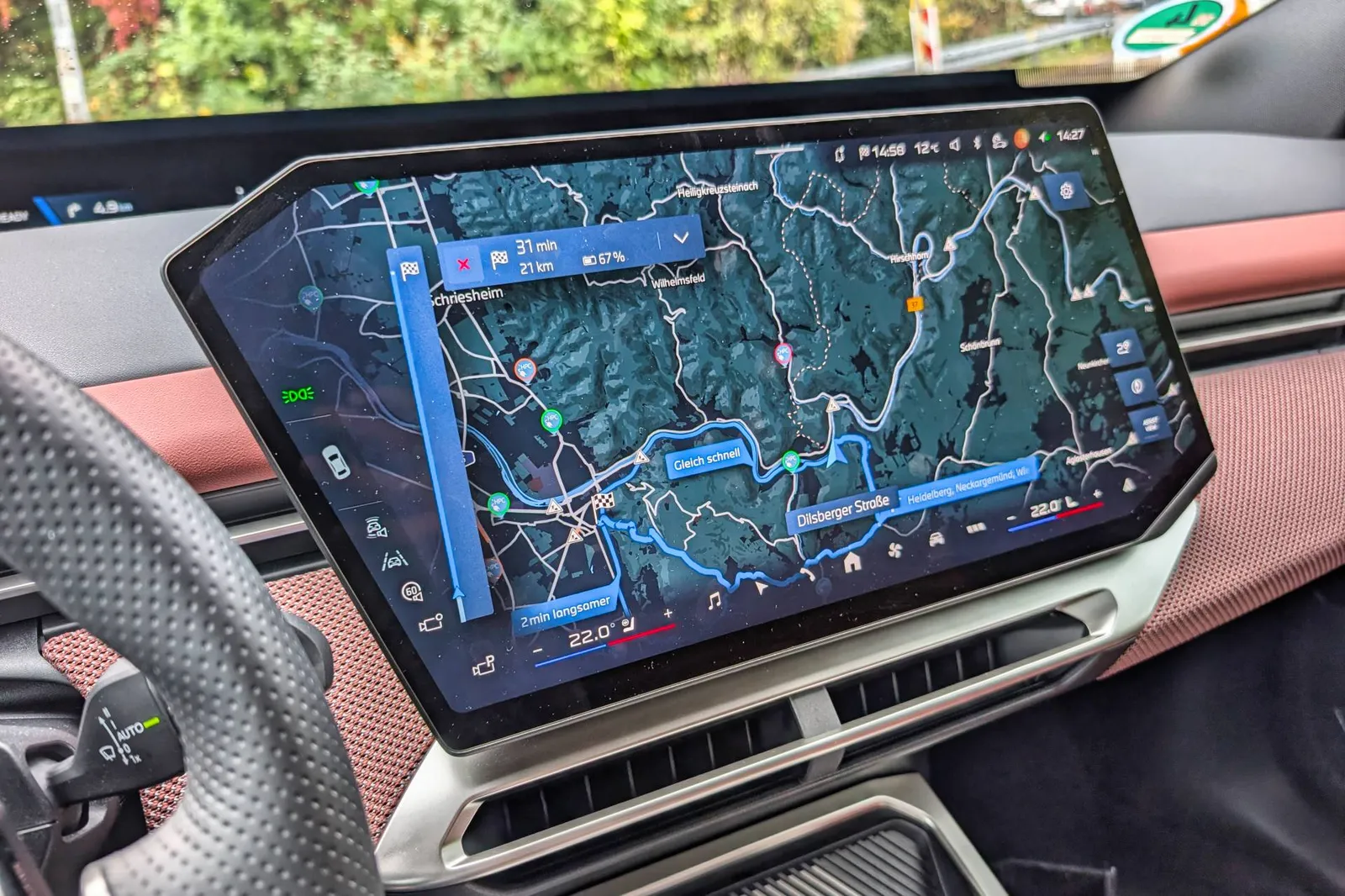
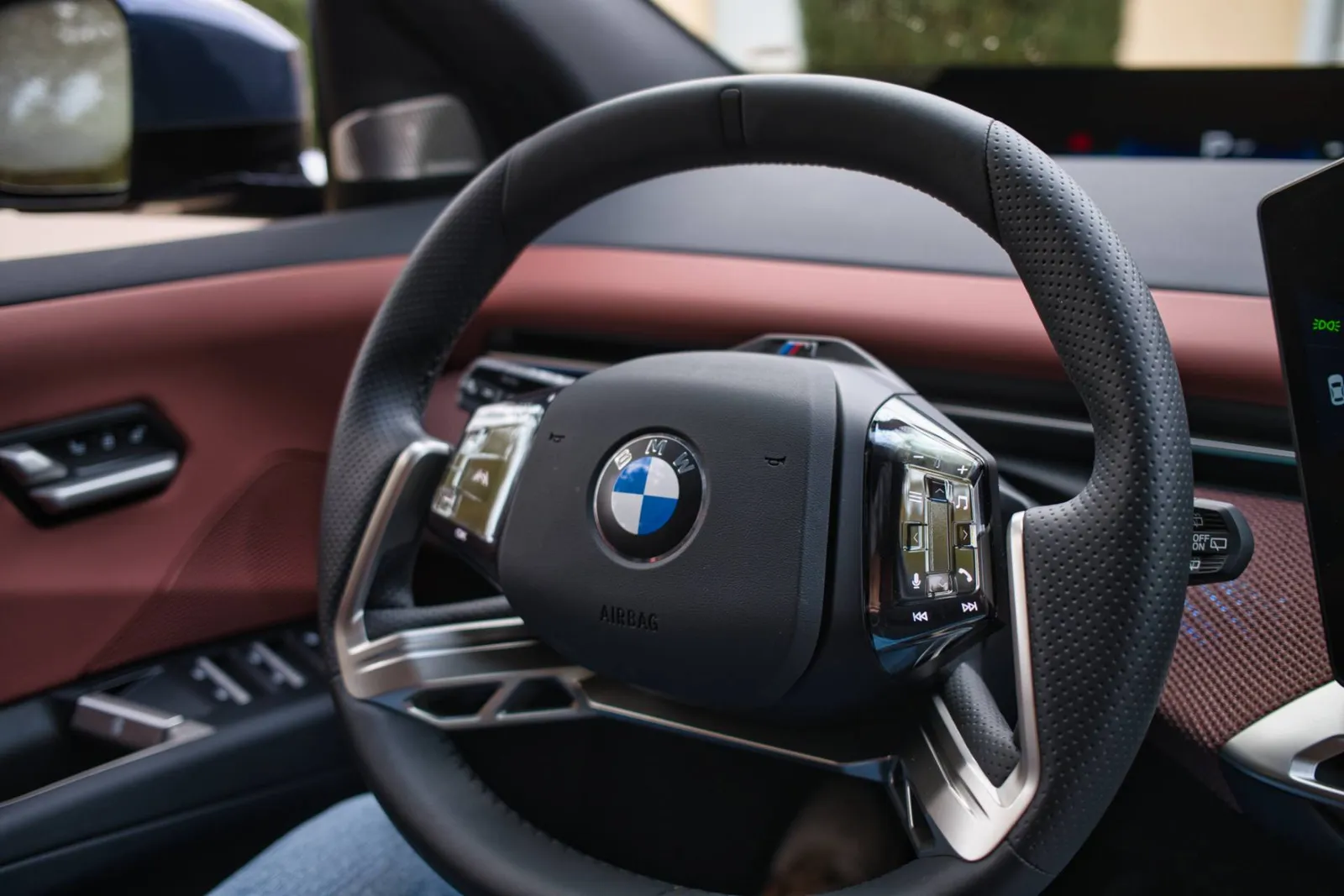
The 17.9-inch central display features an unusual, freely shaped design, but it appears organized and processes inputs without noticeable delay. However, it’s not completely bezel-free—some functions are located quite deep in the menu. The steering wheel also takes some getting used to. The design is unconventional, and I initially struggled with the so-called Shy-Tech buttons, which only display functions when they’re currently usable. To me, the two control panels resembled two rectangles that were added later to the steering wheel. Over time, I got used to it, but it wouldn’t be my first choice for a steering wheel.
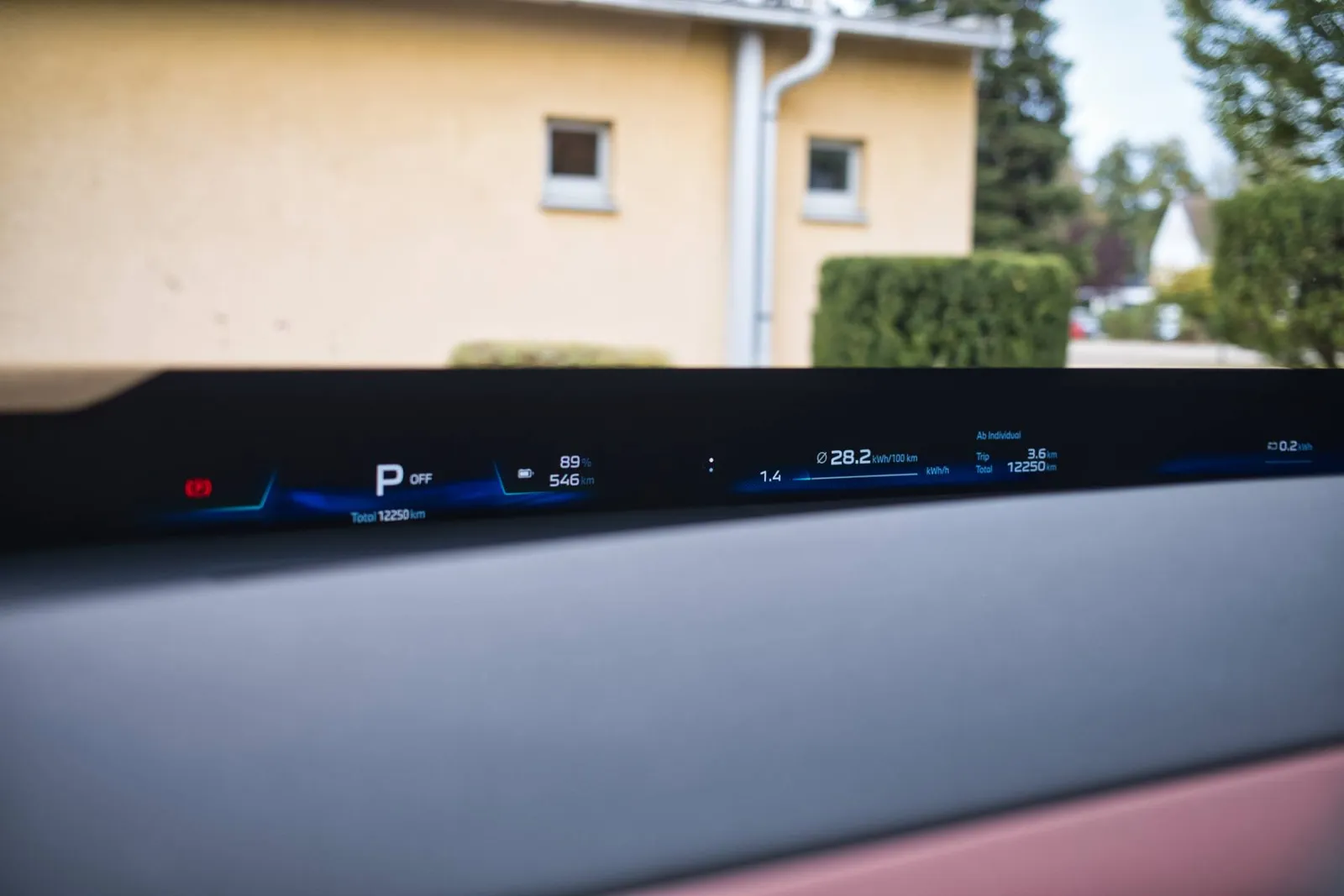
The voice assistant pleasantly surprised me. It responds quickly and stays quiet unless addressed. Every time I used it, it performed its task reliably.
Accurate on the highway, composed in the city
There’s little to criticize about the powertrain. BMW claims 4.9 seconds to reach 100 km/h and a top speed of 210 km/h. In practice, this means you can get from point A to point B quickly at any time, and you can also make a short sprint in between. I drove the entire time in normal driving mode.
I particularly liked the steering. It operates precisely, responds immediately, and never gives the impression that control is not fully in the driver’s hands. This makes the iX3 very predictable, especially on curved roads. The suspension handles well on country roads and highways; rolling and wind noises are audible but remain within normal limits.
The tuning of the regenerative braking is well done. It can be adjusted in stages up to the one-pedal mode, where the car can be brought to a stop solely by pressing the accelerator pedal. It is activated via the selector lever in the center console, after which the display changes from D to B. The car isn’t braked abruptly in this mode. Still, I drove most of the distance in coasting mode, letting the vehicle roll.
In urban driving, I was surprised by the good visibility, even though you don’t sit that high in the iX3. The turning radius is excellent. The parking assistant also helped in tight parking spaces, more on that later. In stop-and-go traffic, the one-pedal mode shines. I particularly liked it when approaching a traffic light slowly: the system detects the light, stops the vehicle, and then resumes driving smoothly and gently, without any abrupt feeling.
When a glance in the mirror is enough
The highway and city assistant costs 1450 euros and combines features such as lane change assistance, intersection assistance, and traffic light assistance. On the highway, what impressed me the most was the ability to overtake by looking in the side mirror. At first it was difficult to adjust to, as it meant giving up some control. However, the system worked flawlessly, and I used it several times without any concerns.
Occasionally I even wished it were available on country roads, but that function isn’t available there. It’s important to remember that this is an assistive system — the driver remains responsible. BMW itself refers to it as a level-2 assistance system.
The Parking Assistant Professional, priced at 850 euros, was also used regularly. It quickly identifies parking spaces, offers various options, and handles parking entirely on its own, fast enough so that traffic behind doesn’t have to wait unnecessarily. Although I can park fairly well myself, I used it more often because it’s simply convenient.
One detail to know when configuring it: The Autobahn and City Assistant, along with the BMW Digital Premium package (480 euros), are limited in duration. Both are valid for two years from delivery and can be extended once free for another two years within three months of that. Further extensions are available through the BMW ConnectedDrive Store, with prices shown by BMW only after registration with one’s own vehicle. Those who want to drive the iX3 for a long time should factor this into their budget.
What 18.3 kWh per 100 km Means in Everyday Use
At the end of the test, the onboard computer showed an average consumption of 18.3 kWh per 100 kilometers. BMW reports values ranging from 16.1 to 19.4 kWh per 100 kilometers according to WLTP standards. However, these two figures cannot be compared directly, as the onboard computer only measures what the car itself consumes, while the WLTP value also includes charging losses. Therefore, my actual consumption from the power outlet was likely slightly higher.
In addition, the conditions were favorable for fuel consumption. At temperatures between 12 and 22 degrees, little heating was needed, while higher values can be expected in winter. The longest leg of the journey was particularly revealing: around 220 kilometers of highway in a row, mostly at 130 km/h, with speeds reaching 150 to 160 km/h at times. Fuel consumption stabilized at around 21 kWh per 100 kilometers, which is a decent figure for an SUV of this size. The estimated range turned out to be reliable.
I also took the risk of checking the long-term data, before I had driven a single kilometer myself. By that time, since its delivery from the factory, the iX3 had covered just under 12,250 kilometers, with an average fuel consumption of 20.4 kWh per 100 kilometers and an average speed of 68.6 km/h. My own figure is about two kWh lower.
The breakdown is also interesting: 86.5 percent of the energy went to the drive system, 7.9 percent to climate control, 4.6 percent to electronics, and 1.0 percent to battery management. Overall, the onboard computer recorded a consumption of 2589.6 kWh up to the handover, with 627.5 kWh recovered through regenerative braking. Based on my average usage and a 108.7-kWh battery, this results in a range of just under 600 kilometers.
Charging at Home and the Battery as an Energy Storage Unit
I mainly charged the vehicle at home. The iX3 comes standard with 11 kW AC charging capacity, and my test vehicle had an additional AC Charging Professional unit costing 740 euros, which increases the charging power to 22 kW. I didn’t use this feature, but for a battery of this size, I still consider it useful: according to BMW, a full charge would take five and a half hours instead of eleven hours.
I wasn’t at the fast charger during the test. On paper, the iX3 is well-equipped for this: thanks to its 800-volt technology, it can deliver up to 400 kW, with BMW claiming it takes 21 minutes to charge from 10 to 80 percent. Under optimal conditions, it should be able to cover 309 to 372 kilometers according to WLTP standards in just ten minutes.
There’s one feature I didn’t test during the review, although it’s part of the core promises of this new class: two-way charging. With the AC Charging Professional and compatible adapters, the iX3 can supply external devices with up to 3.7 kW. It also comes standard with two-way DC charging capability, allowing it to feed power back into the home (Vehicle-to-Home) or the grid (Vehicle-to-Grid).
The requirement for this is the BMW Wallbox Professional, which costs around 2100 euros as an accessory and can charge and discharge at up to 11 kW. For vehicle-to-grid functionality, Germany requires a special electricity tariff from Eon, along with a feed-in contract and a smart meter. BMW and Eon offer a bonus of up to 720 euros per year, depending on how long the car remains connected to the Wallbox.
A lot of technology comes at a price
The iX3 50 xDrive starts at 70,900 euros. At its launch at the IAA, BMW listed it at 68,900 euros, but the base price increased by 2000 euros before it hit the market. Below that are the iX3 40 with rear-wheel drive at 63,400 euros and the iX3 40 xDrive at 65,900 euros, both with 82.6 kWh of battery capacity. Standard features include a heat pump, onboard climate control, and Panoramic Vision.
The list price for my test vehicle was 85,820 euros gross. The optional extras totaled 13,660 euros, plus 960 euros for the paint and 300 euros for the interior. The most expensive item is the M Sport package at 3,800 euros, followed by the Professional package at 1,900 euros, which includes a 3D head-up display, a Harman Kardon sound system, and an extended 3-zone climate control. Other items include the Highway and City Assistant (1,450 euros), the panoramic roof (1,420 euros), and the Iconic Glow exterior package (1,060 euros).
It’s not cheap, and not every extra is absolutely necessary. The head-up display would be dispensable for me after these two weeks. There are several advantages to the two assistant packages, as they have made daily driving noticeably more comfortable, although the limited operating time of the Highway and City Assistant needs to be considered.
The iX3 50 xDrive is particularly interesting for those who drive long distances regularly and can charge at home, as it is then that the large battery truly shines. Those who mainly drive short distances should take a closer look at the cheaper iX3 40.
What remains after 750 kilometers? My initial skepticism has largely dissipated. I used to wonder why the iX3 received such high praise, but after two weeks I can understand it: the driving behavior, efficiency, assistance features, and display design work well together. I would prefer a more streamlined menu structure, a more traditional steering wheel, and greater transparency regarding costs after the warranty period ends. It’s not a car without weaknesses, but one where the strengths clearly outweigh the flaws.
Disclaimer: The BMW iX3 was provided to us by BMW at no cost for a period of two weeks for this review. However, this does not affect our honest opinion expressed here.