
Auto World in a Week: Electric cars account for 30% of Europe’s market, SEAT faces threats, while BYD builds an “European empire”
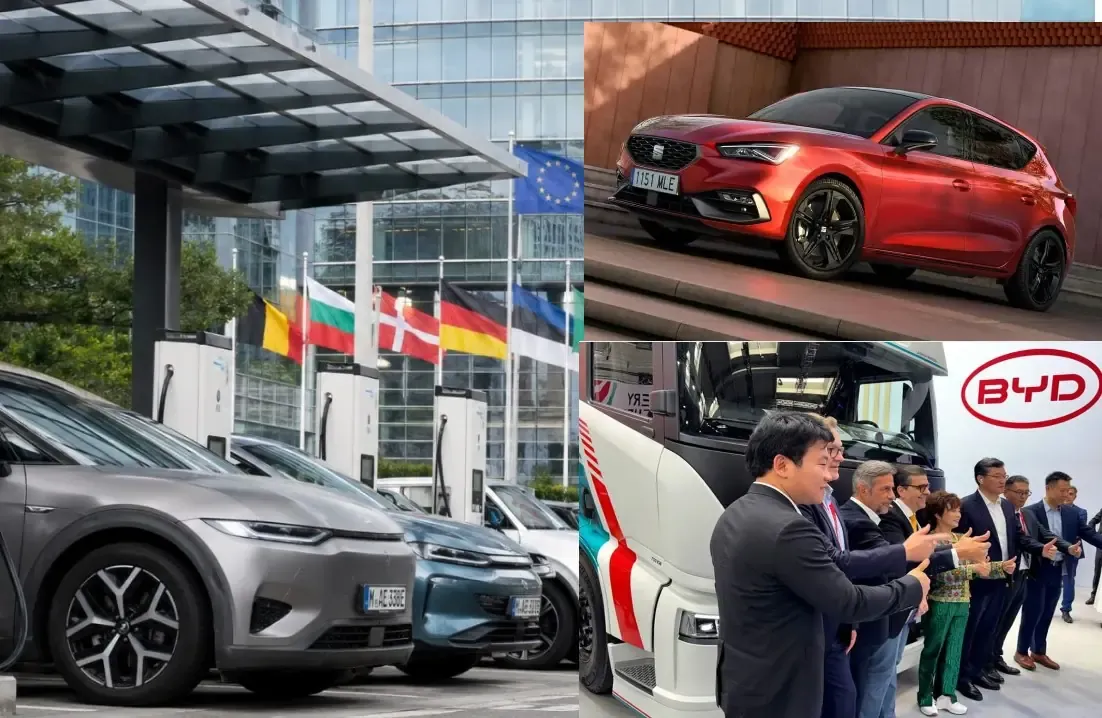
Top Automotive Events from September 11–18, 2026
This week has proven to be one of the most significant in recent months. The European electric vehicle market has unexpectedly accelerated far beyond predictions, with Chinese manufacturers already planning not only to sell but also to mass-produce cars and trucks within the EU. Volkswagen might even take a step that seemed unthinkable just a while ago — essentially abandoning its SEAT brand.
Meanwhile, the American market is moving in a completely different direction: GM continues to invest in diesel pickups, and a large portion of the planned American EV factories have been frozen or canceled.
We’ve selected nine events from the past seven days that best illustrate the new balance of power in the global automotive industry.
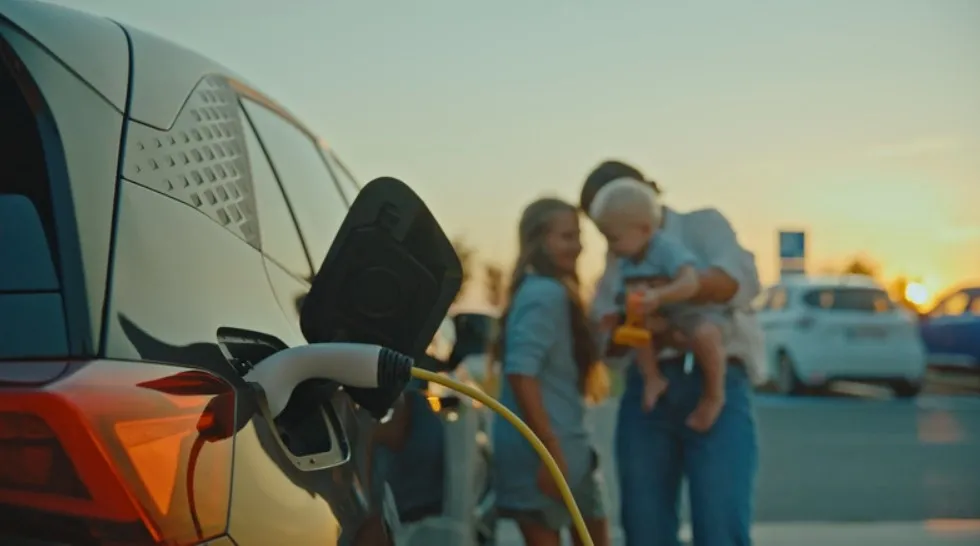
1. Electric vehicles already account for 30.5% of the European market
Perhaps the most significant figure of the week came from Europe.
In August, registrations of pure electric vehicles in 16 key European countries rose by 54.2% to 202,833 units. As a result, BEVs captured a record 30.5% of the new car market. Since the beginning of the year, Europeans have registered over 1.67 million electric vehicles — 33.1% more than last year.
Individual countries are particularly striking: Norway at 98.7%, Denmark at 85.9%, Finland at 52.3%, and the Netherlands at 48.9%. But more importantly, EVs are no longer niche even in the largest markets: their share reached 38.3% in France and 32.5% in Germany.
This is significantly higher than the forecasts that predicted around 21–23% BEV share by 2026.
Why this is important for Ukraine. The European market for new cars is essentially Ukraine’s used car market, just 3–5 years behind. Therefore, the current surge means a huge supply of used electric vehicles by the end of the decade.
And these won’t be mainly Teslas, Nissan Leaves, or Volkswagen ID.3s. Renault 5s, Skoda Elroqs, new Volkwagens, BMWs, Hyundais, Kias, and an increasing number of Chinese models will flood Ukraine.
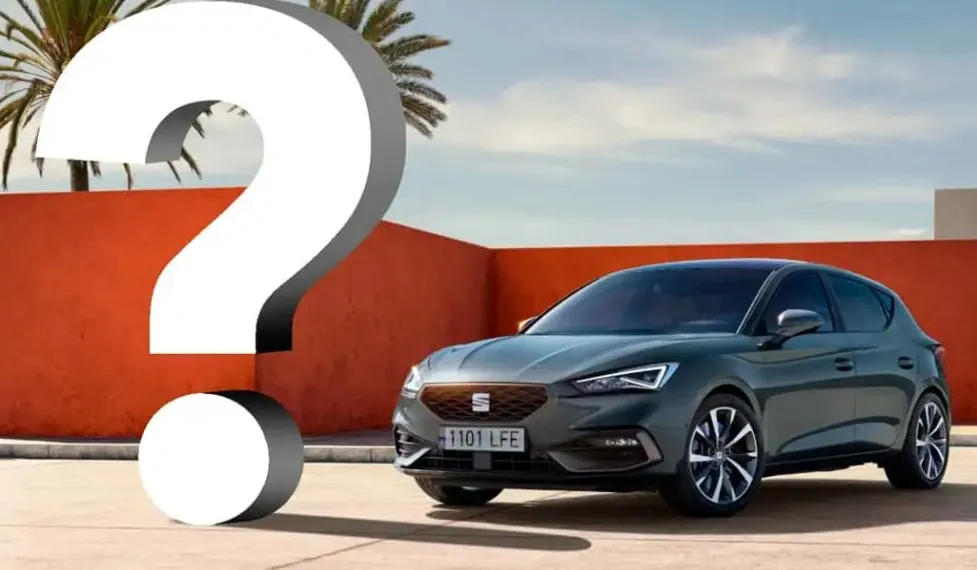
2. SEAT could become the first major victim of Chinese expansion
One of the biggest news stories of the week is that SEAT’s future has come under serious doubt.
Reuters reports that a major restructuring of the Volkswagen Group could effectively mean the end of the SEAT brand as an independent automobile manufacturer. The reasons include weak profitability, internal competition from Skoda and Cupra, and increasing pressure from Chinese manufacturers.
Cupra, on the other hand, shows significantly better performance and higher margins. Thus, Volkswagen’s logic is clear: why maintain two closely related brands when one of them generates more profits?
Reuters describes the possible disappearance of SEAT as potentially the first major automotive brand to fall victim to Chinese competition in Europe.
For Ukraine, this is practically important. SEAT models such as the Leon, Ibiza, Ateca, and Tarraco are widely available in our used car market. Even if the brand stops producing vehicles, there won’t be issues with basic spare parts—most of the components are shared with Volkswagen, Skoda, and Audi.
The residual value of specific SEAT models could decrease.
Here, a much broader trend becomes evident: vehicle brand consolidation could begin in Europe in the coming years.
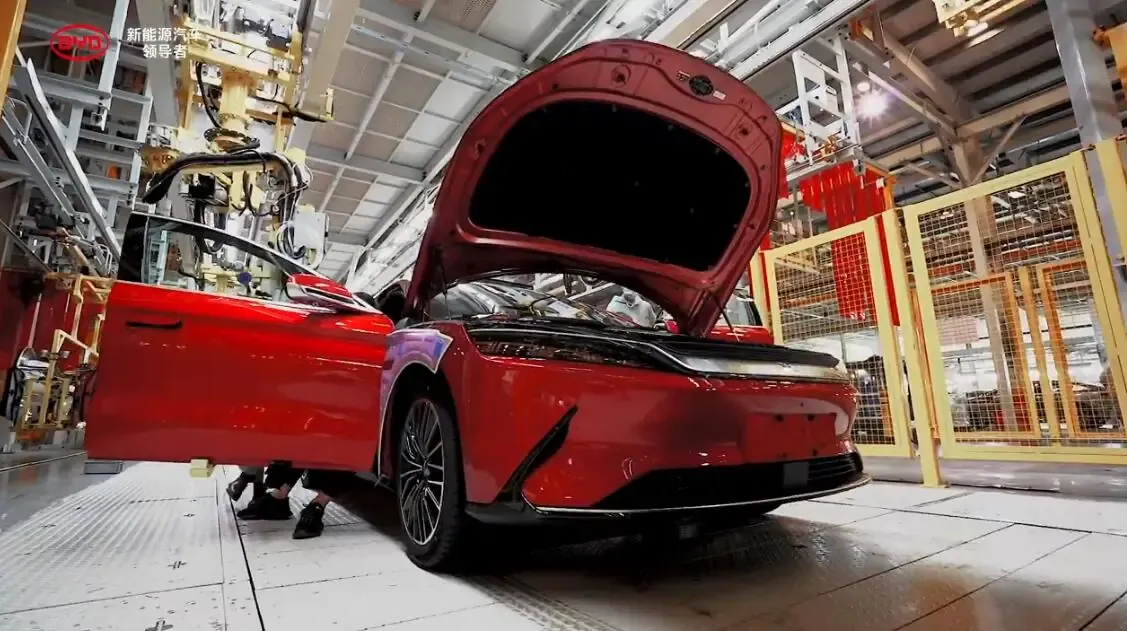
3. BYD wants three car factories and a battery plant in Europe
The Chinese company BYD is no longer hiding the scale of its European ambitions.
A company advisor, Alfredo Altavilla, said BYD will need three manufacturing plants and a separate battery production facility in Europe in the long term.
Chinese manufacturers are currently actively seeking European production sites ahead of future EU requirements regarding the proportion of local components.
This represents a fundamental shift in strategy.
Initially, Chinese companies exported vehicles from China. Then they began building assembly plants. Now they are creating a complete European production chain—from batteries to finished cars.
For Ukraine, this is largely good news. European production by BYD will mean better logistics for spare parts, more European specifications, and a significantly larger number of used cars in a few years.
In other words, the risk of buying a used BYD at the end of the decade might not be the same as the risk of buying an obscure Chinese EV today.
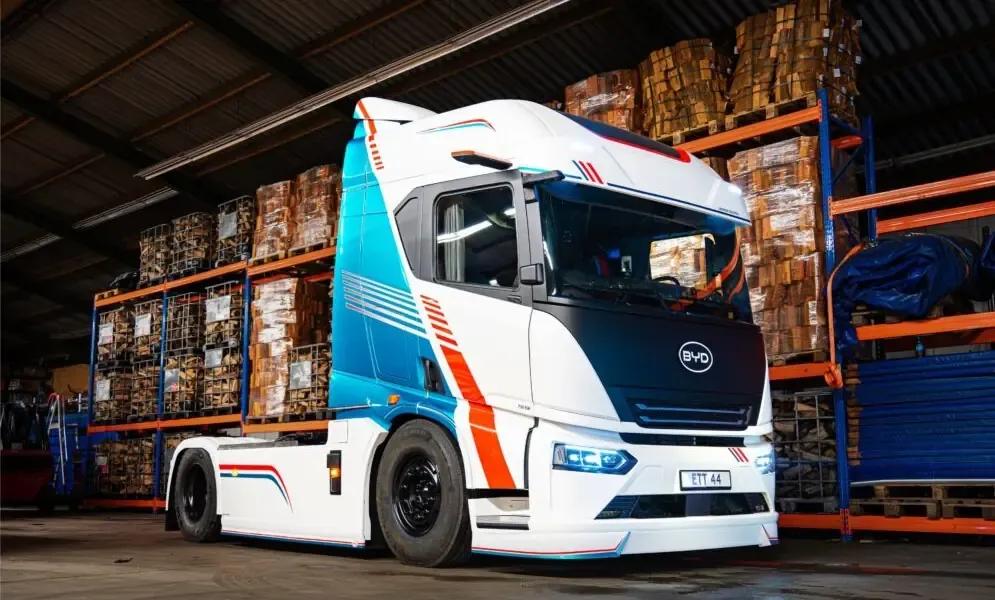
4. BYD is now also targeting the European truck market
At IAA Transportation in Hanover, BYD confirmed its next step—entering the heavy truck segment.
The company plans to introduce its first heavy electric tractor to the European market already next year, with the goal of localizing truck production in Europe thereafter.
This is a very serious signal for Daimler Truck, Volvo, Scania, and MAN.
The Chinese competition, which first transformed the passenger EV market, is now entering the most profitable segment of European commercial vehicles.
For Ukraine, this topic is particularly interesting. Our truck fleet is largely composed of used vehicles from the EU. If electric tractors become widespread in Germany, the Netherlands, and Scandinavia, they will start appearing in Ukraine’s used vehicle market within a few years.
However, the main limitation here will no longer be the price of the vehicles themselves but rather the charging infrastructure.
5. Hydrogen has unexpectedly returned to the big game
IAA Transportation revealed another interesting trend: major truck manufacturers are not yet ready to rely solely on batteries.
Daimler Truck, Volvo Group, Toyota, Bosch, Air Liquide, TotalEnergies, and several infrastructure companies have formed a coalition to develop hydrogen truck infrastructure in Europe.
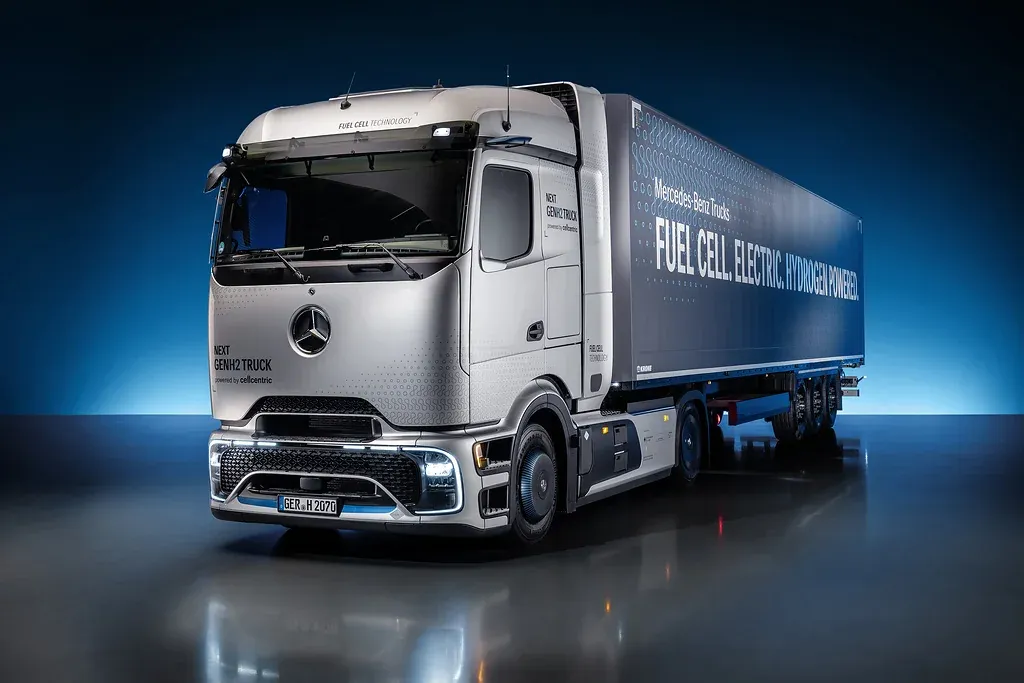
Daimler has already unveiled the Mercedes-Benz NextGenH2. The first batch of 100 hydrogen tractors is planned for production by the end of 2026, with full-scale mass production expected in the early 2030s.
The manufacturers’ reasoning is simple: for long-haul trucks, a high-capacity battery means additional weight and reduced payload capacity.
For Ukraine, this is important not today but strategically. If Europe truly builds hydrogen transport corridors, Ukraine could potentially become their extension—especially considering international freight transportation.
But for now, battery-powered trucks seem like a technology much closer to reaching mass market adoption.
6. McLaren has surrendered to SUVs
There is another automotive tradition that seems to have died for good: a supercar manufacturer without an SUV.
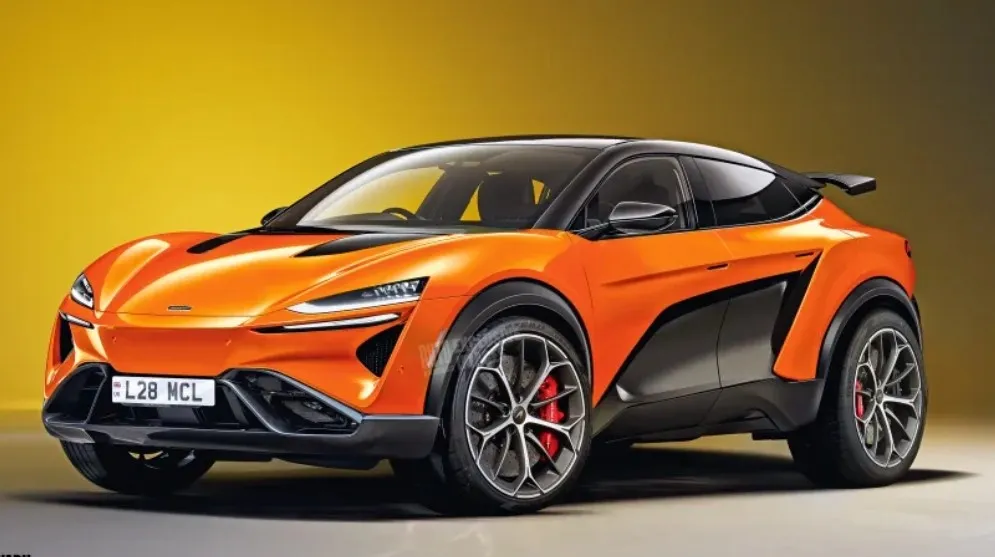
McLaren announced investments of £500 million ($675 million) in British manufacturing and the development of new models. The main focus will be on the brand’s first SUV in history.
The company will establish a new manufacturing plant in the United Kingdom and plans to develop engines and transmissions in-house. By 2032, the program is expected to create around a thousand jobs.
Meanwhile, McLaren has no plans for an electric vehicle at this time, citing a lack of sufficient demand from its customers.
The reaction in automotive circles is predictable: purists viewed the SUV almost as a betrayal of the brand’s philosophy, but others point to the success of models like the Porsche Cayenne, Lamborghini Urus, and Ferrari Purosangue — it is these luxury crossovers that provide manufacturers with the funds to create true sports cars.
For Ukraine, the direct impact is minimal, but the trend is significant: SUVs have firmly become the most important vehicle category even in the highest price segment.
7. GM goes against the trend: the next Silverado will remain diesel
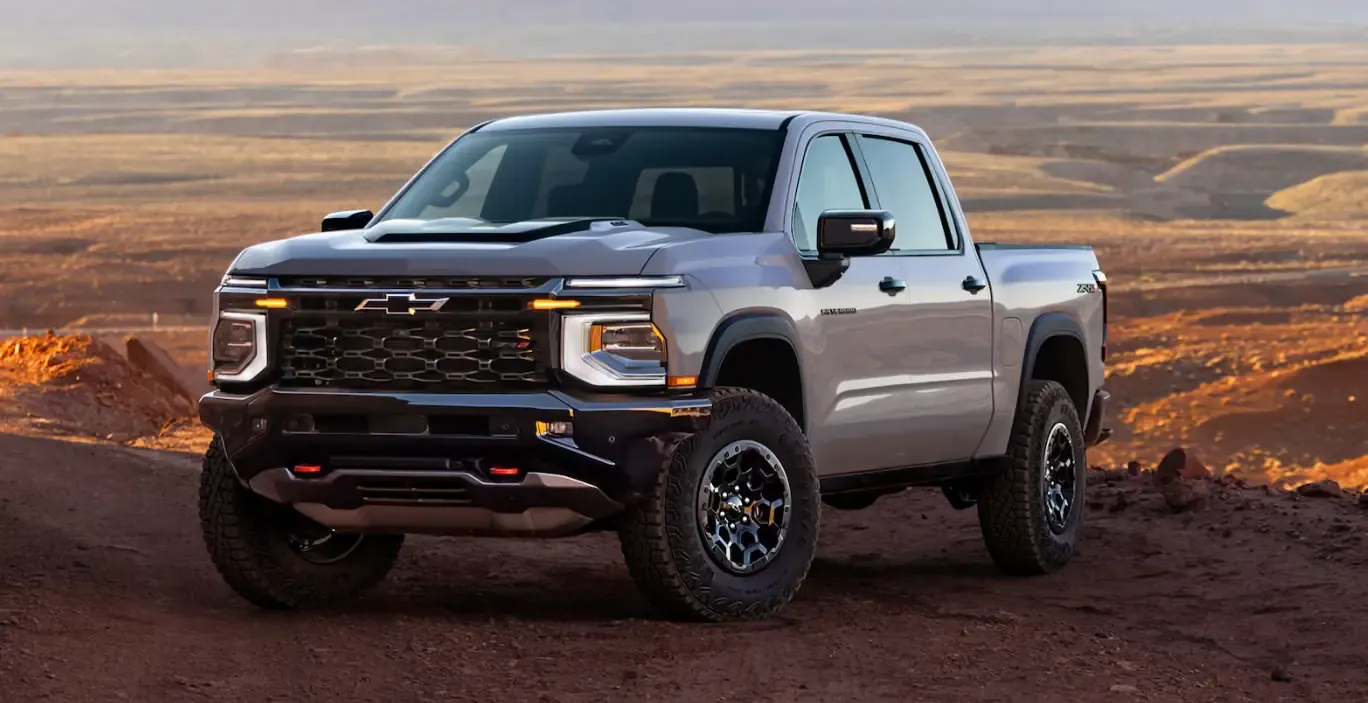
While Ford and Ram are actively developing hybrid pickups, [General Motors](https://www.gm.com/?utm_source=chatgpt.com) has chosen to take a different path.
The upcoming Chevrolet Silverado and GMC Sierra will feature an upgraded 3.0-liter diesel engine, along with two new gasoline V8 engines.
With an enlarged fuel tank, the diesel version will be able to travel over 900 miles—approximately 1450 km—without refueling.
For comparison, Ford has already abandoned the diesel F-150 in favor of a hybrid, while Ram is developing a range-extender plug-in hybrid.
Why this matters to Ukraine: Silverado and Sierra regularly arrive here from U.S. insurance auctions. For our conditions, the 3.0 Duramax remains a significantly more practical option than a heavy electric pickup.
This story also shows that even at the end of the decade, internal combustion engines don’t disappear instantly. In certain scenarios—towing, long distances, remote areas—diesel engines will remain competitive for a long time.
8. GM missed the American hybrid boom
The irony is that at the same time, General Motors faces a completely different problem.
American consumers are now switching to hybrids in large numbers, but GM has little to offer them. Dealers tell Reuters that customers are increasingly asking directly for hybrid versions, mainly due to high gasoline prices.
Toyota, Honda, Hyundai, Kia, and Ford gained a huge advantage, while GM bet on a quick shift from internal combustion engines to electric vehicles.
Now the company has to bring back hybrid technologies.
This situation is very familiar to Ukraine. The classic HEV is often the most versatile option today: it doesn’t rely on charging infrastructure, has fuel consumption of 4–6 liters per 100 km, and its battery is relatively small.
The current American trend means that in a few years, there will be significantly more hybrid SUVs on Copart and IAA.
9. Europe prepares for 25,000 Lucid ride-hailing cars
Another technology this week took a big step from experimentation to commercialization.
The Estonian platform Bolt and the American company Lucid Motors have agreed to create a fleet of at least 25,000 autonomous vehicles in Europe. In the long term, Bolt aims to expand this autonomous fleet to 100,000 vehicles by 2035.
The vehicles will be built on Lucid’s upcoming midsize platform and equipped with Nvidia Hyperion. This represents SAE Level 4 — meaning the car can operate entirely on its own within a designated area without any driver involvement.
For comparison, most modern production systems remain at Level 2.
There’s a very interesting aspect related to Ukraine here: Bolt is one of the major players in our country’s taxi market. Of course, the emergence of robotaxis in Kyiv is unlikely in the near future, but technically, this scenario is no longer fantasy.
---
This week’s figure — 30.5%
That’s the market share electric vehicles held in 16 key European countries for new cars in August.
What’s even more interesting is the growth rate: +54.2% in just one year.
This figure changes our perspective on Ukraine’s future used car market.
If already one in three new cars in the European part is electric today, then by the end of the decade, one in three 3–5 year old cars that Ukrainians will look for in Germany, the Netherlands, or Belgium will also potentially be EVs.
---
What to watch in the coming days
This weekend will feature two interesting automotive events.
Until September 20, IAA Transportation 2026 is taking place in Hanover — one of the world’s leading exhibitions for trucks, buses, and transportation technologies. It is here that we can best see the future of commercial transport: batteries, megawatt chargers, hydrogen, Euro 7, and autonomous logistics.
Today, September 18, the Goodwood Revival 2026 kicks off and will run until September 20. This year, the central themes will be the centenary of Maserati’s racing history, the 80th anniversary of the Vespa, and tributes to Jack Brabham and Barry Sheene. Historical Grand Prix cars, sports cars, and touring vehicles will take to the track, with Jensen Button among the confirmed participants.
This Week’s Main Trend
This time, the picture is particularly clear: the automotive world isn’t transitioning from internal combustion engines to electric vehicles in a single pathway—it’s diverging along multiple routes.
Europe has already crossed the 30% BEV psychological threshold. BYD is setting up three European manufacturing plants, a battery factory, and plans to enter the heavy truck market. Bolt and Lucid are no longer talking about just a dozen test ride-hailing cars but about a fleet of 25,000 autonomous vehicles.
Meanwhile, GM is developing a new diesel engine with a range of around 1450 km, McLaren is launching an SUV instead of an electric vehicle, while Daimler and Volvo are investing in hydrogen trucks.
So the main takeaway for Ukrainian drivers is simple: the coming years will bring us not just one winning technology, but the widest range of powertrains in automotive history.
BEVs for urban use, hybrids as a versatile solution, diesel engines for long distances, electric trucks for regional logistics, hydrogen for long-haul transportation — each technology strives to find its own niche.
The second change is even more significant. China is no longer just selling cars to Europe. It is becoming part of the European automotive industry through factories, batteries, software, trucks, and technological partnerships.
The possible disappearance of SEAT in this context does not appear to be an isolated corporate story, but rather a symbol of a much larger restructuring that is just beginning.