
Audi unveiled the ultra-efficient electric crossover A2 e-tron
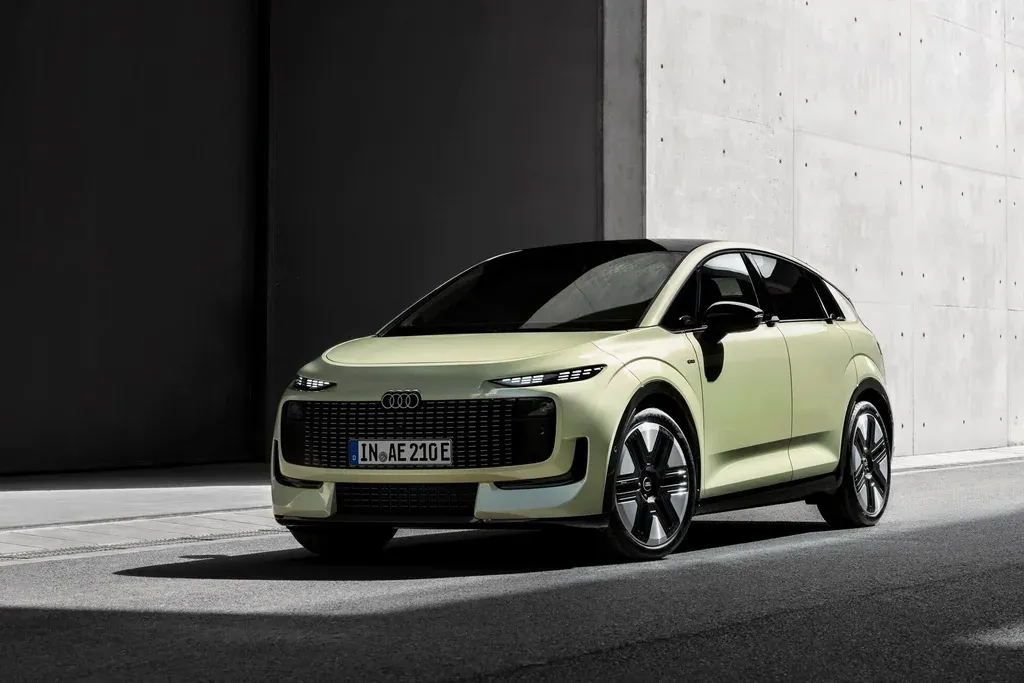
Audi, the German automaker, officially unveiled its new compact electric crossover named the A2 e-tron. This debut marks a return of the iconic A2 designation two decades after the original hatchback of the same name was taken off the production line. The vehicle was developed in record time for today’s industry—just 21 months elapsed from the first sketches to a fully functional prototype. The model’s main commercial goal is to enter Europe’s mass-market eco-friendly segment, where it will compete with the Volkswagen ID.3 and Volvo EX30.
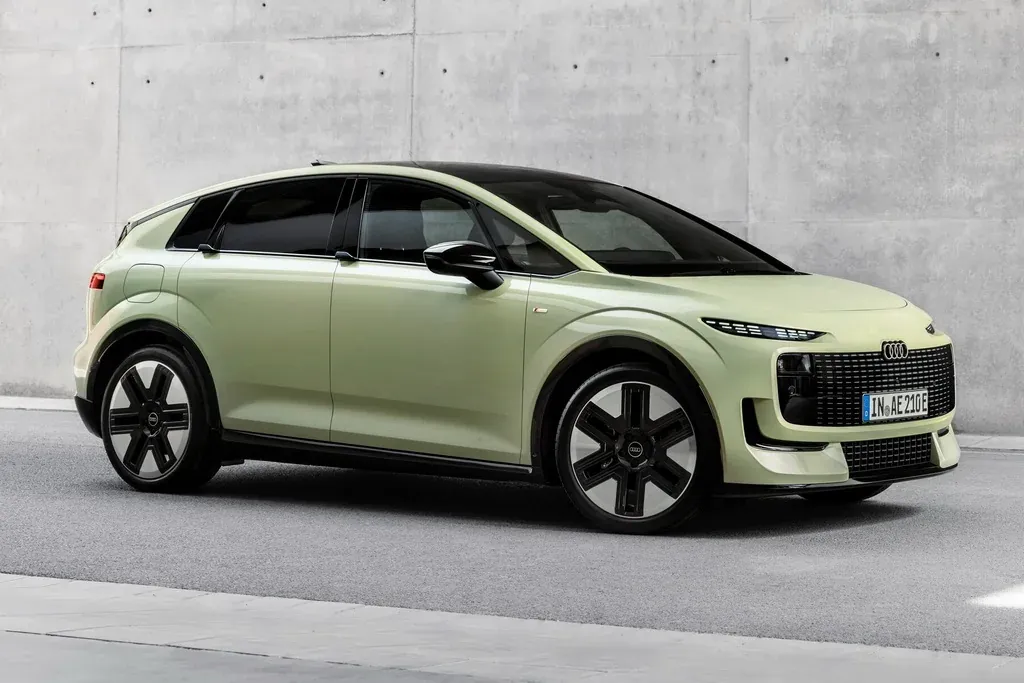
The vehicle retains the recognizable silhouette traits of its famous predecessor, including a monumental monolithic shape, a high roof, and original split-window rear doors. Innovative door handles are integrated into the base of the A-pillars. They lack mechanical pulls and open using sensors.
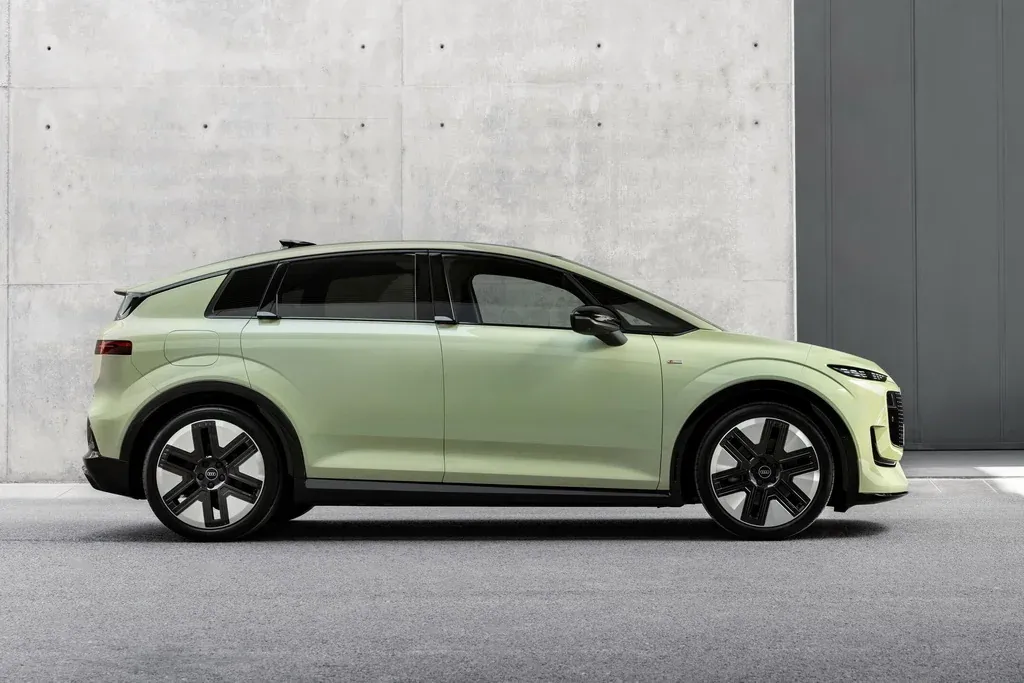
In terms of size, the new model is noticeably wider, featuring a robust and sturdy stance. With a wheelbase of 2770 mm—on par with its larger sibling, the Q4 e-tron—it ensures ample legroom for passengers, while the standard trunk volume amounts to 396 liters.
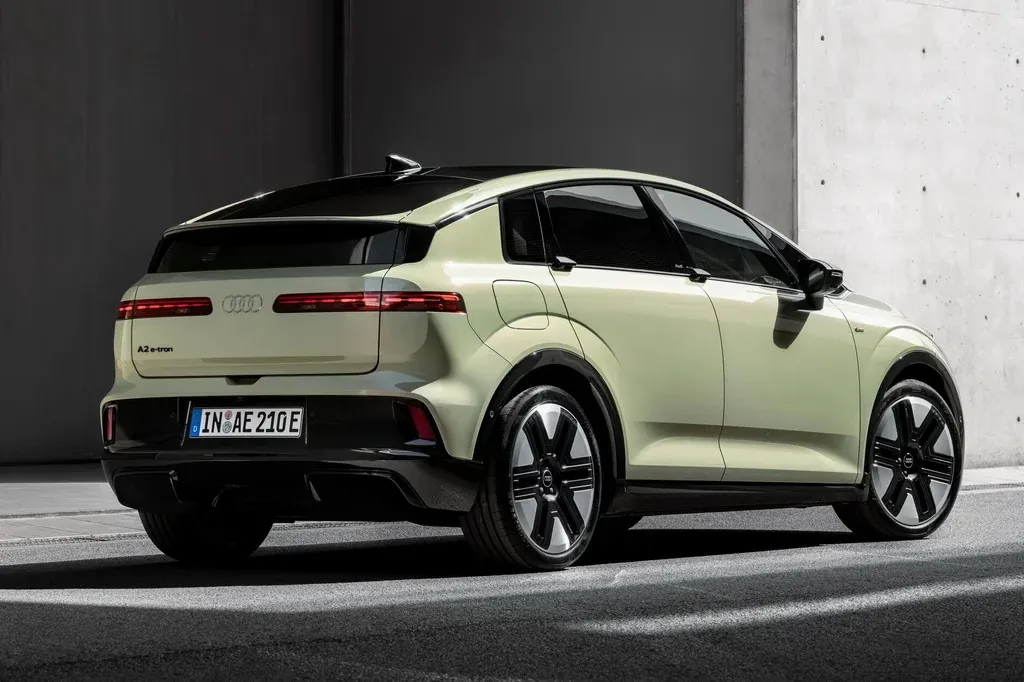
The management states that the A2 e-tron is the most efficient production car in the company’s entire history. Thanks to a fully enclosed underbody, active radiator shutters, aerodynamic wheels, and special deflectors around the wheel arches, the drag coefficient was reduced to 0.24. This allowed for an average energy consumption of just 12.8 kWh per 100 kilometers.
Three options of lithium-ion battery packs with capacities of 52, 61, and 84 kWh are available for buyers. Since it is based on the time-tested German MEB modular architecture with longitudinally arranged components, all peak power is delivered exclusively to the rear axle (Quattro variants are not available in this lineup):
- Base version (52 kWh): equipped with a single electric motor producing 170 hp, it accelerates to 100 km/h in 8.8 seconds and offers up to 422 km of range per WLTP cycle.
- Mid-level model (61 kWh): gets a 190 hp engine, reducing acceleration time to 7.9 seconds while increasing range to 515 km.
- Roadster version (84 kWh): delivers 231 hp, reaching 100 km/h in exactly 7 seconds and providing a top range of 645 km as specified by the manufacturer.
- Flagship model (84 kWh): boosted to 326 hp, it accelerates to 100 km/h in 5.7 seconds, has a top speed of 200 km/h, and offers a range of 629 km.
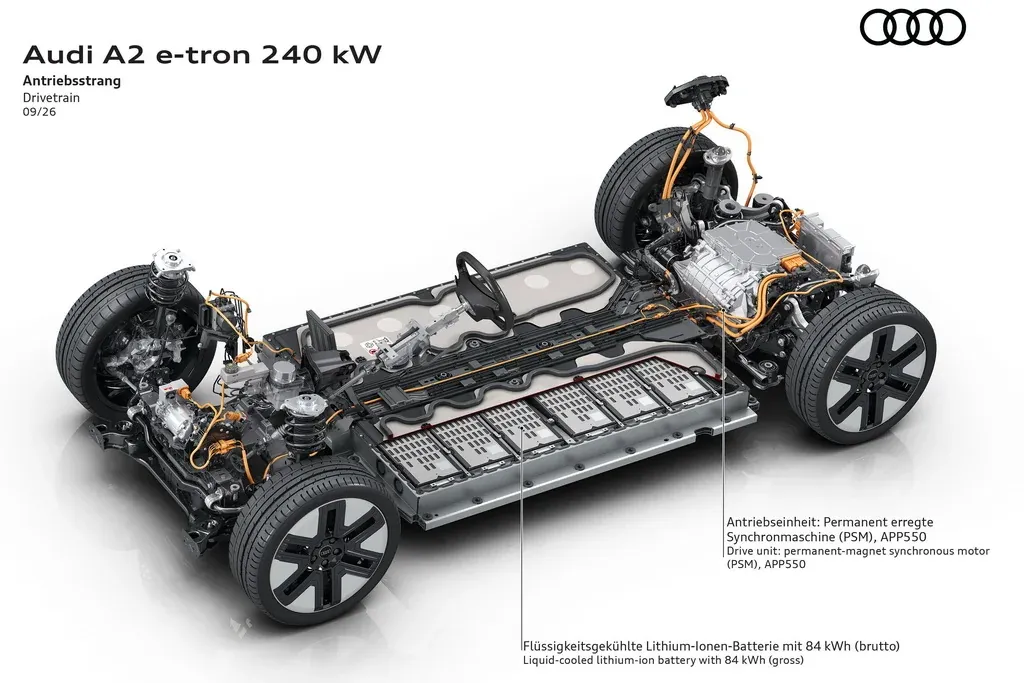
The power system supports a fast DC charging setup with up to 183 kW for the larger battery (charging from 10% to 80% in 29 minutes) and up to 100 kW for the two smaller versions (charging in 24 minutes).
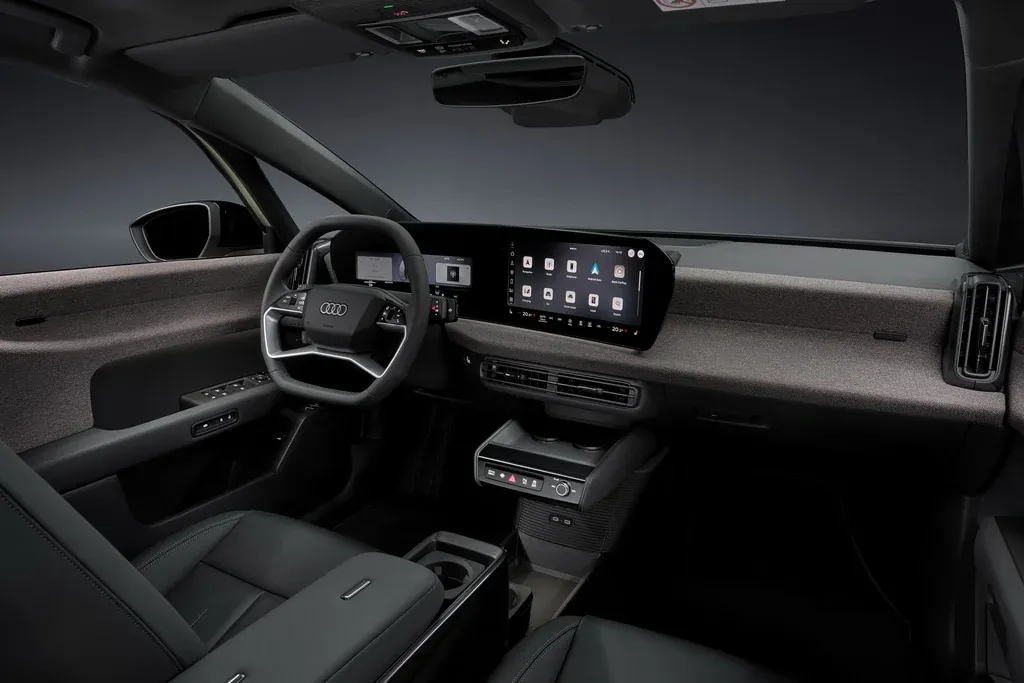
The dashboard features a large curved panel that combines an 11.9-inch digital instrument cluster with a 12.8-inch touchscreen multimedia system, while the gear shift lever has been moved to the steering column. A notable feature is the Fidlock magnetic fastening system with a mechanical lock, allowing passengers to securely attach cup holders, organizers, and branded bags to custom locations throughout the cabin and trunk with just one click.
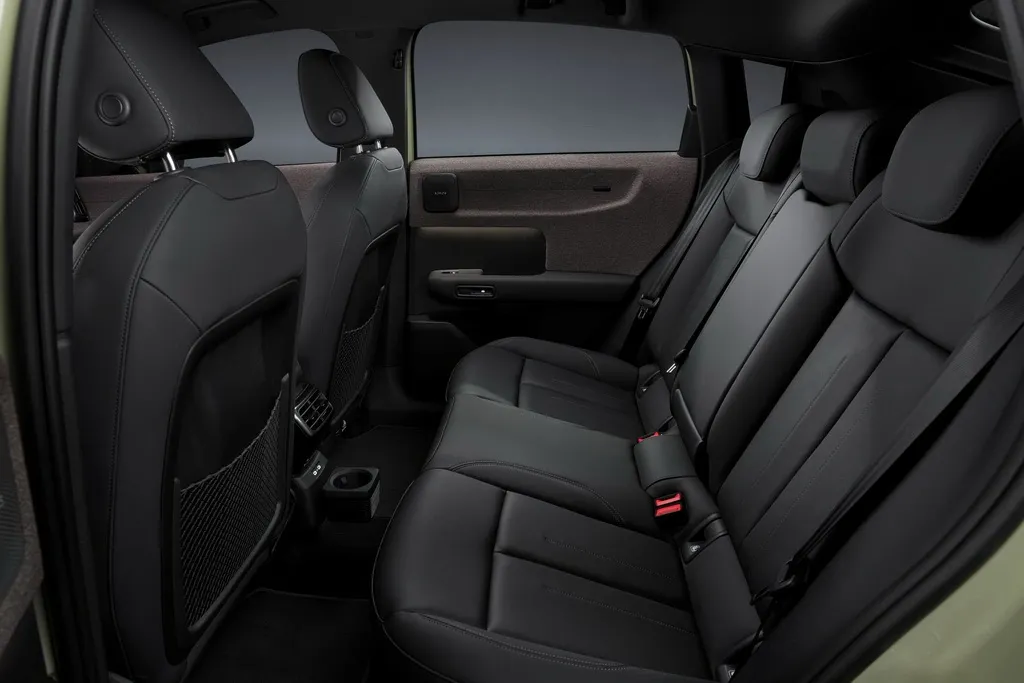
Orders for the Audi A2 e-tron can be placed starting September 10, 2026, with the first vehicles arriving at dealerships in December 2026. The starting price in Germany is 38,200 euros.
AC Note
The original first-generation Audi A2 compact hatchback, produced from 1999 to 2005, entered world history as one of the most forward-thinking yet commercially unsuccessful vehicles in the industry. The key engineering feature of that model was the complete abandonment of steel in favor of a revolutionary ASF (Audi Space Frame) body made from aluminum profiles and panels, which allowed the curb weight to be kept at an astonishing 895 kg while enabling a highly fuel-efficient “3 liters” diesel version (consumption of 3 liters per 100 km).
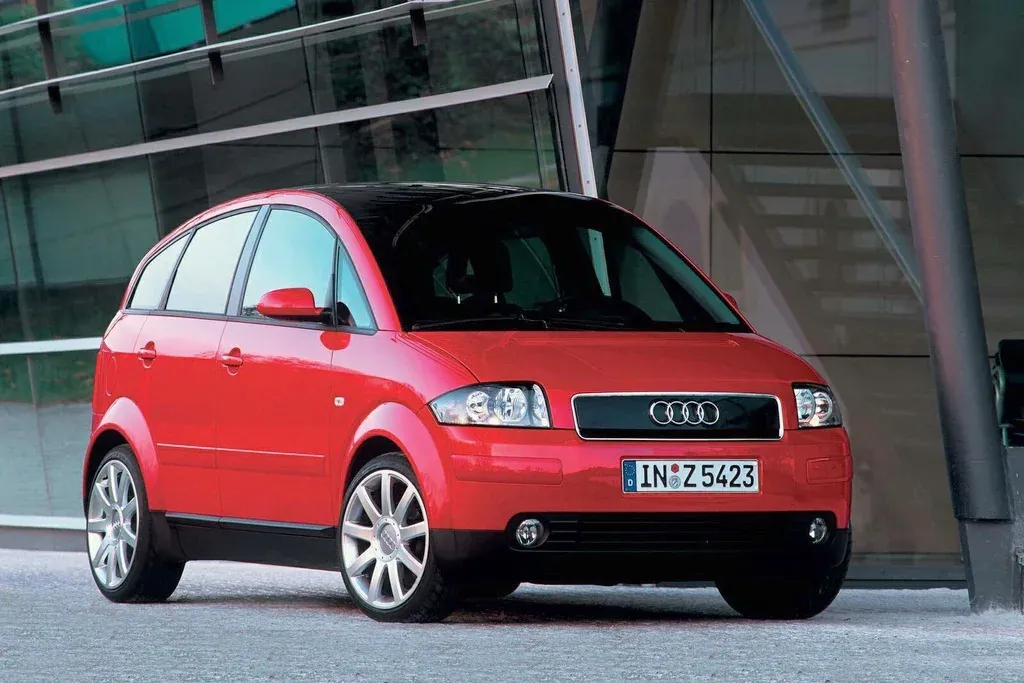
However, the enormous production cost of aluminum and the complexity of repairing the plastic hood raised the retail price to that of the higher-end A4 model. The conservative European market was not willing to pay a premium for its compact size, resulting in the project being shut down with huge losses.