
The alphabet of electric mobility. What are the differences between cells in your electric vehicle, and why is it not just lithium?
When buying a gasoline car, few people ever considered the metal grade used to cast the engine block. What interested us was the capacity, number of cylinders, and presence of a turbocharger. However, in the world of electric vehicles, we are entering the realm of materials engineering, something an average driver didn’t need to worry about before. Manufacturers juggle the chemistry of battery cells, seeking the ideal balance between cost, range, and performance.
Table of Contents
Show
Hide
This is not a situation where there is one perfect solution. Different cell formats and cathode or anode chemical compositions resemble the old choice between low-octane gasoline and high-performance diesel. Each technology has its applications and limitations. If you’re confused by abbreviations like NMC, LFP, or LMR, this text will clarify your understanding of what truly powers modern electric vehicles and what lies ahead in the coming years.
Lead and acid. A heavy legacy from the past
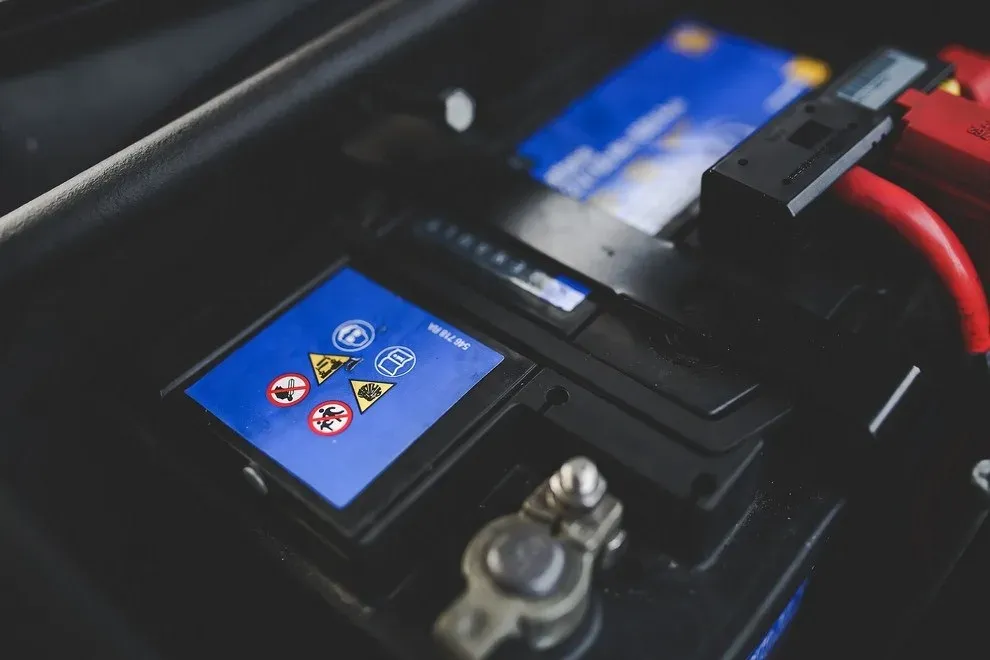
Let’s start with a technology that, paradoxically, is still found in almost every modern electric vehicle. Lead-acid batteries are the oldest type of rechargeable cells in widespread use. They are inexpensive to produce, proven reliable, and easy to recycle. It’s the same technology that powers starting systems in internal combustion engines.
In electric vehicles, 12V batteries still serve to power auxiliary systems such as cabin lighting, electric windows, and multimedia systems. However, they are not suitable for driving the main motor. They are heavy and offer a poor energy density compared to lithium. Historically interesting is the fact that the first generation of General Motors’ EV1 from the 1990s used this type of cell before engineers switched to nickel hydrogen. Today, lead in power applications is obsolete, but as an auxiliary battery, it remains standard.
Nickel-metal-hydride (NiMH). The hybrid workhorse
Before the lithium era arrived, nickel-metal hydride cells served as a bridge between internal combustion engines and electrification. This technology was behind Toyota’s hybrid success. NiMH cells are extremely durable and resistant to harsh conditions, including extreme temperatures, making them “dumb-proof” for everyday use.
However, they share a fundamental flaw with lead-acid batteries: they are heavy and store relatively little energy. In conventional hybrids, where the battery acts as a small energy buffer, this wasn’t a problem. In full electric vehicles, NiMH gives way to lithium technologies, which offer better energy density and greater reliability under deep discharge cycles.
Lithium-manganese (LMO). Fast charging, fast wear
Lithium-manganese oxide (LMO) batteries use a manganese-based cathode. This material is cheaper and more thermally stable than those rich in nickel. The advantage of this chemistry lies in its ability to deliver high power and absorb current quickly.
LMO blends powered early pioneers of modern electric mobility, such as the first generation of Nissan Leaf or Chevrolet Volt. Unfortunately, this technology has its limitations. These cells degrade faster than newer solutions, and their energy density does not allow them to achieve record ranges. Currently, pure LMO has largely fallen out of favor in applications requiring long ranges, giving way to more advanced blends.
NMC. The king of range and performance
The currently dominant technology outside the Chinese market is NMC chemistry, which is a combination of nickel, manganese, and cobalt. It is this mixture of metals that determines the specifications of most vehicles we see on European and American roads. Hyundai, Kia, BMW, Volkswagen, and Toyota rely on NMC cells in their BEV (Battery Electric Vehicle) models.
The advantage of this technology lies in its high energy density, which enables long driving ranges without the need to significantly increase the vehicle’s weight. There is also a well-established supply chain and manufacturing infrastructure. The downsides include high raw material costs (especially for cobalt and nickel) as well as lower thermal stability. These cells require advanced cooling systems to operate safely and efficiently. Additionally, their performance drops noticeably in low temperatures compared to some alternatives.
NCA and NCMA. A way to reduce manganese
NCA batteries (nickel-cobalt-aluminum) are a variation of high-nickel cells, where expensive manganese is replaced with aluminum. This approach improves cathode stability and slows down cell degradation. It is a technology that Tesla has promoted for years by using Panasonic cells in its models.
An interesting development is NCMA chemistry, which adds aluminum to the traditional mixture. General Motors uses this solution in its large electric SUVs and pickups. NCMA allows maintaining the high energy density characteristic of NCA, but it shares the same issues: high production costs and the need for precise temperature management of the battery pack.
LFP. The iron horse of the mass market
This brings us to the technology that has turned the market upside down in recent years. Lithium-iron-phosphate (LFP) batteries eliminate expensive nickel and controversial cobalt in favor of widely available iron and phosphates. The result? Batteries are cheaper to produce, safer (more difficult to ignite), and offer a significantly longer lifespan measured in charge cycles.
The drawback of LFP is its lower energy density – a battery with the same capacity as NMC will be heavier and larger. Manufacturers are addressing this by using new packaging methods, such as prismatic cells or cell-to-pack technology (direct mounting of cells in the pack without modules). LFP has dominated the Chinese market and is now gaining traction in Europe and the US with cheaper versions of popular models. It is an ideal solution for city cars and basic sedan versions, where a slightly shorter range is acceptable in exchange for lower cost and durability.
The resurgence of manganese: LMFP and LMR
The battery industry is actively seeking a balance between the cheap LFP and the high-performance NMC. The answer might lie in returning to manganese.
LMFP (Lithium-Manganese-Iron-Phosphate) is an improved version of LFP batteries. The addition of manganese increases the battery voltage, resulting in higher energy density and better range, while retaining the cost advantages and safety features of iron-based technology. Chinese company Gotion claims that its LMFP batteries can withstand over 1800 fast charging cycles and offer a range of around 1000 kilometers (according to Chinese standards). CATL is also developing this technology under the name M3P, supplying it to models such as the Luxeed S7. CATL’s partnership with Tesla suggests that this chemistry may soon be used in the world’s most popular vehicles.
The Western response to China’s dominance in LFP is LMR (Lithium Manganese Rich). Europe and North America do not have as developed a supply chain for iron-based cells, so they are turning to manganese, which is more readily available than nickel or cobalt. LMR batteries are intended to offer ranges similar to those of expensive NMC cells, but at production costs comparable to cheaper LFP. General Motors and Ford are working intensively on this technology. GM plans to introduce LMR cells in its full-size SUVs around 2028, aiming for ranges exceeding 640 km.
Revolution in the anode: Silicon and synthetic graphite
The technologies discussed above mainly relate to the cathodes (positive electrode). But revolution is also happening at the other end of the battery—the anode. Traditionally, it is made from graphite. However, engineers are increasingly experimenting with synthetic graphite or silicon.
Companies like Group14 Technologies and Sionic Energy claim to have silicon anodes ready for production. Silicon allows for a drastic reduction in battery size without losing capacity. The problem with silicon is its swelling during charging, which damages the cell structure, but new composites are designed to eliminate this issue. If this can be implemented on a large scale at a reasonable price, we can expect a significant increase in range.
Lithium metal. The holy grail of density?
An even more radical approach is to completely eliminate graphite and replace it with pure metallic lithium. Such an anode is lighter and can hold much more charge. Theoretically, it is the best material for anodes we know of.
In practice, lithium metal tends to form dendrites—sharp, needle-like structures that grow inside batteries during charging and can pierce the separator, causing a short circuit and fire. Startups such as Factorial Energy and QuantumScape are working on solutions to this problem. The stakes are extremely high: a battery that offers several dozen percent more range per unit of weight than current top-tier designs.
Sodium instead of lithium. It can’t get any cheaper
While Western manufacturers strive for higher energy density, China is introducing sodium-ion batteries to the market. Sodium is a thousand times more abundant in the Earth’s crust than lithium, making these cells extremely inexpensive.
They have a lower energy density, so we won’t see them in sports cars or long-range cruisers. However, they are ideal for urban vehicles, scooters, and energy storage systems. Interestingly, sodium batteries perform well in low temperatures, which could be a key advantage in colder climates. CATL is already producing such cells for both vehicles and stationary applications.
Solid state. A promise we’re still waiting for
Finally, there’s the technology that has been sparking imagination for years—solid state batteries. In a typical battery, ions travel through a liquid electrolyte. Replacing it with a solid material (ceramic, polymer, or sulfides) is expected to bring breakthroughs: faster charging, longer range, complete safety, and resistance to weather conditions.
The problem lies in mass production. Creating such cells without defects at a price acceptable to the automotive market remains an engineering nightmare. That’s why semi-solid batteries using gel electrolytes will be available first on the market. This is an intermediate step that we’ll see in cars much sooner than true “solid state” batteries.
It’s Not Just Chemistry
When looking at this technological race, one thing must be remembered: chemistry is only half the battle. Equally important is how the cells are packaged (cylindrical, pouch, or prismatic format) and how they’re integrated with the chassis. The competition for performance now takes place at the level of engineering the entire package, not just within a single cell.
The development of battery technology is no longer linear. Instead of a single path forward, we have a branched tree of solutions tailored to different needs. Affordable urban electric vehicles will use sodium or LFP batteries, long-range SUVs will rely on LMR or silicon-based compositions, while high-performance sports cars will employ semi-solid electrolytes.
And you, which technology are you most looking forward to? Do you prefer cheaper and more durable LFP batteries, or is range offered by NMC batteries a priority for you? Let us know in the comments!