
BMW iX3 50 xDrive: чи є Neue Klasse проривом?
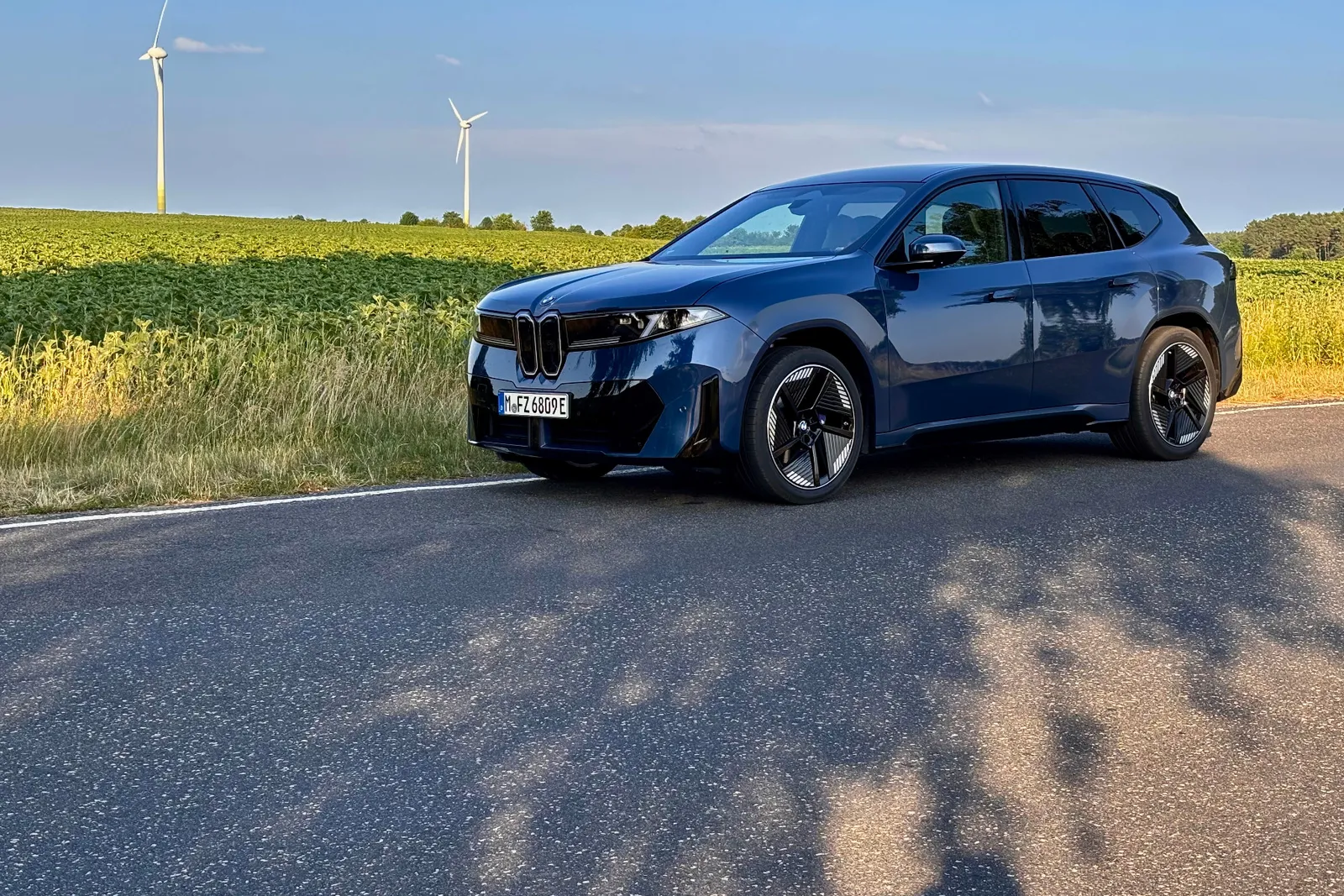
A lot is at stake for BMW with the BMW iX3. As the first production model of the Neue Klasse, it is not just another electric car but is meant to embody the brand’s technological leap forward. New drivetrains, a new battery architecture, new software, and an entirely new operating concept: BMW has left no stone unturned. But do the numerous innovations hold up in real-world testing?
Our test vehicle, a BMW iX3 50 xDrive with M Package, brings the best prerequisites together to take BMW’s new technology through its paces. On paper, two electric motors, all-wheel drive, 345 kW of power, and 645 Nm of torque promise impressive performance. Accelerating from 0 to 100 km/h in 4.9 seconds is remarkable for an SUV of this size. But the promised consumption and range figures are even more intriguing. After all, the Neue Klasse is not only supposed to be particularly dynamic but, above all, particularly efficient.
A BMW just the way you’d want it
It becomes clear after the first few kilometres that BMW’s developers in Munich have done an outstanding job in terms of driving dynamics. The way the iX3 responds directly to the accelerator pedal is exceptional. In Sport mode, the drivetrain immediately reacts with a surge of power without feeling uncontrollable. The power delivery is impressive yet perfectly manageable.
On the motorway, the iX3 exudes enormous composure even at very high speeds. Even beyond 200 km/h, the vehicle remains firmly planted on the road. The sense of speed is correspondingly low. You only remember you’re driving a relatively tall SUV and not a flat sports car when confronted with strong crosswinds. During a trip with a strong north-westerly wind, a certain sensitivity to crosswinds was indeed noticeable.
Where the iX3 truly reveals its qualities is on country roads. The steering is particularly impressive, operating with surprising lightness and precision while providing an excellent feel for the road. The car can be almost playfully manoeuvred through corners. It is remarkable how composed this large and heavy SUV feels.
The pure steel suspension also does its job well. It’s typically BMW — tuned on the firmer side — but still absorbs most uneven surfaces well. There is no air suspension, which does affect comfort. Short bumps, in particular, are felt more distinctly by the occupants than one might expect in this vehicle class. An adaptive suspension is coming with a sporty top version, rumoured in the industry as the iX3 M60, which is not expected to arrive before 2027.
What stands out even more is the unexpectedly stronger acoustic experience. The tyre and rolling noises are relatively noticeable. Uneven surfaces also make themselves heard, especially around the wheel arches. Given the premium aspirations, we would have wished for better sound insulation. This is not a major flaw, but it is certainly surprising in such an otherwise refined vehicle.
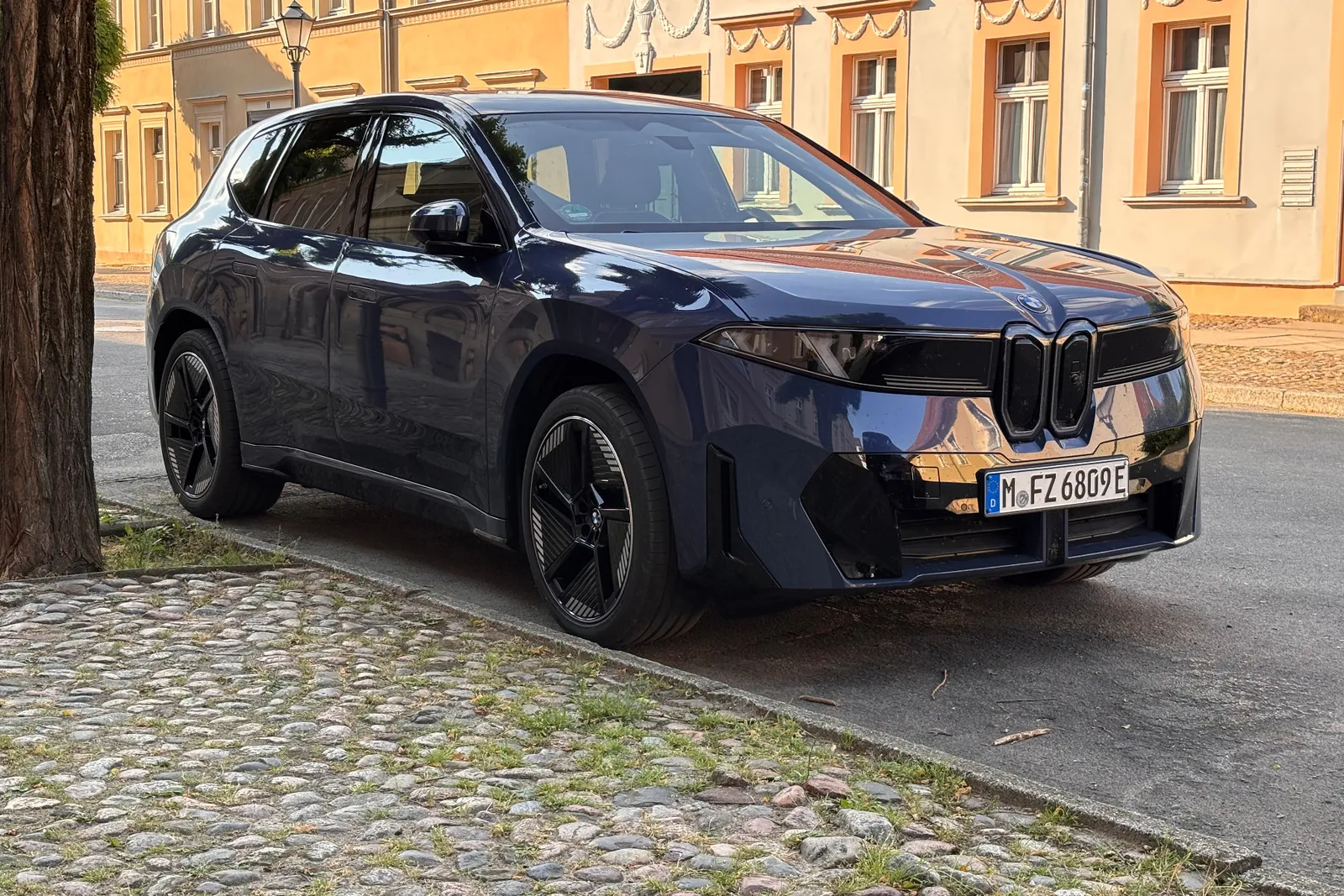
Image: Peter Schwierz
- 1/4
- 2/4
- 3/4
- 4/4
BMW iX3: between 213 km/h and 14.4 kWh/100 km
The efficiency of the new drivetrain is kind of exciting. On a roughly 102-kilometre drive from Neuruppin towards Neustrelitz just North of Berlin, the iX3 demonstrated its capabilities on the motorway, since Germany still allows open speed limits on some sections of its motorways. Where traffic and speed limits allowed, we picked up speed in Sport mode. The speedometer temporarily showed up to 213 km/h—3 km/h more than the manufacturer’s stated figure.
At the end, the on-board computer displayed an average consumption of 26.2 kWh/100 km. Overall, despite the exhilarating stretch of open speed limit, the average speed was only 88.8 km/h due to traffic and the sections of country road after the motorway. At outdoor temperatures between 25 and 29 degrees Celsius, the vehicle display indicated that 5.9 per cent of the energy use went to air conditioning.
This is not a spectacularly low consumption figure, but it is respectable given the temporarily very high speeds.
The real surprise came on the return trip when we mainly drove in Efficient mode on different country roads at temperatures above 30 degrees. Traffic rarely allowed for longer stretches of faster driving. At an average speed of 60 km/h, after 55 kilometres, the display showed a consumption of just 14.4 kWh/100 km.
This is a remarkable figure for a large, high-performance electric SUV with all-wheel drive. Especially since we had higher summer temperatures, and air conditioning now accounted for 13.4 per cent of the energy use.
Of course, the two trips can’t really be compared. The significantly lower speed level on the return journey greatly favoured economical operation. Nevertheless, the test impressively demonstrated the wide range of the new BMW drivetrain. Those who want to can drive the iX3 in a very sporty manner. Those who drive more moderately, on the other hand, achieve consumption figures that one would hardly expect from an SUV of this format.
Given the usable battery capacity of 108.7 kWh, the consumption figures revealed enormous range potential. The up to approximately 800 kilometres according to WLTP promised by BMW naturally remain a standard value. However, based on our experience, it seems entirely plausible that long distances can be covered with the iX3 without constant charging planning, even if we weren’t specifically focusing on this aspect.
Panoramic iDrive shows the future of the cockpit
BMW has made a particularly big leap with its display and operating concept. The new Panoramic iDrive is undoubtedly one of the highlights of the iX3.
The combination of the large central display and the information display spanning the width of the windscreen works brilliantly in everyday use. The most important driving information is located directly in front of the driver, while navigation instructions, for example, can be displayed in the centre.
This reduces the need to constantly look at the central screen. After a short familiarisation period, one almost wonders why such a concept has not long since become the standard.
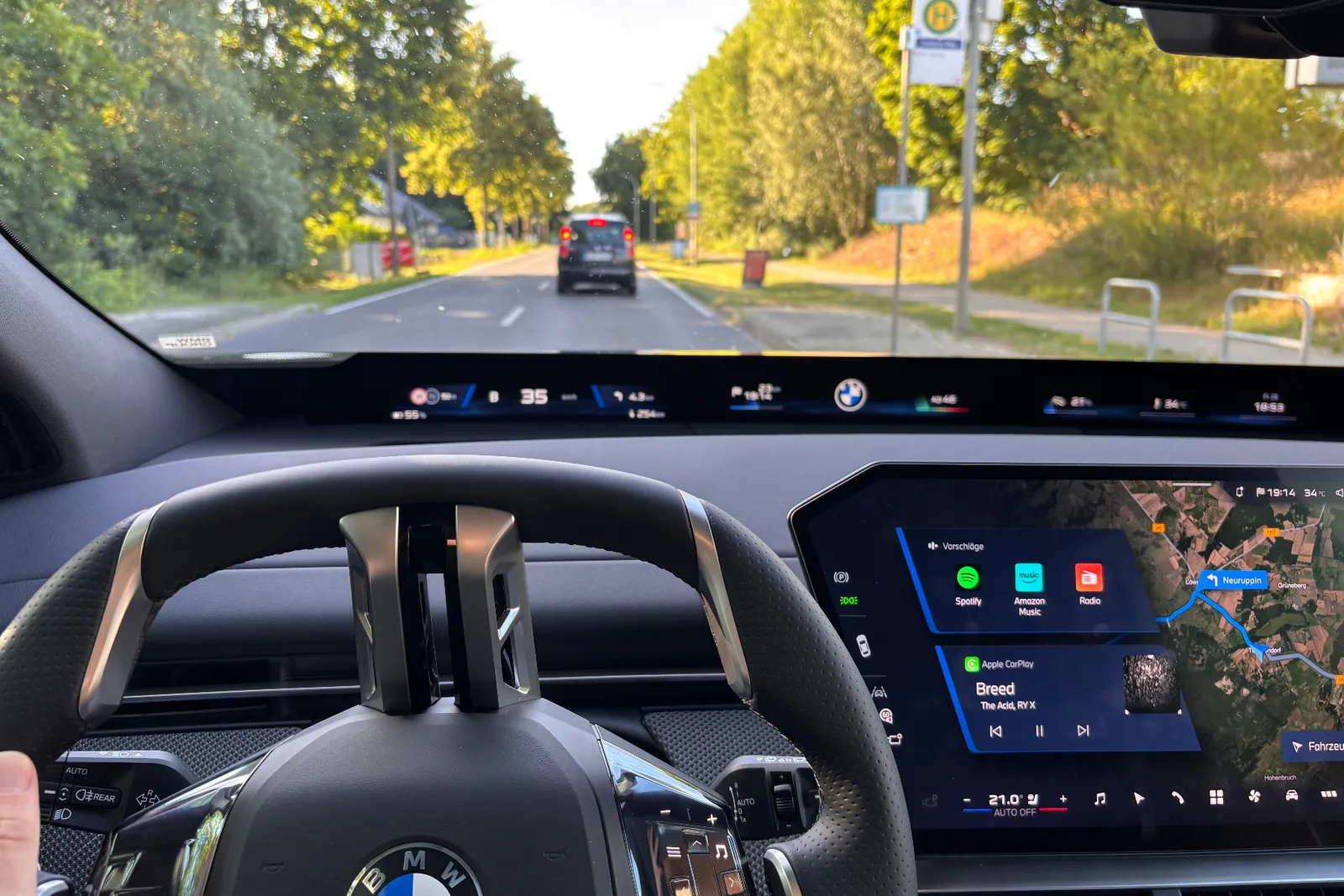
Image: Peter Schwierz
- 1/2
- 2/2
The software makes a fast and mature impression overall, but BMW offers an exceptionally large number of functions and settings, so users initially have to navigate through numerous menus and submenus. Compared to Tesla’s reduced operating concept, this sometimes feels a bit overwhelming. Once you have found your way around, though, the operation is genuinely enjoyable.
The system is not entirely without flaws. During incoming or outgoing calls, the navigation sometimes disappears from the displays. This is hard to understand, especially in a cockpit with multiple information areas. Additionally, the voice control cannot be used as usual when the parking camera is activated.
While BMW’s own software responds quickly, Apple CarPlay stood out in our test for its sometimes exceptionally sluggish operation. That said, it wasn’t possible to conclusively determine whether the issue lay with the vehicle or the connected smartphone.
The navigation system itself also left a mixed impression. Voice input works reliably and understands even more complex destinations surprisingly well. The map material and the consideration of current traffic information were a little underwhelming. For example, the system tried to route us through a construction site in Hohen Neuendorf that has existed for years.
An assistance system that truly relieves the driver
Almost even more impressive than Panoramic iDrive are the driver assistance systems. This is where BMW has taken a remarkable developmental step.
The simplicity of operation is great. A single button press is all it takes for the iX3 to take over longitudinal and lateral control within the system’s limits. This not only works with remarkable composure on the motorway but also in many everyday driving situations. The lane-keeping assist works precisely. Even curves are navigated cleanly. The system feels neither erratic nor patronising. The intuitive activation, in particular, is reminiscent of Tesla in a positive way.
The motorway assistant takes things a step further. On suitable motorway sections, this function enables hands-free driving as long as the driver continues to monitor traffic attentively. In our test, this was exceptionally reliable. The automatic lane changes were particularly impressive and could be confirmed by the driver with a glance in the exterior mirror.
This provides a new level of relaxation on long motorway journeys. Of course, it remains an assistance system that requires the driver’s attention. Nevertheless, this implementation is among the best we have experienced in a production vehicle to date.
The technology also impresses when parking. Obstacles are reliably detected, and the vehicle brakes automatically. If necessary, such interventions can be easily overridden via the user interface.
High comfort with surprising gaps
The interior of the iX3 conveys an overall high-quality impression. The materials feel solid, and the workmanship is of a high standard. The seats are also exceptionally comfortable and offer excellent comfort on long journeys. The powerful massage function is a welcome addition.
All the more surprising, then, is the absence of seat ventilation. On hot summer days, we found ourselves wishing for it repeatedly. While the air conditioning performs its task just fine, it does not replace the active ventilation of the seat surfaces.
A small, unexpected highlight, on the other hand, is the steering wheel. Regardless of its unusual design, it fits your hands perfectly and ergonomically. The shape really works well when gripping it at a slightly higher position.
Less successful are the door handles. They provide barely any mechanical feedback, so you sometimes have to grab them a second time before the door opens. This fits with a detail that struck me as a long-time BMW observer: the rich, premium sound when closing the doors that was once almost a trademark has become quieter. It still sounds decent, but that typical premium ‘thunk’ is no longer there. In isolation, this is a minor detail — but it is precisely such details that define a premium claim.
The boot, on the other hand, is practically designed. Although the load floor is relatively high and the compartment beneath offers less additional space than hoped, the comparatively steep tailgate allows for good utilisation of the storage space far to the rear.

Fast charging: impressive even at high SoC
With its 800-volt architecture and a maximum DC charging power of 400 kW, the iX3 is, on paper, one of the most powerful electric cars when it comes to fast charging. BMW states an optimal charging time of just 21 minutes for the window from 10 to 80 per cent.
We were unable to conduct a full charging test over this charging window during our test phase. But we did document a particularly interesting charging session with an already significantly filled battery.
At an EnBW charging station with an Alpitronic HYC 300 type, we started charging at 58 per cent SoC. Right from the beginning, the iX3 achieved a charging power of 258.2 kW. After around twelve minutes, the vehicle showed a charge level of 80 per cent.
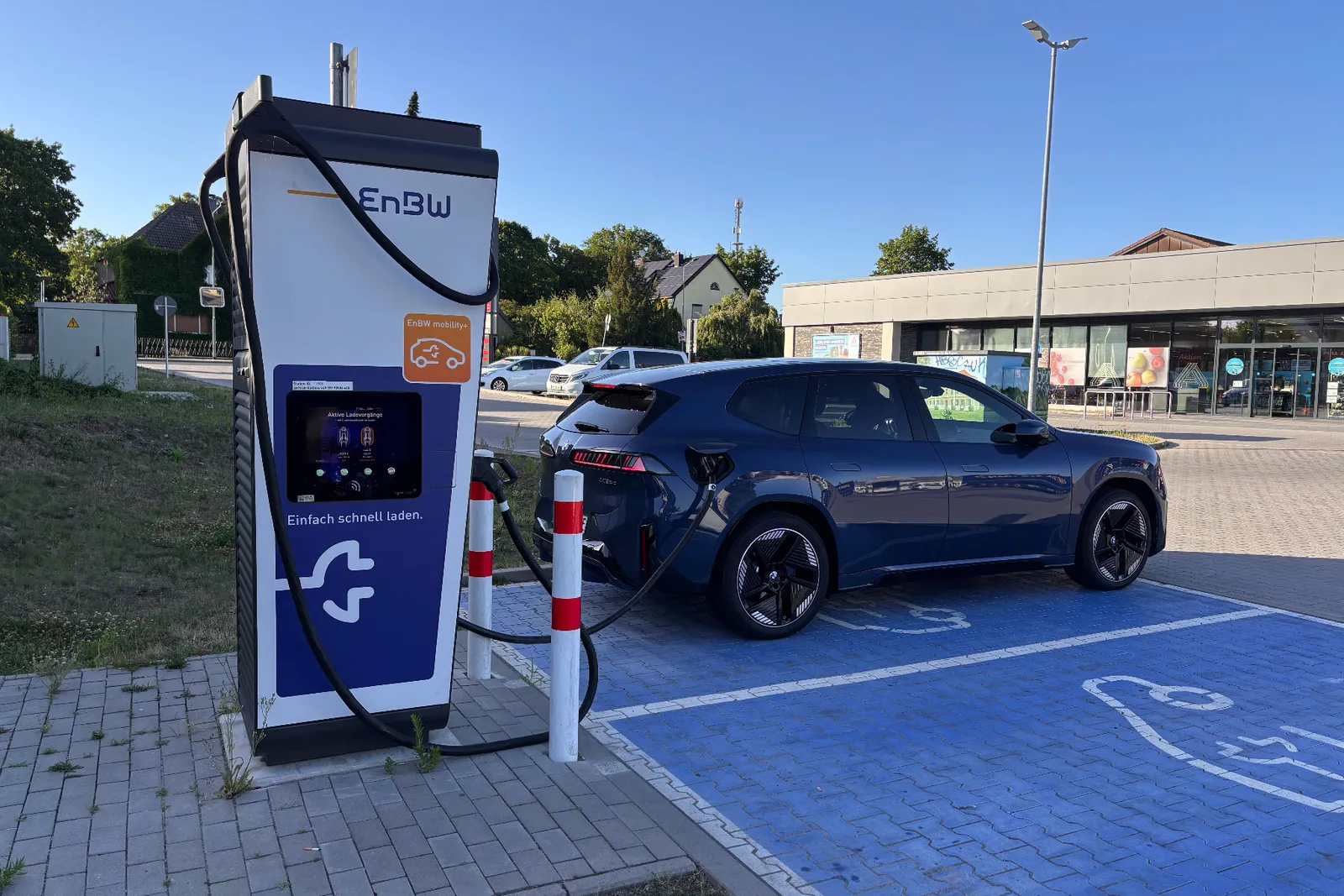
Image: Peter Schwierz
- 1/3
- 2/3
- 3/3
The charging protocol recorded 30.62 kWh of energy delivered. While no universally valid conclusions about the charging curve can be drawn from this single charging session, the high initial power at 58 per cent SoC is remarkable. It shows that the new battery technology also enables high charging power in the mid to upper charge range.
Bidirectional charging: when the BMW powers the home
Another special feature of the Neue Klasse is bidirectional charging. The iX3 can not only absorb electrical energy but also discharge it via corresponding interfaces.
We were able to test this function in practice for a separate _electrive_ report. First, we focused on Vehicle-to-Load (V2L), i.e., the direct powering of external electrical devices from the vehicle battery. We powered a wide range of electrical devices from a toaster to a leaf blower using the included V2L adapter, and it always worked smoothly.
Even more interesting was its use as a home storage system. With a specially installed BMW Wallbox Professional and the Smart Energy Module, the iX3 could power electrical consumers in a private household. We tested operations such as running a pool heat pump, charging a second electric car, and applications for cooking and baking.
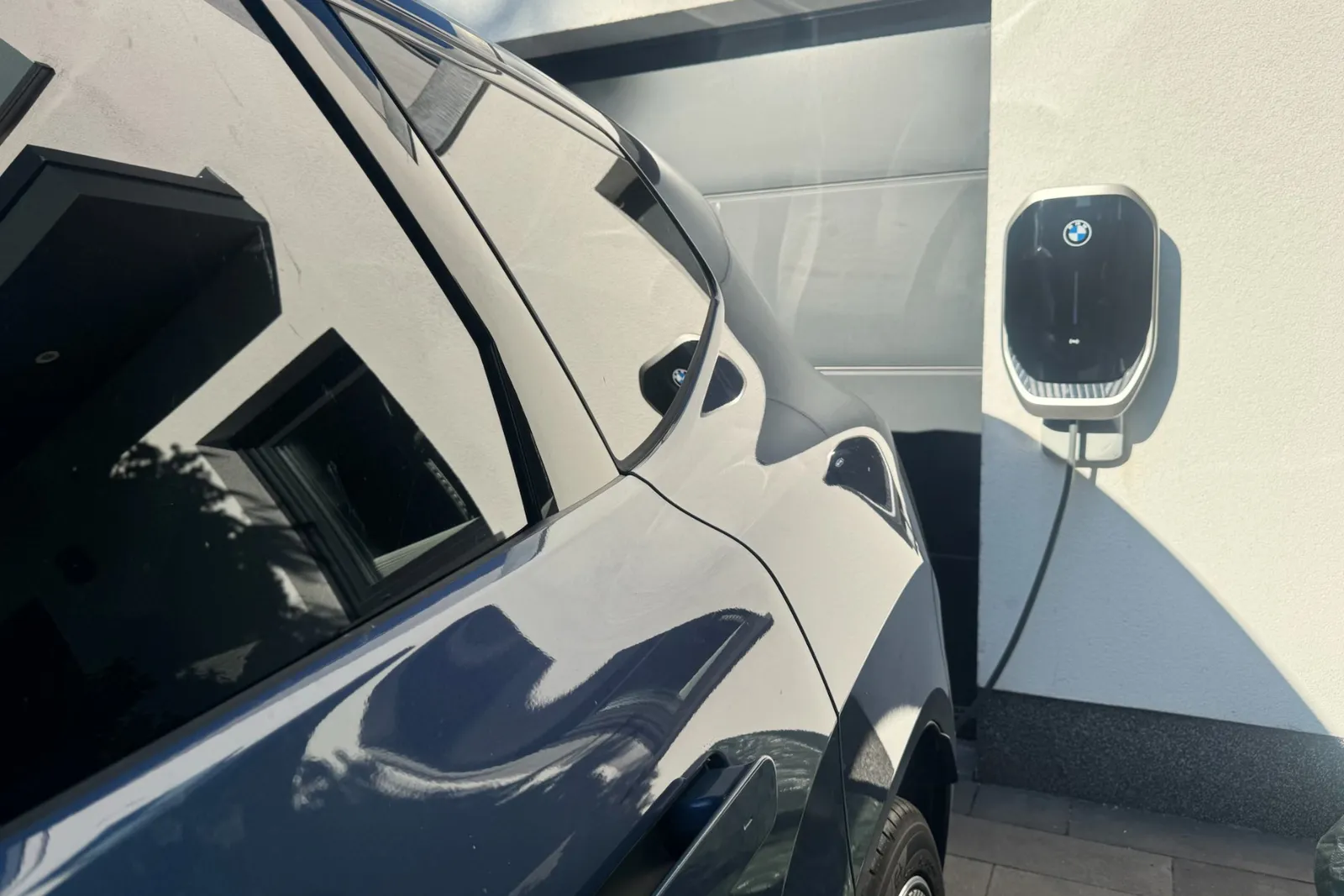
Image: Jörg Greinert
- 1/2
- 2/2
This demonstrated that the technology fundamentally works and offers practical application possibilities. Even so, there are still a few limitations; for example, the feedback function in our tested system requires a minimum load of 800 watts. If the power consumption is lower, the discharge function does not start. Users need to keep this in mind.
For households with corresponding energy demands — such as a heat pump for heating — the vehicle battery can become an interesting additional storage solution. Whether this is economically viable depends on numerous factors in each case, depending on where you live – these factors include the local electricity tariff, your usage profile, and the costs of the necessary charging infrastructure.
The technical foundation is in place, in any case. And the iX3 demonstrates that the role of an electric car can go far beyond mere transportation in the future.
A big step forward – but not perfect in every detail
After two weeks with the BMW iX3 50 xDrive, the impression is overwhelmingly positive. With the Neue Klasse, BMW has achieved a remarkable technological leap. This applies in particular to the efficiency of the drivetrain, the new operating concept, and the quality of the driver assistance systems.
In terms of driving dynamics, the iX3 is beyond reproach. It combines powerful, spontaneous responsiveness with precise steering and an impressively composed road manner. At the same time, surprisingly low consumption figures can be achieved in everyday use.
Panoramic iDrive also proves to be more than just a spectacular display — it represents genuine progress in operation. And with bidirectional charging, BMW opens up additional possibilities that we were able to test in everyday life for the first time.
The car is not perfect: the relatively noticeable rolling noises, the firm suspension tuning, and the lack of seat ventilation somewhat detract from the premium impression. There are also some minor weaknesses in operation and navigation.
What matters, though, is that the Neue Klasse is not just defined by new technical specifications but also makes its advancements truly tangible. The iX3 drives superbly, handles energy with surprising frugality, and supports its driver with convincing assistance functions. The Neue Klasse is therefore much more than just a new electric car for BMW. It could indeed be the technological fresh start the brand needs.