
The Australian-first grid connection that could transform the rollout of EV fast-chargers
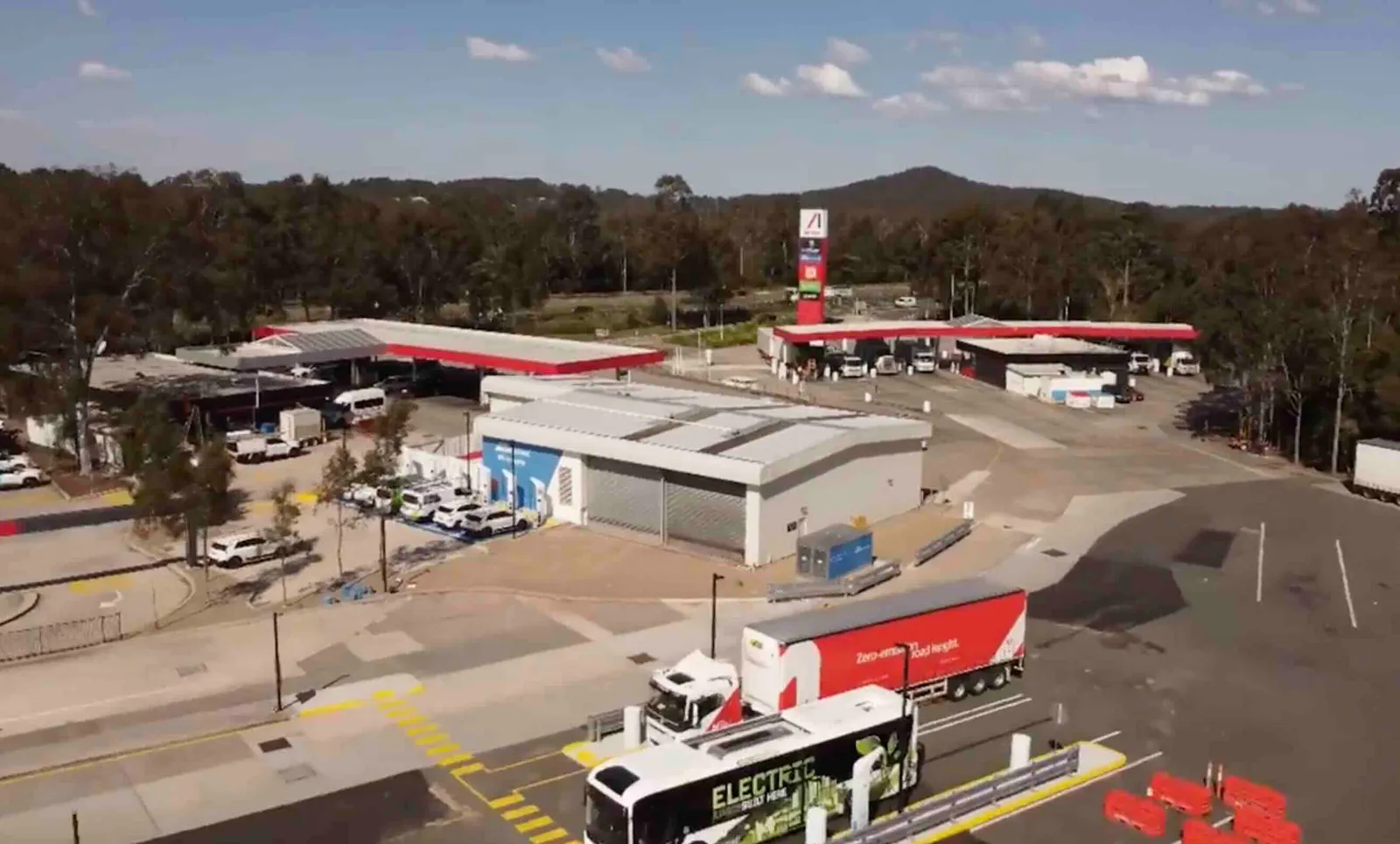

Two weeks ago, something quietly changed at an Ampol service station north of Wyong in NSW that could revolutionise the way Australia connects EV chargers, and other major electricity users, to the grid.
For the first time in Australia, an EV charging station began operating under a dynamic connection agreement that allows it to tap into spare grid capacity when it is available, then reduce its demand during the few days each year when the network is under pressure.
The agreement between Ampol’s AmpCharge business, and distribution network Ausgrid, has turned what could have been a multimillion-dollar grid connection into one costing just $90,000. The agreement means that the eight charging bays – each providing up to 200 kW – are being installed at a lower cost and more quickly, and with more capacity than could have been considered before.
If the model can be replicated, it could help overcome one of the biggest obstacles to Australia’s EV charging rollout: the cost and time involved in connecting high-powered chargers to the grid.
Ampol has previously warned that network connection problems are holding back its charging rollout. But Patrick Luxton from Ampol told the Everything Electric conference in Sydney that the two companies have found a new way forward.
“We have learned how to work together,” he said.
Ausgrid operates the electricity distribution network across parts of Sydney, the Central Coast and the Hunter. Head of Customer Network Solutions, Adam Baxter told the Everything Electric conference, a standard high-speed charger can require as much power as a 15 or 16-storey apartment building.
Traditionally, when a large customer like an EV charging company seeks a grid connection, the network calculates the maximum amount of electricity the site could ever use and designs the connection on the assumption it could draw that much electricity continuously.
“We assume they use that every day of the week,” Baxter said. “We’re making them much larger than they need to be, on the odd chance that everyone uses the maximum supply at the same time.”
That can force businesses to fund substantial upgrades to poles, wires, transformers or substations before they can connect. The infrastructure can cost millions of dollars and take more than a year to upgrade, even though the extra network capacity may be needed only during rare demand peaks.
With the AmpCharge project, Ausgrid has flipped that model on its head.
“EV chargers don’t use their maximum demand all day, every day. They fluctuate. So can we give them a connection that allows for that fluctuation?” Baxter said.
The answer is a dynamic operating envelope that allows the charging site to draw more electricity when capacity is available, but requires it to reduce demand when the local grid is under pressure.
AmpCharge receives real-time information from Ausgrid’s distribution management system showing how much network capacity is available. It has a guaranteed fixed capacity, plus additional dynamic capacity that can be curtailed when necessary.
On a very hot afternoon, for example, when air conditioners are driving demand towards its peak, Ausgrid can send AmpCharge a signal requiring the site to reduce its consumption.
Ausgrid’s Connections Manager Angela Burford told Renew Economy the chargers would continue operating during those events.
“The chargers will still operate. They’ll just be charging a bit slower.”
“We’ll turn that connection down maybe two or three days a year, and they will save thousands and thousands of dollars in their connection fees,” Baxter said.
If AmpCharge fails to reduce its draw on the grid at peak times, Ausgrid has a circuit breaker – “a kill switch” – it can operate.
The Ampol location north of Wyong is particularly suited to this type of connection. It has charging sites on both sides of the M1 motorway, with eight passenger vehicle charging bays as well as facilities for heavy vehicles.
The two sites can shift load between them, giving AmpCharge more flexibility to manage charging demand. The northbound site is now operational, with the southbound facility expected to open in November ahead of the Christmas holiday rush.
But the project’s significance extends well beyond one highway charging station. Australia will need thousands of new fast-charging locations as passenger and heavy vehicle fleets electrify, and manufacturers and other major energy users need more electricity.
Building the network to meet every customer’s theoretical maximum demand would be extraordinarily expensive. Allowing flexible loads to respond to real network conditions could instead make better use of infrastructure that already exists.
Consumer energy advocate, and the consumer representative on the Federal government’s Data Standards Advisory Committee, Tim Ryan says this is precisely the kind of thinking needed to improve the productivity of the grid.
“This is fantastic because it’s driving the most important part of what I talk about the consumer’s grid. It’s about lifting productivity of the whole network.”
Ryan believes charging businesses could eventually add batteries at these sites, storing energy when spare grid capacity is available and using it to charge vehicles during busier periods.
“This is the way forward in terms of the network actually dealing with these bigger customers in order to get the most out of what we already have in the grid.”
Ausgrid is now working on a low-voltage version of the dynamic connection and talking with other charging companies about sites near its distribution substations.
The ambition is to turn a first-of-its-kind project into a connection model that can be rolled out at scale.
If those lessons can now be standardised, the result could be faster electrification, dramatically lower connection costs and a network capable of serving many more customers who don’t have to wait years for expensive upgrades.