
Webasto poised to sell its battery systems business
According to media reports, Webasto is seeking to divest its battery systems division. CEO Jörg Buchheim stated that the company is in advanced negotiations with two strategic investors. A deal could be finalised later this year. The proceeds would provide financial relief to the struggling supplier.
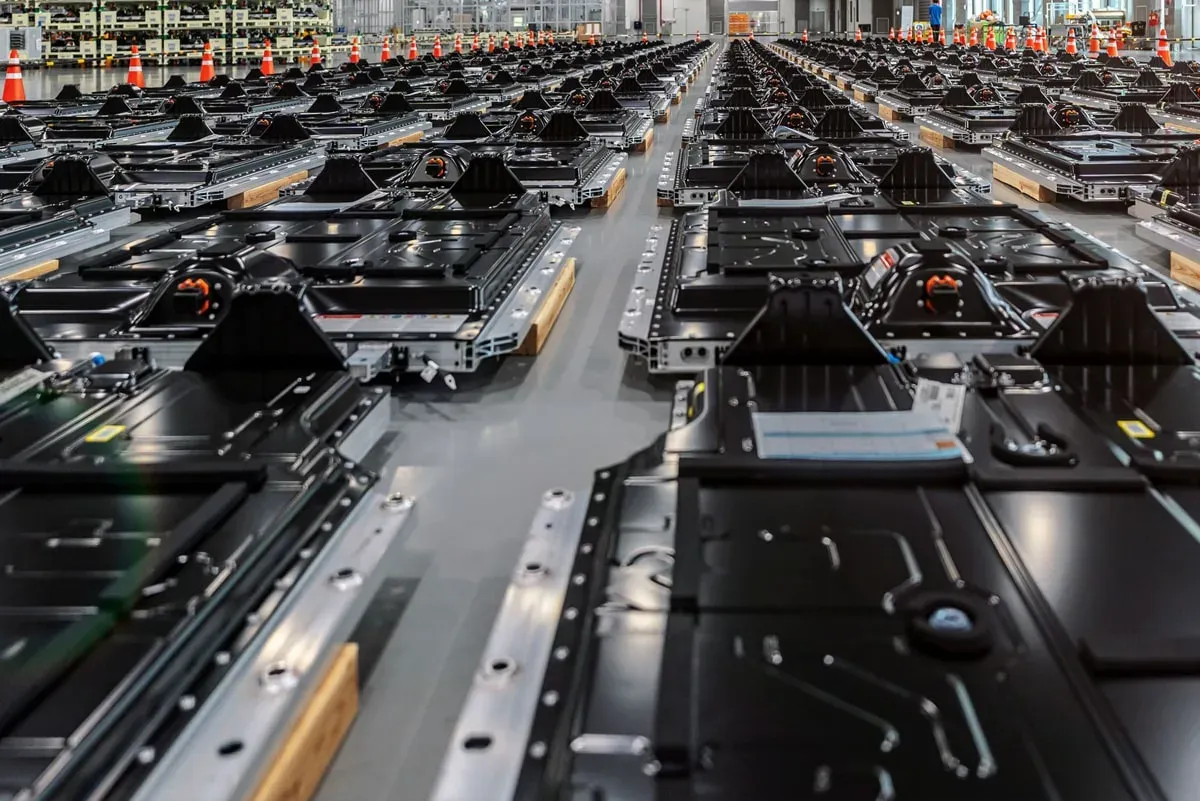
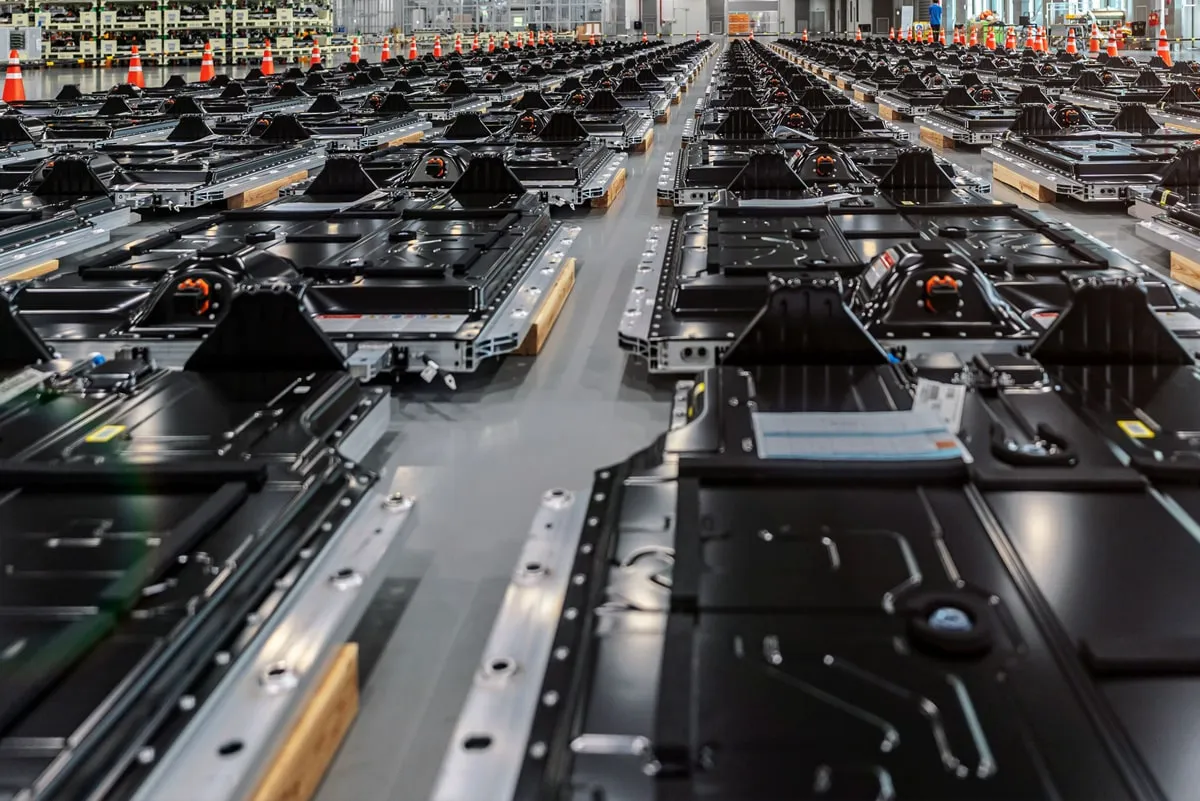
Production lines at Webasto's Korea plant.
Image: Webasto
This is according to consistent reports from _Handelsblatt_ and _Automobilwoche_, citing statements by high-ranking company representatives on the sidelines of Webasto’s 125th anniversary celebration. The Stockdorf-based group intends to use the impending sale of its battery division to stabilise its financial position. Webasto had originally explored all options, including cooperation or a partial sale, it is said. However, the two interested parties with whom Webasto is currently in advanced negotiations are “both interested in a complete takeover,” Buchheim is quoted as saying.
As a reminder: nearly ten years ago, Webasto invested significant capital in future markets for battery systems and charging solutions. The supplier launched production of battery packs in Germany in 2019 – specifically at a plant in Schierling. Following this model, Webasto opened another battery assembly facility in Dangjin, South Korea, about three years later, and expanded it further in 2024. This was driven by ongoing orders from Hyundai-Kia for the supply of battery systems for several high-volume all-electric passenger car models. To this day, the Hyundai-Kia Group remains Webasto’s anchor customer in the battery business. In 2025, this division generated approx. €300 million in revenue.
In this context, Buchheim emphasises that while the battery business is attractive, it also requires significant investment. According to the company, the division grows by an average of 25 per cent annually, and current demand exceeds available capacities. _Automobilwoche_ adds: “However, Webasto itself lacks the funds to finance this growth alone. New production capacities can […] require investments of up to €100 million.”
The sale now explicitly concerns the global high-voltage battery business. _Automobilwoche_ quotes Buchheim as stating that both interested parties bring not only sufficient equity but also industrialisation expertise and access to additional applications beyond the automotive sector. The division is currently operating at a loss, but the business plan forecasts a turnaround in 2027. While the supplier would lose a lucrative growth field through a potential sale, it could avoid future financing requirements for the division and use the proceeds to pay down pressing debts. However, no information has been disclosed regarding the potential purchase price.
Speaking to _Automobilwoche_, Buchheim said: “We do not need to make distress sales.” The restructuring is fully funded even without divestments; transactions would be an additional positive effect. Available liquidity exceeds the assumptions of the restructuring expert report from October 2025. The need for Webasto to restructure at all stems from its expansion drive after the turn of the millennium, when the supplier invested in several new fields. Webasto’s core business remains automotive roof systems.
Webasto was unable to recoup its earlier investments through steep revenue growth as planned. As a result, debts of approx. €1.5 billion euros have accumulated, pushing the automotive supplier into such a precarious position that an agreement with banks became necessary last year. Under considerable pressure, Webasto negotiated an extension of existing loans and additional borrowing. _Handelsblatt_ summarises: “The owner families Baier and Mey had to temporarily relinquish control over the majority of shares. 2,000 jobs were cut.” Currently, according to Chief Restructuring Officer Johann Stohner, no further job cuts are planned. However, the downsizing course will continue in the long term. The goal is to reduce debt below one billion euros through various measures, Stohner is quoted as saying.
Among these ‘further measures’, _Automobilwoche_ reports, is the search for new perspectives for the electric high-voltage heating business. Webasto is seeking new owners or partners for individual activities in this area. The division is said to generate around €50 million euros in revenue. “Here, too, a strategic partner is being sought who can integrate the technology into a larger system and scale it up,” the automotive trade journal writes. The background is the price pressure in electric vehicles. “Webasto has invested heavily in high-performance heating technology but sees a trend towards more cost-effective solutions. Further innovations would first need to be industrialised – and would again tie up capital.”