
Water Power Winners Emerge As Collegiate Competitions Surge
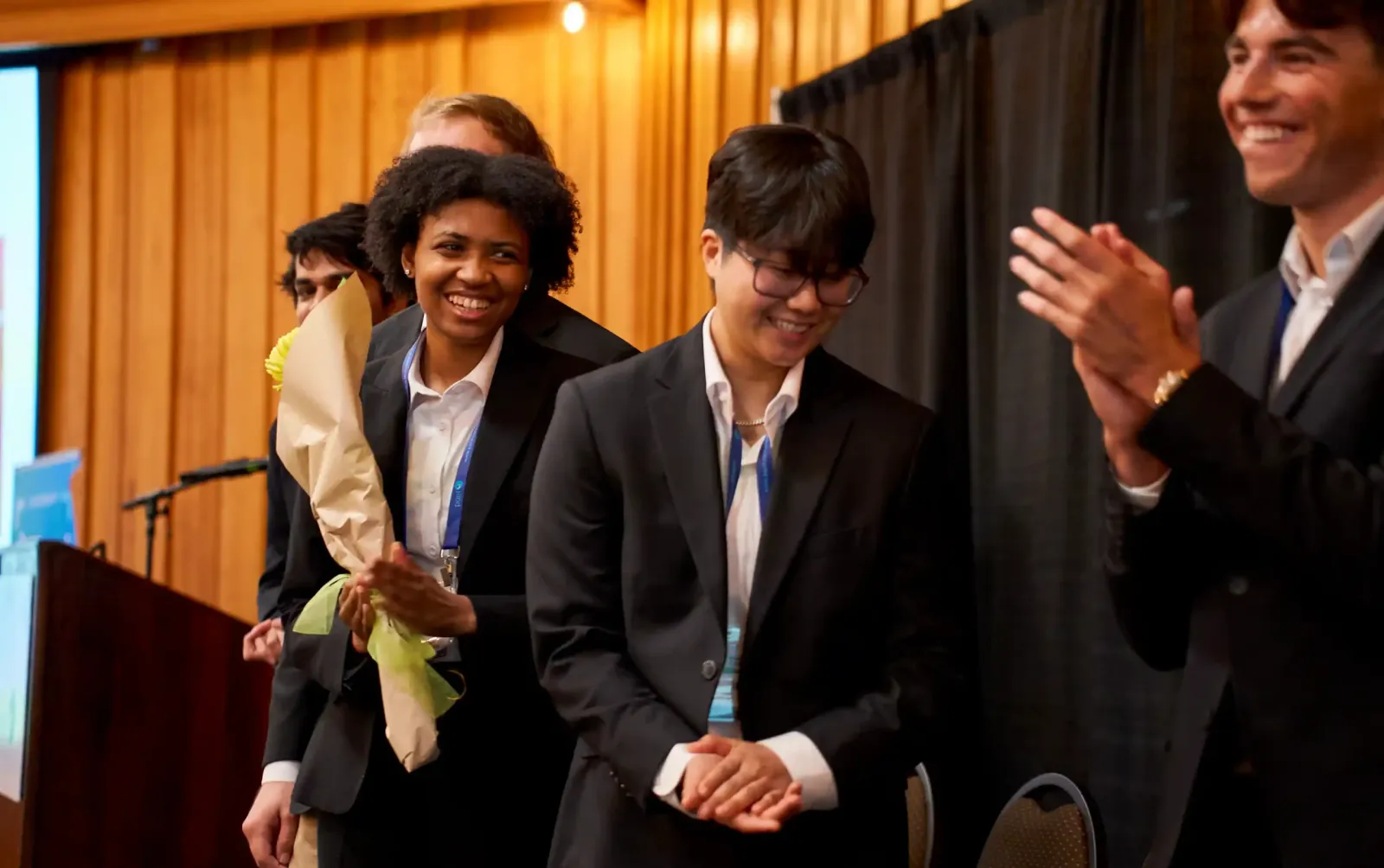
Members of the University of Southern California team celebrate their win in the 2026 Marine Energy Collegiate Competition. Photo from Sarah Yeoman, Yeoman Photo LLC.
Support CleanTechnica's work through a Substack subscription, on Patreon, or on Stripe. Help us produce all of the high-quality, original content we publish week after week despite the challenges of content-scraping AI, antisocial media, inflation, and other hurdles.
Top Teams Claim Prizes at 2026 Hydropower and Marine Energy Collegiate Competition Final Events, and DOE Welcomes a Record 45 Teams for the 2027 Season
Two teams have snagged the top prizes in the 2026 Hydropower and Marine Energy Collegiate Competition finals, and 45 others have risen to the top of a record-shattering applicant pool to clinch their spots for next year’s showdowns.
California Polytechnic State University, San Luis Obispo (Cal Poly), claimed the Grand Prize at the fourth annual Hydropower Collegiate Competition (HCC) Final Event in Green Bay, Wisconsin. University of Southern California (USC) claimed the same high honor at the seventh annual Marine Energy Collegiate Competition (MECC) finals in Portland, Oregon.
The competitions, run by the National Laboratory of the Rockies (NLR) and funded by the U.S. Department of Energy’s (DOE’s) Hydropower and Hydrokinetic Office (H2O), challenge cross-disciplinary teams to solve complex hydropower and marine energy challenges while competing for cash prizes.
This year’s competitions gave participating teams the opportunity to either advance an existing technology or develop a new one.
Along with gaining hands-on experience in all aspects of technology development, competitors had ample opportunities to engage with industry experts and explore potential career paths.
HCC’s Top 2026 Teams Ride the Current to Victory
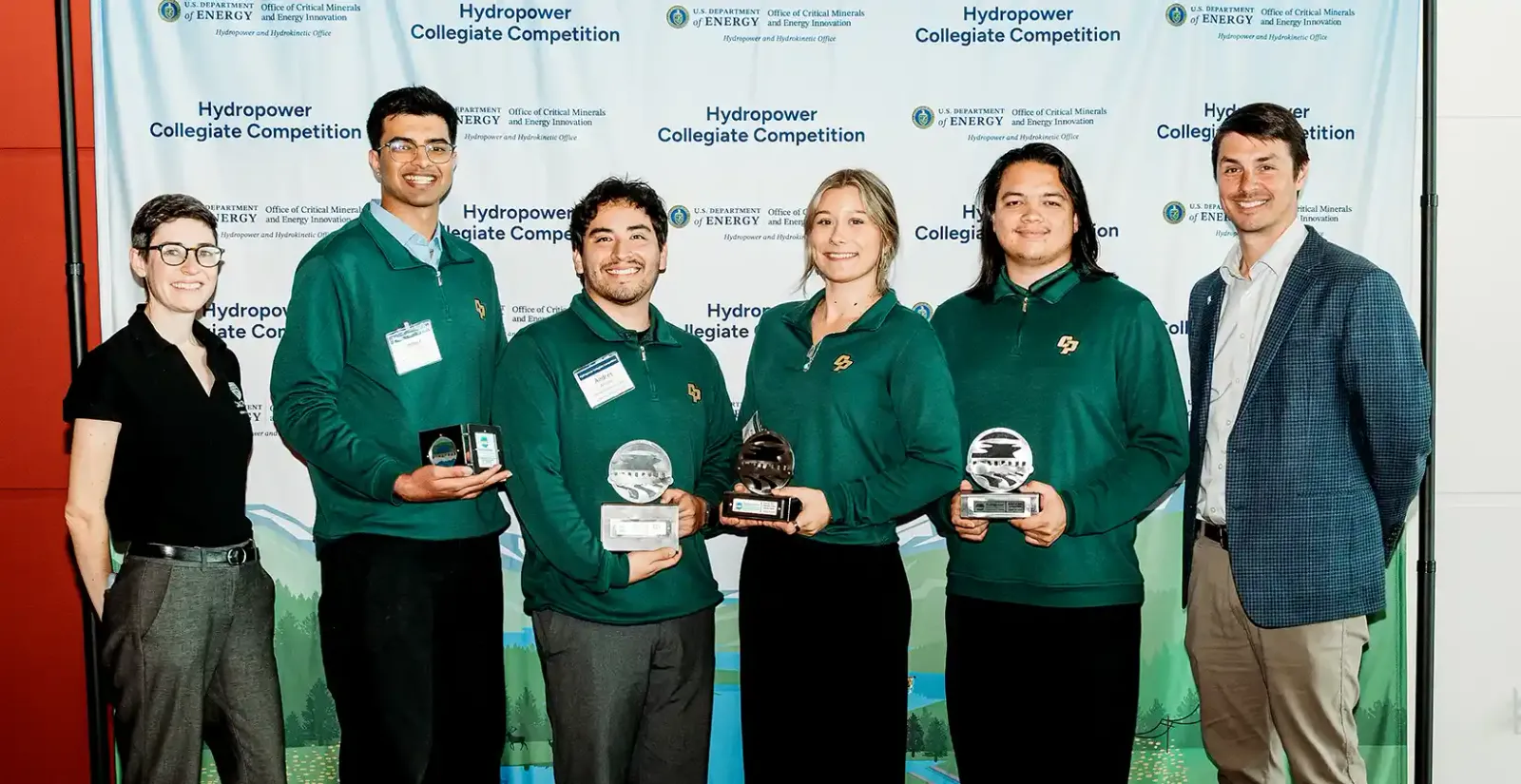
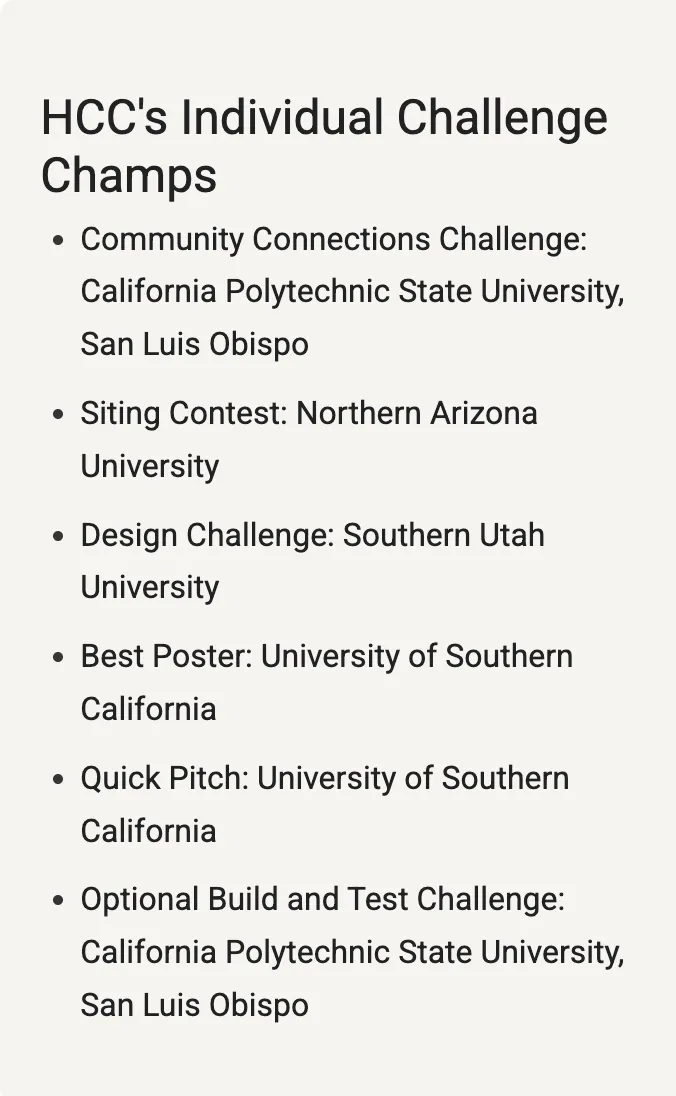
The 2026 HCC finale was the highlight of a regional meeting organized by the National Hydropower Association (NHA) and the Midwest Hydropower Users Group in Green Bay on April 30.
The 11 teams who competed in the final event took the stage to present technologies they spent the better part of a year developing. Their primary task was to come up with innovative solutions to one of three key industry challenges: adding power to non-powered dams, adding pumped storage hydropower to existing hydropower reservoirs, and developing in-conduit hydropower. In the year leading up to the final event, all 11 teams took part in five required challenges and had the option to compete in a sixth—the build and test challenge.
Cal Poly took first place overall for their place-based in-conduit hydropower innovation, which they designed to extract energy from a pressure-reducing station within the Sacramento Suburban Water District.
Southern Utah University finished in second place, and Purdue University and Northern Arizona University tied for third. The People’s Award went to the USC team, whose “Quick Pitch” stole the show, earning them the highest numbers of votes from the audience in a live poll.
“The opportunity to interact with the other student teams and the industry members at the NHA conference was incredibly impactful,” said Lauren Rueda, who served as faculty advisor to the Cal Poly team. “Two students who were somewhat interested in hydropower jobs after completing their project are now actively applying for jobs with companies they met in Green Bay.”
NLR Project Lead Elise DeGeorge said HCC has continued to build on its success in incubating new hydropower programs within academic programs nationwide, which she noted is the core reason DOE funds this type of collegiate competition.
“This year stood out because we had significant integration with industry,” said DeGeorge. “Our tight connection with the NHA gave student teams a chance to be front and center at a regional meeting—so much so that they were invited to present their quick pitches at the luncheon, and industry got to vote on the best quick pitch.”
DeGeorge said the spirited engagement marked the continuation of “a really strong partnership between industry organizations and student innovators that supports what we’re trying to achieve with our collegiate competition focused on hydropower.”
Powered by Innovation, MECC’s 2026 Winners Make a Mega Splash
The MECC took place May 18–20 during the Ocean Renewable Energy Conference hosted by the Pacific Ocean Energy Trust in Portland, Oregon, where a record-setting 24 teams took the stage for the competition’s final event.
Teams competing in MECC were tasked with developing marine energy innovations to solve key challenges confronting ocean-based industries, marine energy research sectors, or national security missions. Over the course of the competition, they benefited from the experiential learning involved in designing and building the marine energy technologies they conceived.
For the first time in MECC’s 7-year history, organizers introduced a two-tiered format that let competitors enter the high-powered Megawatt League or the streamlined Kilowatt League. The idea was to eliminate any perceived barriers to entry and make the competition more broadly accessible.
Newcomer USC went all in on their first run, entering the Megawatt League and emerging as the overall winner to seize the grand prize. USC won with their modular oscillating wave column, “the ModWave OWC,” which retrofits onto preexisting breakwaters to produce marine energy for onshore applications. University of Washington came in second, and Cal Poly clinched the league’s third-place prize.
“MECC was the perfect opportunity to broaden our horizons as we try to find new, exciting ways to innovate,” said David Moseley, one of the winning team members from USC. “Learning on the fly, we used real community needs to help guide our project into something that may one day be implemented in the real world. The most rewarding part of this experience was seeing how much of an impact our group made, and that success and greatness can come from something as small as a single idea.”
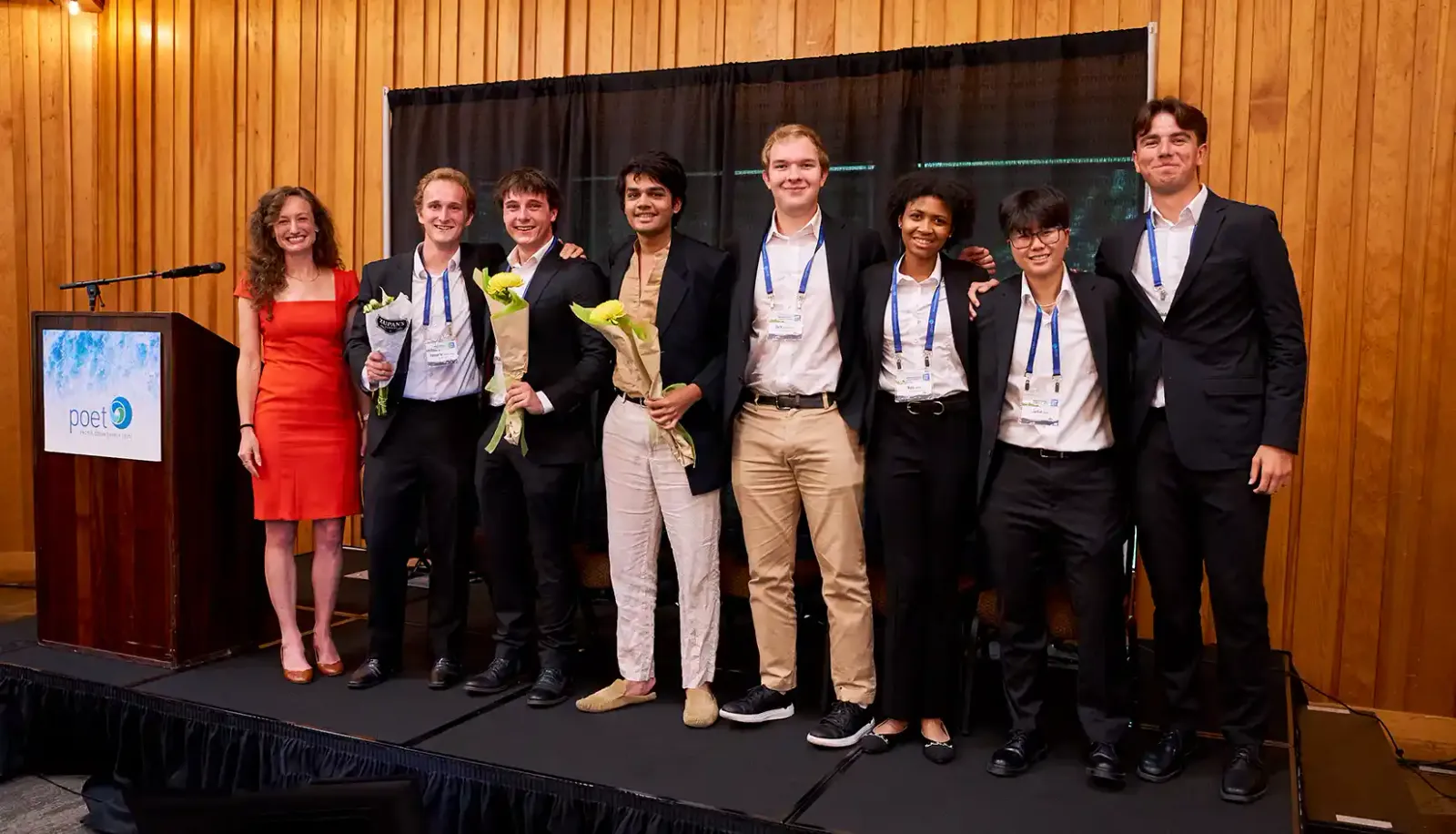
While Kilowatt League teams did not compete for the grand prize (first, second, and third overall), they competed for an all-competition cash prize pool established for individual challenges, including community connections, technical design, build and test, poster, and quick pitch.
Two additional awards were created to recognize individual team achievements. The Wavemaker Award was presented to North Carolina A&T University as a special recognition of the energy, enthusiasm, and exceptional teamwork they brought to every aspect of the competition. The Spirit of MECC Award was presented to Michigan Technological University for embodying the spirit of innovation, resilience, and teamwork that defines the competition.
As a strategic move, the two-tiered competition appeared to pay off in its first year, bolstering NLR’s longstanding efforts to both increase engagement across academic institutions and bridge the gap between academia and the water power industry.
“It felt like the theme of the year was cross-disciplinary collaboration,” said MECC Project Colead Betsy Stratton, who has supported MECC from its inception, initially as NLR’s communications lead for the competition.
“So many students talked in their Community Connections presentations about how they recruited team members from the art and communications departments,” Stratton said, noting that academic diversification has given many teams an edge throughout the competition’s history. “That lesson really seemed to click this year.”
Declaring this year’s MECC “the most successful event so far,” Stratton pointed to NLR and Pacific Ocean Energy Trust’s concerted efforts to integrate competition and conference programming as key to building connections between collegiate competitors and industry players.
“We have a running list of competition alumni who now work in the industry, some of whom met their employers during MECC,” Stratton said. “So, we can see a direct pathway from this competition to that success.”
That success is reflected in the record number of applications received in May for both competitions.
2027 Applicants Flood the Zone: HCC/MECC 2027 Team Selections
On May 14, DOE announced a record-setting roster of 45 teams selected for the 2027 HCC and MECC, the most ever accepted across the two competitions in a single year.
“We actually maxed out the competitions for 2027,” said Arielle Cardinal, the NLR project lead for MECC and HCC. “I think that’s a testament to the momentum these competitions have achieved—a reflection of the expanding need and opportunity for fresh ideas and innovation in both hydropower and marine energy.”
DOE selected 15 teams to compete in the fifth annual HCC next spring:
California Polytechnic State University, San Luis Obispo
California State University, Fresno
Colorado School of Mines
James Madison University
Michigan Technological University
Northern Arizona University
The Ohio State University
Purdue University
Southern Utah University
University of Colorado Boulder
University of Houston
University of Michigan
University of North Florida
University of Southern California
University of Wisconsin – Madison
On the MECC side, there are 30 teams slated to compete in 2027, including:
Baldwin Wallace University
California Polytechnic State University, San Luis Obispo
California State University, Fresno
Cornell University
Georgia Southern University
Hawaii Pacific University
Iowa State University
Michigan Technological University
Oakland University
Oregon State University
Purdue University
Rutgers University (New Brunswick)
Stevens Institute of Technology
Stanford University
University of California, Riverside
University of Hawaii at Manoa
University of Houston
University of Kentucky – Paducah Campus
University of Michigan
University of New Hampshire
University of New Mexico
University of North Carolina at Charlotte
University of North Florida
University of Southern California
University of Texas at Dallas
University of Texas at Tyler
University of Washington, Seattle
University of Wisconsin – Madison
Washington and Lee University
Webb Institute
“The surging interest in HCC and MECC speaks to the power of hands-on learning to raise awareness and generate excitement about the expanding opportunities that exist in two areas of water power with significant potential to shape the future of energy in the United States,” Cardinal said.
Learn more about hydropower and marine energy careers and workforce development opportunities on the Hydropower STEM Portal and Marine Energy STEM Portal.
By Karen Petersen, NLR