
Stellantis and Leapmotor: how much Chinese technology will make its way into European cars?
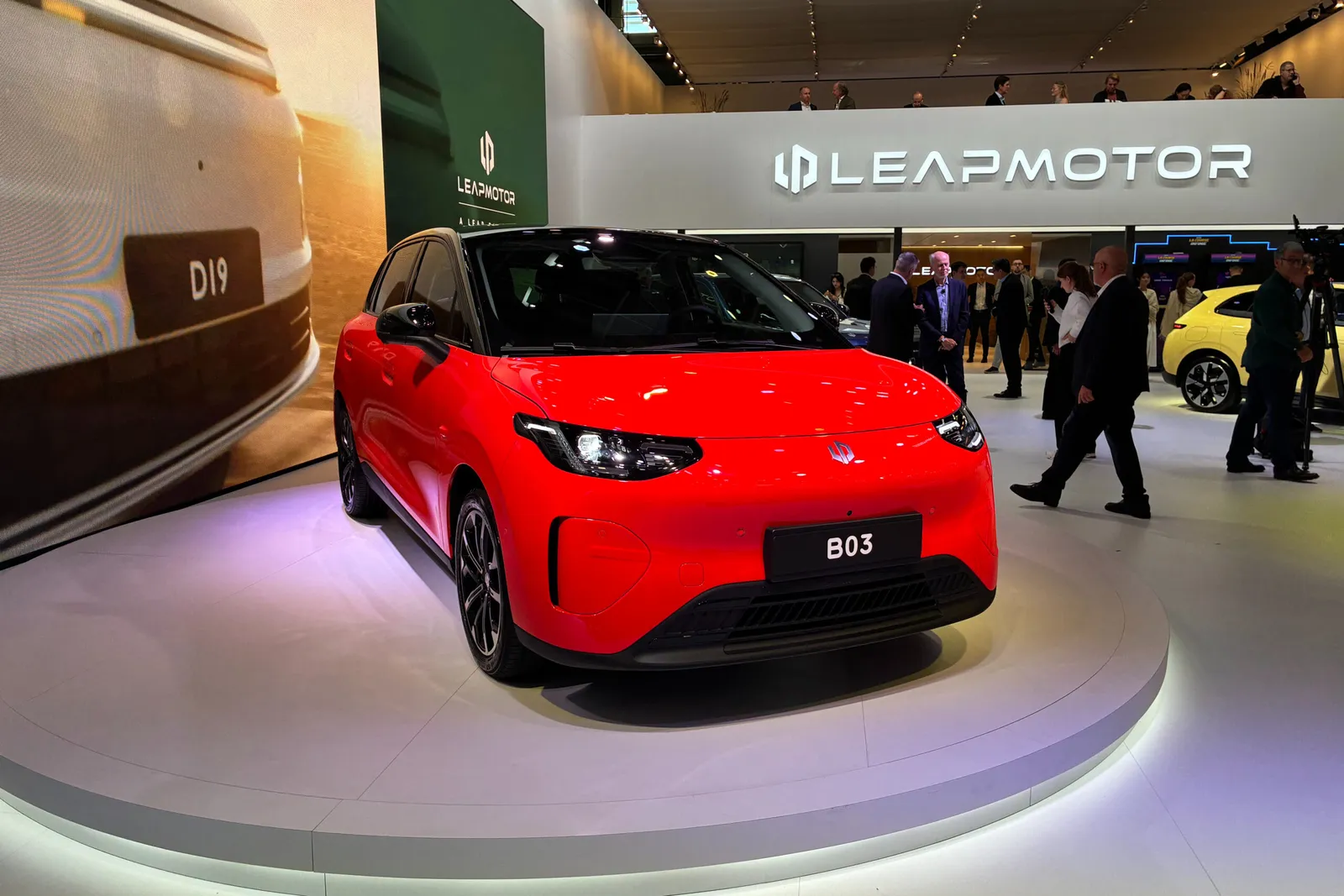
There are partnerships that mostly look impressive on paper. And then there are those where, at some point, it is no longer entirely clear where one partner ends and the other begins. Stellantis and Leapmotor are increasingly moving in the latter direction.
What began as an investment and international distribution cooperation has since extended deep into production and development. Leapmotor is manufacturing the B10 at the Stellantis plant in Zaragoza, Spain. The Stellantis brand Opel is developing its own electric SUV with the Chinese partner for 2028. And behind the scenes, both sides have long been discussing further technical collaboration.
This shift is particularly evident at the Paris Motor Show. Leapmotor is presenting the B03, another electric vehicle, in Europe for the first time and simultaneously announcing that production of the B10 in Spain has officially begun. A few halls away, Opel is showcasing its vision of an electric estate car with the STX Concept, while Peugeot is putting its own electric concept studies in the spotlight. On the surface, the brands remain clearly distinct. Technically, at least for Opel, the boundaries are becoming significantly more permeable.
Since the unveiling of the FaSTLAne 2030 strategy in May, Stellantis has been pursuing two goals simultaneously: greater efficiency through shared platforms and technologies, while also reinforcing the distinct identities of its brands. This balancing act is on full display at the Paris Motor Show. Outwardly, the group stages the independence of its brands with different concept vehicles, but behind the scenes, development and technology are being consolidated more closely. The deepened cooperation with Leapmotor fits perfectly into this dynamic.
Leapmotor Europe CEO Danilo Annese sums up his company’s European ambitions in Paris with a simple formula: “We are in Europe, and we want to stay in Europe.” By this, he explicitly means more than just selling imported vehicles. Leapmotor wants to build cars in Europe and further increase its local presence.
What is interesting is that Annese does not primarily justify localisation in terms of tariffs or production costs. Instead, he talks about logistics. Anyone importing from China is “subject to all kinds of delays” and more vulnerable to geopolitical disruptions. Local production brings Leapmotor closer to its customers and enables faster, more stable deliveries.
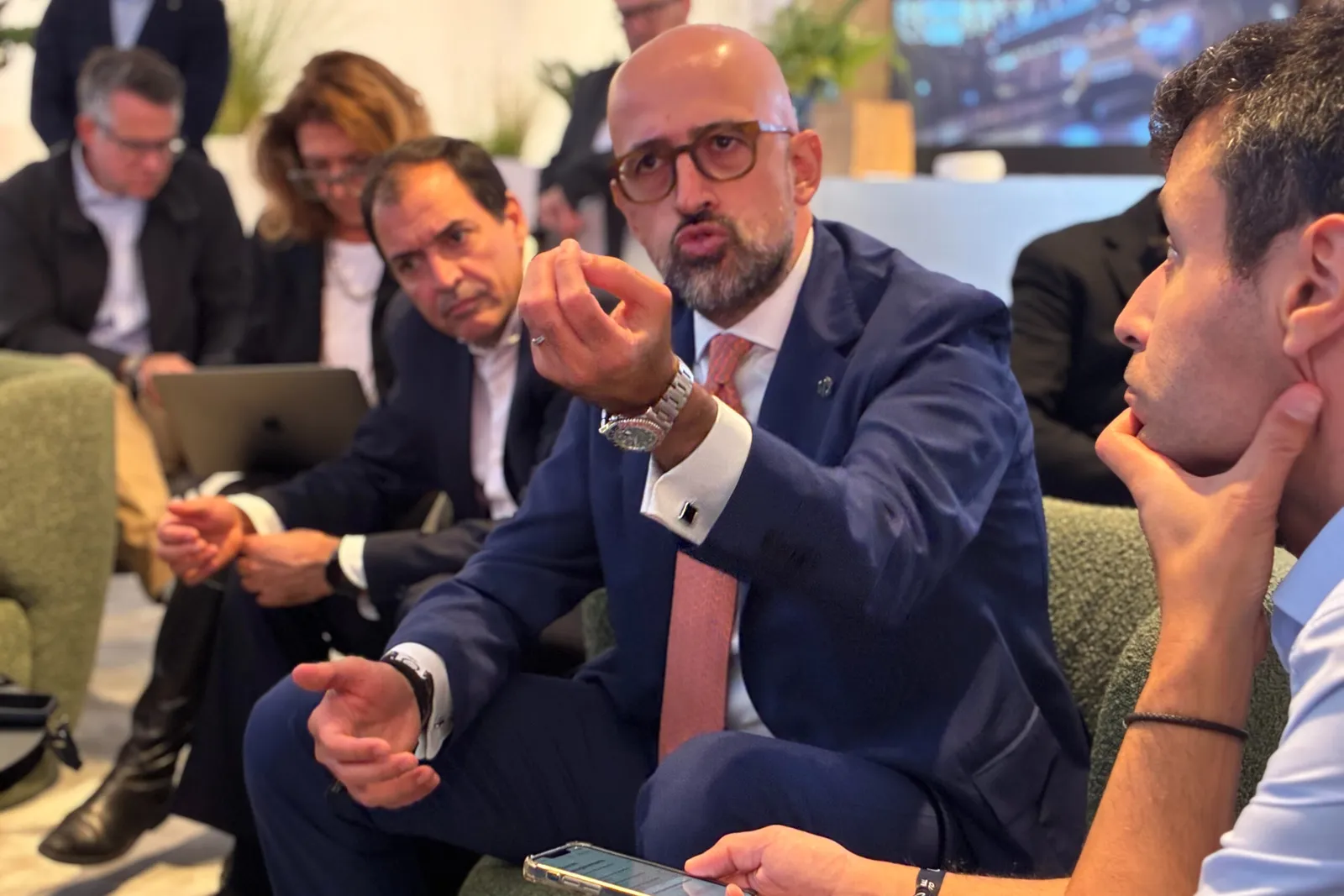
From his perspective, this should by no means be limited to the final assembly of Chinese vehicles. Additional models could be localised if production capacities and the business case align. Leapmotor is also considering European production for the B05.
The more decisive point, however, lies elsewhere: for Leapmotor, Stellantis is increasingly evolving from a distribution partner into a technology and industrial partner. Annese confirms that both companies are continuously discussing platforms and further technical collaboration. He is not yet naming any new concrete projects in Paris. However, the development of the joint Opel SUV already shows just how deep this collaboration can go.
Huettl Focuses on “Less Planning, More Development”
The Opel project is currently the most interesting test case for the partnership. The approximately 4.50-metre-long electric SUV is set to be positioned between the Frontera and Grandland and will launch in 2028. It will be produced in Zaragoza—the same plant where the Leapmotor B10 is already rolling off the production line. Development began in mid-2026, and according to Opel CEO Florian Huettl, the styling freeze has already been completed.
In conversations in Paris, Huettl emphasises that this is not a rebadged Leapmotor. “We are combining the development expertise of our Opel engineers in Rüsselsheim with Leapmotor’s engineers in China,” he said. The goal is to bring together “the best of both worlds.”
What each of these worlds contributes is now quite clear. Opel is responsible for areas such as chassis, steering, lighting technology, seats, design and user experience. Leapmotor provides expertise in E/E architecture, batteries and electric powertrains, while also opening up access to its procurement and supplier network. At the same time, Huettl stresses that Leapmotor is not intended to replace Opel’s own technical development.
Opel is also relying on Stellantis’ own technologies and platforms in parallel. When it comes to battery technology, Huettl sees multiple levers. “LFP ensures affordability in the first step,” he said. This is complemented by modern battery management and cooling systems “not only in the Leapmotor cooperation but also in the development of the STLA One.” The collaboration with Leapmotor is therefore best understood as an accelerator. Opel is leveraging Chinese know-how specifically in areas where Huettl himself sees a need to catch up technologically, without abandoning its own development foundation.
Huettl also explained with unusual clarity why Opel is taking this approach at all. The Chinese automotive industry, he said, has built up a lead in electronic components, vehicle architectures, battery technology and electric powertrains. “We have to be very clear about that.”
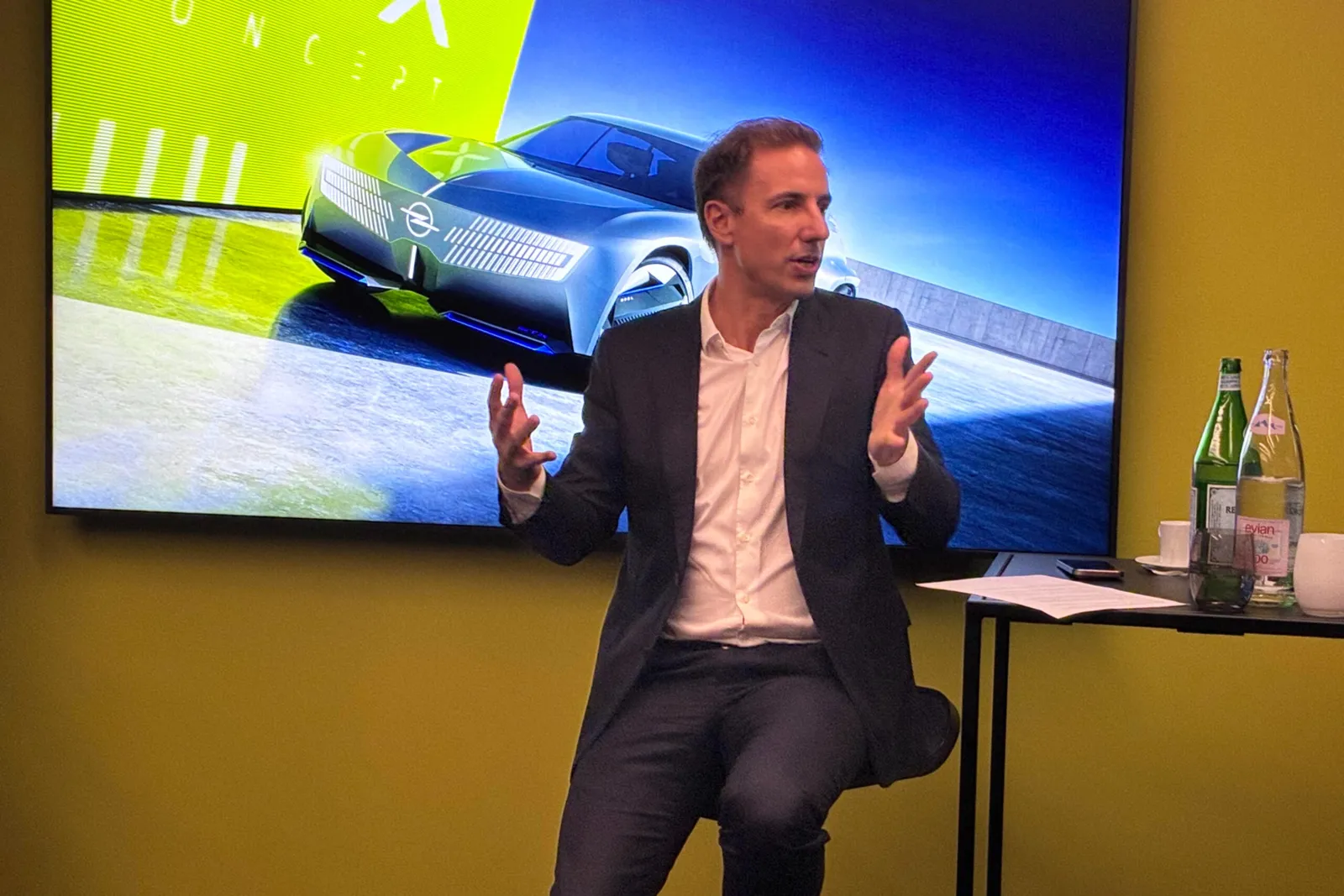
European manufacturers often talk about unfair competition, subsidies or differing production costs. Huettl addresses these issues, of course, but above all, he focuses on the technological lag in the domestic industry.
“The terrain, the field where we need to catch up, is the components of the electric powertrain,” he explained, listing batteries, powertrains and architectures. Opel is attempting to close this gap in parallel – both through its own Stellantis technologies and via Leapmotor. Huettl is particularly impressed by the speed of Chinese development work. The project is “very engineering-driven”; when technical problems arise, the teams focus directly on finding solutions and revising them as needed.
His most succinct statement on the matter: “Less planning, more development.” The speed, he said, is “remarkable.” Opel is therefore confident it can develop the new SUV in less than two years. The brand also wants to learn from Leapmotor in software. Huettl describes its electronic architecture as high-performance and highlights the possibilities for over-the-air updates. Opel intends to use this technical foundation but adapt functions and assistance systems to European requirements.
The B10, already available in Europe, provides a rough technical reference point. At 4.51 metres, it fits exactly into the announced size range of the new Opel. It is offered with LFP batteries of 56.2 or 67.1 kWh. The larger variant supports charging at up to 168 kW and achieves a maximum range of 434 km (WLTP).
However, it is not confirmed that Opel will adopt these components unchanged. Battery and powertrain technology, in particular, are expected to be the subject of joint development. Opel also aims to set its own accents in areas visible to customers, such as the chassis and operating concept. Huettl therefore frames the ambition as follows: “We are jointly developing a new model.” The result, he said, should ultimately be a “true Opel.”
This sounds simpler than it is. After all, this is precisely where the partnership will reveal whether it truly represents a new development model or whether, in the end, it merely places Chinese core technology behind European design.
For now, Opel does not intend to derive a series strategy from this. In the product plan through the end of 2030, only this one vehicle from the direct cooperation with Leapmotor is envisaged, says Huettl. “We are doing something here that no one has done in this form before.” For this reason, the company is initially focusing on successfully bringing this project to market. In the original announcement in May, Opel sounded somewhat more assertive, describing the SUV as a potential blueprint for an expanded partnership.
Leapmotor: more than a Chinese importer
At the group level, the direction is broader anyway. Stellantis holds a 20 per cent stake in Leapmotor. In addition, there is Leapmotor International, which is 51 per cent owned by Stellantis and 49 per cent by Leapmotor, and is responsible for activities outside China.
Stellantis CEO Antonio Filosa explains in Paris that the relationship has shifted from a largely sales-oriented cooperation towards engineering and production. Additional manufacturing opportunities are also being examined. Stellantis’ keen interest in this is evident from a look at its European plants. Filosa puts their utilisation for 2025 at around 60 per cent. Additional models from Leapmotor could fill spare capacity. Zaragoza is already the prime example: first the Leapmotor B10, later the jointly developed Opel SUV.
Filosa links this strategy to a demand for European industrial policy. His recurring phrase in Paris is “level playing field.” Anyone who wants to sell in Europe, he argues, should also invest in European development, plants and supply chains.
At first glance, this seems contradictory. Stellantis is calling for protection or fair conditions against Chinese competition while simultaneously bringing a Chinese partner deeper into its own development and production system.
In reality, however, both are part of the same strategy. Leapmotor is not simply supposed to ship vehicles from China to Europe. The company is expected to establish parts of its value chain here, while Stellantis, in return, gains access to technology, speed and cost advantages.
Favey has “absolutely no intentions” for Peugeot
How sensitive this issue is becomes clear when looking at Peugeot. Brand CEO Alain Favey answered the question in Paris of whether Peugeot could follow Opel’s example with remarkable clarity: “We have absolutely no intention of developing anything with Leapmotor for Europe.”
This, he says, is explicitly part of brand differentiation. Favey essentially stated that Opel’s path is not automatically Peugeot’s. After all, Peugeot also has a Chinese partner. Together with Dongfeng, a new model for China is being created, and another is under consideration. However, according to Favey, these vehicles will not come to Europe. Unusually, he strongly emphasised the European side of the brand: “Anyone who buys a Peugeot in Europe must know they are contributing to the European economy.” He pointed to plants and value creation in Europe and notes that the future of the European automotive industry is by no means guaranteed.
This is an interesting contrast to Opel. Both brands ultimately claim to strengthen the European industry – just in different ways. Peugeot is focusing on greater technological independence from Leapmotor. Opel, on the other hand, argues that combining Chinese technology with European development and production can secure its own competitiveness.
On the exhibition stands, these differences are barely visible. Citroën is showcasing an electric 2CV concept, Peugeot is presenting electric coupé and motorsport studies, Opel is unveiling its vision of a future electric estate car with the STX Concept, and DS is showcasing the F3VER, a vision for a possible electric compact car. There is plenty of design, brand identity and independence on display.
Behind the scenes, however, things are a bit more complicated. Leapmotor is now bringing more than just cars to Europe. The manufacturer is providing production volume for European Stellantis plants and technology for a future Opel model. At the same time, Peugeot explicitly does not want to take this path.
The partnership can now be understood in three stages. First, Stellantis helped sell Leapmotor vehicles outside China. Then, production of Leapmotor models began in European Stellantis plants. Now, with the new Opel SUV, a model from a European group brand is being developed for the first time with direct input from Chinese core technology. For Stellantis, this is a pragmatic response to an uncomfortable problem: Chinese competition has not only become cheaper but also technologically faster in some areas critical to electric vehicles.
The real question, therefore, is no longer whether Stellantis uses Chinese technology – it already does. The more intriguing question is how far this technology can extend into European brands without reducing their independence to a mere design issue. Opel is currently testing this very scenario. Peugeot, for its part, is deliberately drawing a line and currently rejecting a comparable Leapmotor path for Europe.
This makes the new Opel SUV more than just another model. It is a test of whether Stellantis can truly combine Chinese development speed with European brand identity. If it succeeds, the cooperation with Leapmotor could extend far beyond this single vehicle. If it fails, it would ironically bring back the very interchangeability that Stellantis aimed to overcome with its new strategy.
_Source: electrive on site in Paris_