
Series production of the VW ID. Cross has begun in Spain
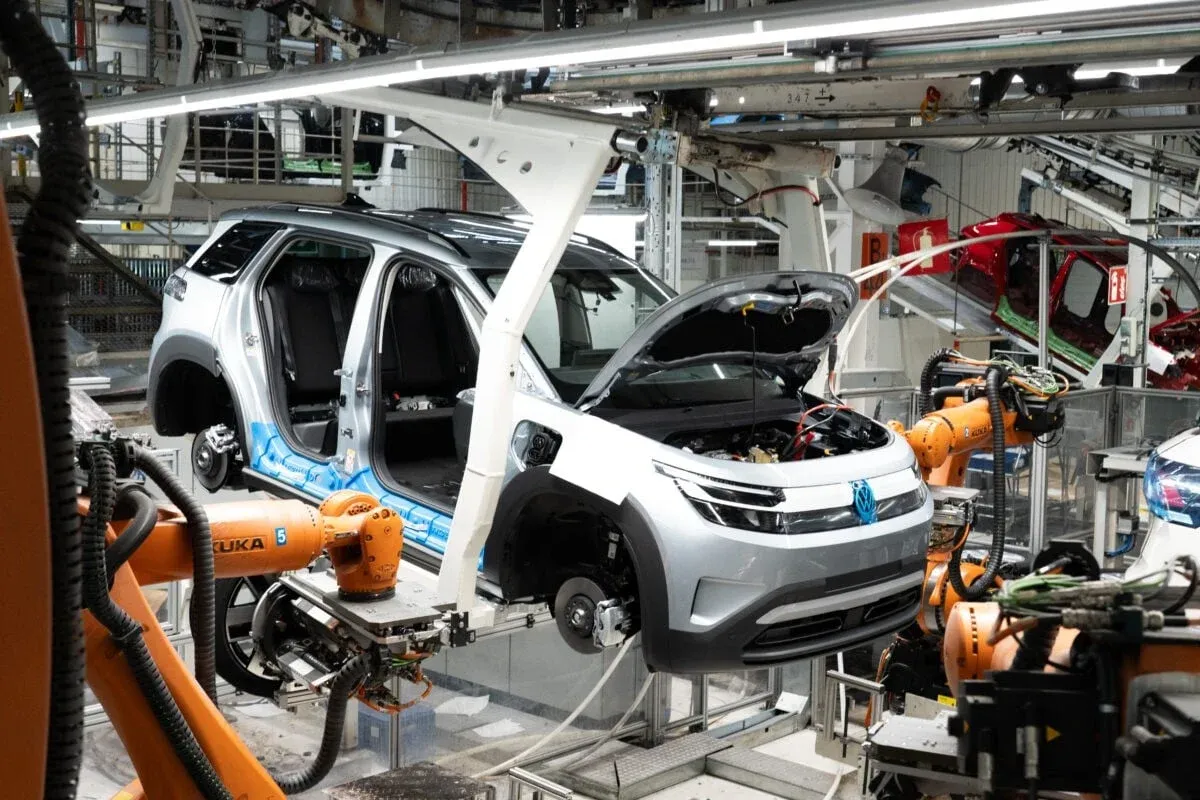
Volkswagen has begun production of the ID. Cross at its plant in Navarra, Spain, near Pamplona – initially in the higher equipment variants. The production kickoff of the ID. Cross means the German carmaking giant is now mass producing of all four new smaller electric car models.
Image: Volkswagen
The ID. Cross is part of Volkswagen’s new generation of compact electric cars based on the advanced MEB+ platform and is technically closely related to the ID. Polo, the Cupra Raval (here is our driving report) and the Škoda Epiq. Volkswagen positions the ID. Cross as an SUV-style model above the ID. Polo. At 4.15 metres, it is about ten centimetres longer and five centimetres taller than its VW sibling. The ID. Cross is not being produced alongside the ID. Polo in Navarra but shares the production line with the Škoda Epiq, while the ID. Polo and Cupra Raval have been built in Martorell since early June, all in Spain.
The choice of location highlights the fact that the Volkswagen Group is significantly upgrading Spain’s role as a production hub for its electric vehicles. The Navarra plant is already one of the group’s key European production sites. Since its integration into the VW Group in 1984, the plant has produced more than ten million vehicles. The nearly 5,000 employees manufacture over 1,400 cars daily. So far, only the internal combustion engine models VW Taigo and VW T-Cross have rolled off the production line in Navarra. However, like the Škoda plant in Mladá Boleslav in the Czech Republic, the Navarra site is set to offer high flexibility in the future so that both internal combustion and electric vehicles can be assembled on the same production line.
With the Škoda Epiq electric SUV, introduced in May, and the ID. Cross, unveiled in July, the manufacturer is now putting this flexibility into practice. Thomas Schäfer, CEO of Volkswagen and the Brand Group Core, commented that the Volkswagen Navarra plant is now producing four models from two brands, both with internal combustion engines and as electric vehicles, noting that “very few plants can do this.” In preparation, the factory has undergone a transformation process, during which, Volkswagen says, more than 290,000 hours of training for employees were completed. Schäfer also describes the ID. Cross as “a very important step for our brand and for our customers in Europe, who expect attractive, reliable, and above all affordable electric cars from us.”
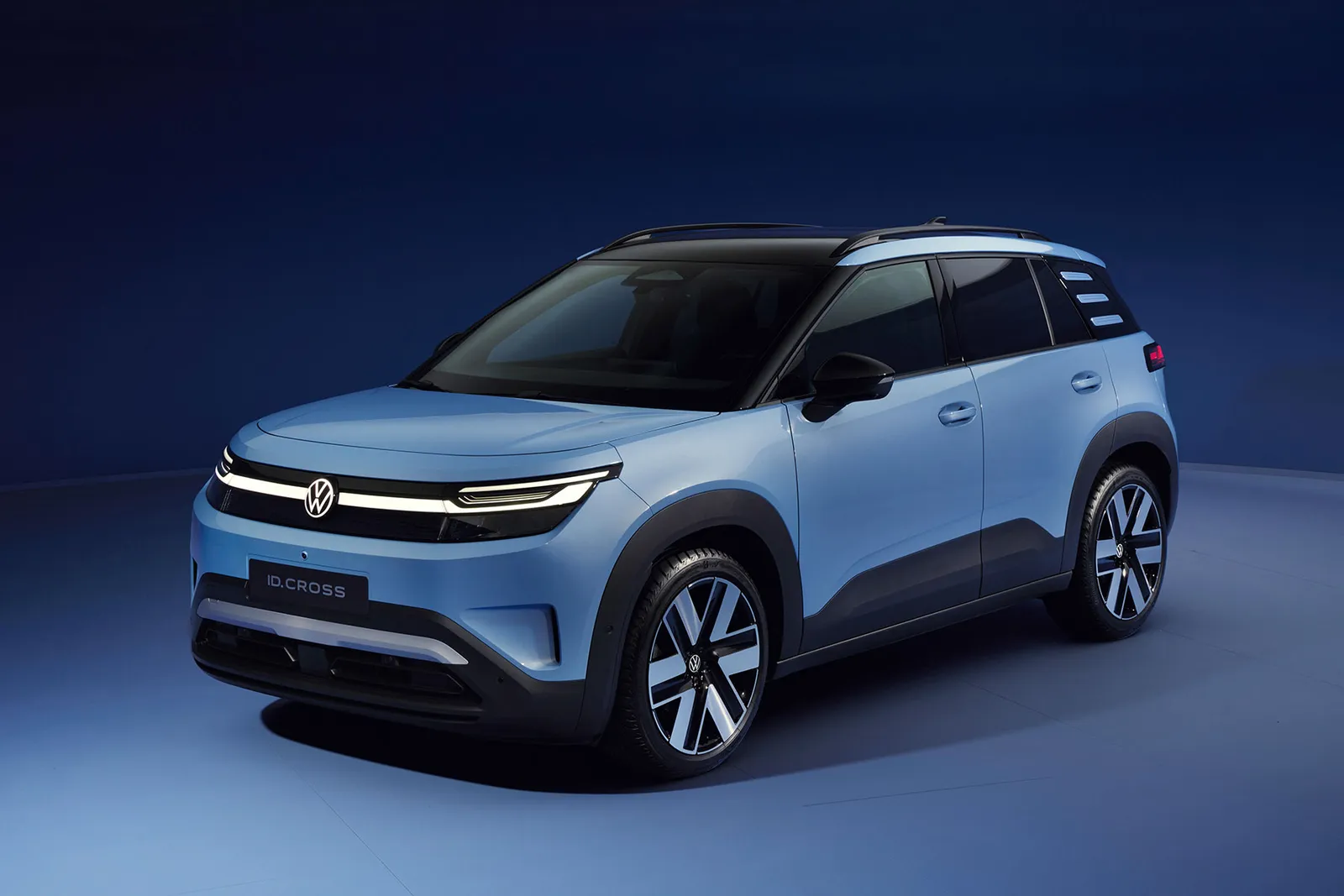
Image: Volkswagen
- 1/12
- 2/12
- 3/12
- 4/12
- 5/12
- 6/12
- 7/12
- 8/12
- 9/12
- 10/12
- 11/12
- 12/12
André Kleb, Chief Production Officer for the Iberian Peninsula, added: “The Iberian Peninsula is playing an increasingly important role within the group and is well on its way to becoming an extremely competitive and flexible region. Given the projected growth, we will soon exceed the milestone of one million vehicles produced across the three plants on the Iberian Peninsula—Martorell, Pamplona, and Palmela.”
The first ID. Cross to leave Volkswagen Navarra’s production lines is a model in the ‘Life’ trim level, painted in ‘Nori Green,’ and destined for Germany. The electric urban SUV, now rolling off the production line in Spain, will be launched in a total of 34 countries. In Germany, it is priced at €27,995, which is €3,000 more than the ID. Polo. However, the entry-level version at this price will not be available to order until October. Currently, only the higher-end Life and Style trims can be ordered — regularly priced from €36,525, but available from €34,025 when factoring in Volkswagen’s ID. purchase incentive in Europe, which remains valid until the end of September.
Now, let’s look at the car itself: In the future entry-level version, customers will get the ID. Cross in the Trend trim with a small 37 kWh (net) battery and 85 kW of power. This combination is already familiar from the new MEB+ modular system. The background is that the ID. Cross, like its three aforementioned relatives, is technically based on the advanced MEB+ platform with front-wheel drive. While the others are offered in four power levels, the ID. Cross will remain limited to a choice of three powertrains (85 kW, 99 kW, and 155 kW), combined with two battery sizes of 37 kWh and 52 kWh (net).
The new electric small car family showcases several innovations introduced by Volkswagen over the last few years. For the first time, the Urban Car Family uses the newly developed Group Unified Cell, which can be equipped with various chemistries. The cells are integrated in a Cell-to-Pack design, making them a load-bearing element of the vehicle structure in the underbody. The electric motor is the APP290, specifically developed for front-wheel-drive models, offering 290 Nm of torque, as per VW’s naming convention. The inverter, referred to by VW as the “pulse inverter” – a module that increases efficiency and thus reduces consumption – is also entirely new. This component was also developed in-house and is now being produced within the group. This concludes our brief deep dive into the technology toolkit.
Let’s take a closer look at the battery: The small LFP battery can be charged at up to 90 kW as standard, with the charging process from 10% to 80% taking 27 minutes—just like the ID. Polo. AC charging is possible at 11 kW, with a time of under four hours. Volkswagen states a preliminary WLTP range of up to 316 kilometres. While the 99 kW powertrain is also paired with the 37 kWh battery, offering the same charging behaviour but slightly better performance, the 155 kW powertrain is the only option for the ID. Cross to come with the 52 kWh NMC battery. The 166 kW variant of the ID. Polo GTI is not currently offered by VW for the ID. Cross. One more important note is that the 52 kWh battery increases range to up to 436 kilometres, and the DC charging power rises to 105 kW, while the stated DC charging time (10–80% SoC) slightly decreases to 24 minutes. Here is the corresponding overview:
| | ID. Cross 85 kW | ID. Cross 99 kW | ID. Cross 155 kW |
| --- | --- | --- | --- |
| FWD powertrain | 85 kW, 290 Nm | 99 kW, 290 Nm | 155 kW, 290 Nm |
| Top speed | 150 km/h | 150 km/h | 160 km/h |
| Battery (net) | 37 kWh LFP | 37 kWh LFP | 52 kWh NMC |
| WLTP range | approx. 316 km | approx. 316 km | up to 427 km |
| DC charging power | up to 90 kW | up to 90 kW | up to 105 kW |
| DC charging time (10–80%) | 27 min | 27 min | 24 min |
| AC charging power | 11 kW | 11 kW | 11 kW |
| Kerbside weight | 1,539 kg | 1,539 kg | 1,548 kg |