
Renault Trafic E-Tech electric opens for UK pre-orders from £38,000 plus VAT
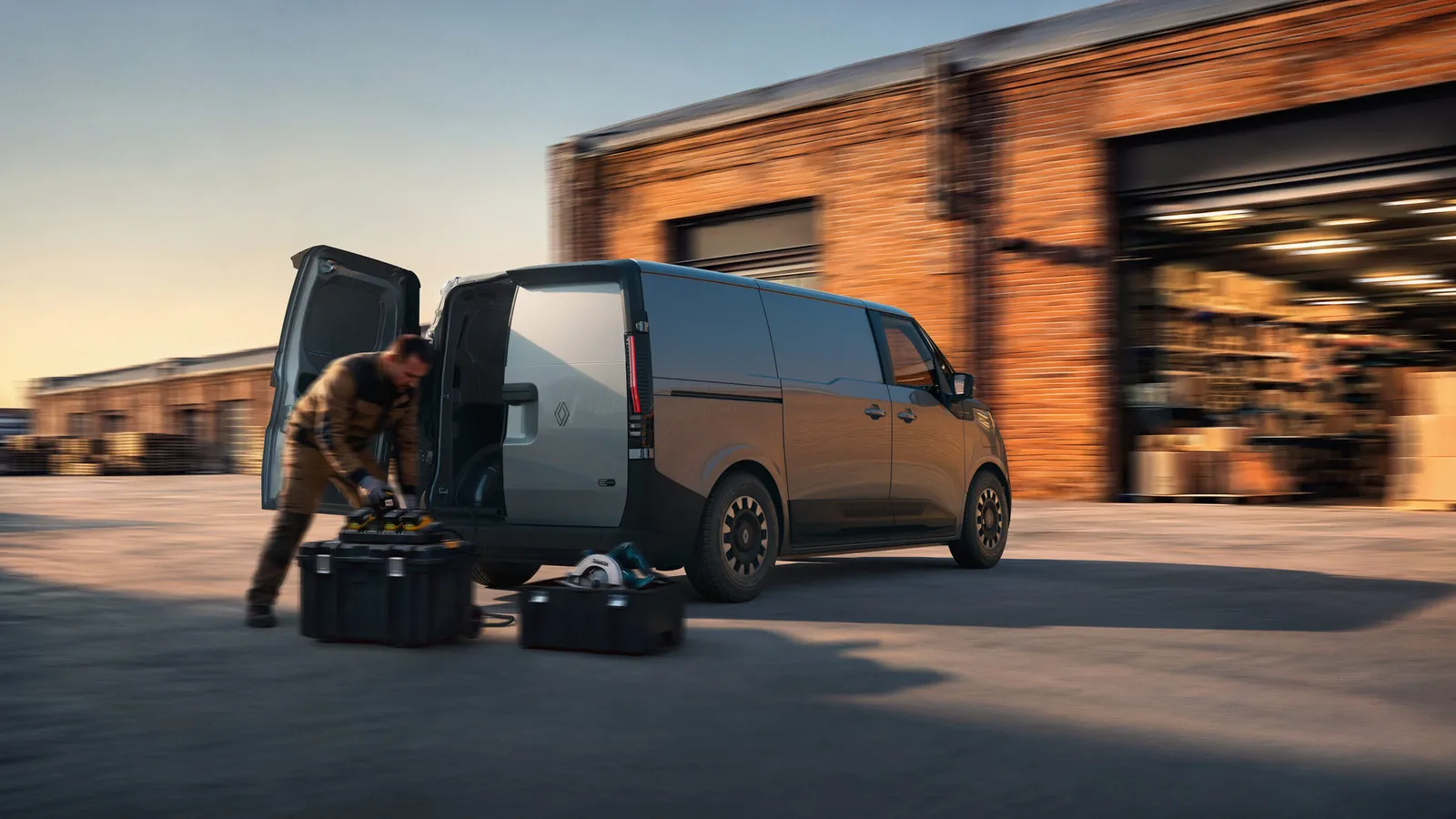
Renault has opened UK pre-orders for its new Trafic E-Tech electric van, with prices starting at £38,000 excluding VAT and first deliveries scheduled for the second quarter of 2027. The range offers a choice of two batteries, a claimed maximum range of 292 miles and rapid charging using an 800V electrical architecture.
The medium-sized van is also Renault’s first software-defined vehicle, allowing functions to be updated or added remotely throughout its working life. For businesses considering the switch to electric, the practical figures include up to 1.3 tonnes of payload, towing capacity of up to two tonnes and as much as 5.8 cubic metres of load space.
However, the entry price and longest range apply to different versions. The £38,000 model is a short-body Advance panel van with a 60kWh usable battery and a quoted WLTP range of up to 217 miles. Access to the larger 81kWh battery, offering up to 292 miles, starts at £43,000 excluding VAT.
Pre-orders opened on 5 November 2026, with seven versions listed across Advance and Extra trims. Buyers can choose between two body lengths, while crew vans are offered alongside conventional panel vans. The 60kWh battery is confined to the entry-level configuration in the published UK price list; all other listed versions use the 81kWh pack.
The longer Advance panel van costs £44,000, while Extra panel vans are priced at £44,500 in short form and £45,500 with the longer body. Crew vans are available only in the longer configuration, costing £46,500 in Advance specification or £48,000 as an Extra. All these figures are basic prices excluding VAT. Renault lists a £5,000 grant for every version.
On an equivalent battery and body length, Extra costs £1,500 more than Advance. That premium applies to both panel and crew versions, giving businesses a consistent upgrade cost when weighing the additional cabin and load-area equipment against their needs.
For charging, the larger battery supports a peak DC rate of 190kW, while the 60kWh version is rated at up to 160kW. Both have 11kW AC charging capability, providing an alternative for businesses able to recharge at a depot or other suitable workplace supply between shifts.
Renault says the 81kWh version can reach an 80% charge in around 20 minutes under suitable conditions. Its UK announcement does not specify the starting battery percentage, however, so the figure cannot be treated as a directly comparable 10–80% charging time. Actual charging performance will also depend on the available equipment and battery conditions.
Both battery versions use a 160kW electric motor producing 355Nm of torque. A heat pump is standard, and Renault quotes electricity consumption as low as 17.2kWh per 100km. The range and consumption figures are manufacturer claims, with the distance achievable in service affected by factors including payload, speed, temperature and towing.
The battery choice gives operators a £5,000 basic-price step between the two short-body Advance panel vans. In return, the larger pack raises the maximum quoted range by 75 miles. That makes expected daily mileage and opportunities to recharge central considerations when choosing between the urban-range and long-range versions.
Load capacity remains a key part of the proposition. Renault quotes cargo volumes ranging from 5.1 to 5.8 cubic metres, with room for three Euro pallets. Maximum payload and towing figures depend on the version, so businesses will need to match the chosen specification to their equipment, cargo and trailer requirements.
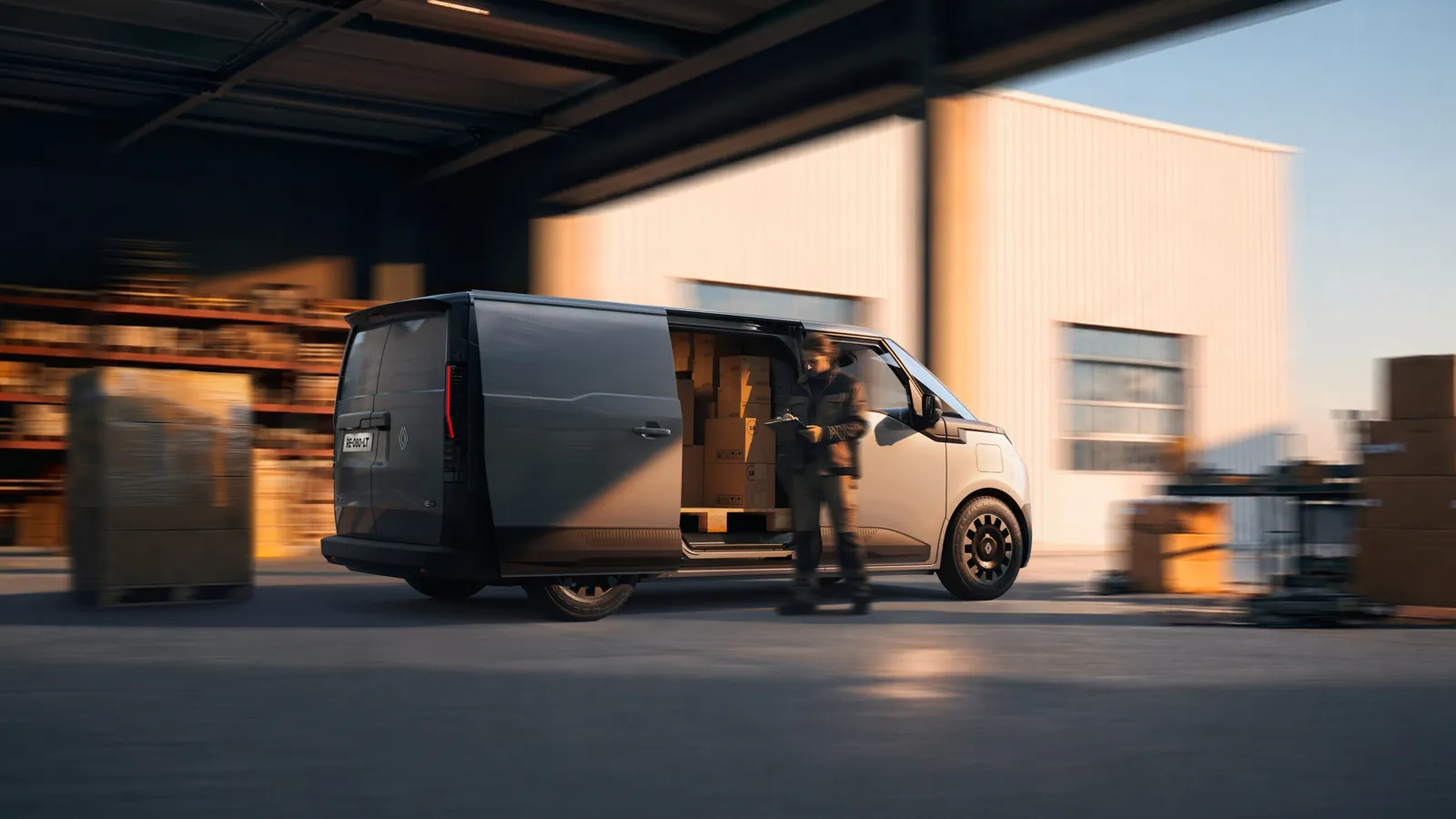
The two body lengths measure 4.87 metres and 5.27 metres, with an overall width of 1.92 metres. Height is quoted at 1.89 metres, potentially useful for operators regularly entering height-restricted parking areas. A 10.3-metre turning circle matches Renault’s figure for the Clio, helping manoeuvrability in confined streets and loading areas.
Beyond the powertrain, Renault is placing considerable emphasis on the van’s electronic architecture. Describing it as software-defined means that software can change or extend vehicle functions after delivery, rather than the specification remaining fixed throughout ownership. Over-the-air updates are part of that approach, alongside applications tailored to particular business activities.
Renault says companies will be able to integrate their own applications into the vehicle’s systems. A delivery operator could display routes, schedules and job details on the dashboard, for example. Specialist converters could also develop applications to manage equipment fitted to the van, including refrigeration systems.
The manufacturer also sees scope for remote diagnostics and predictive maintenance to help operators avoid downtime. Those are proposed operational benefits rather than evidence of a particular saving: the UK announcement does not quantify how much workshop time or running cost an individual business could expect to reduce.
Vehicle-to-load capability provides another potential use for the traction battery, supplying compatible electrical equipment away from a mains connection. That could allow tools or other equipment to run at a job site. Extra versions include 230V sockets in both the cabin and load area.
Standard equipment on Advance includes a 10-inch digital instrument display and a 12.3-inch OpenR evo multimedia touchscreen. Wireless Apple CarPlay and Android Auto compatibility, DAB radio, Bluetooth, voice recognition and Google Play Store access are included. Two dashboard USB-C sockets provide connections for devices used during the working day.
Driver assistance includes adaptive cruise control, front, rear and side parking sensors, and a reversing camera. Automatic emergency braking operates at the front and rear, while emergency lane-keeping assistance, traffic sign recognition and driver monitoring also feature. Hill-start assistance and trailer stability assistance are included within the vehicle dynamics system.
Advance also brings manual air conditioning, adaptive LED headlights, automatic lights and windscreen wipers, plus hands-free access and starting. The electric parking brake has an auto-hold function. Electrically adjustable, heated door mirrors and a steering wheel adjustable for height and reach are also fitted as standard.
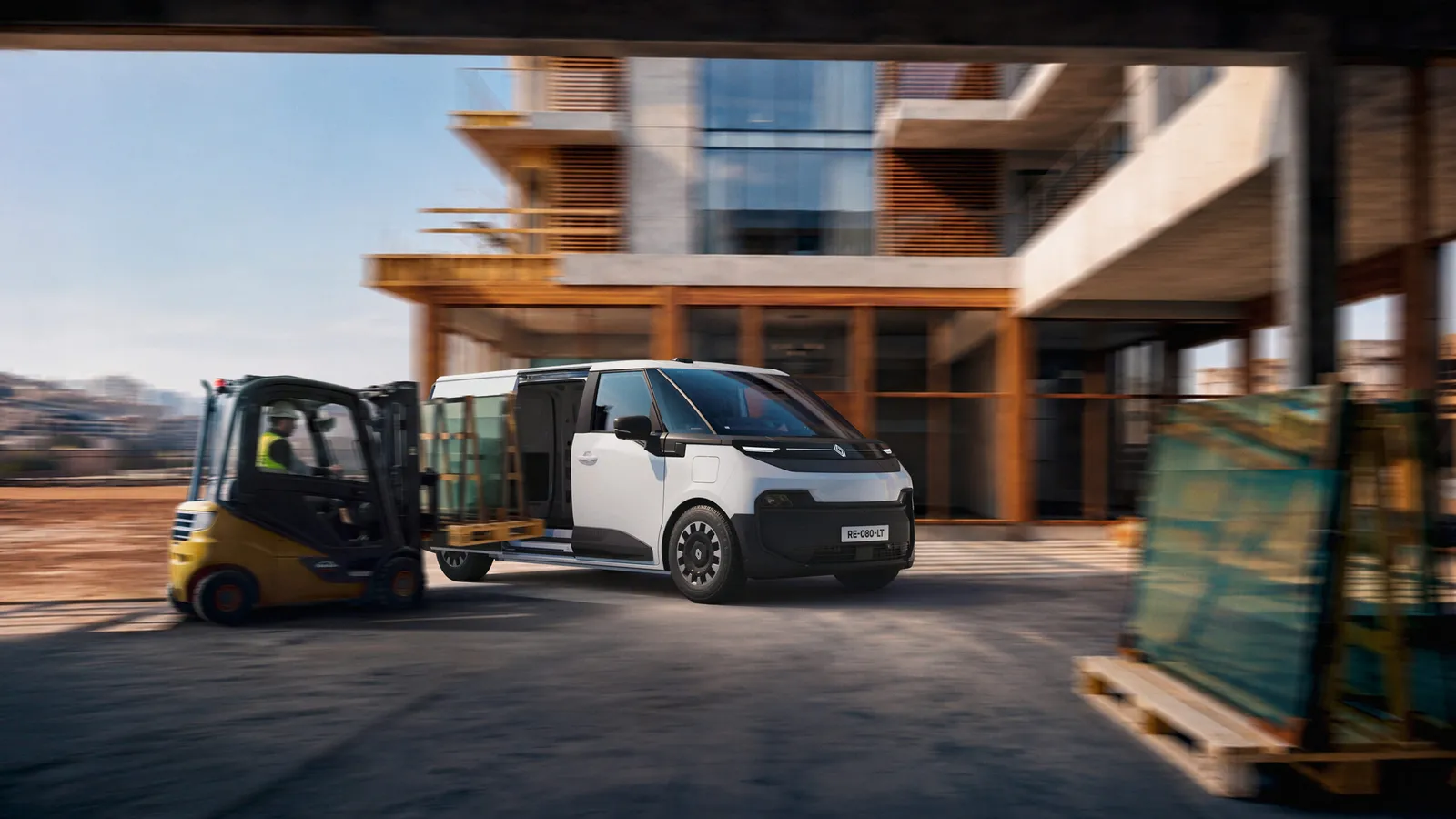
Moving to Extra adds metallic paint, additional airbags, automatic climate control and a driver’s seat with lumbar support, an armrest and further adjustment. Wireless smartphone charging and HERE navigation join the equipment list, alongside a mobile office configuration intended to make the cabin more useful between journeys.
Extra also gains ten lateral load-lashing rings and a bulkhead with a load-through flap. Advance already includes a full bulkhead, an 8mm wooden load floor, side protection panels and LED load-area lighting, with six to eight integrated floor-lashing rings. Rear doors open through 180 degrees, while a sliding side door provides another access point.
Cabin storage totals 32 litres, including open dashboard compartments, a closed glovebox and passenger bench storage. Renault also lists three cup holders, dashboard and load-area 12V sockets, and a loading height of 530mm.
The new model has already been named International Van of the Year 2027, an award Renault announced ahead of UK pricing and pre-orders.