
QuantumScape launches open platform for sulphide-based solid-state batteries
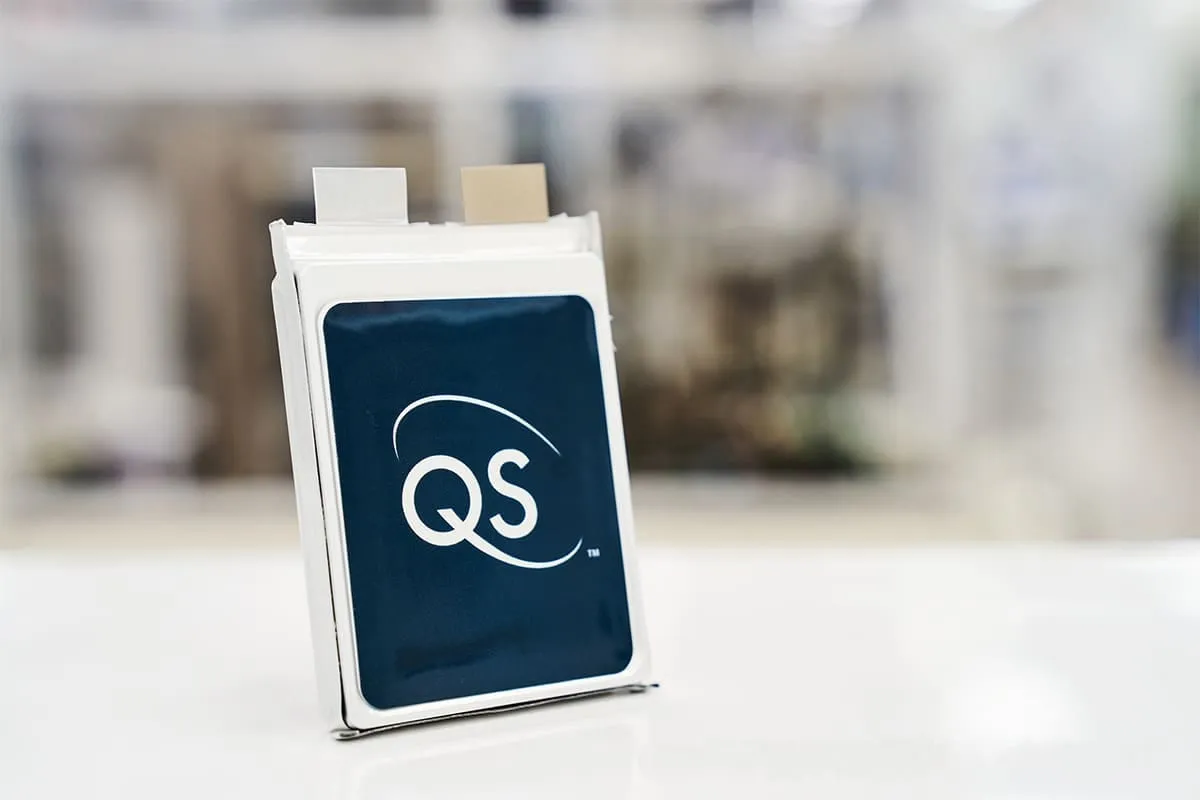
The Volkswagen partner has unveiled an open platform for sulphide-based solid-state batteries. It aims to create new licensing and co-development opportunities for existing customers - and allow the integration of third-party components.
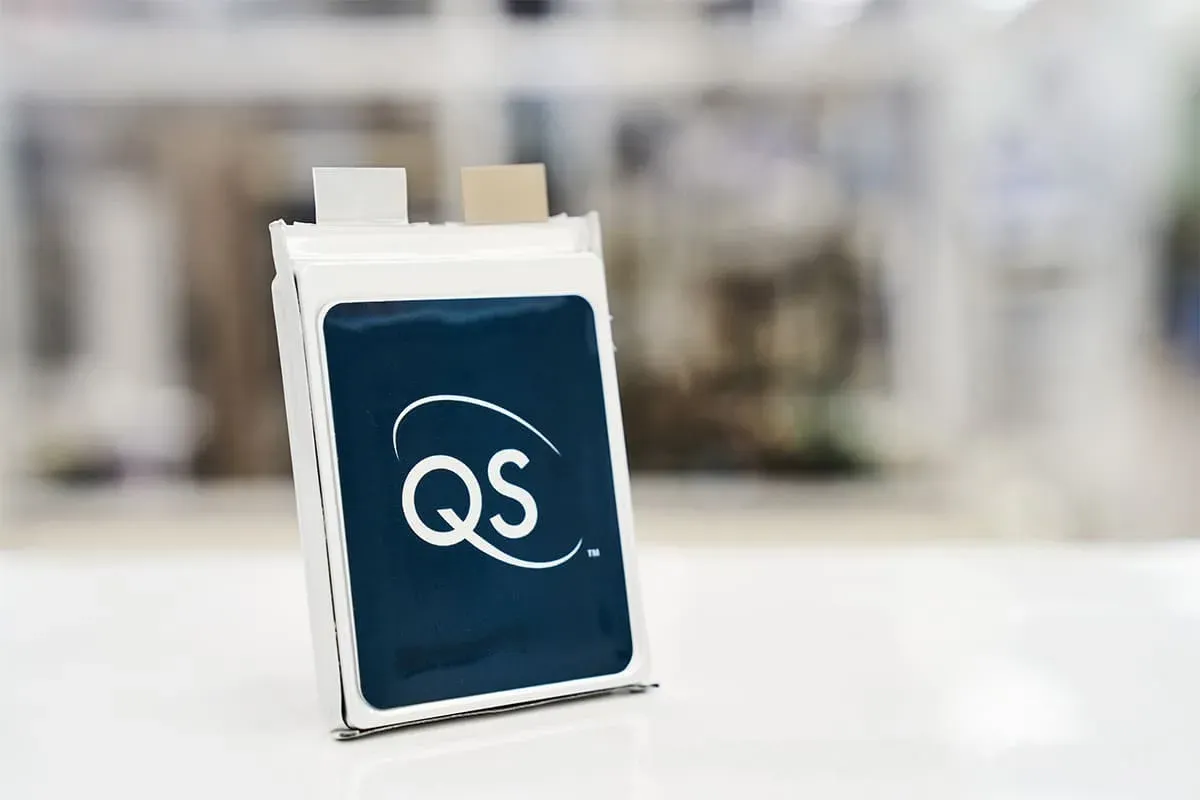
Symbolic image: A cell developed by QuantumScape with the company logo.
Image: QuantumScape
QuantumScape has introduced its new open platform for the next generation of solid-state batteries under the name ‘Osprey’. The platform builds on the company’s existing QSE platform and incorporates the ceramic separator developed by QuantumScape over the past years, as well as its established anode-free lithium-metal design with a solid cathode. The US company’s primary goal with the new platform is to enable “new licensing and co-development options for current QS customers and expanding its offering to developers of sulphide-based all-solid-state batteries.”.
The background is that the battery industry has long been working on solid-state batteries based on sulfide electrolytes, yet no commercially viable technology has emerged so far. QuantumScape explains: “Sulfide-based solid-state battery approaches are widely popular across the battery industry. Their popularity is due to the high ionic conductivity of sulfide electrolytes and the relative simplicity of processing them. However, sulfide still face several significant limitations, including the need for high applied pressure, as well as poor cycle life and incompatibility with lithium metal.” Although significant progress has been made along the entire value chain, “these efforts have been somewhat fragmented, and they have all run against the same fundamental limitations of sulphides as separators.”
The Osprey platform is thus designed to address this issue, and serve as a new open foundation. QuantumScape states that it is already working with partners from the automotive industry on development projects based on the new platform, with collaboration beginning in the early stages of cell development. QuantumScape elaborates: “Whereas our QSE platform is currently being scaled up to mass production as a full-stack technology solution, Osprey presents a fundamentally collaborative model for all-solid-state battery development.” Customers who prefer a sulphide-based cathode can either utilise QuantumScape’s proprietary sulphide-based cathode technology or integrate their own cathode into the Osprey platform, which “allows them to leverage their own cathode technology, materials and supply chain while gaining the benefits of the QS ceramic separator.”
QuantumScape is now referring to its ‘Osprey’ cells, which have reportedly achieved 1,000 full charge cycles with approximately 80% capacity retention and fast charging from 10% to 80% in five minutes during initial testing. This has been demonstrated under demanding standard conditions, the company says. Specific parameters include charge/discharge rates of 1C/1C, a cathode loading of >5 mAh/cm², a 100% depth of discharge at room temperature – all at a pressure of 1 atmosphere. Furthermore, the platform enables the use of high-loading cathodes, allowing for an energy density at the cell level of up to approximately 1,100 Wh/L.
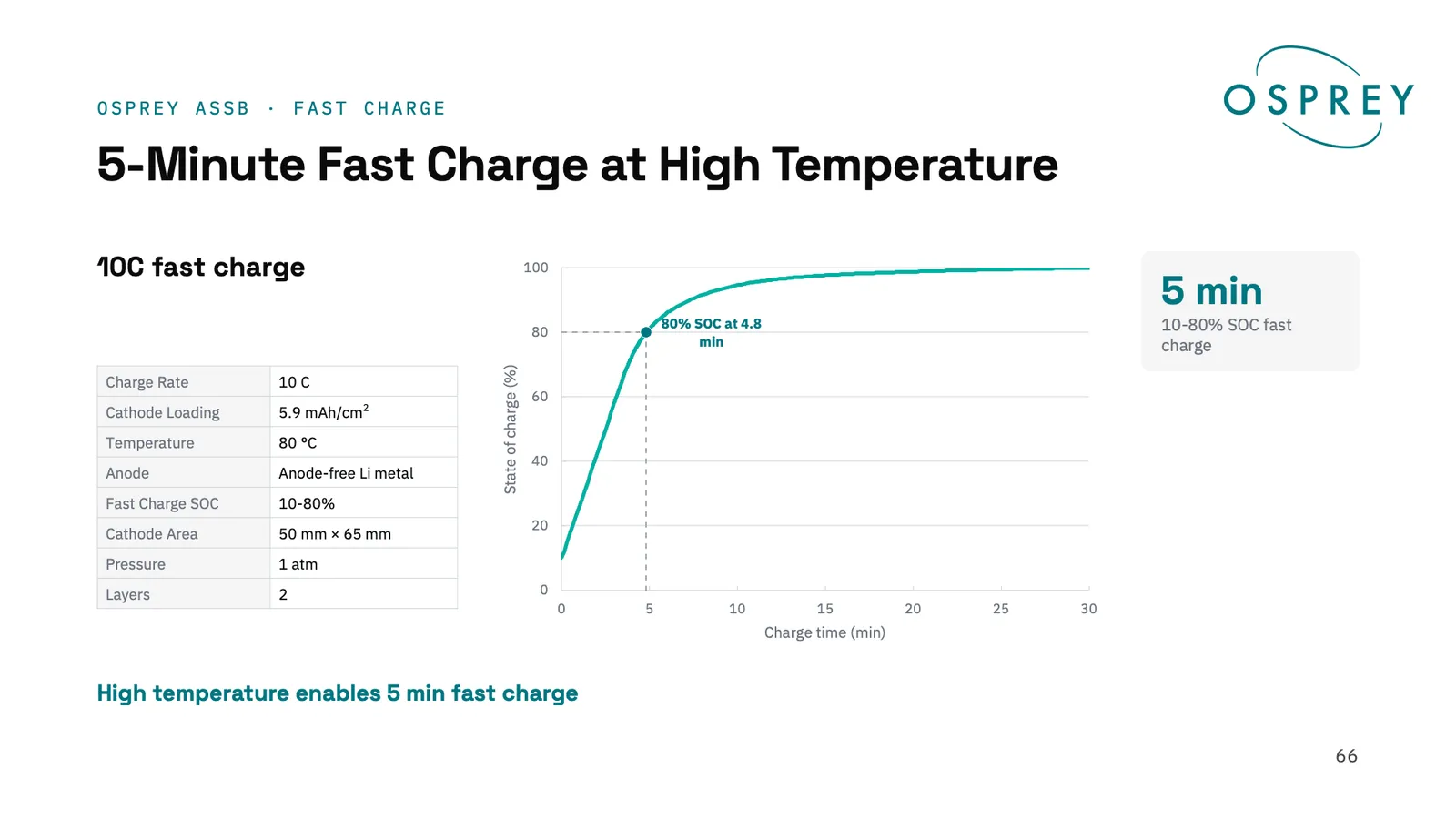
The compatibility of the cathodes has reportedly been demonstrated with both QuantumScape’s own solid cathodes and third-party solid cathodes. Dr Siva Sivaram, President and CEO of QS, summarises: “Osprey is the result of years of frontier R&D efforts, and we’re excited to share it publicly for the first time. The industry has invested heavily in sulphide-based batteries but keeps hitting the same fundamental limits. As the data shows, Osprey can address these limitations. We believe Osprey can unlock the full potential of all-solid-state batteries, and our goal is to make it the leading platform for solid-state battery development.”
However, there are still technical challenges to address before Osprey is ready for mass production. According to the US company, automotive industry customers generally prefer larger prismatic cells that offer higher capacity than the existing QSE-5 design. The aforementioned results, however, primarily come from two-layer test cells. While these have the same footprint as the QSE-5 cell design, “larger cells will likely require both more layers and more area per layer,” the company states. Additionally, much development work remains on the production process, as it has so far only been demonstrated on a laboratory scale.
Looking back at the company’s history: QuantumScape is one of the most promising solid-state battery developers in the US and is primarily supported by Volkswagen. At the end of 2025, the company announced that it had completed the installation of key equipment for the pilot production of its aforementioned QSE-5 solid-state cells in San Jose, California, as reported here. In February 2026, the pilot line was inaugurated. This so-called Eagle Line is an automated line for building QuantumScape battery cells, intended to serve as the foundation for future mass production. However, QuantumScape does not aim to manufacture its own cells at scale but instead plans to implement GWh-scale projects primarily through licensing agreements with partners.
In October 2025, the US company reported that it had begun delivering B1 samples of the QSE-5 cell. The company did not specify who received the new samples, but Volkswagen is likely among the recipients, as the ties between QuantumScape and the Wolfsburg-based automaker are strong and were further strengthened in the summer of 2025 as reported here. The focus of their joint programme is the Ducati V21L motorcycle, which is equipped with solid-state batteries and undergoing extensive testing. Additionally, Honda has been publicly listed as a prominent development partner since mid-2025.
What is clear is that the QSE-5 cell is set to become QuantumScape’s first commercial product, and features a capacity of 5 Ah, an energy density of over 844 Wh/l, and a charging time of 12.2 minutes from 10 to 80 per cent SoC (State of Charge). In October 2024, the manufacturer stated that it had launched small-scale production and delivery of B-sample cells for testing by automotive customers.
QuantumScape specifically describes the QSE-5 as an 84.5 mm x 65.6 mm x 4.6 mm solid-state battery cell. The cell is also designed to function at low temperatures down to -30 degrees Celsius. The QSE-5 was preceded by two cell prototypes at QuantumScape: ‘A0’ cell samples were delivered to automakers for testing just before Christmas 2022, followed by the so-called “Alpha-2” cells in March 2024.