
Porsche produces cathode active materials from recycled raw materials
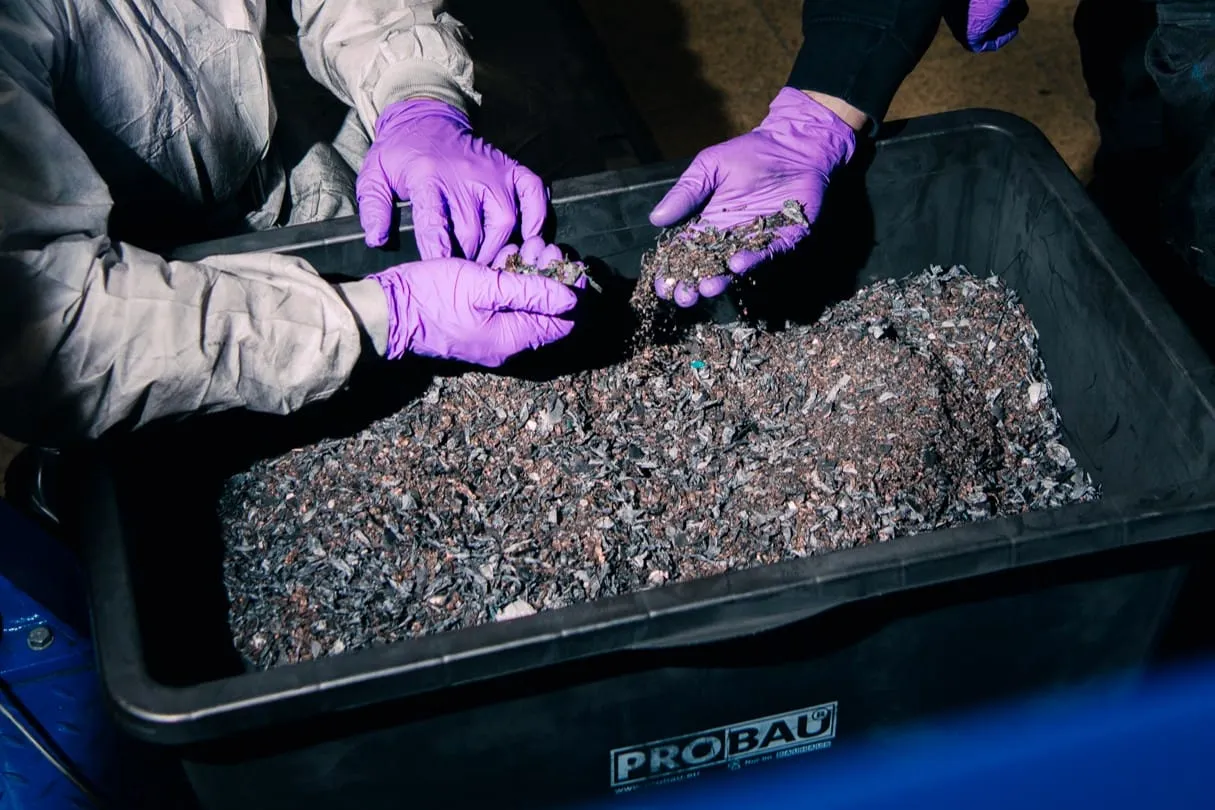
For the first time, Porsche has succeeded in producing battery cells whose cathode active materials are made from 100 per cent recycled raw materials such as lithium, nickel, cobalt, and manganese, sourced from its own high-voltage batteries. The battery recycling startup Cylib was also involved in the project.
Image: Cylib/Jann Höfer
It was last year that Porsche revealed it was working to recover raw materials from high-voltage batteries and establish as closed a material cycle as possible, as reported previously. At that time, the sports car manufacturer launched a pilot project with Aachen-based startup Cylib, in which Porsche invested in 2024.
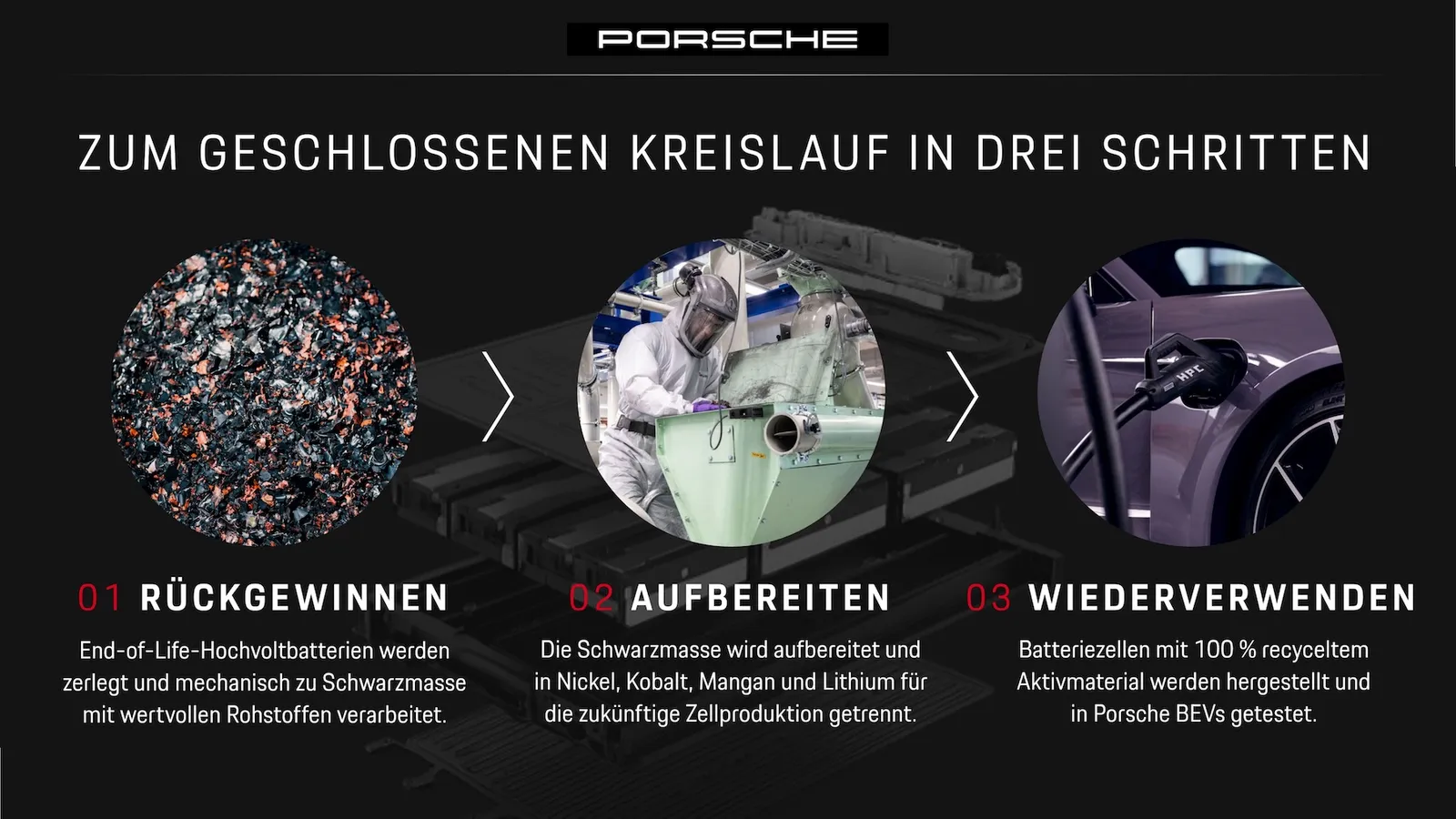
The pilot project with Cylib was divided into three phases. In the first phase, decommissioned high-voltage batteries from Porsche development vehicles were mechanically shredded and processed into black mass containing important raw materials such as nickel, cobalt, manganese and lithium. In the second phase, this black mass was further refined and separated into the raw materials required for producing new battery cells for traction batteries. In the third phase, battery cells with a defined proportion of recycled materials were to be manufactured and their potential use in Porsche vehicles tested.
Porsche to test battery cells in trial vehicles
The project has now reached phase three: for the first time, Porsche – together with partners such as Cylib – has succeeded in producing battery cells whose cathode active materials are 100 per cent derived from recycled raw materials—lithium, nickel, cobalt and manganese – recovered from the high-voltage batteries of its own vehicles. These novel battery cells are now to be tested in Porsche trial vehicles.
According to Porsche, initial tests have already demonstrated the potential technical suitability of this approach. Further results are expected later this year. The insights gained from the pilot project are intended to form the basis for the possible use of recycled battery materials in series-production battery cells.
“With battery cells made entirely from recycled raw materials such as lithium and cobalt, we have achieved an important technological milestone. This innovation is a key step in advancing both circular economy principles and raw material resilience, always with the ambition of optimizing progress, quality and resource efficiency,” said Joachim Scharnagl, Member of the Executive Board for Procurement at Porsche.
Closing the loop in battery recycling
“Cylib closes the battery recycling loop, from end-of-life batteries to recovered raw materials,” added Dr Lilian Schwich, Co-CEO and co-founder of Cylib. “The pilot project with Porsche demonstrates that our approach is feasible in practice: valuable raw materials from Porsche batteries at the end of their first life can potentially flow back into new high-performance batteries for Porsche vehicles.”
Initial findings from the pilot project are already being incorporated into the regular battery disposal process at Porsche centres in Germany. Since May 2026, the batteries have been recycled using an innovative and water-based process. The recovered battery raw materials are managed by Cylib in a material account and will be available to Porsche and selected partner companies for battery cell production from 2028. This is intended to reduce dependence on global raw material sources. In the future, this approach could enable recycled battery raw materials to be used in high-voltage batteries for regular Porsche electric vehicles in Europe.
Reducing dependence on China
The circular economy for batteries is becoming increasingly significant – and not just for sustainability reasons. Europe is heavily dependent on non-European supply chains, particularly China, for important battery raw materials such as lithium, nickel and cobalt, as well as their processing. Recycling can reduce part of this dependence by recovering and reusing battery raw materials already available within Europe for cell production. This gives end-of-life batteries the potential function of a domestic raw material source. At the same time, the Critical Raw Materials Act and the EU Battery Regulation stipulate increased recycling and minimum quotas for the use of recovered raw materials. For a competitive European battery industry, recycling is therefore about both resource efficiency and securing the raw material supply. Porsche is now addressing these considerations through its recycling project with Cylib.