
Polestar lowers forecasts amid weak half-year figures
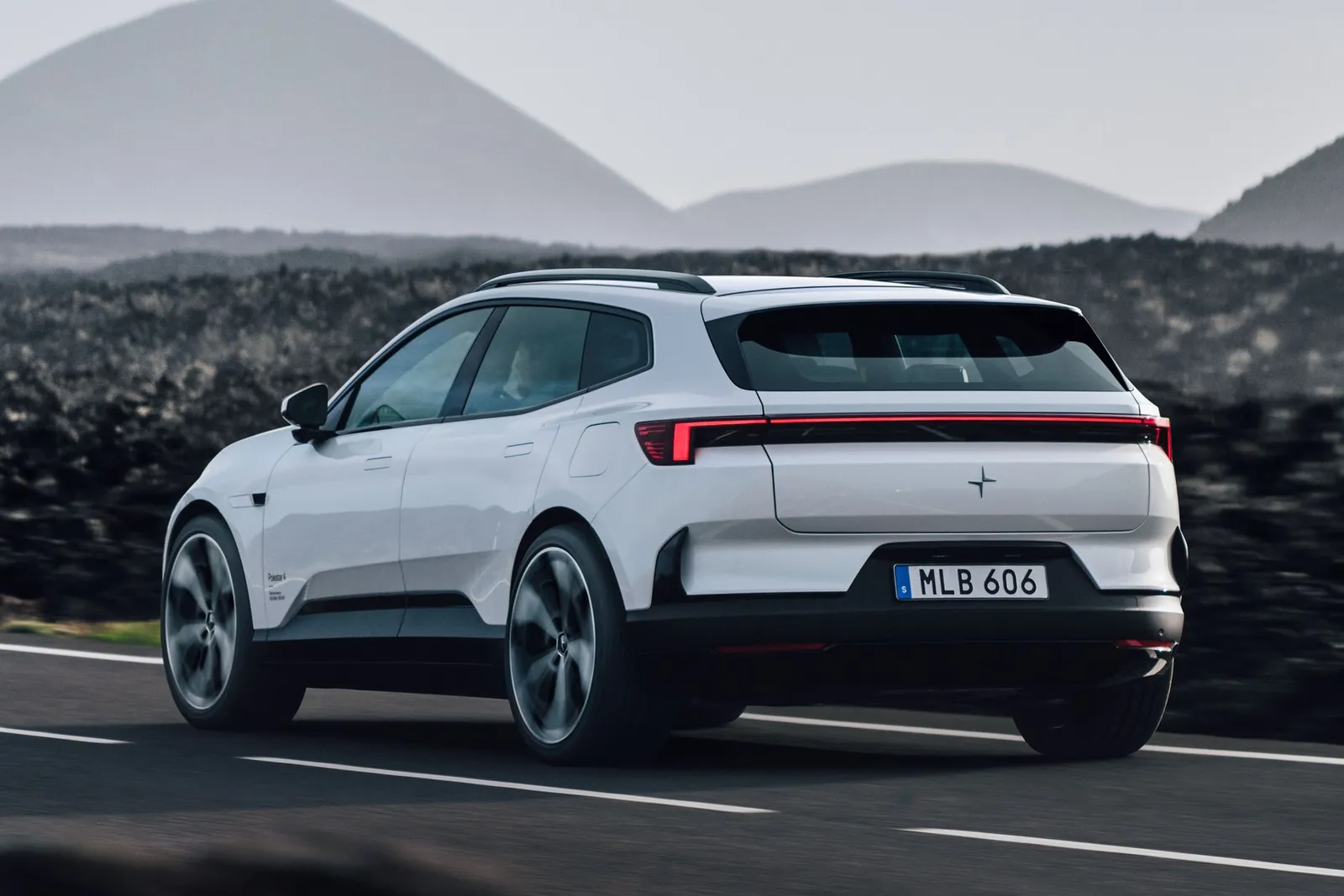
Polestar has reported mixed business figures for the first half of 2026. The Swedish-Chinese EV manufacturer managed to slightly increase its sales and significantly reduce its operating losses - but restructuring measures in its US operations led to additional costs.
In the first half of 2026, Polestar slightly increased its global retail sales to 30,423 vehicles – representing a modest growth of just 134 vehicles, or 0.4 per cent, compared to the same period last year. Nevertheless, Polestar highlights positive developments in distribution, citing the continued transition to an agency sales model, the expansion of retail locations, an attractive model range, and the growing share of the Polestar 4 as key strengths.
However, Polestar’s total revenue declined by approximately 4 per cent year-on-year to $1.36 billion US dollars. This drop was primarily attributed to pricing pressure, costs for residual value guarantees, and lower income from the sale of CO₂ credits to other manufacturers.
Polestar reduces losses
Despite the decline in revenue, the operating result improved significantly. The operating loss decreased by 43 per cent to $629 million US dollars in the first half of the year. In the previous year’s period, high depreciation had weighed heavily on the results. However, the net loss only decreased by 29 per cent to $842 million US dollars.
The fact that the net loss was significantly higher than the operating loss was primarily due to strong headwinds for Polestar in the US market. It’s well known that the US Department of Commerce has decided not to grant the company an exemption under the so-called Connected Vehicle Rule. This regulation prohibits the sale of connected vehicles with Chinese technology in the US starting from the 2027 model year.
This led to extensive restructuring measures, which burdened the first-half results with an additional 211 million US dollars. Moreover, a Polestar dealership in New Jersey has since filed a lawsuit against the company, alleging that the Connected Vehicle Rule served as a convenient pretext for withdrawing from the US market.
Sister company Volvo received exemption
The lawsuit’s basis ironically involves Polestar’s sister company, Volvo, which also belongs to the Chinese Geely Group – and has received an exemption. According to US Senator Bernie Moreno, Volvo met an extensive list of conditions to secure this exemption, whereas Polestar did not pursue this path.
Against the backdrop of intense competition and regulatory pressures in the United States, management has now adjusted its annual forecast. For the full year 2026, Polestar now expects sales growth in the low to mid-single-digit percentage range. This reflects both the business development in the first half of 2026 and the anticipated model transition, as the current Polestar 2 approaches the end of its lifecycle and the new SUV derivative of the Polestar 4 is set to launch in the fourth quarter of 2026.
Previously, the company had expected low double-digit growth in sales figures. The revised forecast was poorly received on the US tech exchange Nasdaq, where Polestar’s share price plummeted by 30 per cent, reaching an all-time low.