
New Hyundai IONIQ 6 starts at £33,240 with grant and offers 422-mile range
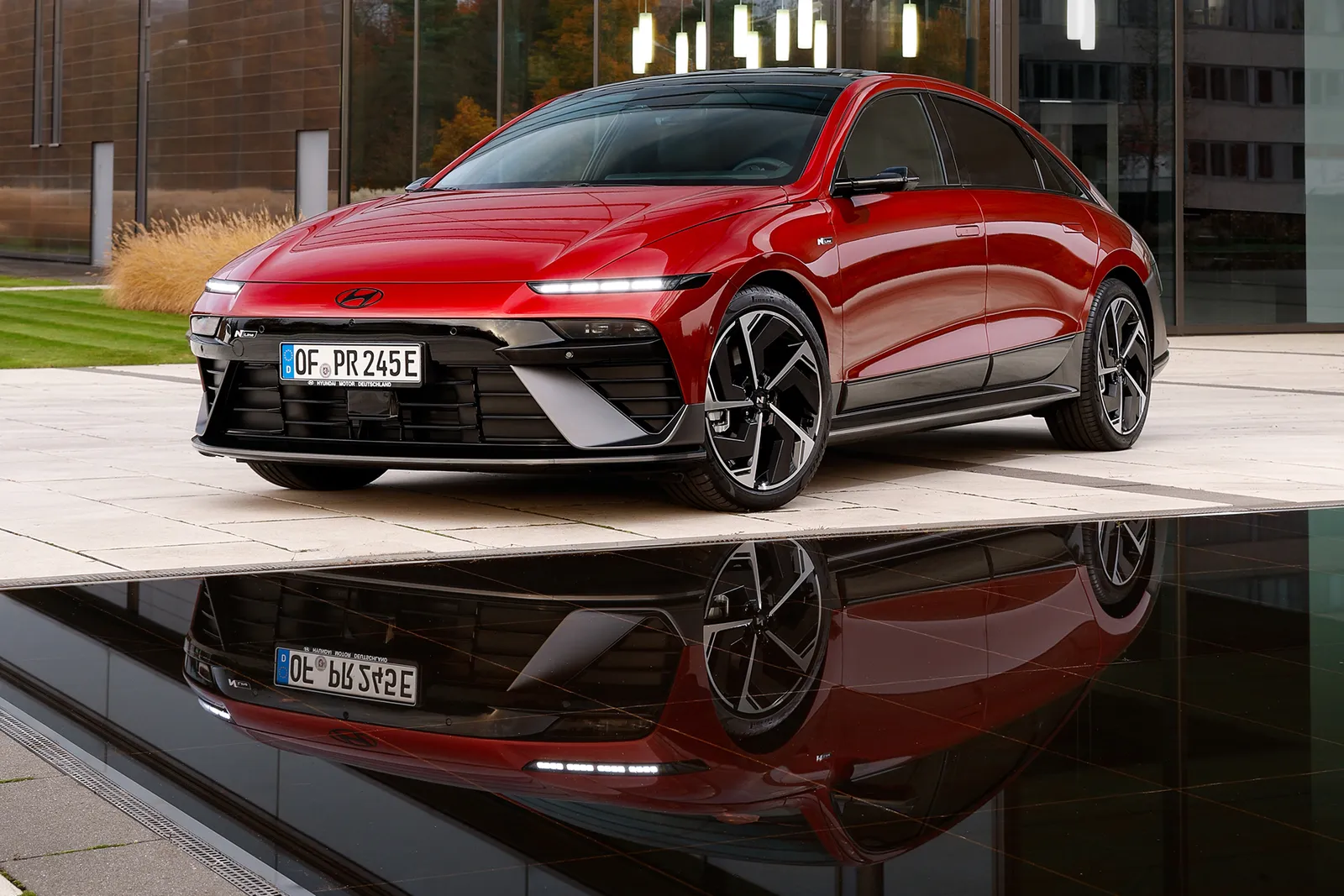
Hyundai has announced UK prices for its updated IONIQ 6 electric saloon, starting at £33,240 including the £3,750 Electric Car Grant, with a larger 84kWh battery delivering a claimed range of up to 422 miles. Orders are open now, with the first deliveries scheduled for early 2027.
The revised range comprises Premium, N Line and N Line Evo trims, with rear-wheel-drive and all-wheel-drive powertrains producing 229PS and 325PS respectively. Alongside the battery upgrade, Hyundai has revised the exterior styling, refreshed the cabin and retained the 800V electrical architecture that enables a claimed 10–80% charge in 18 minutes.
However, the headline price and longest range apply specifically to the Premium rear-wheel-drive model. Hyundai says this version and the £36,240 N Line RWD qualify for the grant. The remaining three variants are listed without the subsidy, with prices reaching £46,770 for the N Line Evo AWD.
Before the grant, the two qualifying models cost £36,990 and £39,990 respectively. That makes the distinction between subsidised and unsubsidised versions significant: moving from N Line RWD to N Line AWD increases the advertised purchase price by £7,250, although the underlying price difference before the grant is £3,500.
Ashley Andrew, President of Hyundai & Genesis UK, said: “The new IONIQ 6’s electrified streamliner look is more dynamic than ever, while enhanced specification and realigned pricing strengthen its appeal for customers seeking style, technology and value. The addition of the Government’s Electric Car Grant to IONIQ 6 makes this compelling package even more accessible.”
The cheapest model also offers the strongest figures for drivers prioritising distance between charges. Premium combines its 84kWh battery and 229PS rear-wheel-drive powertrain with 18-inch alloy wheels, returning Hyundai’s quoted maximum of 422 miles and an efficiency figure of 4.6 miles/kWh. Acceleration from 0–62mph takes 7.4 seconds.
Both N Line RWD and N Line Evo RWD retain that power output and acceleration time, but their claimed range falls to 364 miles, with quoted efficiency of 4.2 miles/kWh. Both use 20-inch wheels. The 58-mile difference means buyers choosing the sportier specification give up almost 14% of the Premium model’s advertised range.
All-wheel drive is available on N Line and N Line Evo, priced at £43,490 and £46,770 respectively. Output rises to 325PS, cutting the 0–62mph time to 5.1 seconds. Hyundai quotes up to 354 miles of range and efficiency of 4.0 miles/kWh for both versions. Every variant has a maximum speed of 115mph.
These are manufacturer figures rather than results from a WhichEV road test. Actual distance between charging stops will depend on conditions and use, but the specification makes the purchasing choice clear: Premium favours range and price, while the AWD versions offer substantially quicker acceleration.
For buyers comparing the two Evo models, all-wheel drive adds £3,500. Unlike the step between N Line powertrains, that difference is unaffected by the grant, because neither Evo version is listed as eligible. The extra performance comes with a modest reduction in quoted range: 10 miles separates the rear-wheel-drive and all-wheel-drive cars, compared with the much larger gap between Premium and N Line in rear-wheel-drive form.
Charging capability is consistent across the range. Hyundai quotes an estimated 18 minutes to replenish the battery from 10% to 80% using a 350kW rapid charger, or one hour and 20 minutes using a 50kW unit. The 350kW figure describes the charging equipment used for the estimate, rather than a stated peak charging rate for the car.
For AC charging, Hyundai lists a full 0–100% recharge in seven hours and 35 minutes using an 11kW supply. Battery heating with pre-conditioning is standard across all three trims, as is a heat pump. Those features are included on the entry-level car, rather than being reserved for the more expensive versions.
Premium also comes with heated front seats, a heated steering wheel, dual-zone climate control and electrically adjustable front seats. Flush automatic door handles, intelligent matrix LED headlights, rain-sensing wipers and an electrically operated boot lid are included, alongside front and rear parking sensors and a reversing camera.
The dashboard combines a 12.3-inch digital instrument display with a 12.3-inch touchscreen for navigation and infotainment. Standard connectivity includes Apple CarPlay, Android Auto, wireless screen mirroring, wireless phone charging and over-the-air updates. USB-C connections are provided for front and rear occupants, while an interior vehicle-to-load outlet is fitted throughout the range.
Safety and assistance equipment includes Forward Collision Avoidance Assist, Blind Spot Collision Avoidance Assist and Highway Drive Assist 2 with hands-on detection. Lane-keeping and lane-following assistance, intelligent speed-limit assistance and smart cruise control with stop-and-go functionality are also standard. The equipment list places much of the driver-assistance technology within reach of buyers choosing Premium.
N Line costs £3,000 more than Premium after the grant and concentrates on a sportier appearance and additional comfort features. Alongside its larger wheels, it gains black Hyundai badges, high-gloss black bumpers, metal sports pedals, metal door scuff plates and an N steering wheel. Red stitching and red detailing distinguish its cloth-and-leather upholstery.
The upgrade also brings heated outer rear seats and lumbar support for the front passenger. Buyers choosing the rear-wheel-drive N Line therefore gain styling and equipment changes, rather than additional performance: its 229PS output and 7.4-second sprint time match Premium.
N Line Evo RWD starts at £43,270, just £220 below the N Line AWD. That creates a closely priced choice between the more comprehensively equipped rear-wheel-drive model and the faster all-wheel-drive version in the middle trim. Evo adds leather-and-suede upholstery, a suede headlining, driver’s seat memory, front relaxation seats and ventilation for the front seats.
Other Evo additions include an electric sunroof, head-up display, surround-view camera system, Remote Smart Parking Assist and parking collision avoidance assistance. Digital Key 2, Walk-Away Lock, an exterior vehicle-to-load adaptor and a Bose audio system with seven speakers and a subwoofer complete the main upgrades. Digital side mirrors are optional on Evo.
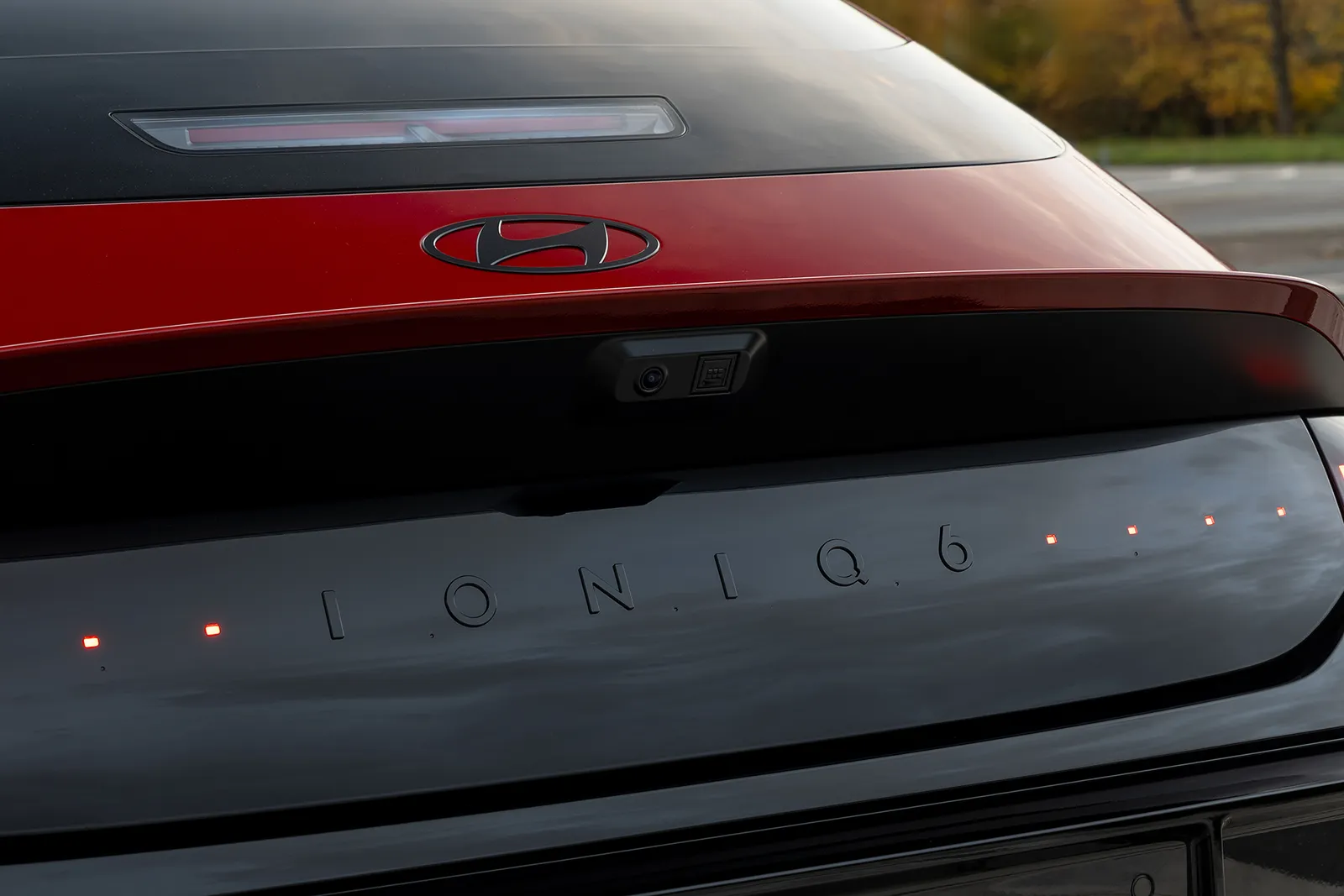
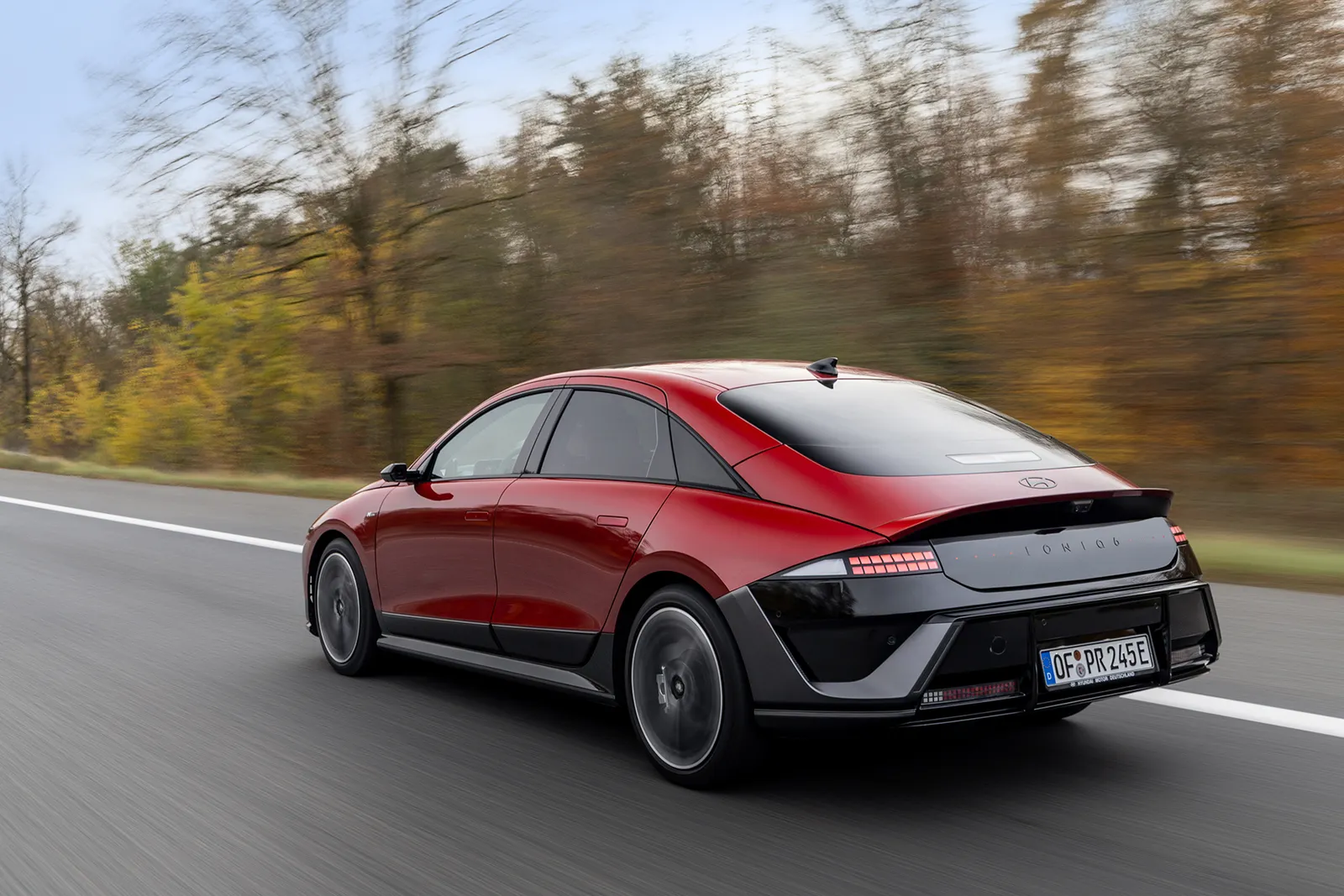
Externally, Hyundai has reshaped the IONIQ 6’s nose and raised the bonnet, while extending the black lower-body trim into the doors. At the rear, an extended ducktail replaces the previous model’s prominent spoiler. Hyundai says the changes preserve aerodynamic efficiency while giving the saloon a smoother profile.
The updated car measures approximately 4.93 metres long, with a 2,950mm wheelbase. Hyundai lists a 401-litre boot, 45 litres of under-bonnet storage and a maximum braked towing capacity of 1,500kg. Rear seats split and fold in a 60:40 arrangement.
Ultimate Red metallic paint is included, with other metallic and pearl finishes priced at £750 and matte options at £1,250. Colour availability varies by trim. All versions carry Hyundai’s five-year unlimited-mileage vehicle warranty, while the high-voltage battery is covered for eight years or 100,000 miles.