
Momenta clears Level 4 test drive hurdle in Germany
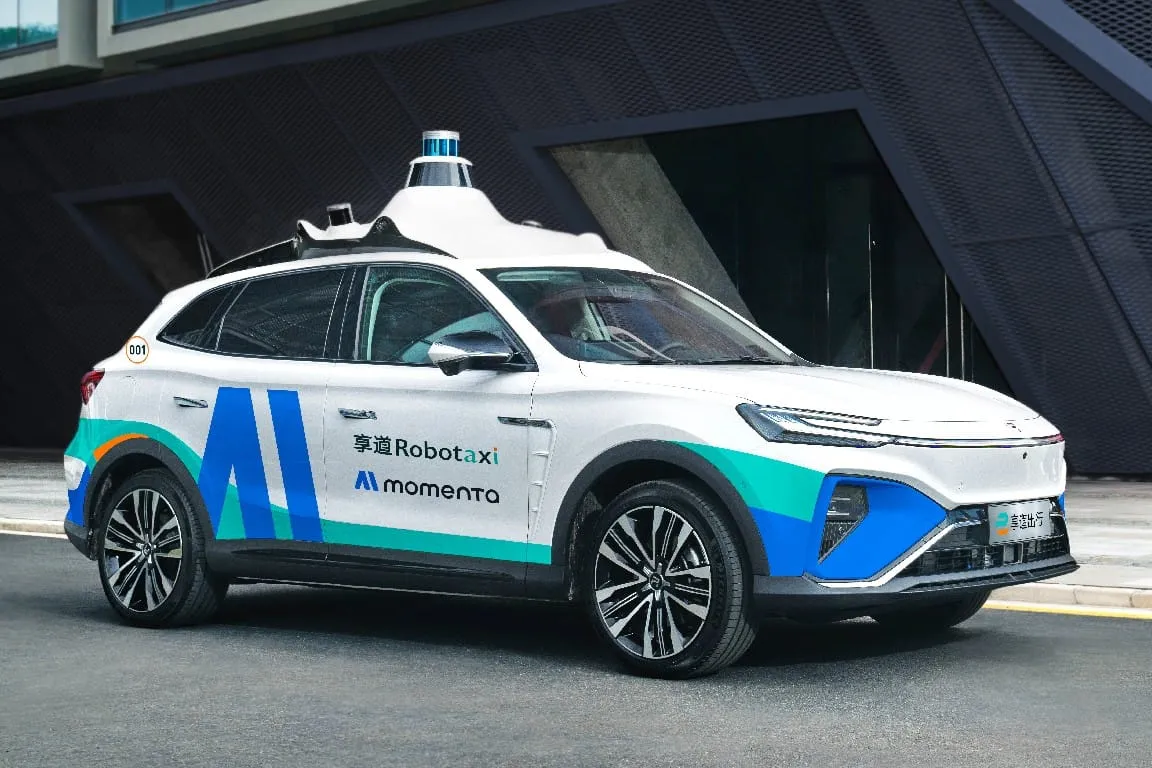
The German Federal Motor Transport Authority (KBA) has granted Momenta, the Chinese autonomous driving specialist, nationwide approval for Level 4 test drives in urban traffic. This clears a decisive regulatory hurdle for the robotaxi project in Munich first announced a year ago.
Momenta has announced that it has received a test licence from the Federal Motor Transport Authority (KBA). This permit allows Level 4 autonomous test drives on urban roads across the entire country. According to Momenta, it is the first Chinese company to be granted such nationwide approval for urban traffic by the authority.
The practical value of this approval lies less in its symbolic significance and more in the reduction of bureaucracy. Until now, developers of autonomous driving functions had to undergo a separate process for each city. This is precisely where such projects in Europe typically falter: not due to software limitations, but because of the question of where testing is permitted. Momenta can now relocate, expand, or continue its testing in a second city at will, without having to restart the bureaucratic process each time. Additionally, the safety validation is directly aligned with European regulations, which is likely to significantly shorten the path to further EU markets.
Level 4 autonomous driving: what it means in practice
Level 4 means that the vehicle can operate fully autonomously within a predefined operational domain and can be brought to a safe state without human intervention in the event of a malfunction. This eliminates the need for a safety driver to take control in an emergency. As a result, the effort required to demonstrate compliance is entirely different from that of Level 2 driver assistance systems, which are now standard in almost all new cars.
With the Autonomous Driving Act of 2021, Germany became one of the first countries worldwide to establish a legal framework in which the KBA serves as the approving authority. The authority’s reputation as a particularly stringent reviewer is precisely why Momenta emphasises this approval: those who receive it gain a benchmark that carries weight internationally.
Technically, Momenta relies on what it calls a World Model – a system that not only perceives its surroundings but also predicts their future development. CEO Xudong Cao explains this as a system that must not only see the road but also understand it. And it must be able to anticipate how a situation will unfold before it occurs. This principle underlies the key difference between a driver assistance system and a fully autonomous vehicle: a rule-based approach reacts, while a predictive model plans. In dense urban traffic, with cyclists, delivery vans parked in the second row, or pedestrians stepping out from between parked cars, this capability determines driving quality and safety.
Munich remains the primary market
The approval did not come out of nowhere: in September 2025, Uber and Momenta announced plans to jointly test robotaxis in Munich from 2026 onwards and expand into a European service from there. At the time, however, it was unclear how quickly the requirements could be met. In addition to proving the driving function, a specific operational area must be defined and approved by the authorities. The launch in the Bavarian capital is no coincidence: while Momenta’s European headquarters is located in Böblingen near Stuttgart, the company also maintains an office in Munich. Furthermore, Momenta supplies driver assistance systems for the China models of BMW and Mercedes-Benz and has counted the Stuttgart-based automaker among its investors since 2017. Connections also exist with Audi and the Volkswagen Group.
The timing of the announcement also aligns with financial developments: Momenta went public in Hong Kong on 8 July, raising approximately 6.8 billion Hong Kong dollars. Around one-fifth of this sum is earmarked for the commercialisation of its robotaxi business. Uber increased its stake during the listing and now holds around 1.19 million shares – worth approximately $45m USD – through a subsidiary. In addition to Uber, investors include Grab, Lumo, and EnjoyGo (the mobility service of SAIC Motor).
Despite the progress in autonomous mobility, a sober perspective is warranted: a test permit is not an operational licence. Many additional approval steps lie between testing and a service that allows regular passengers to board and ride. Momenta has not yet announced a start date for the service. The fact that Baidu’s Apollo Go is simultaneously hitting the streets in London via Lyft’s subsidiary Freenow underscores a key point: the race for Europe’s first robotaxi fleet is in full swing, and the vehicles for it are predominantly coming from China.