
Liverpool orders 30 battery-electric midibuses from Alexander Dennis
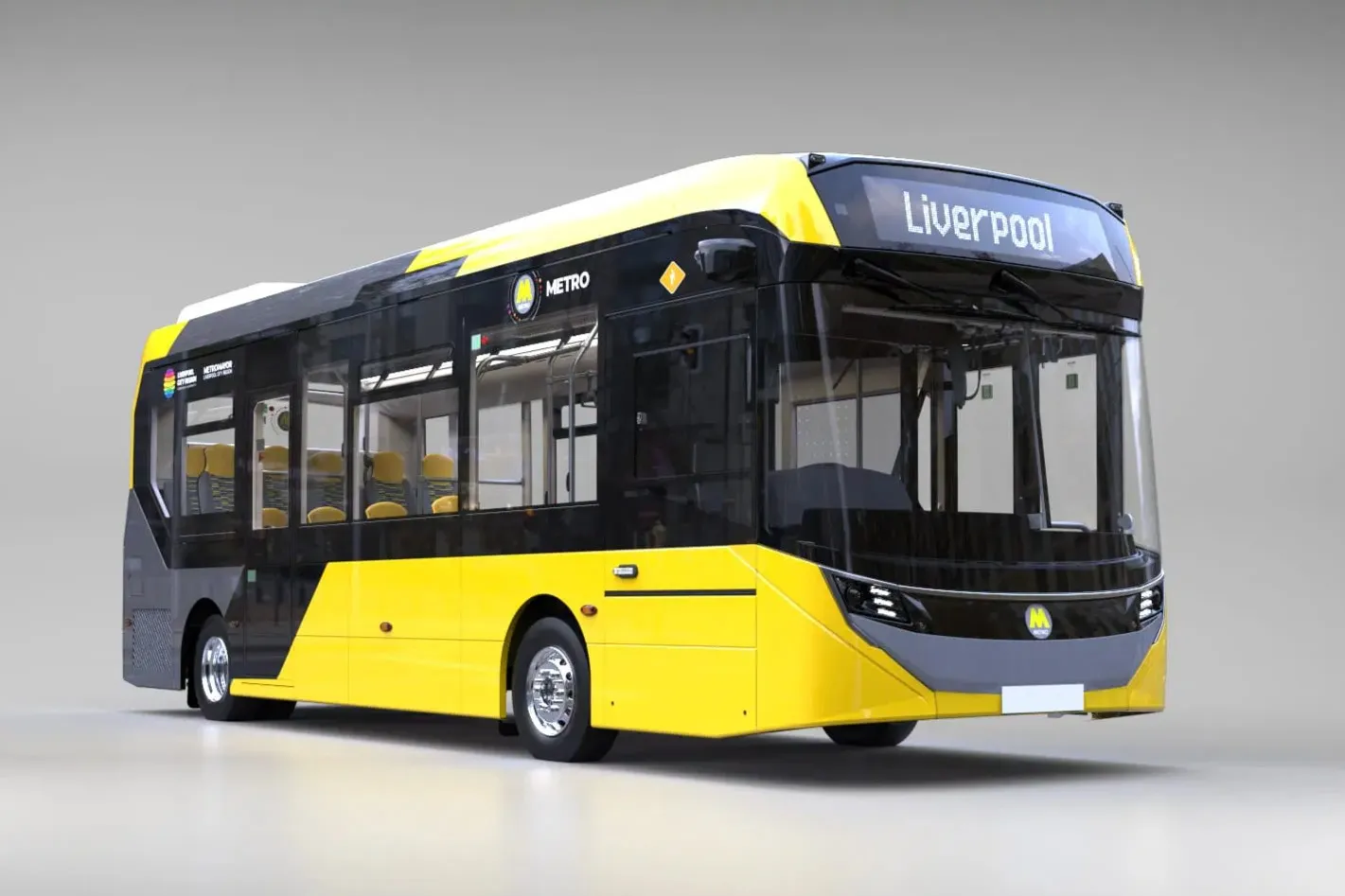
The Liverpool City Region Combined Authority has ordered 30 electric buses of the Enviro100EV type from Alexander Dennis. They are part of an order for at least 207 buses worth £57 million, equivalent to approximately €66 million. Deliveries are scheduled for 2027.
Image: Alexander Dennis
Only a small portion of the order is for purely battery-electric buses — the remaining 177 vehicles are low-emission combustion models. With this order, the number of buses Alexander Dennis supplies to the region’s public transport network grows to around 400.
According to its own statements, Alexander Dennis won four of the six tendered lots, with two therefore going to competitors. The contract also includes options that could increase the volume to 357 buses and £95 million (approx. €110 million). The announcement does not specify how many additional electric buses this might include.
The 30 ordered electric buses are the Enviro100EV, the smallest model in the British manufacturer’s portfolio: a midibus measuring 8.5 metres in length, 2.35 metres in width, and with a turning circle radius of 8.6 metres. The small electric bus can transport up to 45 passengers, including 25 seated.
Propulsion is provided by the Voith Electrical Drive System in the MD configuration, delivering 250 kW peak power and 230 kW continuous power. The NMC battery has a standard capacity of 354 kWh, with an optional 236 kWh version available. The battery can be charged at up to 150 kW, or up to 118 kW in the smaller configuration. Alexander Dennis also offers optional roof rails for pantograph charging at up to 177 kW and 118 kW, respectively. The manufacturer states a range of up to 450 kilometres with the larger battery, or around 300 kilometres with the smaller one. However, the announcement does not reveal which configuration Liverpool has ordered.
The remaining vehicles in the order are, according to the company, low-emission combustion models that can later be converted to electric propulsion via Alexander Dennis’ in-house Repower service. All vehicles are to be built or completed in the UK, with production taking place at the manufacturer’s facilities in northern England and Scotland.
First electric double-deckers already in operation
The 30 Enviro100EV models bring Liverpool’s known electric bus orders from the British manufacturer to 88 vehicles, since 58 battery-electric double-deckers of the Enviro400EV type was announced in February 2025, supported by the second tranche of the UK’s ZEBRA 2 funding programme.
Originally, the double-deckers were expected to arrive in 2025, but the first batch actually reached Liverpool in February 2026. Driver training took place before regular scheduled service began. The Combined Authority has not disclosed how many double-deckers have already been delivered. Overall, the procurement includes more than 100 electric double-deckers from Alexander Dennis and Wrightbus, with integration set to be completed by the end of 2027.
Buses to enter public ownership
The electric buses are part of the transition of bus transport in the Liverpool City Region to a franchise model, similar to the one already in place in London and currently being established in Manchester. Under this model, public transport is publicly owned. Ticket prices, timetables, and bus routes are determined by the public administration, while the operation of the routes is tendered to private operators. The first phase launched on 6 September 2026 in St Helens and on the Wirral Peninsula. The entire region is expected to follow by the end of 2027.
In the coming years, significant investments will be made in the Liverpool City Region’s bus network against this backdrop. The plans are funded by the £1.6 billion “Transport for City Region” (TCR) programme, and include extensive investments in depots, intelligent ticketing systems, and the aforementioned new fleet. The electric buses will thus become the property of the Liverpool City Region Combined Authority.