
LEPAS AURA concept previews new look and personalised lighting
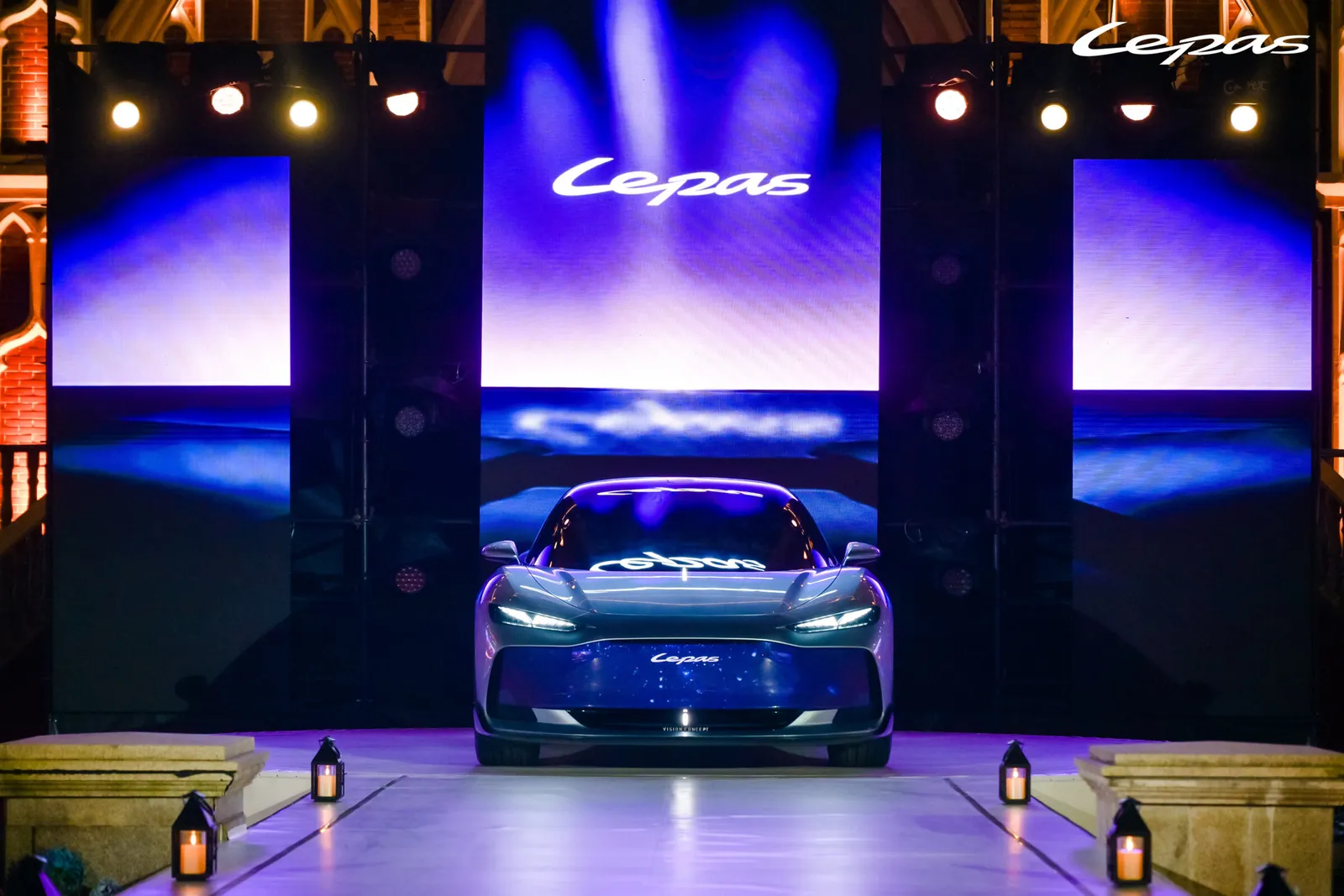
LEPAS has unveiled its first concept car, AURA, previewing a new design direction for the Chery-owned new-energy vehicle brand and exploring lighting displays that could let customers personalise the appearance of future models.
Revealed at LEPAS Global Elegance Night in Wuhu, China, the concept introduces the second evolution of the company's “Leopard Aesthetics” styling. Its most significant features include a redesigned front end, distinctive headlamps and digital surfaces intended to support adaptable graphics and animations.
However, the unveiling is a statement of design intent rather than a production launch. LEPAS has not announced AURA's powertrain, battery capacity, driving range or charging capability. Nor does the release provide a price, production timetable or confirmation that the concept itself will reach UK showrooms.
Instead, the company says AURA establishes a visual direction for future LEPAS vehicles. That makes its styling cues more immediately relevant than any prospect of buying the show car: the front treatment and lighting signature are intended to help create a consistent identity across subsequent models.
The reveal took place during the inaugural LEPAS Global Elegant Lifestyle Week. For a brand seeking to establish its own character within Chery's automotive portfolio, AURA provides an early indication of how it wants its vehicles to be recognised, with sculpted bodywork and personalised illumination central to that ambition.
A new face for future models
The most important change is at the front, where LEPAS has brought the rounded grille and side intake areas together within a single black surface. The company describes this as a cleaner, more cohesive treatment, intended to give its future cars a stronger family resemblance.
Alongside it are the “Leopard-Eye” headlamps, which provide the concept's principal lighting signature. LEPAS says the combination of the front graphic and lamps is designed to make its vehicles recognisable from a distance, rather than relying solely on a badge or individual model details.
Although AURA introduces a new phase of the design language, it retains elements already used on the LEPAS L8 SUV. These include what the manufacturer calls porcelain-inspired surfacing, combining glossy, sculpted volumes with flowing lines. The intention is to develop an existing identity while giving future products more expressive proportions.
The concept has a long wheelbase, short overhangs and a wide stance, accompanied by pronounced shoulder lines. LEPAS has not supplied dimensions, so the release does not establish its overall footprint or allow a meaningful comparison with production vehicles on size, passenger accommodation or luggage capacity.
Chief designer Ivan Dulanovic said the animal reference informed both the car's proportions and its intended character. “It is our interpretation of the Leopard's power. It is not exaggerated and it is certainly not decorated, it is simply present. And that is how we imagine that strength looks when it doesn’t need to prove itself,” he said.
Airflow helps shape the body
LEPAS says integrated air channels follow the contours of AURA's body, linking the exterior styling with an aerodynamic purpose. According to Dulanovic, the channels guide air through and over the vehicle, helping to generate downforce across its broad body.
“In our philosophy, form and function are never two separate things. The AURA's stance follows the running leopard; it is lean, forward and efficient,” he said. “The air itself helped shape this car, so to speak.”
There are no aerodynamic measurements in the announcement, however. LEPAS has not published a drag coefficient, downforce figures or test results, and it has not quantified any effect on energy consumption. The airflow treatment therefore remains a design and engineering claim rather than evidence of a particular efficiency advantage.
For an electric vehicle audience, that distinction matters. A body shaped around airflow may suggest attention to efficiency, but the information released does not establish how far AURA could travel on a charge, or even confirm the type of electrified drivetrain envisaged for the concept.
The same applies to its proportions. A long wheelbase and short overhangs are prominent features of the design, but without a specified platform or cabin details they cannot yet be translated into claims about usable interior space. The announcement concentrates on the exterior rather than the practical package beneath it.
Customers could choose their own lighting identity
AURA's more unusual proposal is to give owners greater control over the car's visual character through digital displays. At the front, a digital canvas can carry adaptable graphics, lighting and animations, potentially allowing the same basic body design to take on different appearances.
At the rear, an elliptical display explores personalised taillight signatures. Together, these features suggest a form of customisation that goes beyond choosing paint or wheels, with lighting and graphics becoming part of the customer's contribution to the vehicle's appearance.
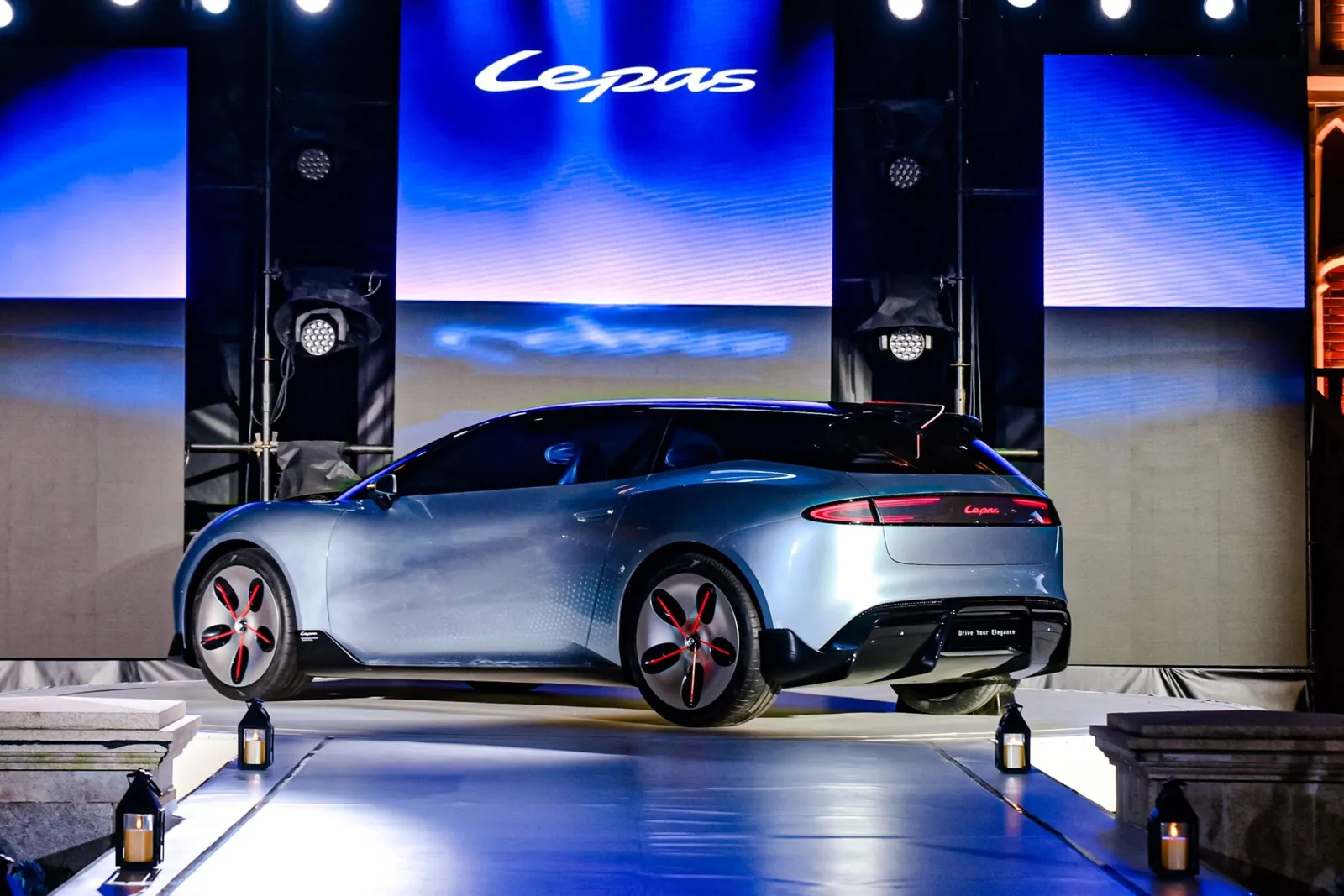
“The customer could, in a way, become the designer of their own car,” Dulanovic said.
LEPAS presents this as a balance between individual expression and a recognisable brand silhouette. The underlying shape would maintain a family identity, while adaptable graphics could give customers scope to distinguish their own vehicle. It is an idea about how future models might be personalised, rather than an announced production specification.
The release does not explain how owners would configure the displays, which elements could be changed or whether animations would operate while driving. It also gives no market-specific details about how such features might be implemented. Consequently, there is no confirmation that customers would receive the full range of visual possibilities explored by AURA.
The announcement also leaves open whether these ideas will appear together on one model or be introduced separately across the range, so AURA should be read as an indication of design priorities.
Three colours inspired by landscapes
The concept's colour palette continues the emphasis on personal expression, with three finishes inspired by landscapes at different times of day. Dawn Pearl uses a soft pink tone drawn from a Tahitian sunrise, while Bacalar Blue references the blue-turquoise waters of Mexico's Bacalar Lagoon.
The third option, Provence Twilight, takes its deep blue-violet tones from lavender fields at dusk. LEPAS says the colours are intended to show different interpretations of elegance as light and surroundings change, reinforcing the lifestyle positioning running through the concept's presentation.
LEPAS describes itself as a design-led new-energy vehicle brand created by Chery Auto, with expressive styling, intelligent technology and considered use of space forming its stated priorities. Its parent company was founded in 1997. AURA adds a concept-car statement to that positioning, with the L8 providing an existing reference point for the evolution of its surfacing.
For now, the clearest commitment concerns appearance: LEPAS says AURA's new front treatment and lighting will influence future models. Whether its more ambitious personalisation features follow them into production remains unanswered, alongside the technical and commercial details that would turn this design preview into a proposition for buyers.