
Kia prices new EV3, EV4 and EV5 GT models from £48,695
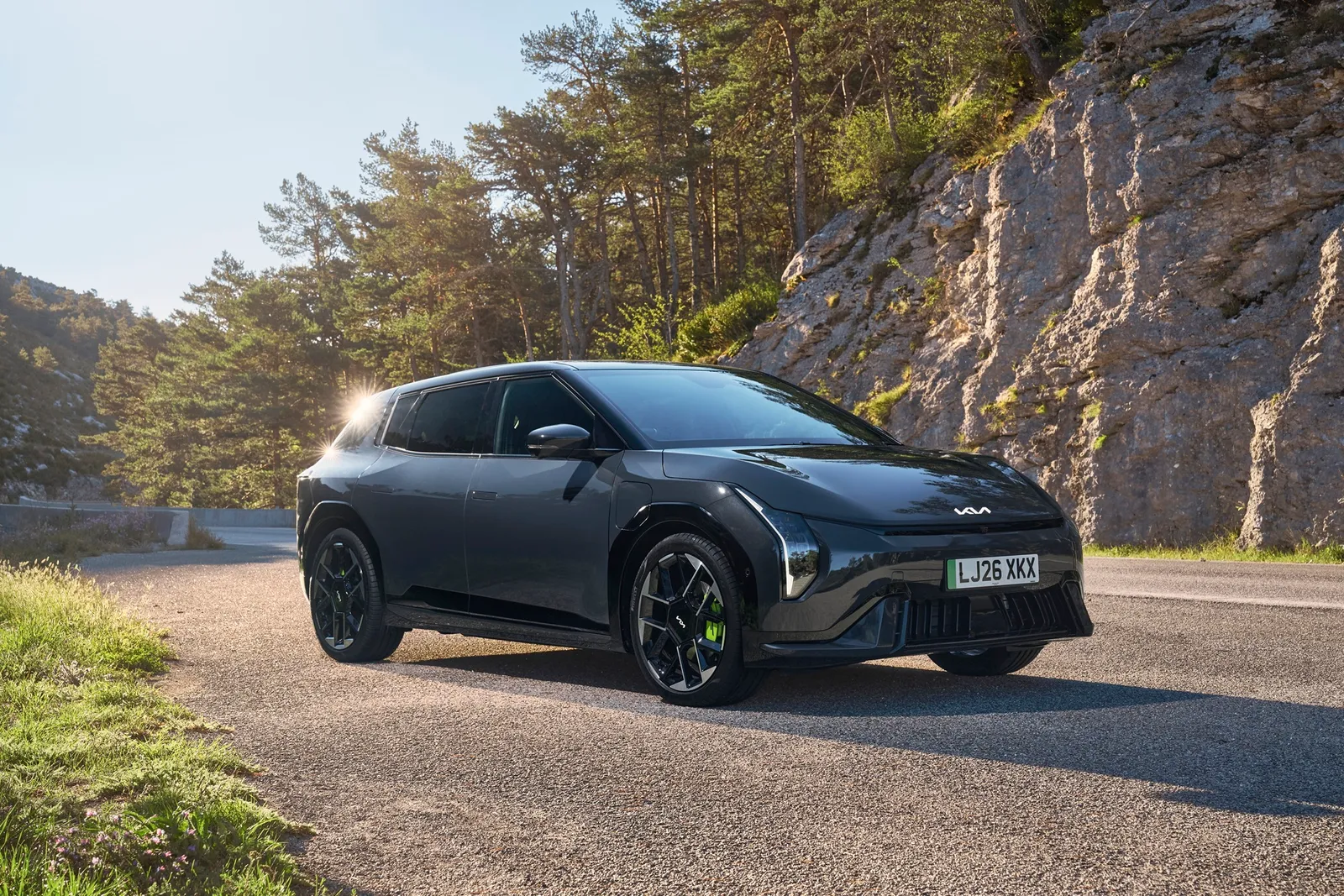
Kia has confirmed UK pricing and specifications for its new EV3 GT, EV4 GT and EV5 GT, bringing dual-motor all-wheel-drive performance to three more of its mainstream electric models.
Prices start at £48,695 for the EV3 GT, rising to £49,345 for the EV4 GT hot hatch and £54,295 for the larger EV5 GT SUV. All three models are available to order from 1 October, with first customer deliveries expected before the end of 2026.
The three cars represent Kia’s first GT models based on its 400V version of the Electric Global Modular Platform (E-GMP), sitting below the higher-voltage EV6 GT in the company’s expanding electric performance range.
All use an 81.4kWh battery, dual-motor all-wheel-drive powertrain and electronically controlled suspension, while also receiving Kia’s Virtual Gear Shift system, Active Sound Design, launch control and electronic torque vectoring.
The EV4 GT is arguably the most intriguing of the three, because it brings Kia’s GT formula into the traditional European hot-hatch market. It develops 288bhp and 468Nm of torque, accelerating from 0-62mph in 5.6 seconds while offering up to 313 miles of WLTP range.
Kia describes the EV4 GT as an everyday performance model rather than an outright track car. The powertrain is deliberately front-biased, combining a 145kW front motor producing 283Nm with a 70kW rear induction motor producing 185Nm. Its 50-75mph acceleration time is 3.9 seconds.
That puts it in an interesting position within the emerging electric hot-hatch sector. Rather than concentrating solely on the instant straight-line acceleration traditionally associated with high-performance EVs, Kia says the EV4 GT has been developed with responsiveness, precision and driver involvement in mind, particularly for European roads.
The EV4 GT is also designed, engineered and manufactured in Europe. Kia expects it to become the most popular of its GT models in the UK, although the company does not anticipate it outselling the standard EV4.
Its 81.4kWh NMC battery is the same capacity as that used by Long Range versions of the regular EV4. Peak DC charging power is 128kW, enabling a 10-80% recharge in a claimed 31 minutes from a sufficiently powerful charger. A 10-100% AC charge using an 11kW supply takes seven hours and 15 minutes. Top speed is electronically limited to 105mph.
The EV3 GT uses essentially the same powertrain but packages it in Kia’s compact electric crossover. It also produces 288bhp and 468Nm, although its additional weight means the 0-62mph sprint takes fractionally longer at 5.7 seconds.
However, the EV3 GT has the longest official range of the new trio, reaching up to 334 miles under the WLTP combined test. It shares the EV4 GT’s 128kW maximum charging rate and quoted 31-minute 10-80% rapid-charging time.
At £48,695, it is also the cheapest route into Kia’s latest generation of electric GT models. The EV3 has already proved important for Kia in Britain, becoming the company’s fastest-selling electric model after arriving in late 2024 and subsequently its best-selling UK EV.
The largest newcomer is the EV5 GT, which takes a slightly different approach. Its dual-motor system produces 301bhp and 480Nm, making it the most powerful of the three, but its larger dimensions and greater weight result in a 0-62mph time of 6.2 seconds.
WLTP range is up to 295 miles, putting the emphasis more firmly on combining extra performance with the practicality of a family SUV.
Kia says the EV5 GT has been tuned for composure, traction and comfort rather than simply outright speed. Its standard equipment also includes a heat pump and a Pet Mode designed to maintain a comfortable cabin temperature when an animal is briefly left in the vehicle. The EV5 GT costs from £54,295.
Central to all three cars is Kia’s six-speed Virtual Gear Shift system. Controlled using steering-wheel paddles, it creates simulated ratios as the vehicle accelerates and decelerates, accompanied by audible, visual and tactile feedback.
Drivers can hold a simulated gear through a corner, select a lower ratio before accelerating out of a bend and experience changing levels of regenerative braking intended to mimic engine braking. The system can even simulate reaching a rev limiter.
A long press of the right-hand paddle can switch the system into a simulated six-speed automatic mode. Active Sound Design accompanies VGS, allowing drivers to alter the volume of the synthetic powertrain soundtrack.
The technology is ultimately artificial, but its inclusion reflects a growing trend among manufacturers to give high-performance EVs more of the interaction traditionally associated with combustion-engined performance cars.
Hyundai has demonstrated a similar approach with the Ioniq 5 N, and Kia has already deployed Virtual Gear Shift in the updated EV6 GT. With its latest models, the technology spreads much further down the company’s electric range.
All three GT models also receive an electronically controlled suspension system with road-preview functionality, Electronic Dynamic Torque Vectoring, dedicated GT modes, a configurable MyDrive mode, launch control and a performance timer.
Visual changes include model-specific 20-inch GT alloy wheels, neon green brake callipers and gloss-black exterior detailing. Inside, there are GT-specific semi-bucket seats, neon green trim and stitching, plus a three-spoke GT steering wheel.
Equipment levels are deliberately comprehensive because Kia is offering each model in a single specification rather than creating multiple GT trim levels.
The EV4 GT, for example, receives heated and ventilated front seats, heated outer rear seats, electrically adjustable front seats, a head-up display and an eight-speaker Harman Kardon audio system. There is also wireless Apple CarPlay and Android Auto, a wireless phone charger, vehicle-to-load capability and Kia’s familiar combination of 12.3-inch infotainment and instrument displays with a separate 5.3-inch climate-control screen.
An extensive suite of driver-assistance technology is standard too, including Highway Driving Assist 2.0, adaptive cruise control, blind-spot monitoring, a 360-degree camera system and forward collision avoidance.
The EV3 and EV5 GTs follow a similarly generous specification, although the larger EV5 adds features appropriate to its family-SUV positioning, including rear climate control, a 44-litre front luggage compartment and Remote Smart Parking Assist 2.0.
Kia’s GT badge dates back considerably further than its electric-car range. The company previewed its performance ambitions with the rear-wheel-drive Kia GT Concept in 2011, followed by the Cee’d GT and Pro_Cee’d GT in 2013 and eventually the rear-wheel-drive Stinger GT.
Electrification took the badge in a different direction with the EV6 GT, originally Kia’s most powerful production car and winner of the 2023 World Performance Car title. The latest EV6 GT subsequently raised output to 641bhp while introducing technologies such as Virtual Gear Shift and Active Sound Design.
GT versions are now available across almost Kia’s entire electric range, spanning the EV3, EV4, EV5, EV6 and EV9.
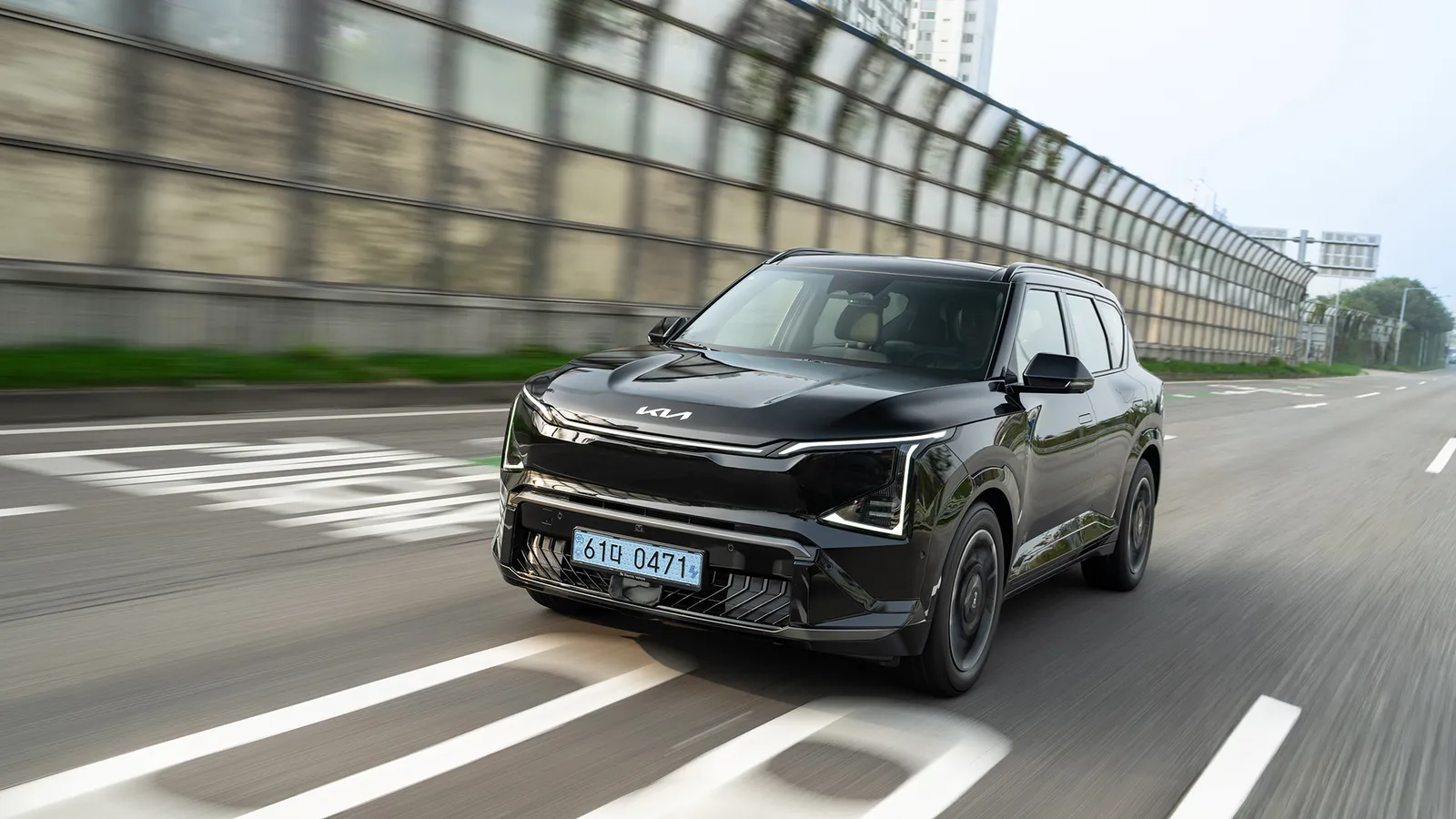
What is notable about the latest trio is that Kia is no longer reserving electric performance for expensive flagship models. The EV3 GT and EV4 GT in particular bring the formula into segments occupied by mainstream family crossovers and hatchbacks.
Whether simulated gears and synthetic sound prove compelling will depend heavily on execution, but the underlying numbers suggest Kia is deliberately avoiding an arms race in acceleration. A 5.6-second 0-62mph time for the EV4 GT is quick rather than extreme, while its 313-mile range remains practical for everyday use.
That may ultimately be the more significant element of Kia’s approach. Instead of turning its smallest EVs into uncompromising performance machines, the company is attempting to retain their range and usability while adding enough chassis technology and driver interaction to justify the GT badge.
All three cars retain Kia’s seven-year/100,000-mile vehicle warranty, with the high-voltage battery covered for eight years. UK orders are open now, with deliveries scheduled throughout the remainder of 2026.
