
Japan cuts EV subsidy rates
The Japanese government has decided to reduce state purchase subsidies for EVs. From January 1, 2027 onwards, the maximum subsidy limits for newly registered electric cars, Kei-EVs, plug-in hybrids, and fuel cell vehicles will decrease significantly. This is due to high demand for the subsidy program in Japan.
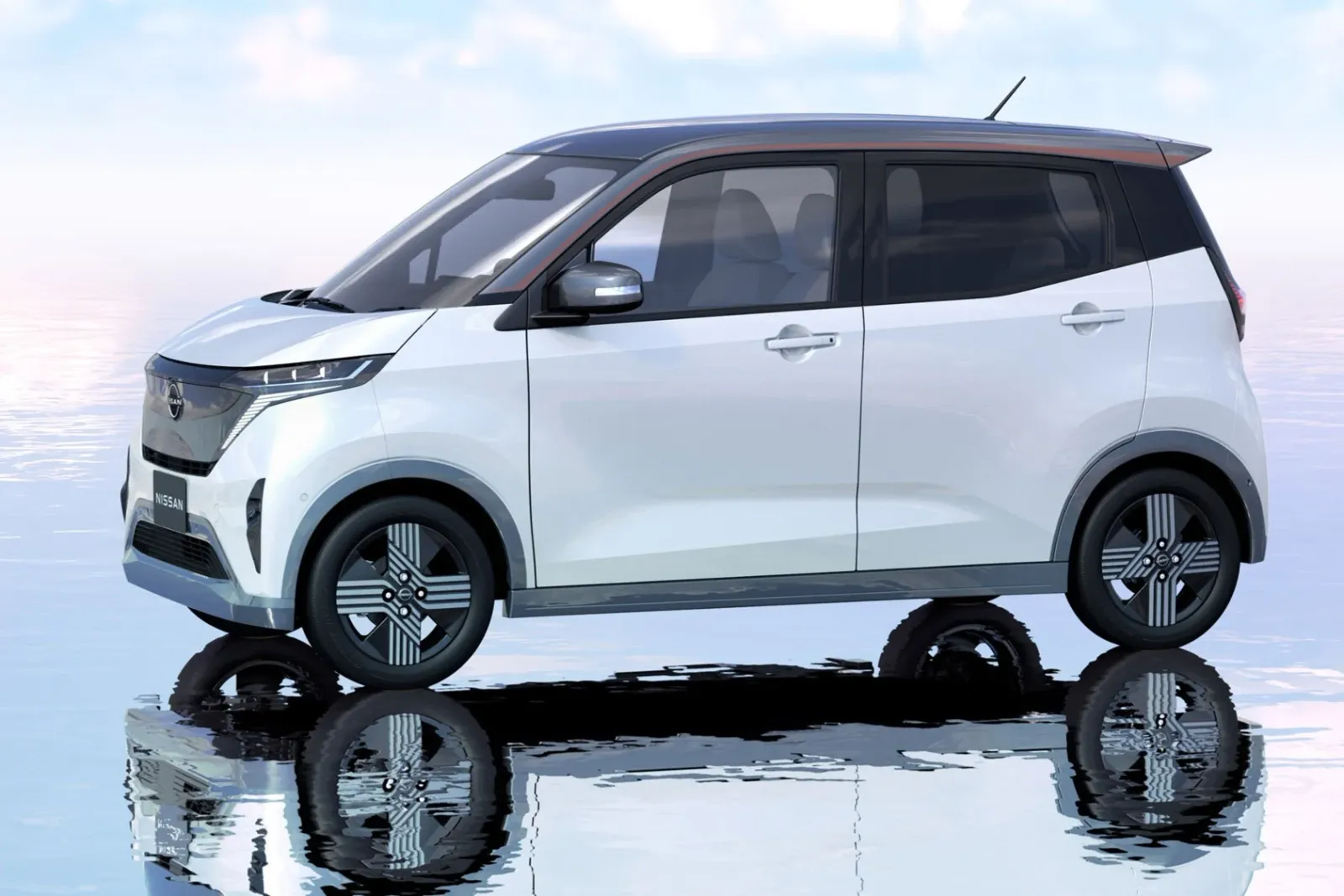
Electric Kei-Car Nissan Sakura
Image: Nissan
Japan’s Ministry of Economy, Trade and Industry (METI) announced on 21 October a revision of the subsidy programme for so-called Clean Energy Vehicles (CEV). The new subsidy rates will apply from January 2027 to vehicles registered from that date onwards, provided the current subsidy programme is extended beyond that point. With this adjustment, the government aims to stretch available funds as far as possible.
The maximum subsidy for battery-electric passenger cars will be reduced from the current 1.25 million yen (approx. €7,000) to 750,000 yen (~€4,200). For electric Kei cars, the Japanese category for particularly compact and lightweight vehicles, the subsidy ceiling will be lowered from 550,000 yen (~€3,100 euros) to 440,000 yen (~€2,500 euros). For plug-in hybrids, the maximum subsidy will drop from 800,000 yen (~€4,500 euros) to 480,000 yen (~€2,700 euros). Fuel cell vehicles will now receive a maximum of 870,000 yen (~€4,900 euros), down from the previous 1.45 million yen (~€8,200 euros). These amounts refer to the highest subsidy tier and do not include additional bonuses for specific manufacturer measures.
Japan: EV subsidy rates drop significantly
The cuts vary depending on the type of powertrain. For regular electric cars, plug-in hybrids, and fuel cell vehicles, the new ceiling is 60 per cent of the previous amount. For Kei EVs, it is 80 per cent. The actual subsidy amount continues to depend on the specific vehicle model and its evaluation based on the programme’s criteria. Therefore, the mentioned ceilings are not equivalent to the subsidies buyers receive for each individual model.
The Japanese subsidy agency, the Next Generation Vehicle Promotion Center, has published an updated list of model-specific subsidy amounts for registrations from 1 January 2027. This list compares the previous and new subsidy rates. For buyers, the decisive factor is not just the respective subsidy ceiling, but the specific subsidy for the selected model and its registration date. Below is an example of how the subsidy changes for five popular models in Japan:
| BEV Model | Subsidy Until End of 2026 | Subsidy From 2027 | Change |
| --- | --- | --- | --- |
| Toyota bZ4X | 1.30 Mio. Yen (~€7,300) | 780,000 Yen (~€4,400) | −520,000 Yen (~€2,900) |
| Nissan Leaf | 1.29 Mio. Yen (~€7,300) | 774,000 Yen (~€4,400) | −516,000 Yen (~€2,900) |
| Tesla Model Y | 1.27 Mio. Yen (~€7,200) | 762,000 Yen (~€4,300) | −508,000 Yen (~€2,900) |
| Nissan Sakura (Kei-EV) | 580,000 Yen (~€3,300) | 458,000 Yen (~€2,600) | −122,000 Yen (~€700) |
| BYD Atto 3 / Dolphin | 150,000 Yen (~€800) | 90,000 Yen (~€500) | −60,000 Yen (~€300) |
In addition, Japan is adjusting bonuses for environmental and climate protection measures implemented by manufacturers. These include efforts to use steel with lower CO₂ emissions. The maximum bonus for regular electric cars will be reduced from 50,000 yen (~€300) to 30,000 yen (~€200). For Kei EVs, it will be lowered from 30,000 yen (~€200) to 18,000 yen (~€100).
Subsidy reduction due to high demand
The reason for the decision is that the funds of the current subsidy programme are expected to be exhausted before the originally planned end of the application period. The Japanese government aims to ensure that the remaining funds last as long as possible by lowering the subsidy rates. The adjustment affects the CEV subsidy programme based on the supplementary budget for Japan’s fiscal year 2025. It has not yet been determined whether or to what extent Japan will introduce a new subsidy programme afterwards.
In the supplementary budget for 2025, the Japanese government allocated approximately 110 billion yen (~€624 million) for subsidies. After the programme’s launch, demand exceeded expectations; under unchanged conditions, a funding shortfall would have been imminent. The surge in demand was triggered by an increase in subsidy amounts in January 2026. The ceiling for conventional electric passenger cars – including bonuses – was raised from a maximum of 900,000 yen (~€5,100) in 2025 to up to 1.3 million yen (~€7,370) in January 2026. According to _Biggo Finance_, this boosted sales: in September 2026, BEV sales in the domestic market reached 16,074 units, an 88.6 per cent increase compared to the same month the previous year.