
Humax wants fleet chargers to do more than supply electricity with MX Pro
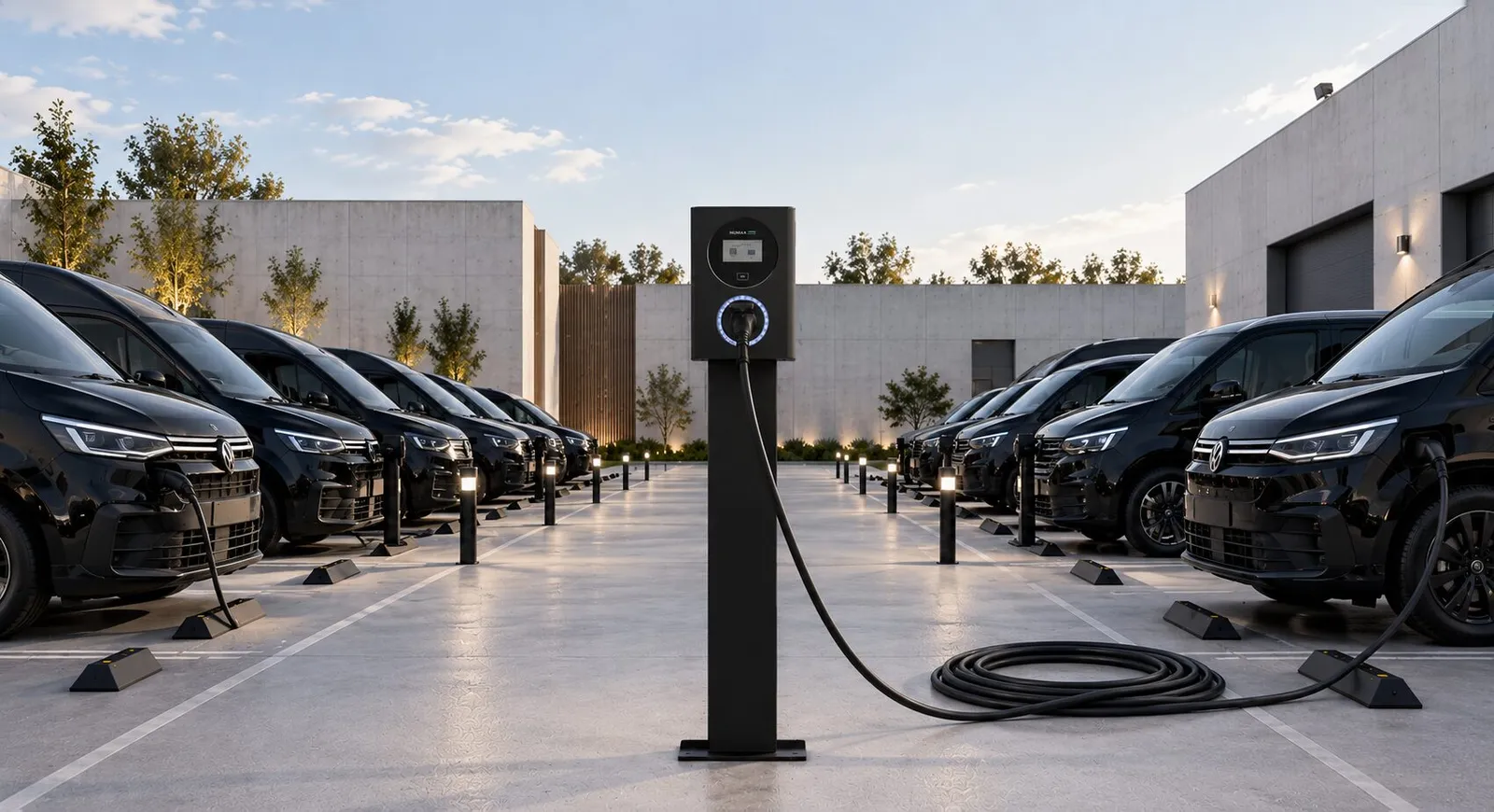
Buying an electric vehicle charger is becoming a decision about much more than how quickly it can replenish a battery. For fleet operators, the questions include who is using the electricity, whether existing software will work and how much disruption expansion will cause. Humax believes its MX Pro can address those practical concerns while preparing businesses for a future in which charging equipment also earns money.
Speaking to WhichEV at Fleet and Mobility Live, Matthew McMullan, Director Automotive & Energy at Humax EV Charging, outlined a strategy built around adaptable hardware, vehicle identification and energy management. The South Korean company may be familiar to British consumers through television equipment, but it wants that history of connected electronics to count in commercial charging.
“One of the main challenges has always been connectivity,” McMullan explains. Humax’s experience building devices for the home helped attract him to the business, alongside its development of hardware and software in-house. “Everything has a Humax fingerprint on it.”
As we reported in our MX Pro launch story, the charger supplies up to 22kW AC and targets workplaces, depots and other commercial settings. However, McMullan’s explanation of its capabilities suggests that headline power is only one part of the proposition.
For a business gradually replacing combustion vehicles, installing every charger immediately can tie up money before the equipment is needed. Waiting until each EV arrives risks repeatedly revisiting electrical work. Humax’s approach separates preparing the site from fitting all the charging units.
“The budget might not be there at the moment to install 20 chargers, for instance,” says McMullan. “Effectively, you do the infrastructure work, all the wiring and the relatively expensive work up front.”
Pre-wired backplates then allow additional chargers to be fitted as demand grows. Daisy chaining supports installations containing multiple units. The attraction is straightforward: plan the electrical infrastructure around the fleet’s direction of travel, while phasing spending on chargers alongside vehicle deliveries.
Managing the available supply matters just as much. McMullan describes a workplace where building demand determines how much electricity remains available for vehicles. Load balancing shares that capacity between chargers, instead of allowing one vehicle to take the available power while others wait.
Humax also retains load management within the charger when customers choose an external charge point management system. McMullan cites Fuuse and Monta as partners, explaining that local capability remains alongside cloud-based management. For operators, the question is how the installation serves the whole fleet within the site’s electrical limits.
Software choice is another priority. Businesses that already operate charging equipment may have established reporting processes and preferred management platforms. Requiring them to replace those arrangements would create another obstacle to buying new hardware.
“We don't want to go in two-footed and say, ‘If you want our hardware, you've got to take our software,’” McMullan says.
Although Humax is developing its own management system, it wants integration with other back offices. It also intends to retain remote diagnostic and maintenance access regardless of the customer’s chosen platform. That could allow a fleet to keep familiar software while still obtaining support directly from the hardware manufacturer.
Vehicle identification offers a more direct route to controlling expenditure. McMullan describes an Autocharge function that recognises a connected vehicle and associates it with an authorised registration. A depot could restrict charging to approved vehicles, while an employer funding home charging could identify which sessions qualify for reimbursement.
That distinction becomes useful when a household has several EVs. The company car may be eligible for employer-funded electricity, while a partner’s or adult child’s vehicle is not. Recording consumption alone does not resolve who should pay for it.
“They're only reimbursing the vehicle authorised by the fleet manager in that setting,” McMullan explains. He suggests the capability could reduce additional expenses while applying similar controls at workplaces and depots. Humax’s MID-certified metering provides another part of the reimbursement process by measuring the electricity supplied.
Further ahead, the company wants charging infrastructure to participate in energy flexibility markets. Here, the opportunity comes from adjusting demand when the electricity system is under pressure. Drivers would not necessarily need to export energy from their batteries for charging behaviour to have value.
McMullan says both the MX Pro and domestic MX7 could participate. In his illustrative scenario, a vehicle covering 7,000–10,000 miles annually might support £300–£400 in yearly flexibility revenue. He stresses that these are broad assumptions, dependent on mileage and energy requirements, rather than established returns.
Using £300 as an example, he describes a three-way split between the aggregator handling grid signals, the asset owner and the homeowner or lease manager. That would leave £100 annually for the final participant. Across 1,000 vehicles and five years, the arithmetic reaches £500,000, although actual income would depend on participation, commercial arrangements and service delivery.
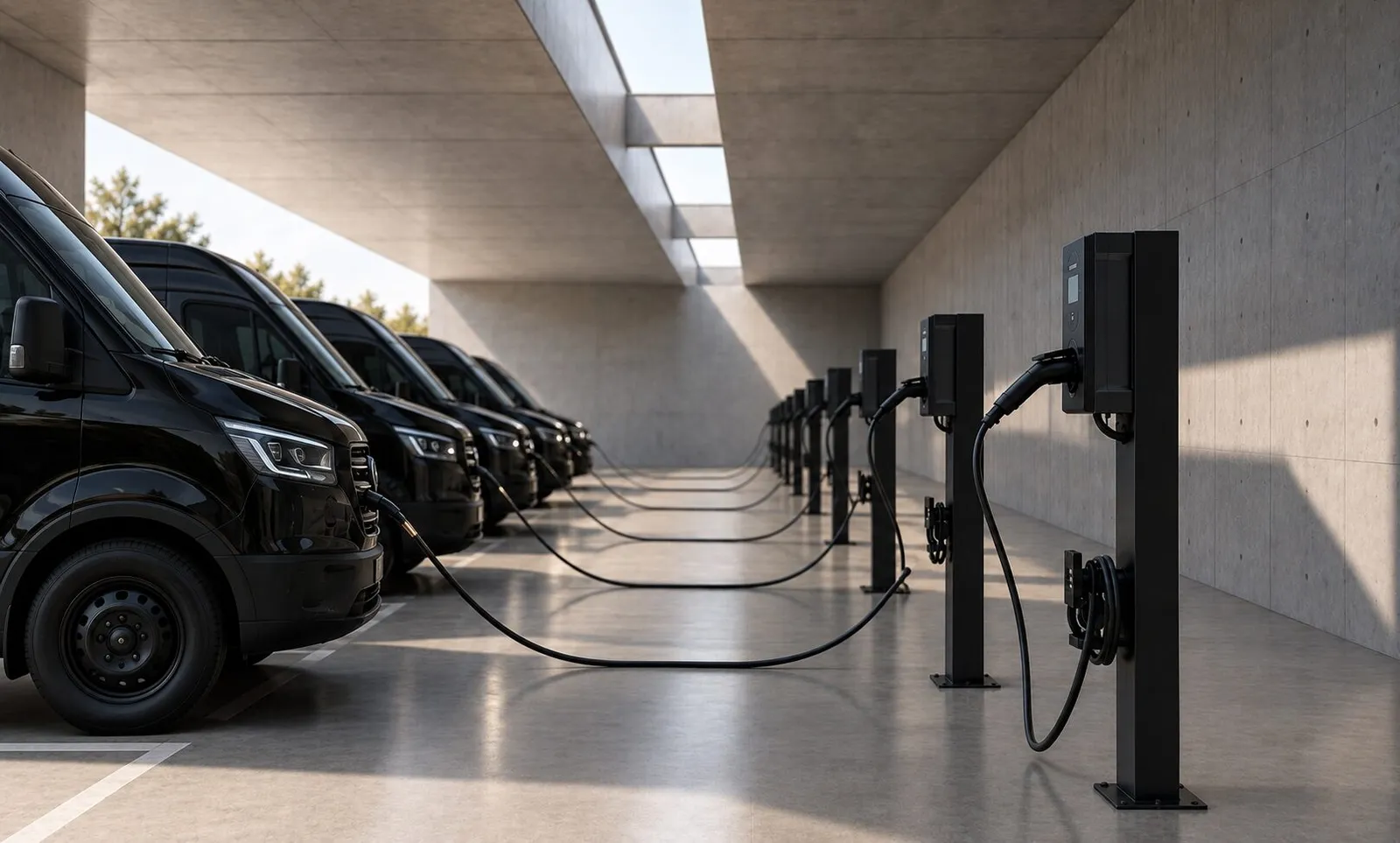
Vehicle-to-grid is a separate, longer-term ambition. Humax describes the MX Pro as ready at the hardware level, with software updates intended to enable further functionality. However, McMullan’s account makes clear that certification, vehicle testing and grid testing still stand between that ambition and an operating service.
He describes progressing from ISO 15118-2 Plug & Charge work towards ISO 15118-20 for bidirectional applications, then collaborating with a vehicle manufacturer. Buyers should therefore distinguish hardware readiness from confirmed compatibility and an available export tariff. The interview does not establish a launch date for that complete service.
“Hopefully, we'll be able to come to market with an OEM with a viable vehicle-to-grid product,” he says. The objective is to let customers store grid electricity in their cars and subsequently return it when required, after meeting household needs.
For fleets considering a relatively new charging supplier, longevity remains another concern. McMullan points to Humax’s established electronics business and international presence as reassurance that its future does not depend entirely on immediate charger sales.
“Humax isn't reliant only on selling EV chargers to be around tomorrow or the day after,” he says. European expansion is planned, starting with Germany, followed by the Netherlands, France and Spain.
For a fleet manager, that creates a useful distinction between purchasing equipment and purchasing an outcome. Preparing charging bays is a tangible installation decision; forecasting income from grid services requires confidence in the wider arrangements that turn connected hardware into a source of revenue.
For UK customers, the strongest immediate arguments are practical: expand installations progressively, retain preferred software and control which vehicles receive company-funded electricity. Flexibility payments and vehicle-to-grid could add further value, but their delivery will require more than a capable charger. Humax’s proposition will ultimately be judged by how well those everyday functions work, and how successfully its future plans become usable services.