
‘Huge growth still to come’: Interview with ChargePoint’s John Saffrett
John Saffrett has only been on board as EVP and Managing Director Europe at ChargePoint for a few weeks, yet he already has a deep understanding of the challenges in e-mobility from a different perspective: as Global Deputy CEO of fleet management and leasing provider Ayvens, he previously oversaw operations in 42 countries with around 3.5 million vehicles, including more than half a million battery-electric vehicles.
In his new role, Saffrett aims to position the US company ChargePoint as a leader in Europe in both hardware and software. He sees the charging industry undergoing structural change: investors are increasingly demanding profitable business models, access to capital is becoming more selective, and not all providers will survive in the long term. As a result, Saffrett expects market consolidation over the next three to five years.
At the same time, the ChargePoint manager sees enormous growth potential, as battery-electric cars already account for more than a fifth of new registrations in some European markets, yet their share of the total vehicle fleet remains below five per cent. In this interview, Saffrett discusses ChargePoint’s strategy, competition with Chinese hardware providers, the importance of reliable charging solutions for fleets, and the opportunities arising from the electrification of heavy-duty transport.
John, these are your first days at ChargePoint. How has the start been?
> It’s been great. I was previously on ChargePoint’s Advisory Council, so I was already familiar with the business. I wouldn’t claim that I knew every detail, but I had a good understanding of where the company is in its journey and the challenges it faces.
>
>
> Europe is becoming increasingly important to ChargePoint’s success globally.
>
>
> We actually brought my start date forward by a week so that I could be here at icnc in Berlin. It would have been a missed opportunity not to attend an event that brings together so many of the key people working on charging in Europe.
>
>
> I’ve spent time with the team and met clients. I’ve probably walked around the event about 20 times, familiarising myself with the different players, understanding what they do and then going back to our team and asking: How do we compare? Do we compete with them? Where do we meet them in the market?
>
>
> So it has been a very useful first couple of days.
Why did you decide to join ChargePoint? Your background is very much in fleets and vehicle leasing.
> At Ayvens, I was Global Deputy CEO. We were active in fleet management, vehicle leasing and vehicle servicing across 42 countries, with around 3.5 million vehicles.
>
>
> We also operated one of the world’s largest multi-brand battery-electric vehicle fleets, with more than half a million EVs. That gave us a very good view of the challenges around charging – from the initial anxiety customers have when making the switch to electric vehicles to identifying solutions that can address those concerns.
>
>
> So we had a great deal of visibility into how charging and mobility infrastructure were evolving and where the challenges were.
>
>
> After nearly 29 years in that industry – with a short period in banking along the way – it felt like a good time to move to the other side of the equation.
From your experience, what are the biggest barriers for fleet operators switching to electric vehicles? Is it the vehicle itself or is charging still the main issue?
> A lot of it is still psychological. Range anxiety is usually the first concern people raise.
>
>
> But when many new electric vehicles now offer ranges of around 400 to 500 kilometres, that concern starts to diminish. Delivery fleets are obviously different because they operate on different schedules, but for the typical company-car driver the next questions are: Where am I going to charge and how am I going to charge?
>
>
> People often worry about public charging, even though relatively little of their actual charging may take place on the road. The more important question is whether you can provide a good charging solution at home, at the office or at a depot.
>
>
> Then there is uncertainty around subsidies and taxation. Incentives are introduced and withdrawn, thresholds change and vehicle prices move. That makes fleet planning difficult.
>
>
> A company wants to be able to tell 500 employees at a particular level: “You can have this car for the next three years at this cost.” If a subsidy suddenly disappears or a threshold changes, that car may no longer fit the policy.
>
>
> So you have to navigate all of these issues before a company can finally say: “Okay, now we can electrify – and we can do it strategically.”
Is charging performance of the vehicles themselves also becoming an issue?
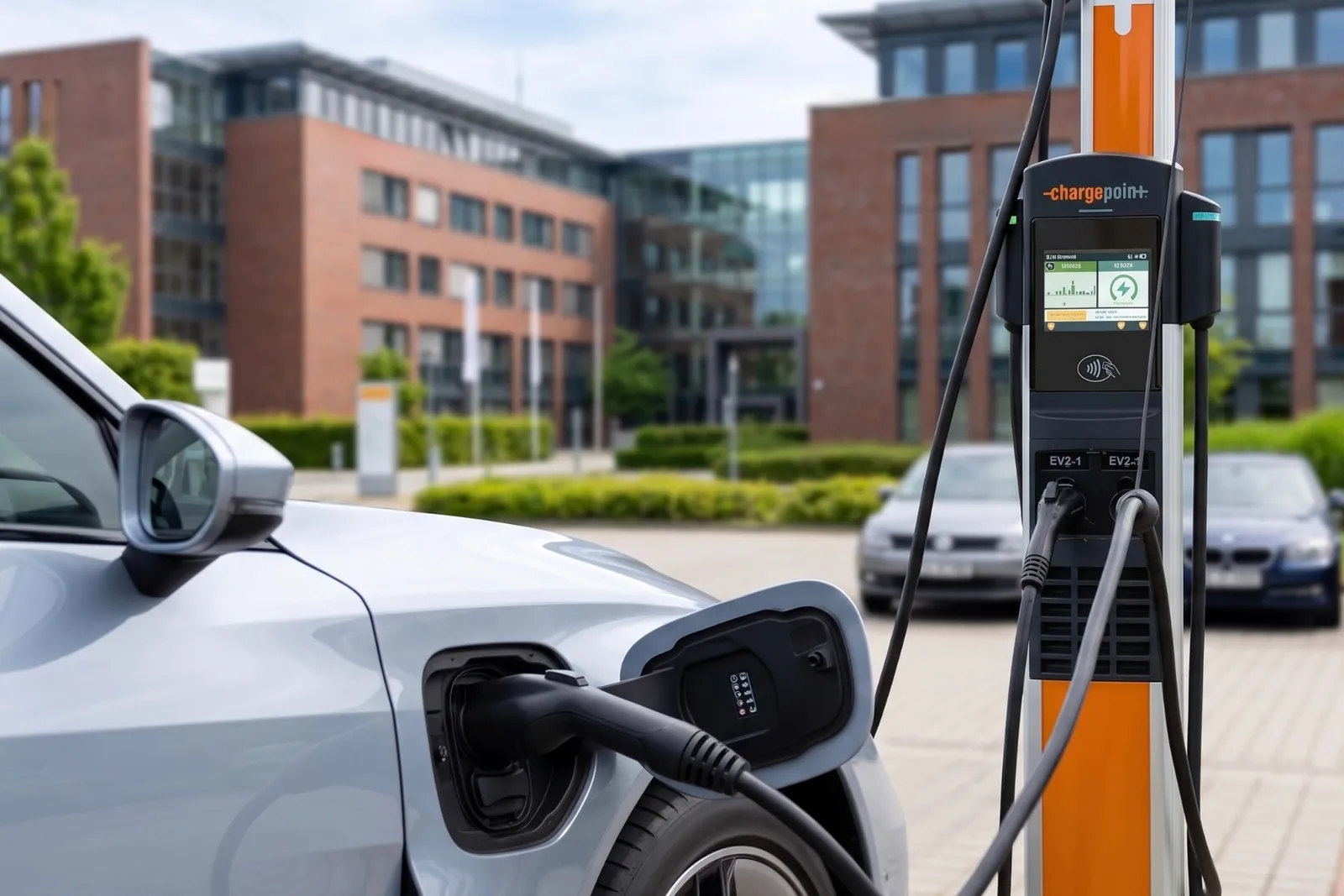
> It has certainly been an issue, particularly with older generations of electric vehicles.
>
>
> There has been a lot of investment in high-power charging infrastructure, but not every vehicle on the road is capable of taking advantage of the power that those chargers can deliver.
>
>
> Cars that were considered state-of-the-art only a few years ago can have significantly lower charging capabilities than models entering the market today. That becomes particularly relevant when those older BEVs enter the used-car market.
>
>
> So the latest generation of vehicles is addressing much of that problem, but Europe still has a substantial legacy fleet of older BEVs that cannot fully benefit from the improvements being made to the charging infrastructure.
How do you assess the charging ecosystem in Europe today?
> It is very fragmented. I expect to see significant consolidation over the next three to five years.
>
>
> The days when technology companies could operate for long periods without demonstrating a financial return to investors are coming to an end, particularly as this industry becomes more industrialised.
>
>
> There is increasing pressure on companies to prove that they have a profitable and sustainable business model. At the same time, access to investment is becoming more selective.
>
>
> I therefore expect a number of players to seek acquisitions, mergers or strategic partnerships if they have products and technologies that are viable in the long term.
>
>
> Unfortunately, some companies will not have a viable long-term proposition or will simply not be able to compete.
>
>
> I wouldn’t say the charging industry is mature yet, but we are moving beyond the phase where two people can sit in a room, create something that suddenly takes off and then build a business around it.
>
>
> Major CPOs, for example, increasingly want to work with partners they believe will still be strong in three, five or ten years. That will inevitably drive consolidation.
Which European markets do you currently see as the leaders in charging?
> The Benelux countries and the Nordics have traditionally been ahead in terms of the maturity of their overall infrastructure.
>
>
> Both regions benefited from strong and, importantly, consistent government support. Policies were maintained over time rather than being reversed because of industry pressure or an economic downturn.
>
>
> Germany, the UK and France are now beginning to catch up.
>
>
> There is still a significant part of Southern Europe that has not made the same transition yet. Spain, Italy and Portugal are beginning to move, and I also think Eastern Europe could become a very strong wave when it comes.
What could drive that development in Eastern Europe?
> I think truck charging could be an important driver.
>
>
> As EU regulation accelerates the adoption of electric trucks, the electrification of major freight routes and the TEN-T core network will require substantial charging infrastructure.
>
>
> That infrastructure can then have a cascading effect on the wider charging ecosystem in those markets.
Which markets are currently the priorities for ChargePoint in Europe?
> The DACH region is very important for us. Our other key focus markets include the UK and France.
>
>
> We also operate across other European markets, including Southern Europe and the Benelux countries.
What are your main ambitions in your new role?
> I come from a business that was a market leader, and I think ChargePoint has the opportunity to become a leader in Europe as well – both in hardware and in software.
>
>
> If you want to be successful in any industry, you have to aim for leadership. Obviously, there are a lot of very strong competitors, particularly in hardware.
>
>
> But I believe the next generation of hardware we are bringing to the European market is very well suited to Europe in terms of footprint, adaptability and quality.
>
>
> Utilisation and reliability are becoming absolutely critical, availability has to be close to 100 per cent.
>
>
> My ambition is therefore for ChargePoint to become a leader, but also a responsible leader. I don’t want us chasing market share at any cost. That simply becomes a race to the bottom, and I don’t think that is healthy for the industry.
>
>
> I also believe ChargePoint has a role to play in supporting and shaping the charging industry in Europe. I don’t think we have been visible enough in that discussion so far. That is part of the rationale behind my appointment and also behind my position on ChargePoint’s executive team.
How large do you believe the growth opportunity still is in Europe?
> It is enormous.
>
>
> We often talk about battery-electric vehicles accounting for more than 20 per cent of new registrations in some markets. But if you look at the total vehicle fleet on the road, the BEV share is still below five per cent.
>
>
> There is therefore huge growth still to come over the next five to ten years.
>
>
> If CPOs are already achieving reasonable utilisation levels today, imagine what happens when the share of EVs in the overall fleet rises from five per cent to ten, 15 or 20 per cent.
>
>
> That gives you an idea of the multiplier effect on the charging infrastructure that will be needed to serve those vehicles.
>
>
> There is a huge market opportunity. I wouldn’t have joined ChargePoint if I didn’t believe we could compete for it.
ChargePoint is well known in Europe for its software business, particularly be.ENERGISED. How important will hardware be alongside software in your European strategy?
> We have both a software business and a hardware business.
>
>
> We sell charging hardware, we combine our hardware with our own software, and we also provide our software platform for third-party hardware.
>
>
> be.ENERGISED is a very powerful charging management platform. We want to invest in it more and strengthen it because we are convinced it can be increasingly successful and maintain its market leadersip with the right focus.
>
>
> We also have our partnership with Eaton, which has been very effective in the US and which we intend to strengthen in Europe. Many charging sites first need additional electrical infrastructure and power capacity, and that is Eaton’s core business.
>
>
> That creates a strong combination.
I’m slightly sceptical about the hardware business. Europe already has a huge number of AC and DC charger manufacturers. Is the market really waiting for another DC charger?
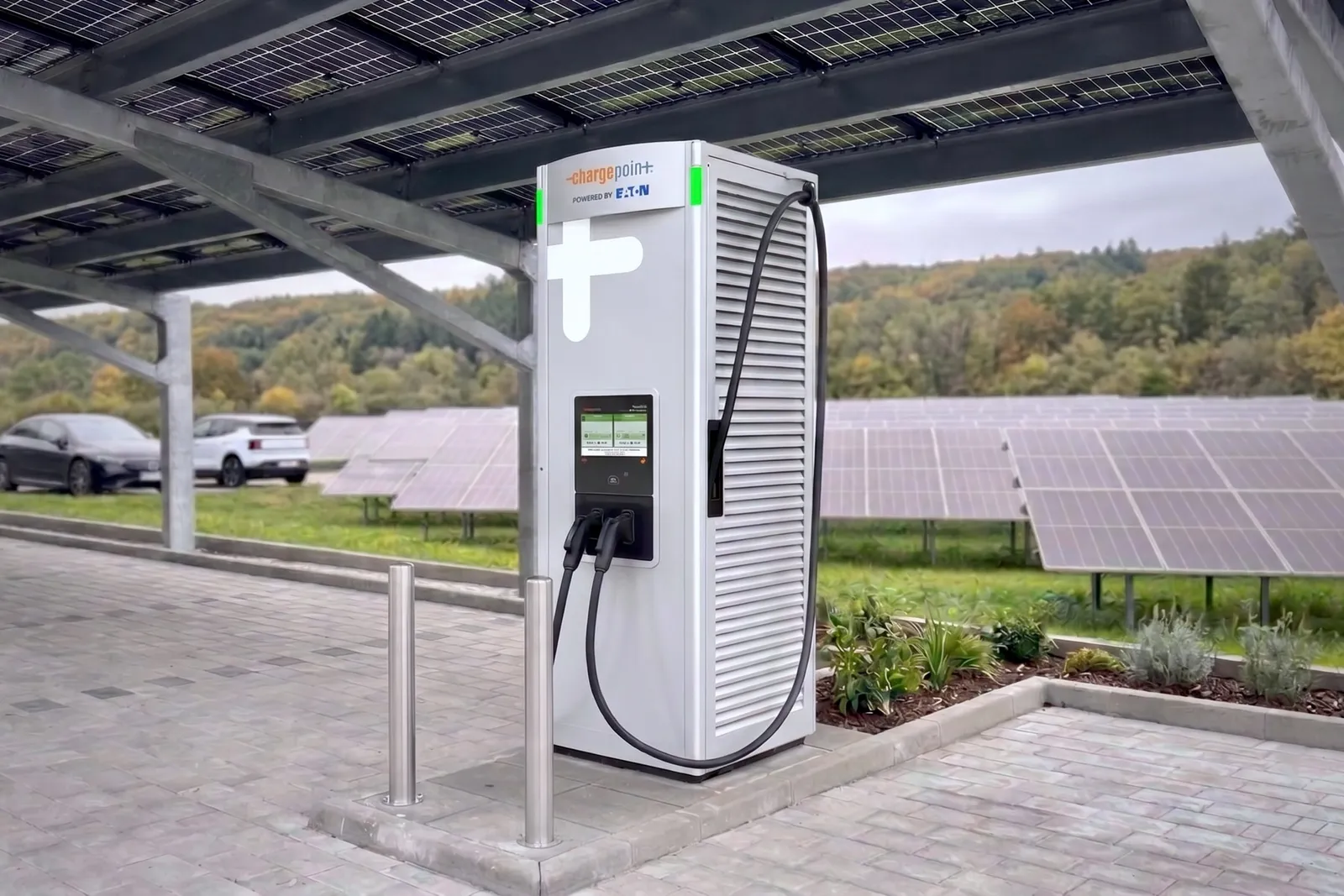
> What we have done with our new DC charger Express Solo is integrate class-leading technology in areas such as cooling and efficiency.
>
>
> It also has a very small footprint relative to the power it can deliver and is modular.
>
>
> But we are also looking beyond the utilisation of the charger itself. The wider question is how you utilise the electrical capacity that has been brought onto a site.
>
>
> How can you manage that capacity and make productive use of as much of that available power as possible over a 24-hour period?
>
>
> The technology inside the charger gives us the opportunity to explore a number of additional use cases around that. Those are areas we hope to bring to market over time.
Technology is one thing, but price is another. How can ChargePoint compete with Chinese hardware suppliers?
> We have to continuously improve our production and procurement processes to make sure we remain competitive.
>
>
> As in every market, there is a relationship between price and quality. We have to find the sweet spot where customers are willing to pay a certain premium for a product because of its quality, reliability, longevity and the support behind it.
>
>
> But the price differences the market will tolerate are relatively small. That defines the range within which you can price hardware competitively.
Will your hardware strategy focus primarily on passenger cars, or do you also see an opportunity in truck charging?
> Both, but we see a significant opportunity in truck charging.
>
>
> EU regulation is driving the adoption of electric trucks, and the development of charging along the TEN-T core network will be important.
>
>
> Depot charging is also a major part of truck electrification. In that environment, uptime has to be very close to 100 per cent. Large logistics fleets simply cannot afford unreliable charging infrastructure.
>
>
> So it is not enough just to bring hardware to the market. We have to build the service and support ecosystem around it so that customers are confident the equipment will deliver the level of uptime they require.
>
>
> And we need to get that right from the beginning.
>
>
> Logistics companies are making major long-term infrastructure decisions. If you get an installation wrong or fail to support it properly, the industry talks. That makes it much harder to win the next customer.
>
>
> We will therefore spend a lot of time making sure that model is right before scaling it.
Germany also has some very specific regulatory requirements, particularly Eichrecht. How significant is that challenge for ChargePoint?
> All of the products we sell in Germany have to comply with Eichrecht or other relevant certification requirements.
>
>
> It is certainly a challenge, but it is a challenge everybody operating in this market has to deal with.
Given your background, should we expect fleets to become an even stronger focus for ChargePoint in Europe?
> ChargePoint already operates across multiple segments, and fleet is already an important part of our business.
>
>
> Last-mile delivery fleets and truck and depot-based fleets are clearly major growth areas. Last-mile delivery has expanded enormously in Europe over the past decade, and those fleets increasingly need to electrify in order to maintain access to cities. Trucks will follow a similar path.
>
>
> We already have a strong footprint in automotive and fleet, so I’m not coming into the business to introduce that market from scratch. We already have strong partnerships with OEMs, including Mercedes and Ford Pro.
>
>
> I can certainly bring my experience of working with OEMs and managing large fleets into ChargePoint.
>
>
> But ultimately, my ambition is to make ChargePoint successful in Europe across all of the channels in which we operate.
Thank you for the conversation!