
GM announces new efficient EV platform
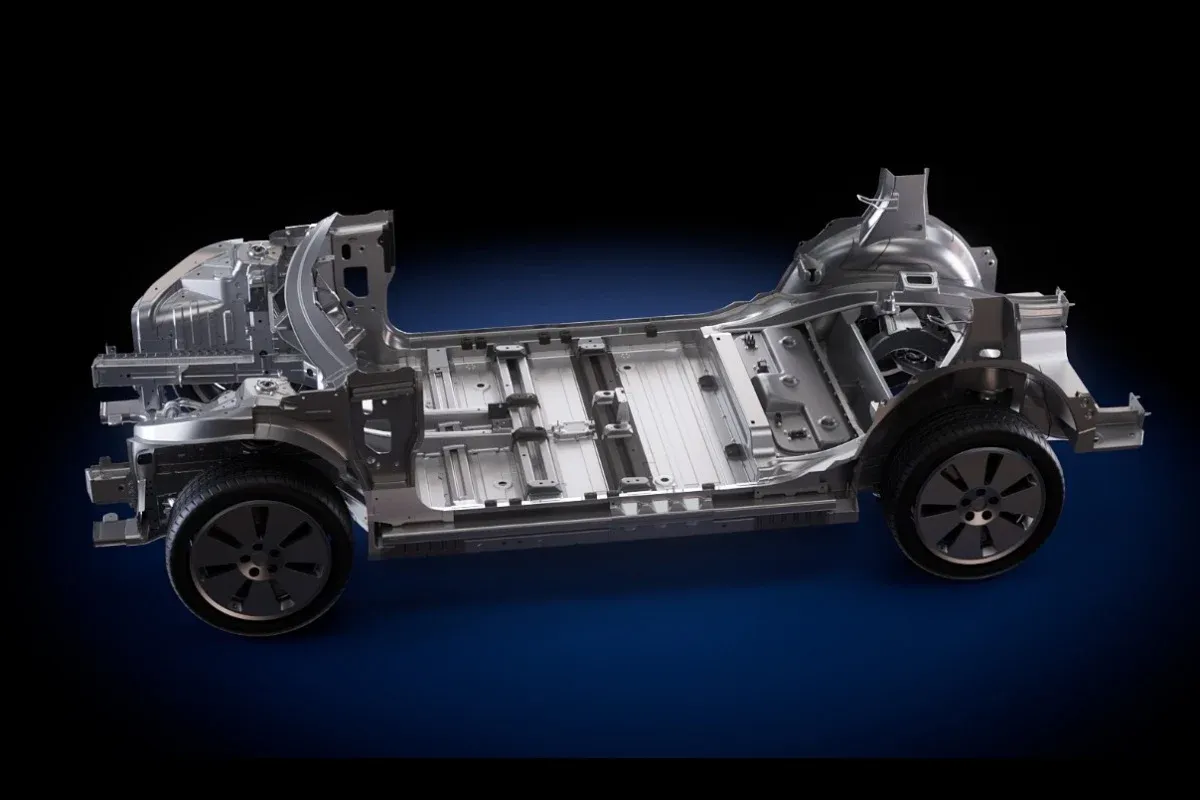
GM has streamlined its development processes and introduced a new platform in a shorter timeframe, with the first production vehicles set to debut "very soon". From 2028, vehicles on the platform will also feature significantly more efficient batteries and a faster, centralised computing system.
Image: GM
General Motors has unveiled the fourth generation of its battery-electric vehicle platform. The new design is said to be more efficient, cost-effective, and require fewer components. During the presentation at the ‘GM Forward’ event in New York, GM President Mark Reuss described the platform’s launch as “very imminent”, with a primary focus on high-volume models such as crossover SUVs.
Reuss emphasised during the presentation that GM, as a global corporation, stands to benefit from the worldwide rise in EV sales. “When the U.S. market is ready for EVs in large numbers, we will be there for them,” he stated.
With this move, the company is responding to intense competitive pressure in the EV segment. Rival Ford is developing a comparable concept for more efficient and affordable electric vehicles with its ‘Universal Electric Vehicle Platform’. There, a pickup named ‘Fathom’ is set to be the first model to enter production at the end of next year, priced at around US$30,000.
Faster development processes established
In developing the platform, GM has adopted new approaches by integrating teams that typically work sequentially on a project. This collaborative method allows designers, engineers, and manufacturing teams to jointly develop ideas and solve problems faster. According to the manufacturer, this change shortens the entire vehicle development cycle from five years to roughly half the time.
According to GM, this has resulted in an EV base that reduces vehicle weight by 15 per cent, improves aerodynamics by 25 per cent, and cuts powertrain components by 40 per cent. Additionally, GM is adopting new lithium-manganese-rich (LMR) batteries with prismatic cells and a flat design. According to the manufacturer, this increases the overall range by 20 per cent per kilowatt-hour. This efficiency gain, in turn, allows for smaller batteries, which the company expects to provide significant cost advantages in production.
The flatter battery cells also enable a lower, more aerodynamic vehicle height without compromising interior space. Using digital simulations, the developers tested over 300,000 battery designs before building the first physical prototype. This approach reduced the usual development time from years to a single month.
LMR batteries promise 33 per cent higher energy density
The cell chemistry of the LMR batteries not only offers 33 per cent higher energy density than LFP batteries but also maintains similarly low production costs, as it uses significantly fewer expensive and critical raw materials compared to conventional high-performance batteries. Production of the LMR cells will begin in 2028 through the joint venture between GM Ultium Cells and LG Energy Solutions at the US plant in Spring Hill (Tennessee).
New computer architecture from 2028
In addition to the new platform, GM has also completely revamped its electronics. Instead of numerous smaller control units, a central computer in the front of the vehicle will now handle all functions, from powertrain and chassis to safety systems. According to GM, this reduces wiring by 30 per cent and increases computing power by a factor of 40, enabling, among other things, the use of AI for passenger interaction and energy management. The new computer architecture is set to debut in the Cadillac Escalade IQ starting with the 2028 model year.