
Farizon SV 2026 Review
Jump to section
1. Intro, Price, Options and Verdict
Pros
Smooth, easy driving, including with a substantial load
Useful range and a choice of body and battery sizes
Comfortable cabin and extensive equipment
Cons
Purchase cost still needs weighing against the full working package
Purchase cost still needs weighing against the full working package
No built-in navigation in our test van
Verdict
It feels slightly strange to become enthusiastic about a van, but the Farizon SV makes a convincing case for itself. It is smooth and easy to drive, comfortable over long distances and has the space to tackle serious work. The useful range and modern technology make it a commercial vehicle we would happily recommend. It is worth comparing the final transaction price carefully, particularly with the current offers, but the overall package shows how far electric vans have come.
Range (WLTP): Up to 247 miles Top Speed: 84mph 0 to 62: 12 sec Efficiency: 2.55 miles per kWh
City Driving
Fun Factor
Practicality
Design & Tech
Value
Introduction
An electric van needs to do more than look good on a specification sheet. It must carry the load, cover the working day and avoid making life harder for the person behind the wheel. The Farizon SV is one of the more convincing attempts we have driven to meet those requirements.
Designed as an electric vehicle from the outset, the SV combines a choice of body sizes with three battery capacities and a surprisingly car-like cabin. Farizon belongs to Chinese megacorporation Geely Group, giving this unfamiliar badge a connection to some rather better-known names in the automotive world, like Volvo and Polestar.
Our main review vehicle was the smallest L1H1 with the 83kWh battery. We have also driven the much larger L3H3 over a lengthy EV Rally route, so our experience extends beyond a brief outing in an empty van. The combination of practical use and long-distance driving has left us impressed.
Price and Options
The main decisions when choosing a commercial vehicle are how much van you need and how much battery you want to carry. The standard SV comes in five body configurations: L1H1, L1H2, L2H2, L2H3 and L3H3. These are length and roof-height designations, rather than progressively more luxurious trim levels. The original range shares a comprehensive equipment package.
Since we shot our video review, the live UK configurator now lists the L1H1 67kWh at £44,000 and the L1H1 83kWh we drove at £47,000. The L3H3 106kWh is £55,000. All three figures exclude VAT, delivery and on-the-road costs. They are also before the grant and any applicable promotional discount.
There is now an SV Sport, too. This is an L1H1-based styling derivative with 20in alloy wheels, a body styling kit, rear spoiler and cabin detailing. This starts at £50,000 excluding VAT, delivery and on-the-road costs. We have not driven the Sport yet.
Options listed for the L1H1 83kWh include 270-degree rear-door hinges for £300, a towing system for £400 and vehicle-to-load equipment for £500, all plus VAT. Our test van had the wide-opening rear doors and power sockets.
At the time of writing, Farizon was advertising £10,000 off qualifying retail orders placed by 30 September 2026, alongside a £5,000 zero-emissions grant. However, there’s no indication this offer will continue after that date.
Exterior Design
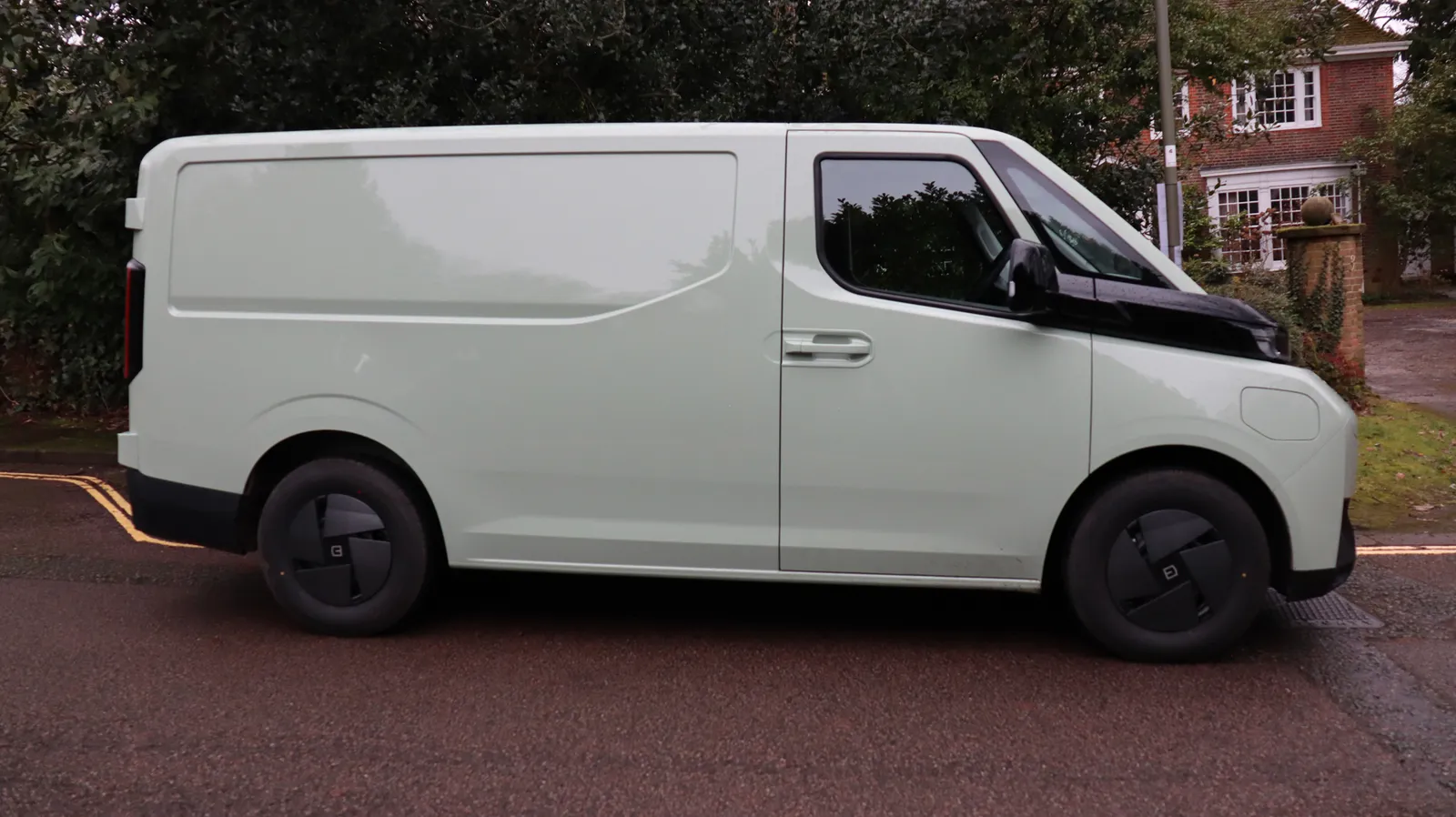
The SV looks distinctly futuristic for a working van. Our mint-green example attracted plenty of positive comments, which is not something we can say about every commercial vehicle we test. The design has enough character to stand out without getting in the way of its job.
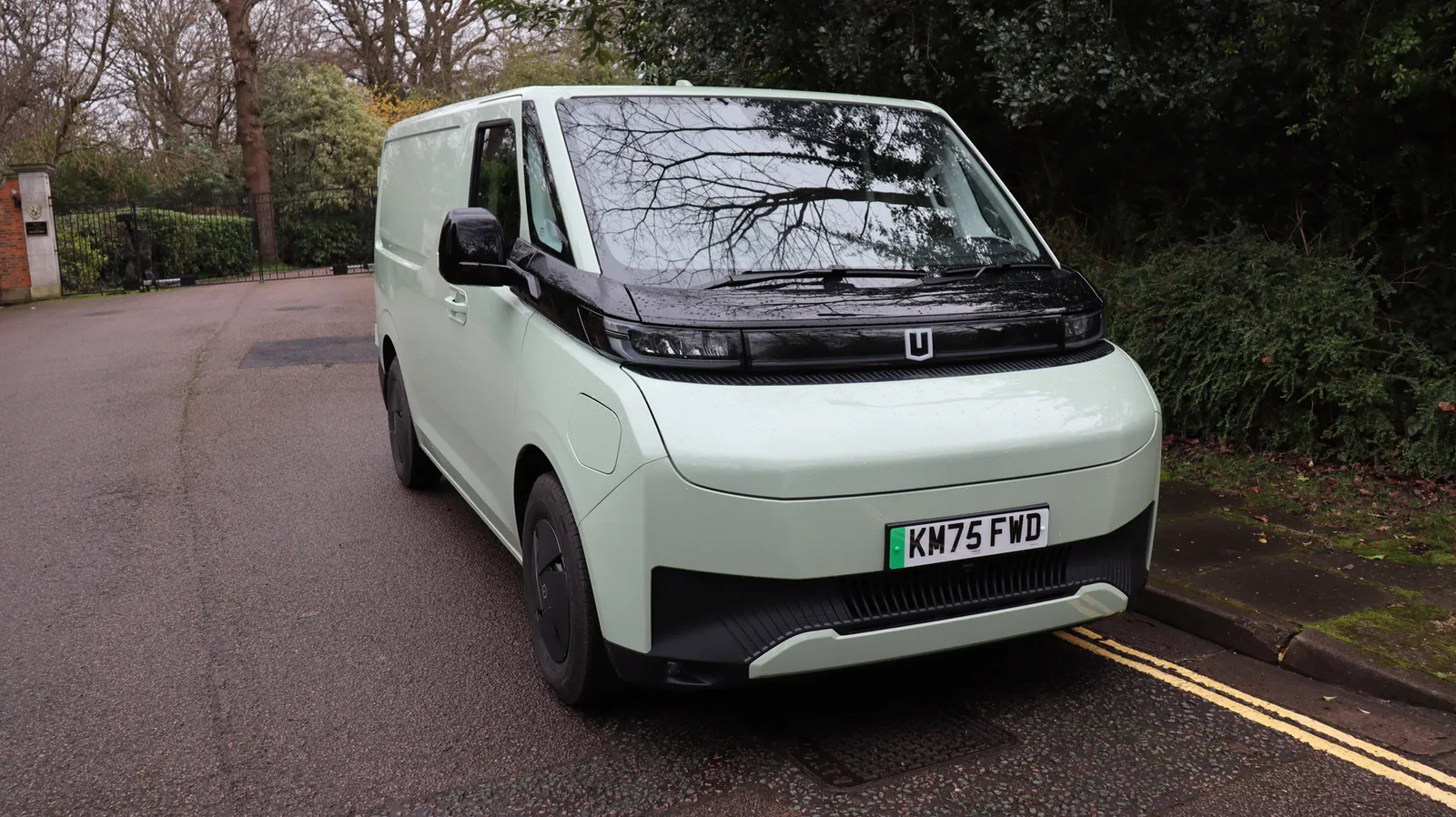
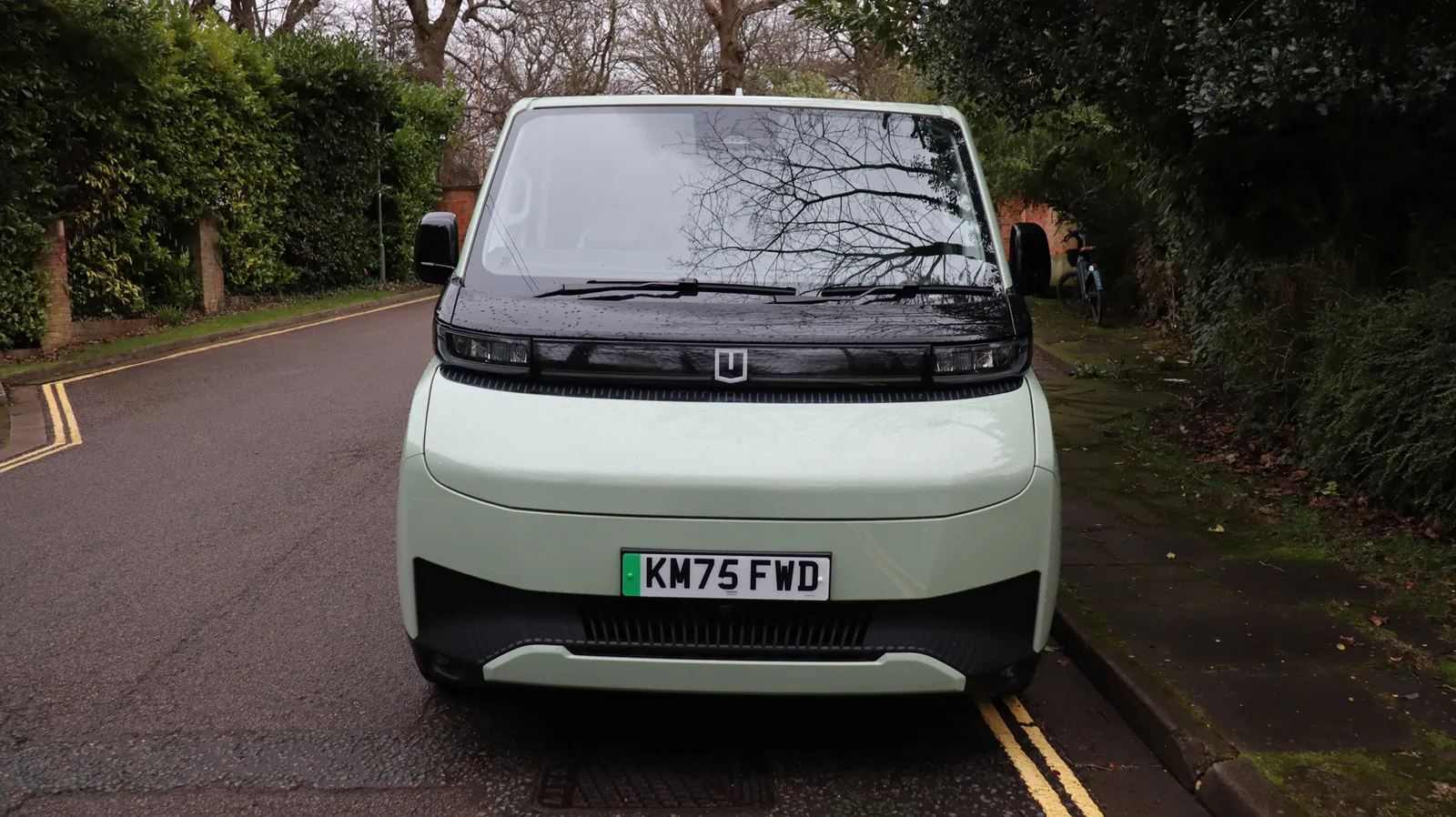
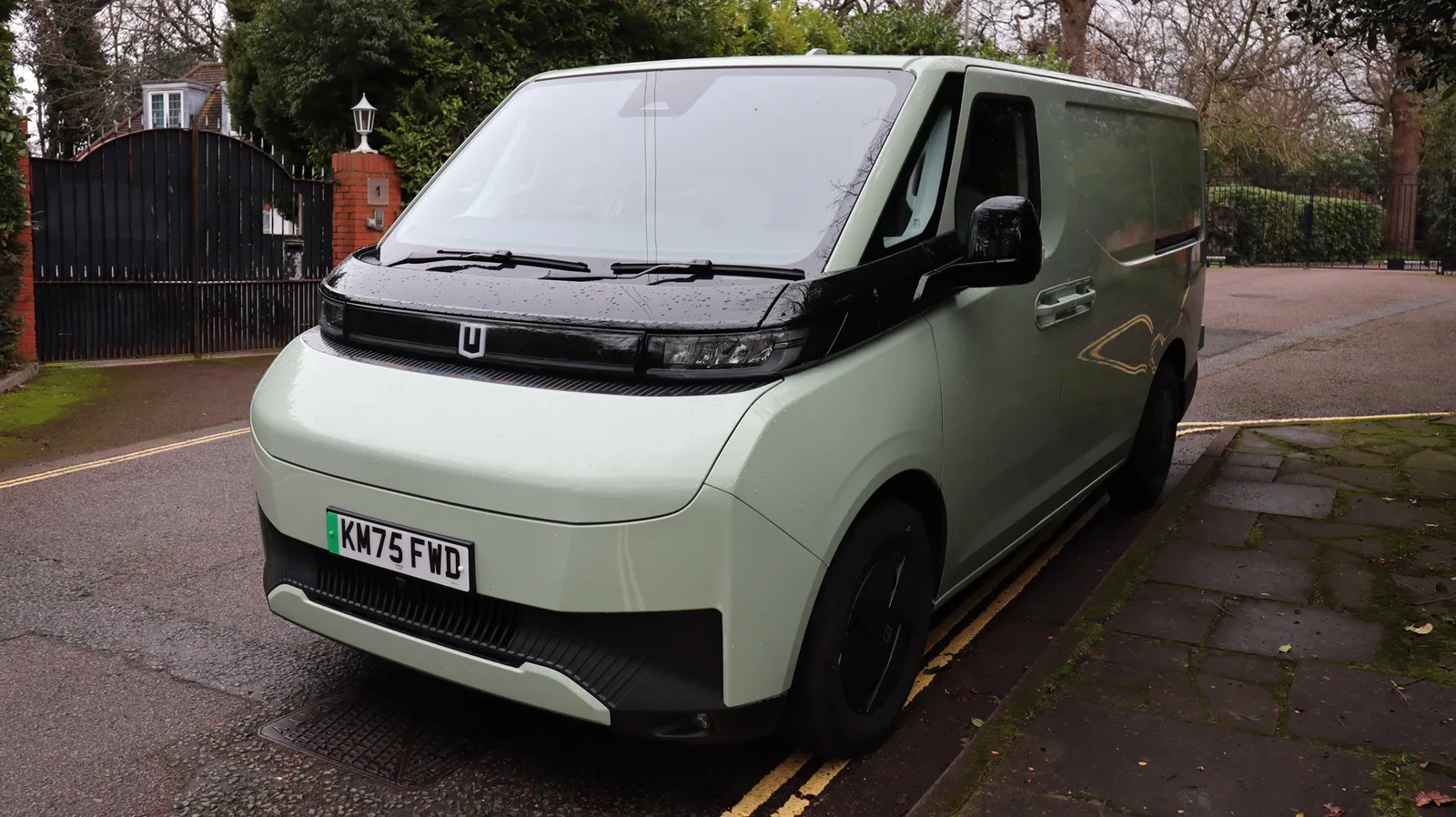
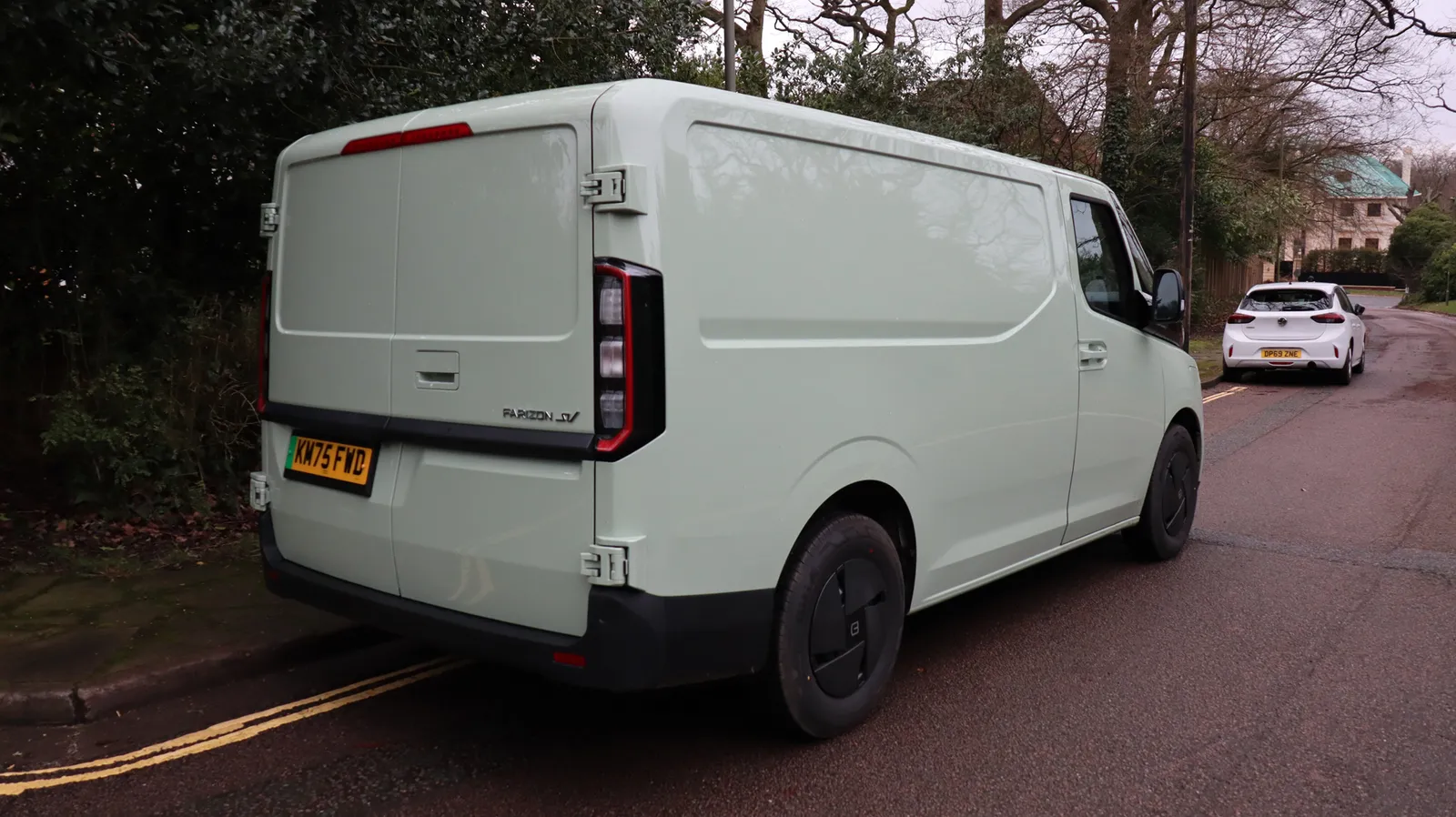
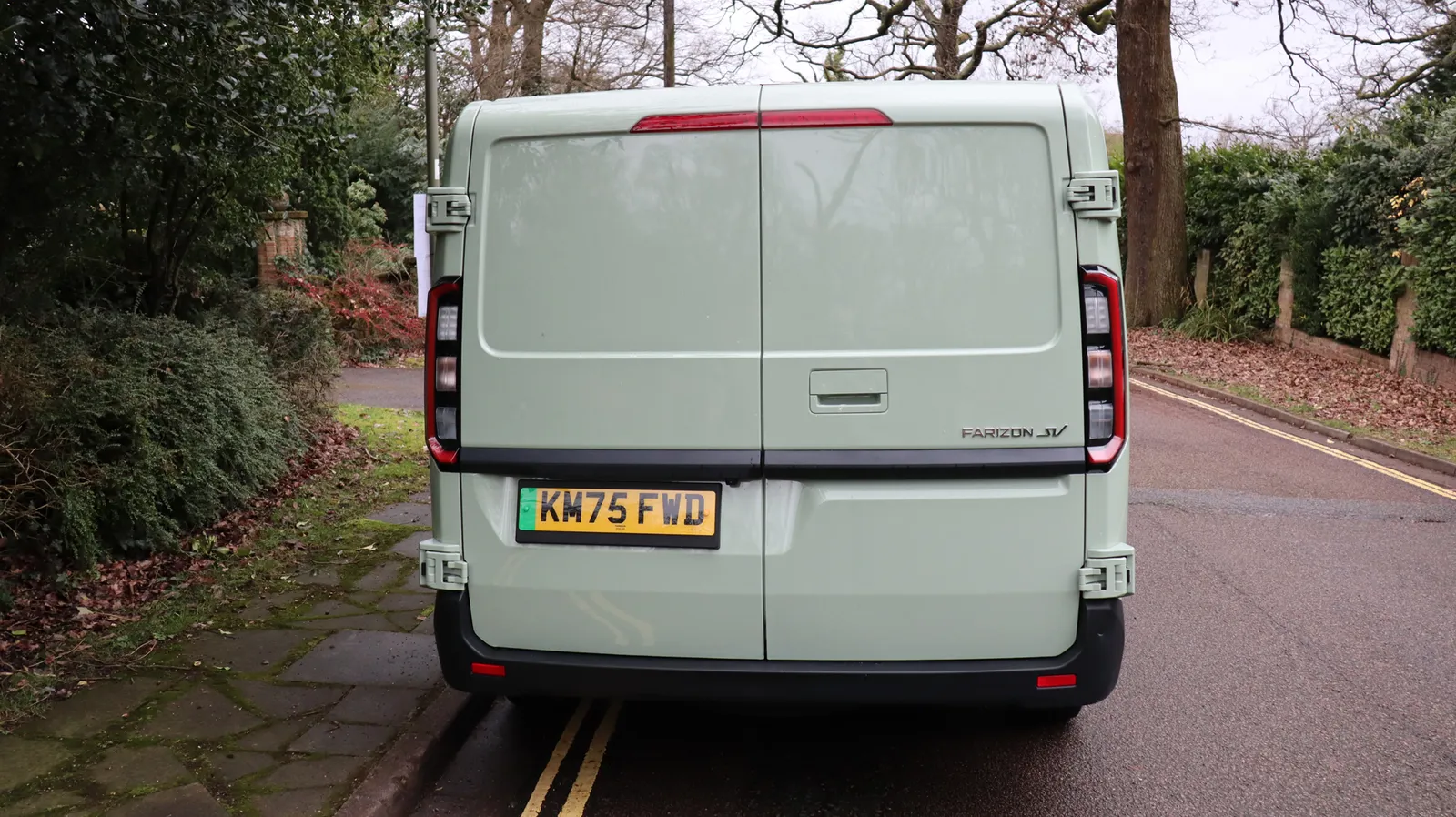
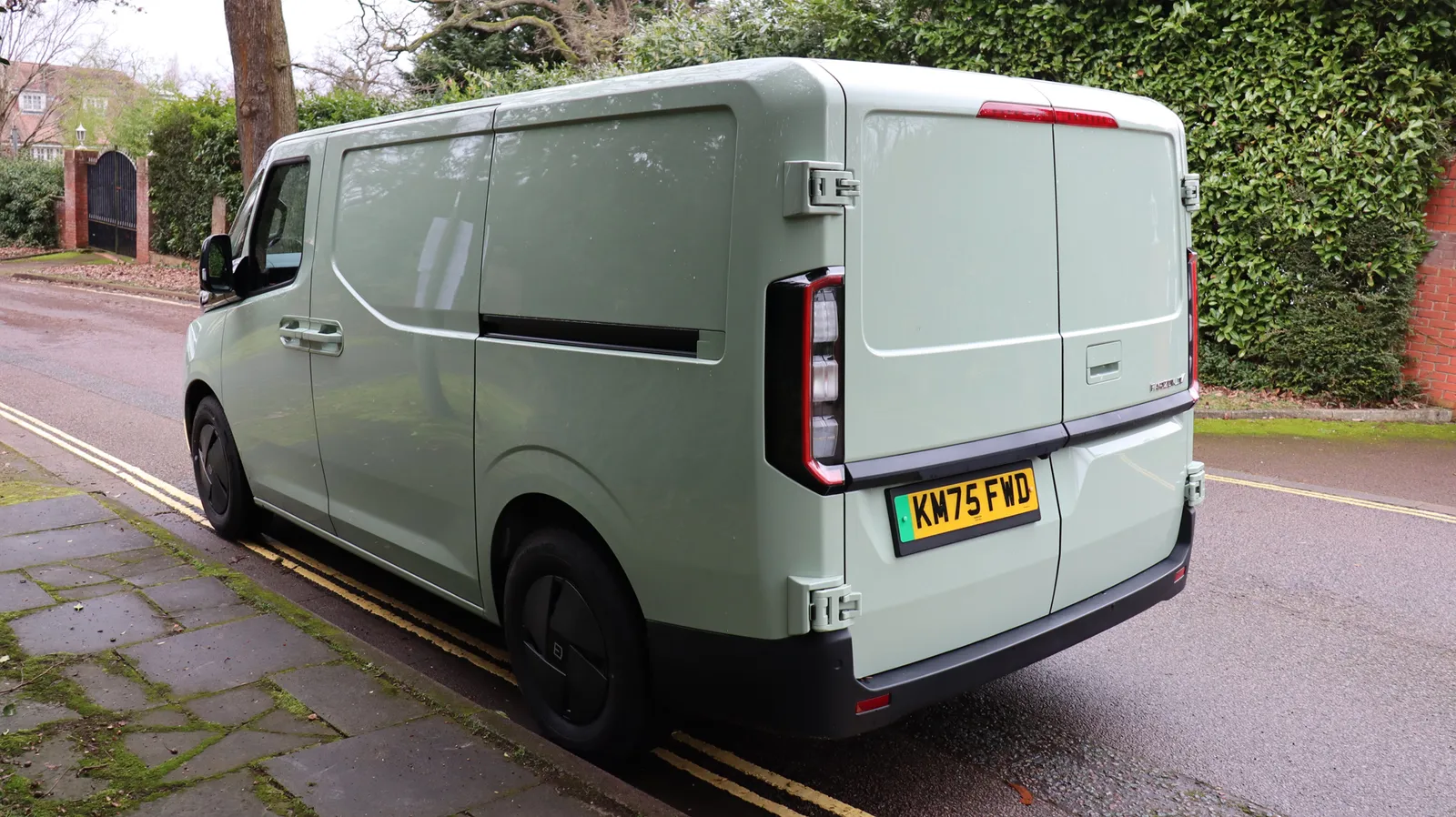
There is a substantial difference between the smallest and largest bodies. The L1H1 is 4,990mm long and 1,980mm high, while the L3H3 stretches to 5,995mm and stands 2,500mm tall. Buyers need to consider parking and access restrictions as well as the volume of equipment they intend to carry.
All versions use a single motor driving the front wheels. With the battery integrated into the electric platform, the SV provides an unusually accessible load area. Farizon quotes a loading height of just 550mm.
Interior Comfort
Farizon wanted the SV to offer a more car-like environment, and that intention comes across clearly when you climb inside. There is still the practical three-seat layout you would expect, but the switchgear and overall presentation feel more modern than in some vans we have tried.
The driving seat is comfortable enough for extended use. We spent hours in the L3H3 during the EV Rally without feeling that the cabin was an endurance test. The driver and outer passenger seats are heated and ventilated, while the steering wheel is heated as well. These are welcome comforts in something that can double as a workplace for much of the day.
There is no wireless phone-charging pad in our test van, but a handset can be plugged in and put away in the drawer. The outer seatbelts are unusually mounted on the doors, a detail that deserves attention when getting in and out. There are two different sizes of cupholder in a drawer with a space to store your phone next door, albeit without wireless phone charging, although there is a gap to route a charging cable into this space. You get a cubby beneath this and room in the doors, but no extra cupholders or document holder on top of the dashboard. There is a nice armrest for the driver, though.
Storage and Load Carrying
The L1H1 offers 6.95m³ of cargo space. Its published maximum payload is 1,350kg with the 67kWh battery, falling to 1,265kg with the 83kWh pack. These are the manufacturer’s figures under its stated “with two occupants” convention; options and the individual vehicle’s plated limits should still be taken into consideration.
The side door slides open easily, and our optional 270-degree rear doors swing well out of the way. Standard rear doors open through 180 degrees. The wheelarches do not intrude excessively into the cargo space, which helps when loading bulky items.
We used the SV to transport artwork to an art fair and found the space more than adequate. Buyers with larger requirements can move up to the L3H3, with 13m³ of capacity, although the maximum load weight drops to 1,035kg payload for the 106kWh version.
Towing capacity is 2,000kg braked or 750kg unbraked. The three three-pin sockets fitted in our van are particularly useful: the quoted 3.3kW vehicle-to-load supply can run equipment on site or charge tools. However, this a shared supply limit, not 3.3kW from each socket. The V2L option costs £500.
Farizon also provides payload monitoring for the SV, which displays load weight to help the driver avoid overloading.
The car-like approach continues with the steering wheel, which places adaptive-cruise functions on the left and media controls on the right. A stalk on the right selects drive functions, while the left stalk handles lights and wipers.
There is a separate on-off button. We might question the need for this in a car, but it makes more sense in a working van that could be left unlocked while the driver handles a delivery. The 7in instrument display provides plenty of information, although its graphics prioritise function over visual flair.
Physical air-conditioning controls are particularly welcome. We found the windscreen misted up readily in wet weather, so being able to reach the demisting function with a single button press was useful.
The central 12.3in touchscreen is straightforward to navigate for basic functions such as DAB radio. Our test van lacked built-in satellite navigation, making smartphone navigation the obvious solution. That may suit a driver who already receives job addresses through their phone. The current UK equipment list includes Apple CarPlay and Android Auto. However, earlier review vehicles lacked native Android Auto, so connectivity should be checked against the software fitted to the individual van.
We found wireless Apple CarPlay worked well, albeit needing a wired connection to keep your phone charged. The screen is responsive and the parking camera that pops up clear and extremely useful. You get some quick icons if you drag down from the top of the screen, and additional apps if you swipe left. This is all more car-like than most vans, but not quite as car-like as an actual car.
Performance and Driving
The SV is extremely easy to drive. Its single motor produces 170kW, or 231PS, with 336Nm of torque. That is about 228bhp, providing ample power for smooth progress. A working van does not need to feel like a sports car to be satisfying from behind the wheel.
Despite the front-wheel-drive layout, the steering remains light and manageable, thanks to drive-by-wire technology. We drove the SV around a tight, city-style test course with 500kg of water secured in the back, and it remained highly manoeuvrable. This kind of easy handling when loaded is exactly what you need from a commercial van.
The larger L3H3 was composed on motorways and A-roads during the EV Rally. The easy responses and comfortable driving position make this a van in which we would be happy to cover substantial distances. However, it rained heavily during this drive and that’s quite a noisy experience in a panel van.
Size still matters on narrow urban roads, of course. The parking sensors are rather keen to beep, but their caution is preferable to discovering a parked car’s bumper the expensive way. The cameras and large mirrors help considerably when positioning the van.
Range and Charging
Range is one of the SV’s strongest features. The L1H1 67kWh has an official combined WLTP range of 188 miles, rising to 234 miles with the 83kWh battery. The L3H3 106kWh reaches 247 miles. Our most useful real-world evidence comes from the larger van. Over 1,004 miles of mixed roads during the EV Rally, the L3H3 106kWh averaged 2.4 miles per kWh, equating to 254 miles on a full charge – more than the WPLTP rating. This was a separate test from the L1H1 review, but it demonstrated that the SV can take on more than short local journeys.
Depending on route length, a local tradesperson might manage several days between charges. We would still plan charging around the actual working day, load and available infrastructure rather than assume that every operator can go a week without plugging in.
The 67kWh and 106kWh packs accept up to 120kW DC, while the 83kWh version can reach 140kW. The current configurator quotes 20–80% in 36 minutes for the two smaller packs and 40 minutes for the 106kWh battery. However, the 67kWh and 83kWh batteries use LFP chemistry, making the full capacity more regularl usable, while the 106kWh pack uses NMC.
Running Costs
Our 2.4 miles per kWh EV Rally result shows how economical the L3H3 could be. At an assumed electricity price of 25p per kWh, the energy used by the van would cost around 10.4p per mile; at 75p per kWh, around 31.3p. Both these figures will be considerably cheaper than diesel.
Farizon’s current warranty is four years or 120,000 miles for the vehicle and eight years or 120,000 miles for the battery. Four years of AA roadside assistance are also listed. The promotional “Big 4” package additionally includes a four-year service plan and charging credit advertised as 4,000 miles. In practice the charging benefit is a £940 public-charging-card credit, so the distance obtained depends on energy prices and consumption. The advertised offer applies to qualifying retail orders from 1 January 2026 registered by 30 September 2026, so may have expired by the time you read this.
Jameel Motors handles the UK operation, with AA servicing and repair support. That is useful reassurance for a new badge, although our tests cannot establish long-term reliability.
Safety
The SV’s parking camera is excellent, and together with the large mirrors it makes manoeuvring around loading areas easier to negotiate. The lane-departure system can be overzealous, much like the parking sensors, but there is no shortage of assistance. Farizon’s UK specification includes autonomous emergency braking, blind-spot detection, adaptive cruise control, lane-keeping assistance, rear cross-traffic alert and a 360-degree camera system.
Euro NCAP’s published commercial-van assessment praises the SV’s emergency braking and lane-support performance, and gives it a five-star rating, which is reassuring.
Price (exc VAT):
L1H1 67kWh – £44,000; L1H1 83kWh – £47,000; L3H3 106kWh – £55,000
Range (WLTP):
L1H1 67kWh – 188 miles; L1H1 83kWh – 234 miles; L3H3 106kWh – 247 miles
Charge time (7.4kW, 0-100%):
67kWh – 9 hours, 83kWh – 11 hours, 106kWh – 15 hours
Charge time (11kW, 0-100%):
67kWh – 6 hours, 83kWh – 8 hours, 106kWh – 10 hours
Charge time (140kW, 20-80%):
67kWh/83kWh – 36 minutes; 106kWh – 40 minutes
Battery:
67kWh, 83kWh, 106kWh options
On Board Charger:
AC – 11kW option; DC – 140kW for 83kWh battery, 120kW for 67kWh and 106kWh
Efficiency (WLTP):
2.55 miles per kWh
0-62mph:
12 seconds
Top Speed:
84mph
Power:
228bhp
Wheels driven:
Front-wheel drive
Cargo:
L1H1 – 6.95m³ (6,950 litres); L3H3 – 13m³ (13,000 litres)
Payload: L1H1 83kWh – 1,265kg; L1H1 67kWh – 1,350kg
Towing: 2,000kg braked; 750kg unbraked
Jump to section
1. Intro, Price, Options and Verdict