
Extreme H hydrogen World Cup postponed to 2027 days before start
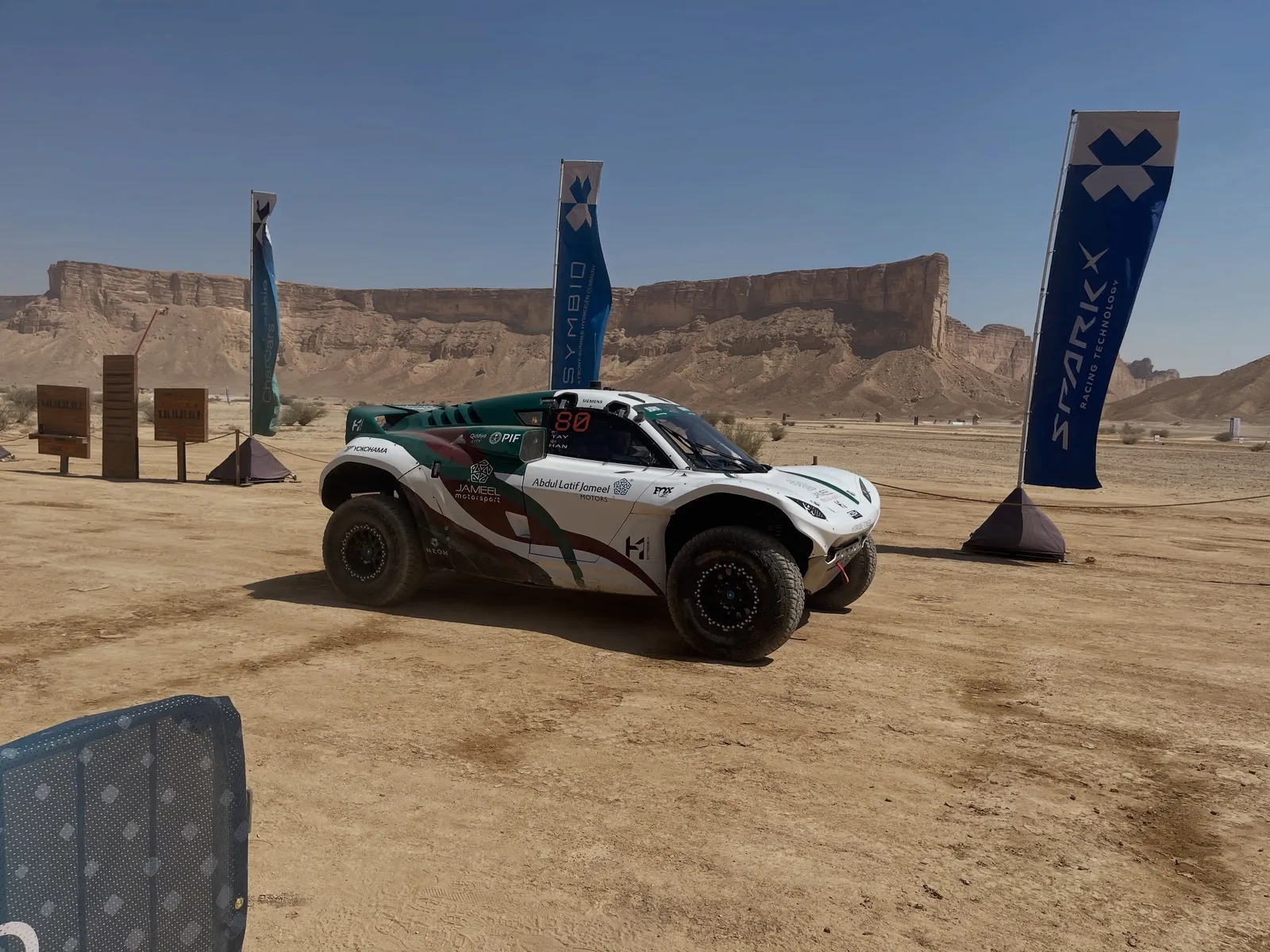
The second FIA Extreme H World Cup has been postponed until 2027, just days before the hydrogen-powered off-road racing event was due to begin in Saudi Arabia. Organisers cited logistical and operational challenges affecting preparations for the competition, which had been scheduled for Qiddiya City from 29–31 October.
The FIA, Saudi Automobile and Motorcycle Federation (SAMF) and Extreme H confirmed the decision on 26 October. No replacement dates were announced, leaving teams and drivers waiting for a revised timetable for the second edition.
The statement attributed the postponement to “logistical and operational challenges affecting the preparations required to deliver the event”. It did not identify the specific obstacles or explain how they had developed so close to the scheduled start.
The FIA and Extreme H said they remained committed to delivering the event in 2027 with their Saudi partners. The announcement thanked those partners for their cooperation, but contained no further detail about the arrangements for next year.
The delay interrupts efforts to establish hydrogen fuel-cell racing as an international sporting competition and technology showcase. It also removes the immediate opportunity to build on the inaugural event, held at the same Saudi venue in October 2025.
Preparations had appeared to be advancing a month earlier. In an update published on 29 September, Extreme H said all eight Pioneer 25 racing cars had been refurbished and were heading to Qiddiya City. The vehicles had undergone servicing and full chassis inspections following their first competition.
The organiser also reported that its team had visited the venue during the previous month to update the purpose-built course. Those changes were intended to develop the layout used for the inaugural race.
At the time, managing director Ali Russell described “a real sense of momentum building around this year's event”. The September update also carried positive assessments of preparations from Saudi Motorsport Company and the FIA.
Veloce Racing had been confirmed as the first entrant for 2026, with reigning winners Molly Taylor and Kevin Hansen due to drive. They had secured the inaugural title for Jameel Motorsport, making their planned appearance with Veloce a notable change for the second edition.
For electric vehicle audiences, Extreme H’s significance lies in its drivetrain. The Pioneer 25 uses electric motors, with a hydrogen fuel cell generating electricity to maintain the battery’s charge. The battery supports the bursts of power required during racing, while hydrogen provides an onboard energy supply.
The FIA’s technical review of the inaugural competition, published in April 2026, reported that nine Pioneer 25 vehicles, including a test car, covered a combined 550km during race week without a powertrain failure. Conditions included dust and ambient temperatures approaching 40°C.
Extreme H technical director Mark Grain said: “We did not have a single powertrain failure over our entire event.” The review also reported no safety issues during the competition, despite the demanding terrain and a rollover.
Those results provided an initial demonstration of the system under racing conditions. However, the accumulated distance and sprint format should be understood in context: this was a competition debut, rather than a comprehensive test of long-term durability in everyday service.
The broader project has institutional backing extending beyond a single race weekend. In September 2025, the FIA and Extreme H announced a multi-year agreement to deliver the hydrogen-powered World Cup, presenting it as a means of advancing technology and encouraging investment in hydrogen infrastructure.
That ambition encompasses the event’s energy requirements as well as the cars. The partners described a programme designed to explore hydrogen use across the paddock, broadcasting and hospitality operations, alongside the competition itself.
Extreme E had already used hydrogen fuel cells to charge its battery-electric racing cars. According to the FIA’s agreement announcement, hydrogen subsequently supplied 80% of the predecessor series’ event operations at its final event of Season 4.
Extreme H therefore represents an extension of an existing experiment in motorsport energy supply. Its commercial and technical ambitions depend on delivering repeatable events that allow teams, suppliers and organisers to apply what they learn.
The first World Cup offered a distinctive sporting proposition. Held from 9–11 October 2025, it brought together eight teams for three disciplines: time trials, head-to-head contests and multi-car races. Points accumulated through the competition determined the grid for an eight-car final.
Each team paired a female and male driver with equal responsibility, continuing the approach established by Extreme E. Driver changes were incorporated into races except in the head-to-head discipline, making the combined performance of both competitors central to the result.
Spark Racing Technology developed the Pioneer 25 for the competition. The organiser lists a peak vehicle output of 400kW, a weight of 2,200kg and a width of 2.4 metres. Claimed acceleration from 0–100km/h is 4.5 seconds, illustrating the performance available from the electric drivetrain despite the vehicle’s substantial mass.
The three-discipline format was intended to test versatility, requiring competitors to combine outright speed with close racing and consistent teamwork.
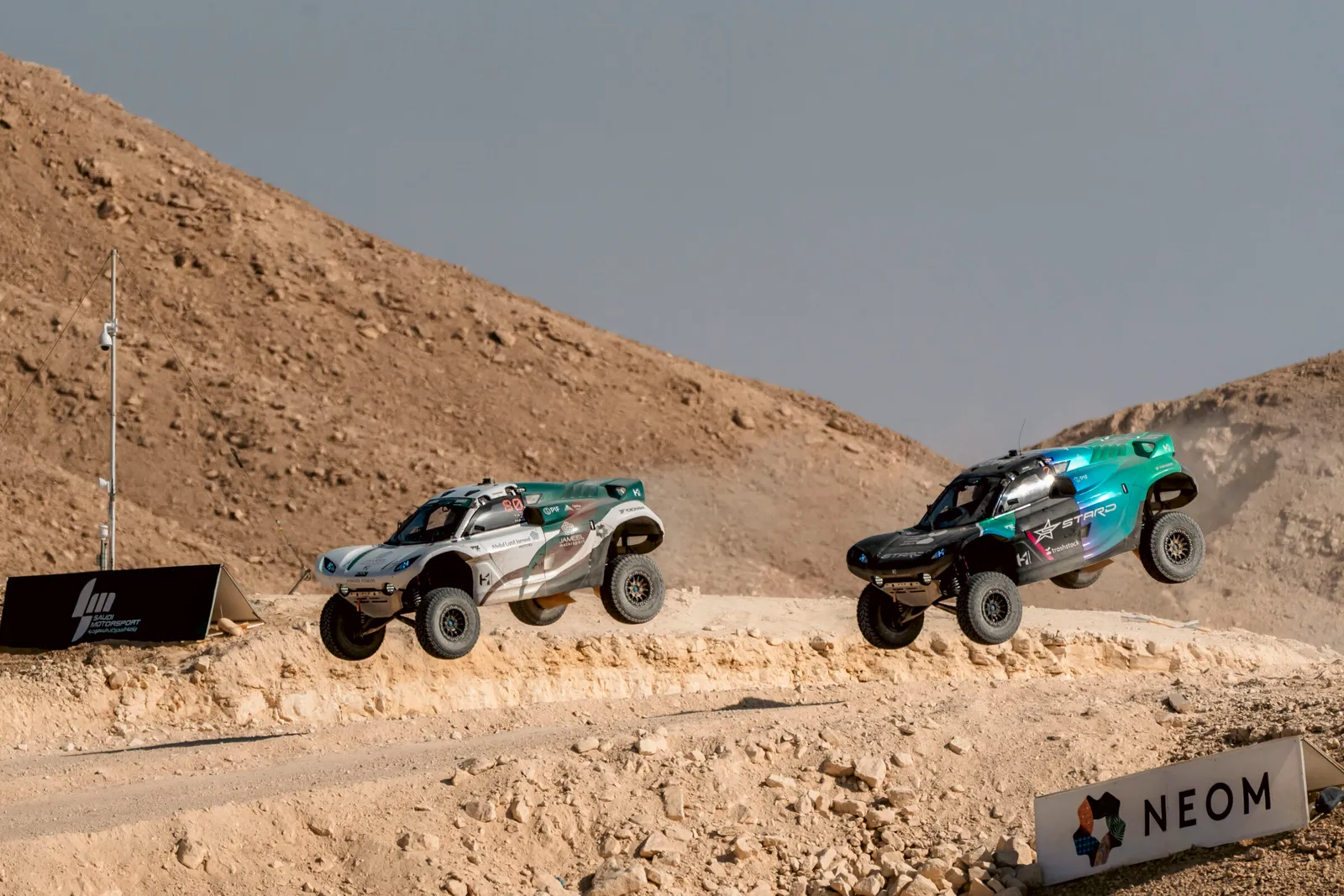
Taylor and Hansen proved the strongest combination at the inaugural event. After finishing second in the opening time trials, they won five head-to-head races and added victory in their opening multi-car heat, ultimately securing pole position for the final.
Hansen established the lead before handing the car to Taylor, who completed the victory more than seven seconds ahead of their nearest challengers. Carl Cox Motorsport’s Klara Andersson and Timo Scheider finished second, with Team EVEN’s Hedda Hosås and Ole Christian Veiby completing the podium.
The result gave Saudi entrant Jameel Motorsport the first title and provided the new competition with an established winning partnership around which to promote its return.
Delivering that first event required substantial work beyond preparing the cars. In an August 2026 announcement about its Saudi Event Show Awards nomination, Extreme H described how events company STAMiNA had helped transform the desert site into an international venue.
The work included the track, race infrastructure, broadcast facilities, paddock and hospitality areas. The inaugural World Cup also followed the final Extreme E race, requiring organisers to accommodate successive battery-electric and hydrogen competitions.
That background illustrates the scope of the operation, although it does not explain the difficulties behind this week’s decision. The postponement statement makes no connection between those earlier delivery arrangements and the challenges affecting the second edition.
For now, the practical distinction is between a declared intention to return and a confirmed race date. Organisers have supplied the former; teams, partners and spectators must await the latter before they can make firm plans.
For a new competition, that uncertainty matters: sustaining interest requires a reliable calendar as well as compelling machinery, particularly when teams must coordinate drivers, personnel and international travel.