
EU vote on Tesla FSD not expected before December
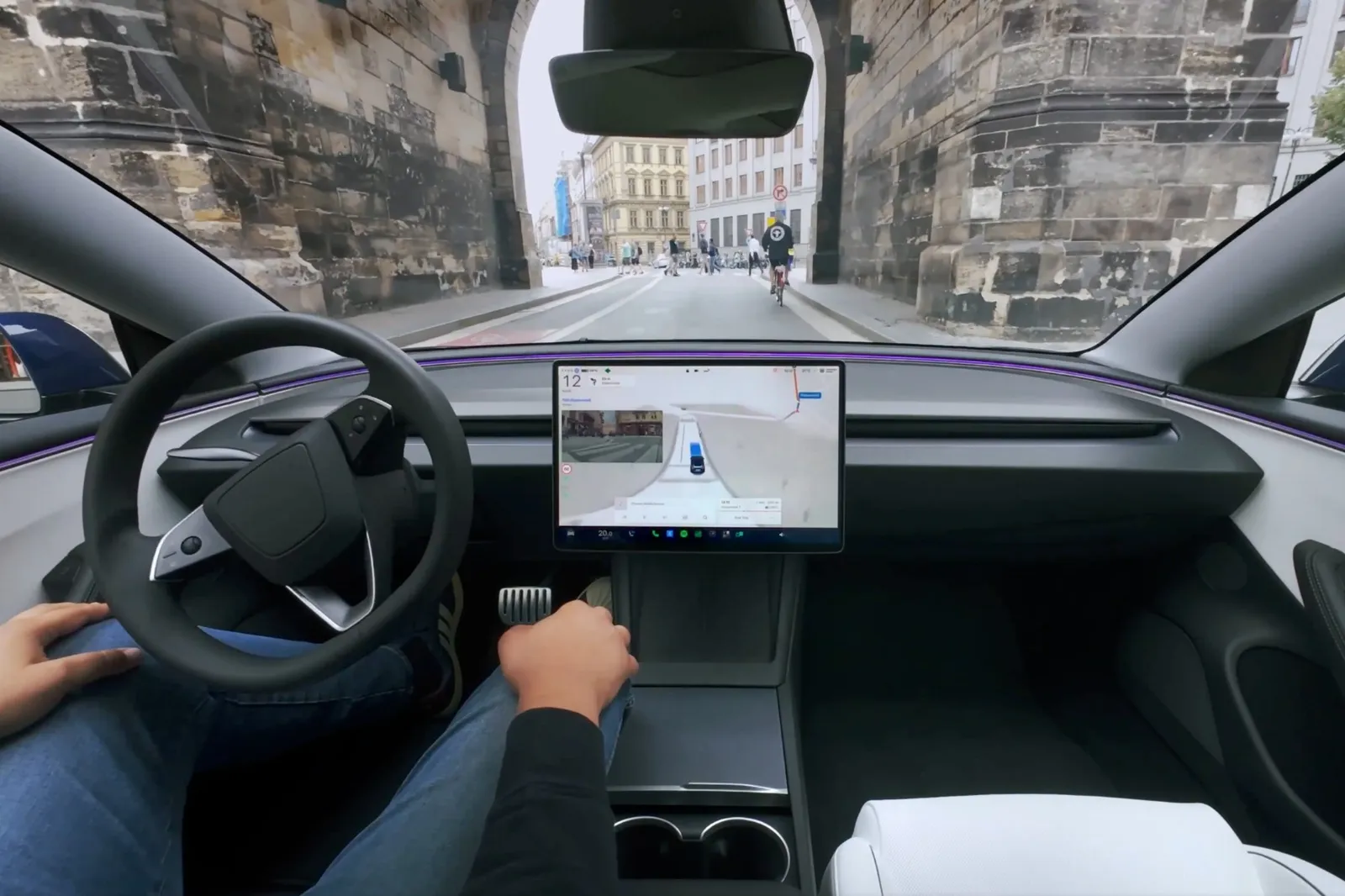
The EU-wide approval of Tesla's driver assistance system called "Full Self-Driving (Supervised)" is facing further delays. At the next meeting of the responsible EU committee in early October, only further discussions will take place. A vote would thus be possible at the earliest in December.
Seven EU states have so far approved FSD Supervised at a national level.
Image: Tesla
In April, Tesla received its first European approval for its system, Full Self-Driving (Supervised) – or FSD (Supervised) – specifically from the Dutch road authority RDW. However, this is not a standard EU type approval but a provisional EU type approval under Article 39 of EU Regulation 2018/858. This article is meant for new technologies or technical concepts not yet fully covered by existing EU regulations. Since then, several other EU member states have adopted this provisional approval, including, a few days ago, the Czech Republic.
Progress towards a regular EU-wide approval, which would apply across the entire Union, is not moving as quickly as initially expected. As first reported by the automotive news site, _Electrek_, the provisional agenda for the Technical Committee on Motor Vehicles (TCMV) meeting on 6 October includes only a 25-minute “continuation of the discussion” regarding the Netherlands’ application under Article 39 of the EU type approval regulation. No vote is listed. Since the EU body will not reconvene until December, this would be the earliest possible date for a Europe-wide decision.
Tesla itself had previously cited 6 October as a possible date for a vote. The basis for the procedure is the aforementioned provisional approval for FSD Supervised, granted by the Dutch approval authority RDW. The responsible EU committee has already discussed the application twice without holding a vote.
Despite its name, FSD Supervised is not a system for driverless driving. The human driver remains responsible and must monitor the system. This is distinct from the UNECE regulatory framework for Automated Driving Systems, adopted this summer. That framework targets fully automated systems capable of performing the driving task without continuous driver supervision but this regulation does not automatically approve use on public roads.
Tesla needs broad EU Member State support
So far, seven EU countries have adopted the Dutch approval for their own roads: the Netherlands, Lithuania, Estonia, Denmark, Belgium, Slovenia and the Czech Republic. Together, however, they represent only around 12% of the EU population. For EU-wide approval, a qualified majority of at least 15 of the 27 member states is required, representing at least 65% of the European Union’s population.
This means that the major automotive markets remain decisive. France has not yet recognised the current system. Germany, Italy and Spain have also not adopted the Dutch approval. Criticisms raised by European authorities include compliance with speed limits and monitoring driver attentiveness.
According to reports from _Electrek_, Sweden has spoken out in favour of rejecting the approval as long as Tesla, among other things, allows the possibility of setting a speed above the applicable limit. Concerns have also been raised in other Nordic countries regarding the system’s behaviour in winter road conditions and driver monitoring. France has also pointed to issues with speed and attentiveness in urban traffic.
Tesla counters with its own safety data. According to the company, more than 70,000 customers were using FSD Supervised at the beginning of September, collectively covering over one million kilometres per day. Tesla claims that, over 100 million kilometres, FSD Supervised was involved in accidents 4.1 times less frequently than manually driven Teslas. However, these figures come from the manufacturer itself and have not been independently verified.
For Tesla, the delay represents another setback in its European timeline. The company has repeatedly indicated earlier dates for broader approval. As long as the TCMV does not make a decision, Europe remains regulatorily divided.