
EU: BEVs made up more than a quarter of new cars sold in August
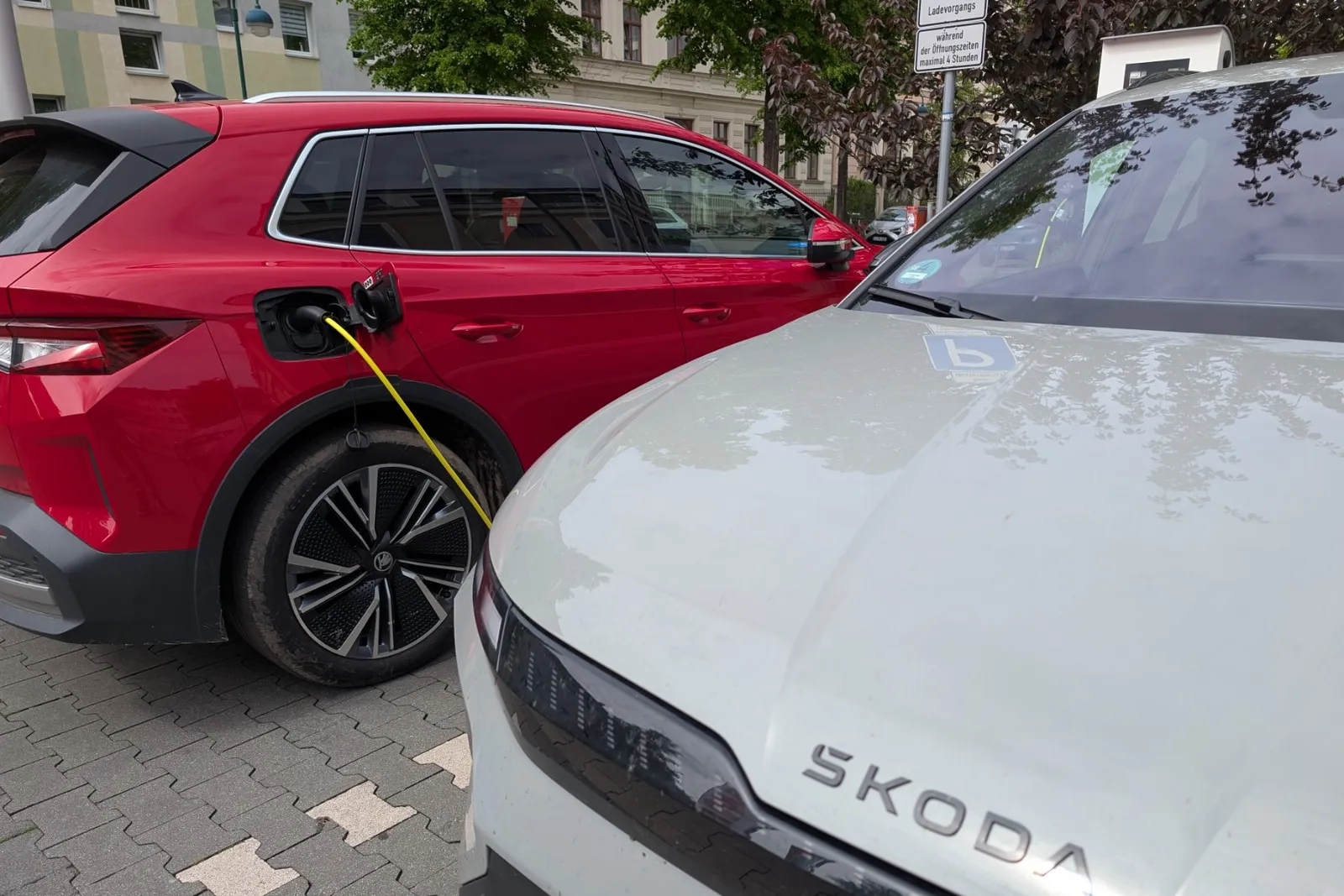
Electric car sales in the EU increased significantly in August. According to ACEA, 27.7 per cent of newly registered passenger cars were battery-electric, while another 11.1 per cent were plug-in hybrids. This means vehicles with an external charging option accounted for almost 39 per cent of the market. The BEV market is also growing strongly so far this year.
The EU car market is increasingly going electric. According to industry association ACEA, a total of 708,211 new passenger cars were registered in August, including 196,486 battery-electric vehicles and 78,426 plug-in hybrids. BEVs therefore reached a market share of 27.7 per cent, meaning more than one in four new passenger cars was fully electric. PHEVs accounted for 11.1 per cent. Combined, vehicles with a rechargeable battery accounted for almost 39 per cent of new registrations.
Across all powertrains, the overall passenger car market grew by 4.5 per cent compared with August 2025. However, the development of plug-in vehicles was considerably more dynamic: BEV registrations increased by 62.7 per cent from 120,797 units in August 2025, while PHEV registrations rose by 10.8 per cent from 70,545 registrations in the same month last year.
BEVs grow strongly in Germany and France
BEV growth was particularly strong in the larger EU member states. In Germany, 68,930 electric cars were newly registered in August, 75.1 per cent more than in the same month last year. (See our separate analysis of KBA data in the eMobility Dashboard in German for more). France recorded 36,159 new electric cars (+112.8 per cent), while Denmark reached 13,887 (+54.6 per cent). Registrations also increased significantly in the Netherlands (+43.5 per cent), Belgium (+43.9 per cent) and Portugal (+65.2 per cent).
Momentum was weaker but still promising for plug-in hybrids. In Germany, PHEV registrations increased by 6.0 per cent in August to 25,406 vehicles. Spain recorded growth of 23.3 per cent, while Italy reached 74.2 per cent. France, by contrast, was almost unchanged, with an increase of just 0.2 per cent. Across the EU, more than twice as many BEVs as PHEVs were registered in August.
BEVs widen their lead over PHEVs
Over the first eight months of the year, the gap between the two plug-in powertrains widened further. Across the EU, 1.641 million BEVs were newly registered between January and August, 44.9 per cent more than in the same period last year. The market share of fully electric cars consequently rose from 15.8 to 21.7 per cent. PHEV registrations increased by 19.6 per cent to 758,082 vehicles, taking their market share from 8.8 to 10.0 per cent. Combined, BEVs and PHEVs therefore accounted for around 31.7 per cent of the EU new-car market.
The growth in BEVs from January to August was also driven primarily by the major markets: after eight months, France recorded an increase of 74.2 per cent to 322,099 vehicles, Germany reached 515,545 BEVs (+53.1 per cent), and Denmark 106,265 (+40.9 per cent). Together with Belgium, these three markets accounted for 64 per cent of all BEV registrations in the EU. For PHEVs, Italy (+77.6 per cent), Spain (+33.9 per cent) and Germany (+15.6 per cent) stood out.
Electric car registrations are also growing strongly outside the EU, although with different trends in individual markets. In the three EFTA countries (Norway, Switzerland and Iceland), 18,658 BEVs were newly registered in August, 9.5 per cent more than in the same month last year. This was accompanied by 2,000 PHEVs, down 14.4 per cent. Norway, the benchmark market for electric cars, is particularly notable, with 13,274 new BEVs and a market share of 98.7 per cent – see our separate analysis.
UK also sees solid BEV growth
In the UK, BEV registrations increased by 27.7 per cent in August to 28,063 vehicles, while PHEV registrations rose by as much as 39.8 per cent to 13,707 vehicles. From January to August, 355,748 BEVs (+28.6 per cent) and 185,198 PHEVs (+37.9 per cent) were registered in the UK. Across the EU/EFTA/UK region, BEV registrations therefore totalled 2.13 million in the first eight months, an increase of 38.8 per cent. PHEVs accounted for 964,497 registrations (+22.2 per cent).
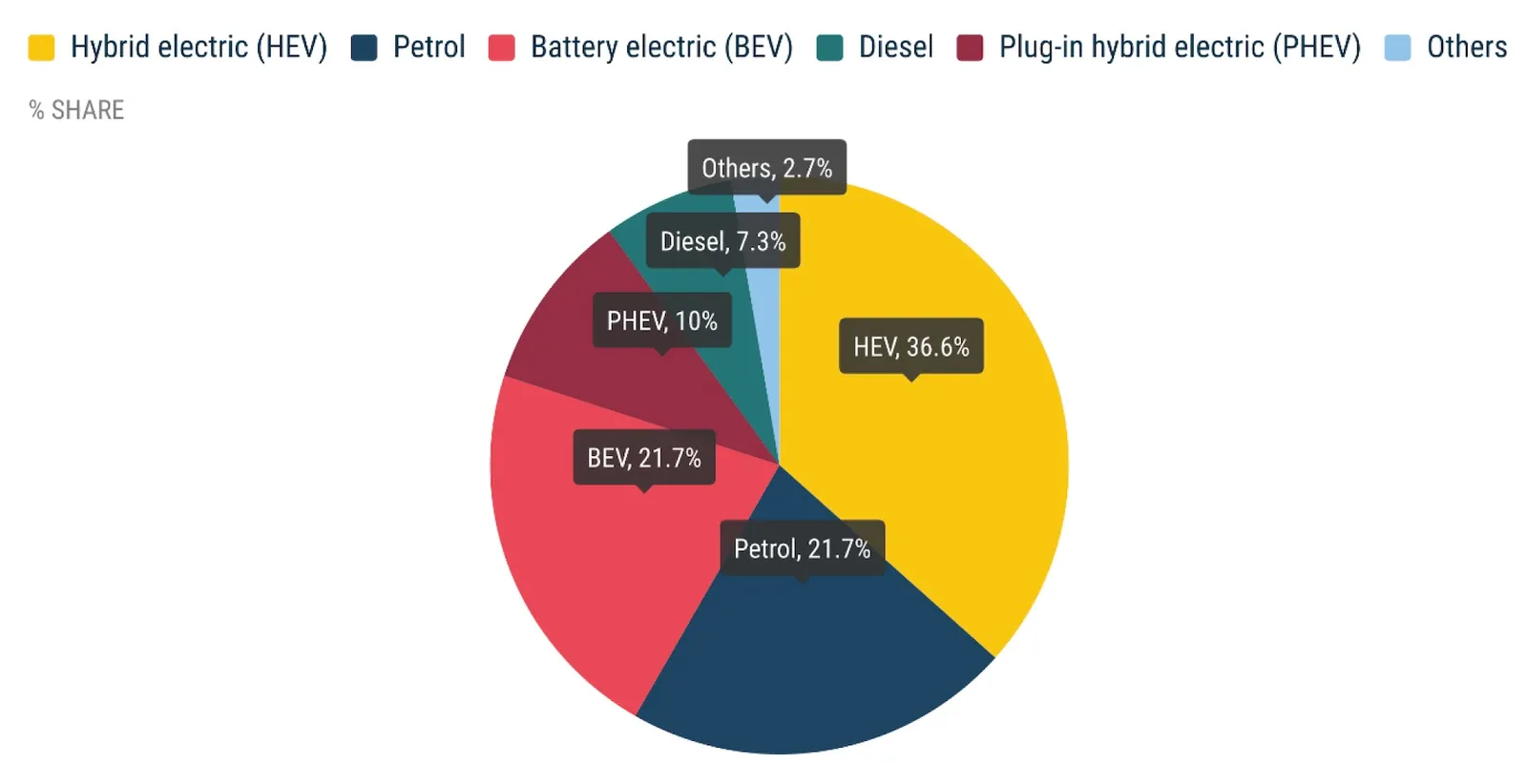
At the same time, conventional combustion engines continue to lose ground. After eight months, petrol cars still accounted for 21.7 per cent of the EU market, while diesel cars accounted for 7.3 per cent. Registrations of both powertrains fell by 18.6 per cent. Full and mild hybrids remain the largest individual powertrain category at 36.6 per cent, but the narrowing gap with conventional combustion engines and the growing share of vehicles with a charging connection are significantly changing the powertrain mix of the European new-car market.
Strong growth for BYD, Chery and Leapmotor
There is also movement among manufacturers; although ACEA’s figures do not break registrations down by powertrain, meaning the BEV figures for individual brands cannot be derived from the data. Nevertheless, several Chinese manufacturers stand out with strong increases: BYD increased its EU registrations by 163.0 per cent from January to August to 177,752 vehicles, while Chery (including Jaecoo, Jetour and Omoda) recorded an even larger increase of 250.9 per cent to 116,318 units. SAIC (MG Motor and Maxus) reached 163,707 vehicles (+19.8 per cent). The Chinese Stellantis affiliate Leapmotor saw even more dynamic growth, with registrations up 426.8 per cent to 62,508. Tesla, the US pure-electric carmaker, recorded an increase of 52.7 per cent in August after a weaker performance earlier in the year; cumulatively, registrations were up 65.9 per cent to 142,165 vehicles from January to August.
Across the broader EU/EFTA/UK market, BYD with 234,099 registrations (+144.1 per cent), Chery with 207,871 (+279.7 per cent) and SAIC with 230,290 (+19.7 per cent) were also significantly higher. Tesla reached 191,787 (+43.3 per cent), while Leapmotor recorded 73,297 registrations (+449.9 per cent). These figures are particularly interesting because they demonstrate just how much some Chinese manufacturers are expanding their European sales, while the ACEA table alone does not show what share of these registrations consists of BEVs, PHEVs, range extenders or combustion-engine vehicles. SAIC and Chery also offer combustion-engine models, while BYD and Leapmotor offer PHEVs and range extenders, respectively, alongside their BEVs.