
EU Auto Package: Committee votes to relax CO₂ rules
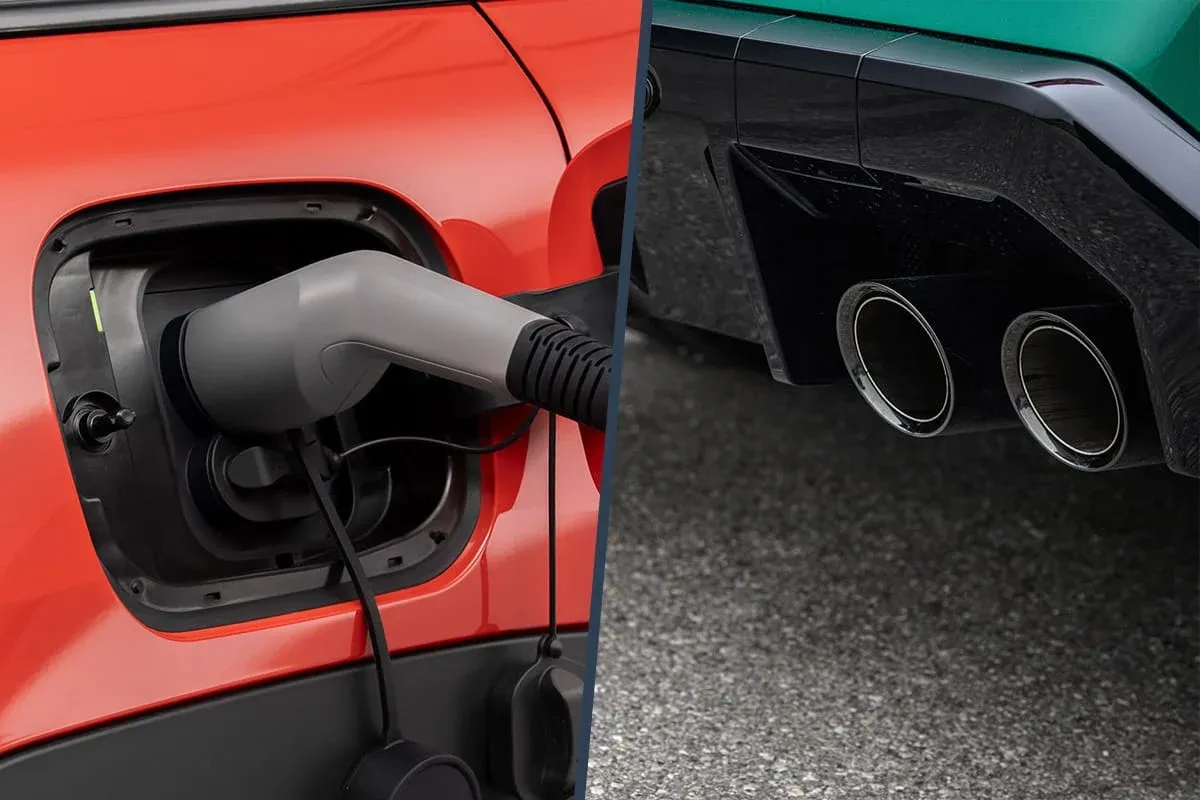
In the European Parliament, standing committees have voted on the Auto Package. The votes are seen as an indicator of whether and to what extent the so-called combustion engine ban in the EU will be softened. The result: a majority of the Industry and Transport Committees are in favour of relaxing the CO2 rules, which the so-called centrist platform had internally agreed upon shortly before.
Bilder: BMW / Montage: electrive
A decision on the EU’s Auto Package is taking shape in the European Parliament, under which the de facto ban on new internal combustion engine vehicles in the EU from 2035 is set to be relaxed. The three factions of the so-called Centre Platform agreed on a position last week. The first committee votes on Thursday, 22 October, are now the first tangible result of this internal majority-building, after the tug-of-war over the still-internal negotiating positions had frequently leaked.
Specifically, on Thursday, the Industry and Transport Committees voted in separate sessions in favour of a proposal previously developed by negotiators from the conservative EPP, the social democratic S&D, and the liberal Renew Europe group amid tough negotiations. Regarding the CO₂ fleet limits, this draft proposes that manufacturers must reduce the CO₂ emissions of their new cars by only 95 per cent instead of 100 per cent (compared to 2021) by 2035. However, they may achieve a further 7.5 percentage point reduction if they install climate-friendly steel produced in Europe in their vehicles as compensation. In the worst case, the savings target could therefore drop to 87.5 per cent by 2035 under this draft. According to the will of the three factions, there would thus remain scope for further new registrations of combustion engine and hybrid vehicles even after 2035.
Centre platform shows united front
As reported by the _Handelsblatt_, all EPP, S&D, and Renew members in the Industry Committee voted in favour of this proposal. The right-wing European Conservatives and Reformists group, the right-populist Europa of Sovereign Nations party family, the far-right Patriots for Europe alliance, the Left, and Greens/EFA voted against it. The result: 49 votes in favour, 27 against, and five abstentions. A similar picture emerged in the smaller Transport Committee. According to the minutes, there were 27 votes in favour, 18 against, and one abstention.
The next step is for the Environment Committee to follow with its vote in early November, according to information from the _Spiegel_, with the plenary session likely to take place in December.
For context: the European Commission responded to warnings from the automotive industry with its ‘Auto Package’ at the end of 2025, stating that sticking to the de facto ban on new combustion engine cars from 2035 would exacerbate the industry’s crisis. This initiative also came under pressure from Germany. In the Commission’s proposal, the new CO₂ fleet target was set at a 90 per cent reduction compared to 2021, equivalent to a fleet CO₂ emission of 11 grams per kilometre – instead of zero grams. The Commission’s draft no longer specified a date for the 100 per cent target.
Importantly, Brussels insists in its draft on full compensation for the remaining 10 per cent through the use of green steel and climate-friendly fuels. While the Centre Platform’s compromise also names green steel as a means of compensation, it does not go so far as to demand full compensation up to the 100 per cent line.
Recently, German Chancellor Friedrich Merz and French President Emmanuel Macron also agreed on a joint position on the combustion engine ban. This envisages a 90 per cent CO₂ reduction by 2035 – without compensation. According to _der Spiegel_, this compromise between Germany and France is considered “groundbreaking for the vote in the Council of EU Member States”. The Council must vote after the Parliament, and changes are always possible during this process.
Votes in European Parliament and Council now imminent
We recall that, as recently as early October, the European Parliament’s Transport Committee had postponed its vote on the Auto Package by two and a half weeks. This vote was originally scheduled for 5 October. The reason given at the time was that the Centre Platform still needed time to reach an agreement.
To push the package through, the EU Parliament must first approve it (where the EPP is the largest group), followed by the Member States in the EU Council. A simple majority is sufficient in the EU Parliament, while a so-called “qualified majority” is required in the EU Council. This means the approval of at least 15 countries representing at least 65 per cent of the EU population.
During the consultation process, various interest groups are likely to attempt to amend the draft in their favour. Against this backdrop, the Commission is said to have deliberately framed the Auto Package from the outset to broadly offer something to as many countries as possible. In addition to Germany, six other EU countries (all with a relatively low share of electric cars in their new registrations) had advocated for a weakening of CO₂ targets and in favour of combustion engines. However, with France – a previous opponent of this policy – now apparently changing sides, though not without demanding concessions elsewhere: France is reportedly receiving support from Germany in return for the so-called ‘Buy European’ requirements.