
Electric truck charging demand could reach 200 TWh by 2045
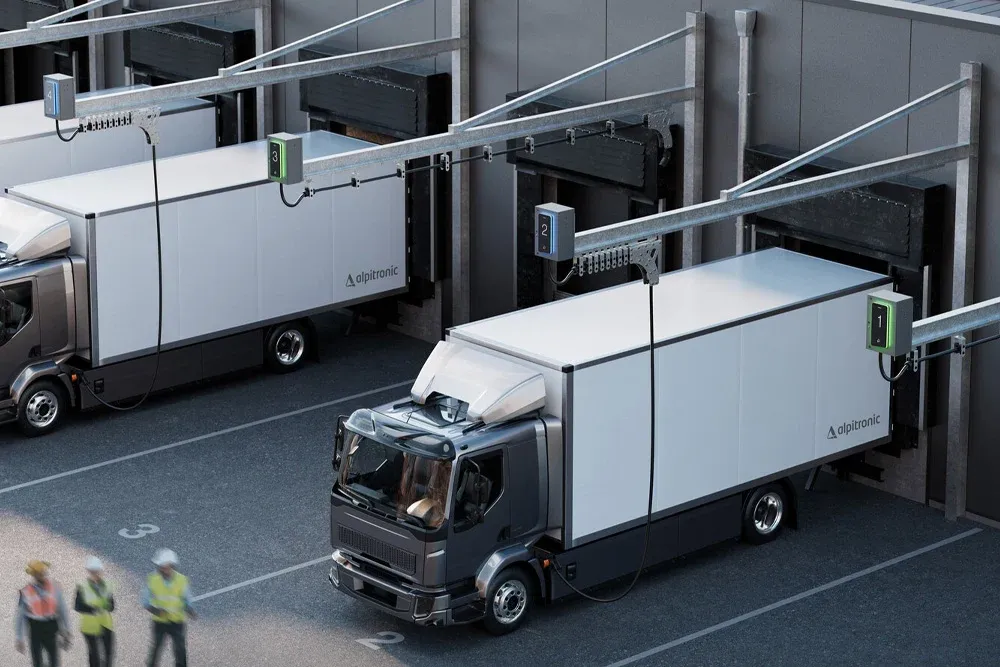
The electricity demand for charging electric trucks in Europe could rise to around 100 TWh per year by 2035 and to approximately 200 TWh by 2045. This is according to a study by Fraunhofer ISI and ICCT, which also highlights that much of the demand is likely to be concentrated in a handful of locations.
The report, entitled “Spatiotemporal Analysis of Electric Truck Charging Demand in Europe”, provides a detailed picture of where and when charging demand for battery-electric trucks could emerge in Europe by 2045. The analysis covers 27 EU member states as well as the UK, Norway, and Switzerland and is based on the newly developed VESUVIO model, which maps both depot and public charging on a grid of approximately 17 by 20 kilometres and in 15-minute intervals over the course of a week.
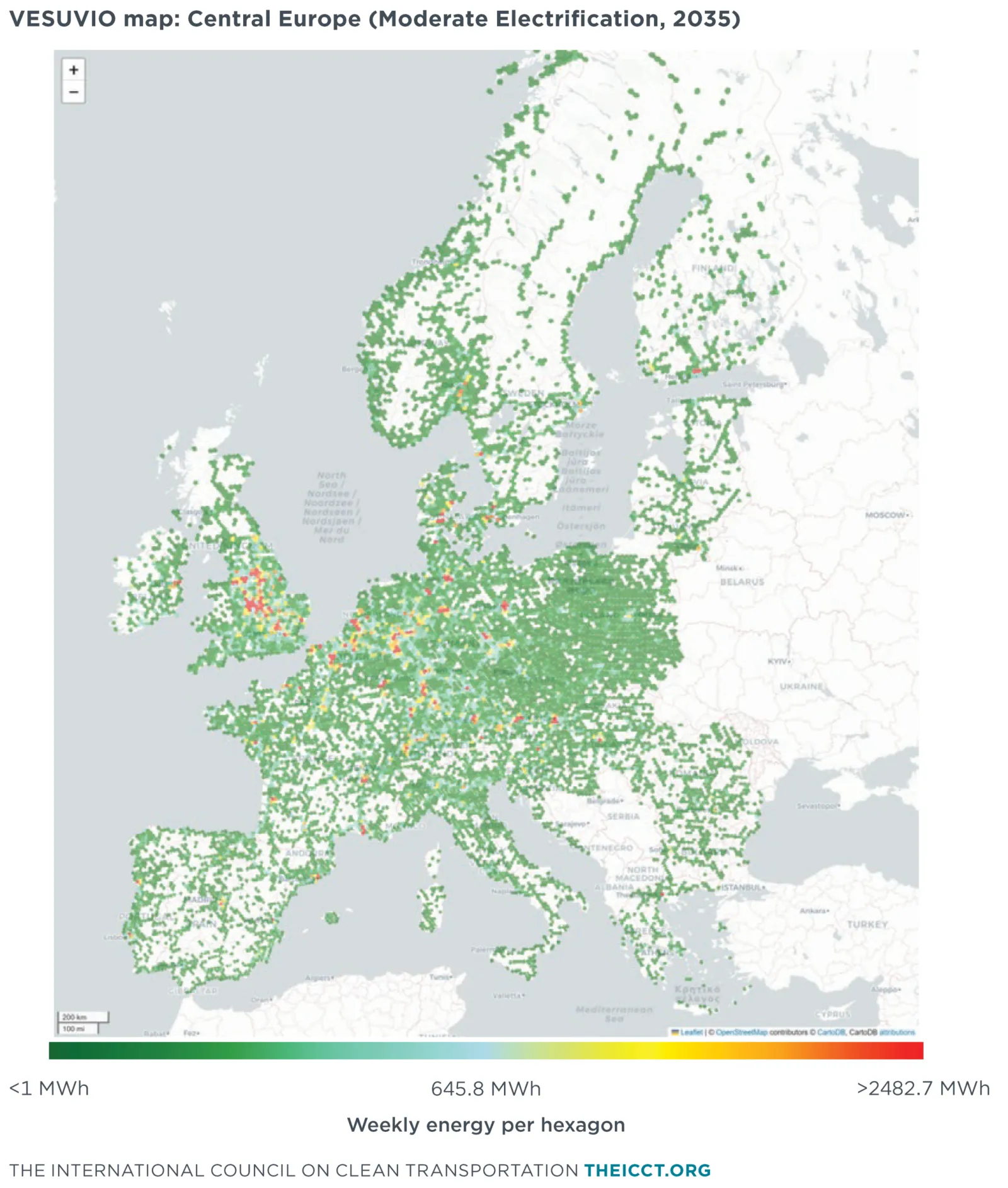
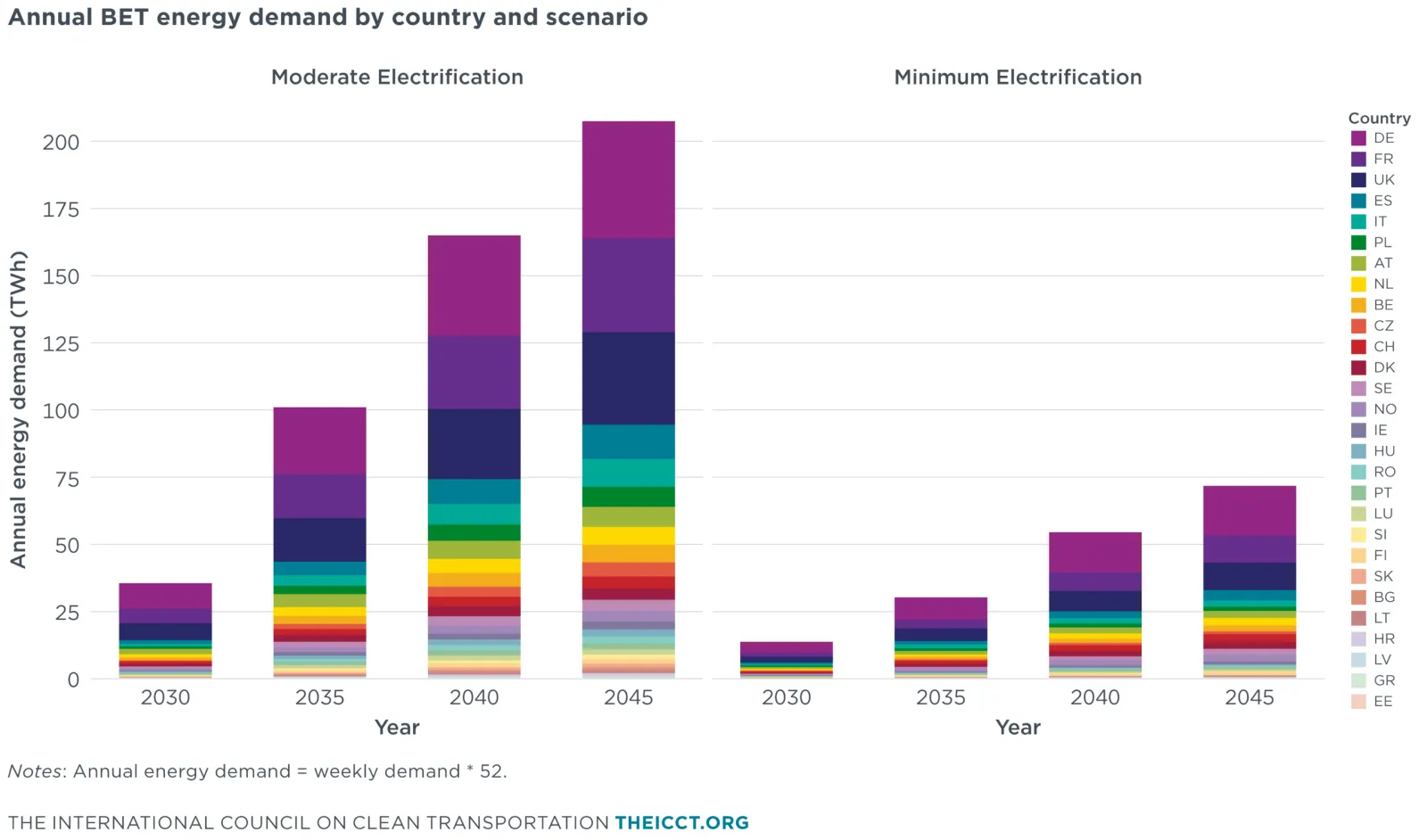
Under favourable political framework conditions for the ramp-up of battery-electric trucks (a “Moderate Electrification” scenario), annual charging electricity demand is projected to rise to around 100 TWh by 2035 and to approximately 200 TWh by 2045. Demand is particularly high in major freight transport markets such as Germany, France, the UK, Spain, and Italy. The following graphic shows the regional hotspots for electric truck charging demand in 2035, as determined by the VESUVIO model:
Depot charging remains by far the most important type of infrastructure, and accounts for more than 70 to 80 per cent of total demand in most countries and scenarios. However, for long-haul transport, public charging infrastructure remains critical: in some smaller transit countries, its share can reach between 30 and 50 per cent, according to the study.
Truck charging hotspot concentration
The spatial concentration is particularly pronounced. In many countries, just one per cent of locations examined account for around 1/4 to 1/3 of total charging electricity demand. The top ten per cent of locations with the highest demand make up between 60 and 90 per cent of the total, depending on the country. Hotspots are primarily located along major freight transport corridors, at motorway intersections, and in urban areas, industrial and logistics centres.
As a result, grid capacity requirements in these areas can be steep. In larger countries with stronger freight transport, Fraunhofer ISI and ICCT forecast frequent peak loads of 20 to 50 MW for particularly stressed regions. Challenges for the power grid are therefore likely to arise initially at individual logistics hotspots rather than being evenly distributed across national networks. The following graphic shows the projected energy demand for the countries under study:
The scale of demand in Germany is illustrated by planning for the state-initiated truck fast-charging network (link in German). For managed motorway service areas, the federal government has already calculated likely required grid connection capacities for 2035. For example, 24.64 MVA is currently planned at the Garbsen Nord location on the A2, while several other major sites also require more than 20 MVA. However, the majority of service areas fall within the four-digit kVA range.
At managed service areas alone, around 1,300 MCS and 2,000 CCS charging points are planned. Together with the already awarded unmanaged sites, the federally initiated network is set to grow to a total of approximately 1,800 MCS and 2,400 CCS charging points. The plan also includes later expansion of individual sites if the initially installed charging infrastructure does not permanently meet actual demand.
Private providers are also focusing their efforts on expanding central freight transport routes. Milence, for example, intends to grow its European charging network along key traffic axes and TEN-T corridors and increasingly deploy megawatt charging systems there. Meanwhile, the joint venture between Daimler Truck, Traton and Volvo Group now operates around 40 charging parks in Europe and aims to reach a total of 70 sites by the end of 2027. At individual charging parks, Milence is also deploying stationary battery storage systems to support high charging power.
Furthermore, the authors of the study recommend promoting depot charging as the backbone of the infrastructure and expanding public charging offers in a targeted manner in transit regions and at particularly high-traffic locations. At the same time, the necessary grid capacities must be planned in advance and approved by governments.