
Dongfeng unveils H2 truck with 1,700 km range
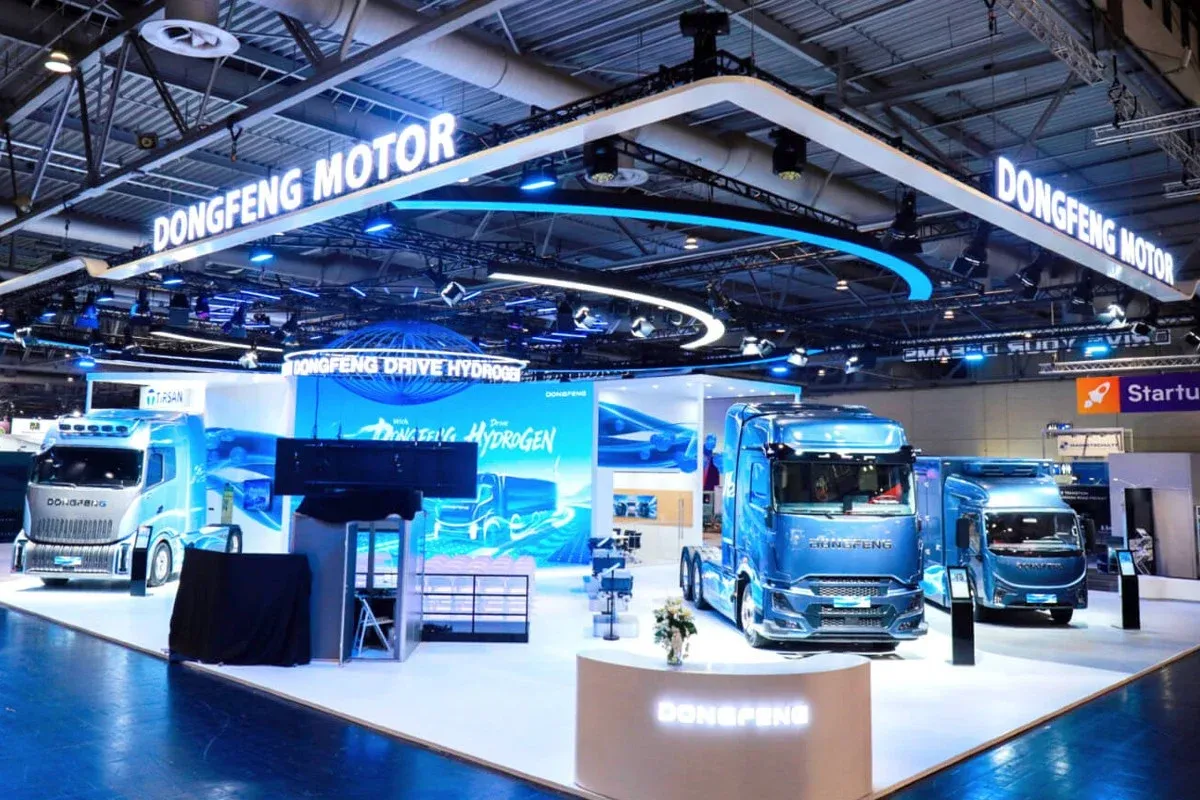
Dongfeng has just presented three truck models at the IAA Transportation in Germany, all based on its new hydrogen-electric platform T1. The highlight is a 400-kW fuel cell system that, according to Dongfeng, is set to deliver a "realistic range of 1,700 kilometers".
Image: Dongfeng
Dongfeng, one of China’s major state-owned automotive manufacturers, is headquartered in Wuhan and produces cars, trucks and buses. According to the company, Dongfeng has been active in the development of fuel cell powertrains for vehicles for decades and now offers what it says is a comprehensive portfolio of fuel cell stacks with outputs ranging from 20 to 400 kW.
Around 10,000 vehicles are reportedly already in operation in China using its proprietary fuel cell technology. Dongfeng now aims to leverage this operational experience to find global partners. With the vehicles displayed in Hanover rather than being on the verge of an immediate market launch in Europe, Dongfeng’s primary goal was to demonstrate its “market-tested practical expertise” and raise its profile in the region.
On display in Hanover were three fuel cell vehicles (FCEVs) based on the recently introduced T1 platform. The DONGFENG-1 is a 6×2 tractor unit designed for long-haul transport, equipped with correspondingly large hydrogen storage. The DONGFENG-2 is a smaller 4×2 tractor, while the DONGFENG-3 is a hydrogen-powered truck with a refrigerated box body, developed for urban and regional transport.
Dongfeng also presented its hydrogen fuel cell systems with 120 kW, 150 kW, and 400 kW stacks, as well as a hybrid system featuring a hydrogen internal combustion engine. The 400 kW system, designed for long-haul transport, is said to achieve an efficiency of 58 per cent, a gravimetric power density of 1,350 W/kg, and a service life of 33,000 hours.
The 150 kW system is positioned as a drive solution for medium and large buses, as well as medium-duty and heavy-duty trucks, dump trucks, and tractors, which the manufacturer says strikes a balance between acquisition costs and operational efficiency, offering a high degree of integration, reliability, long service life, and strong adaptability to diverse environmental conditions. The 120 kW system, meanwhile, is suitable for light buses, light commercial vehicles, and passenger cars. Typical applications include refrigerated transporters weighing 4.5 tonnes or light trucks in the 8-tonne class.
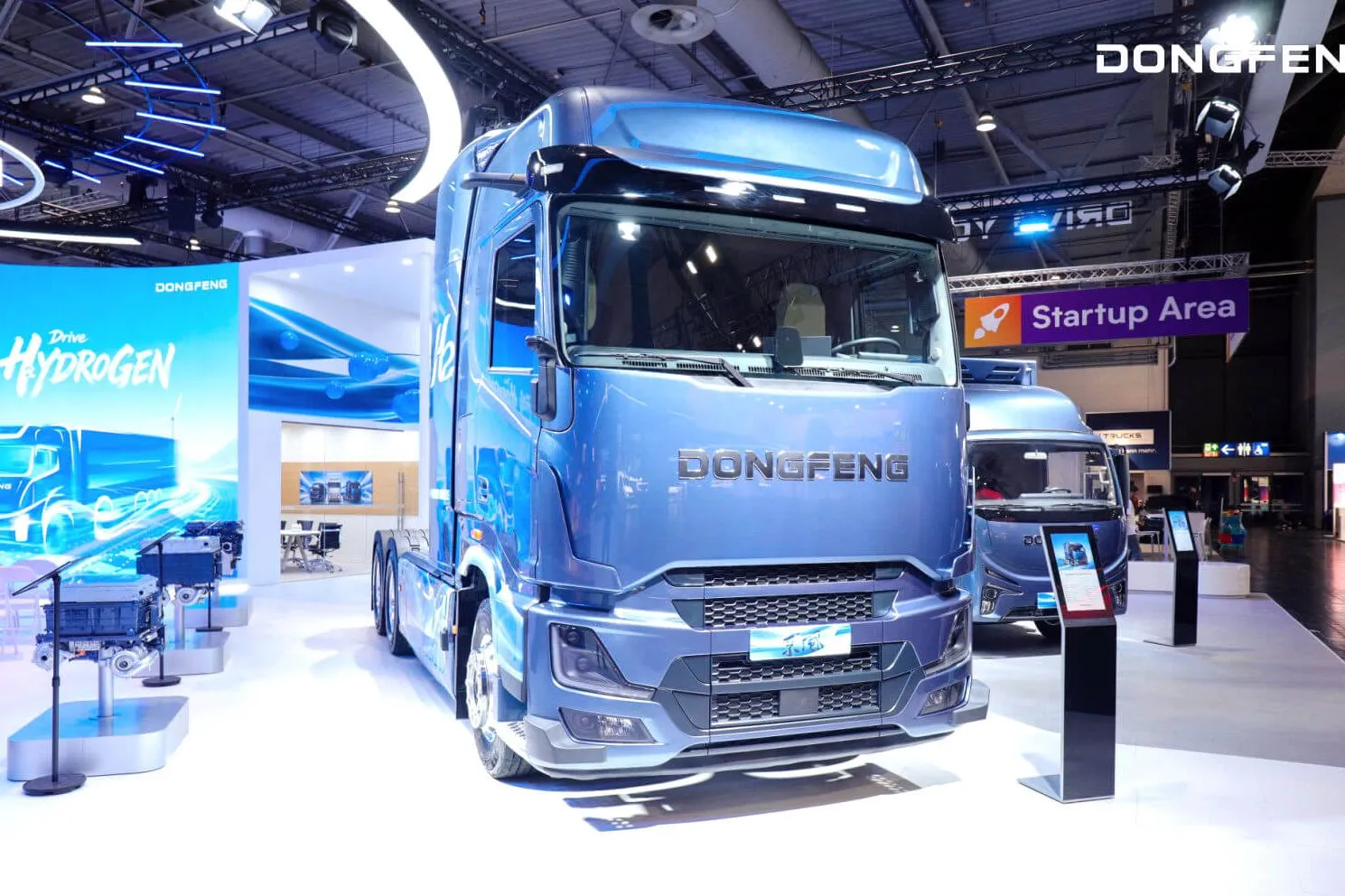
Image: Dongfeng
- 1/3
- 2/3
- 3/3
Dongfeng announced the new 400 kW fuel cell system named “Hydrogen Core” in May, describing it at the time as the first hydrogen fuel cell platform developed in China with metal bipolar plates, “which has passed the 10,000-hour durability test in accordance with the new national standards” – referring to China’s adoption of stricter regulations for vehicle quality assurance.
The company had already specified in May that the T1 platform features four core aspects of low energy consumption, light weight, fast refuelling, and high safety standards. The manufacturer said at the time that its hydrogen-powered vehicles achieve a hydrogen consumption of just 7 kg per 100 kilometres. The 49-tonne hydrogen-powered tractor unit weighs only 8.8 tonnes. With a refuelling time of just 15 minutes, the company said its vehicles achieve a range of up to 1,700 kilometres. The platform is equipped with an intelligent and branched energy system and a battery system.
Dongfeng reiterated the range figure at the current trade fair, referring to it as “a real-world range of 1,700 kilometres”. Tang Jing, Deputy General Manager of Dongfeng’s Commercial Vehicle Business Unit, commented: “Hydrogen represents one of the key pathways for commercial vehicles to achieve zero‑carbon emissions across all-scenario applications and the full life cycle. He said Dongfeng “is ready to join hands with industrial-chain partners, well-known research institutions and other industry peers worldwide.” The aim, he said, is to jointly develop core technologies, establish industry standards, share access to industrial-scale production capacity and expand global markets, “so as to foster a more open, collaborative and prosperous global hydrogen-fuel commercial-vehicle ecosystem.”