
CMA CGM launches electric inland vessel in Vietnam
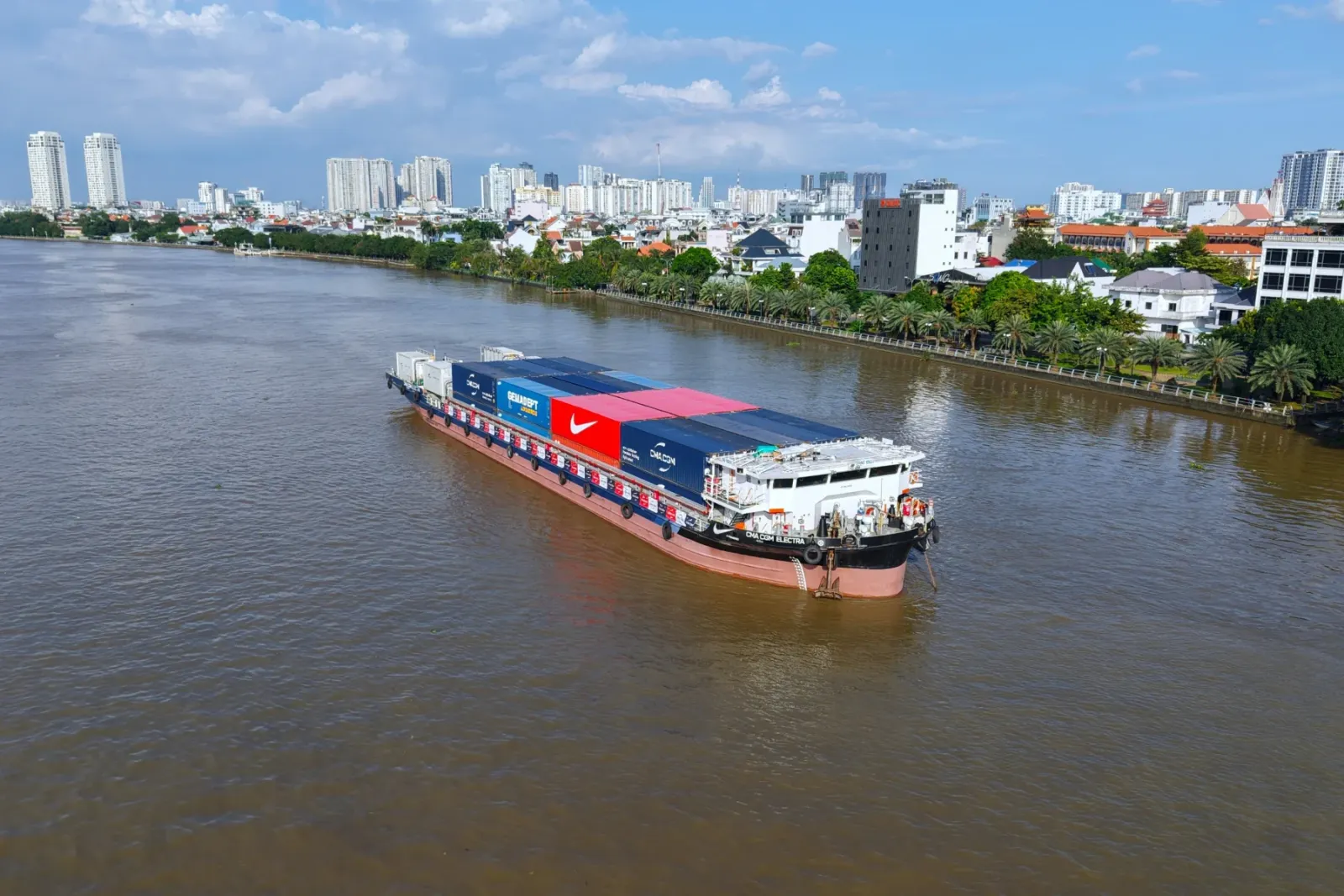
CMA CGM, Nike, and Gemadept have launched Vietnam's first fully electric inland vessel. The freighter is set to transport more than 50,000 TEU annually between Ho Chi Minh City and the Gemalink deep-sea port. The battery technology is provided by CATL.
The electric inland vessel is expected to save around 778 tons of CO₂ annually.
Image: Nike
The vessel connects a Nike transhipment hub in Ho Chi Minh City with the deep-sea port of Gemalink in Cai Mep, from where goods are shipped internationally. According to Nike, the electric round trip covers more than 160 km, while other project sources cite around 180 km. The transport system is designed for an annual capacity of over 50,000 TEU. One TEU corresponds to a standard container approximately six metres long. The companies have not disclosed how many containers the vessel can carry per trip.
The battery-electric operation is expected to save around 778 tonnes of CO₂ annually. No direct greenhouse gas emissions are produced during the journey. However, the basis for calculating the projected savings is not specified in the published information.
The battery technology is supplied by the Chinese manufacturer CATL. The vessel solution was developed by CMA CGM’s research and newbuild departments. A full battery charge is said to take approximately four hours. Details on battery capacity and installed charging power have not yet been disclosed.
Nike partners with CMA CGM for sustainable supply chains
The batteries are charged using certified renewable energy. This includes a dedicated solar plant constructed for the project at the Gemalink Terminal, which supplies the charging infrastructure. The proportion of solar power covering the total energy demand remains unspecified.
For Nike, the electric inland vessel is part of a broader strategy to reduce emissions across its supply chain. The sportswear manufacturer aims to cut greenhouse gas emissions in its extended supply chain by 35 per cent by 2030 compared to the 2020 fiscal year. According to its own reports, Nike has already reduced emissions from inbound and outbound freight by 56 per cent in the 2025 fiscal year compared to 2020. Contributing factors include reduced air freight, lower-emission marine fuels, and increased use of electric vehicles.
The fixed connection between the transhipment hub and the deep-sea port provides favourable conditions for electric shuttle operations. The route is predictable, and the charging infrastructure can be precisely tailored to the vessel’s operations. CMA CGM sees this as a potential model for other transport links and plans to work with its partners to explore how the concept can be transferred to other regions.
Whether the solution can be economically scaled to other routes remains to be seen. The project partners have not yet released details on investment costs, battery capacity, or charging power.