
City of Nuremberg deploys electric construction machinery for demolition
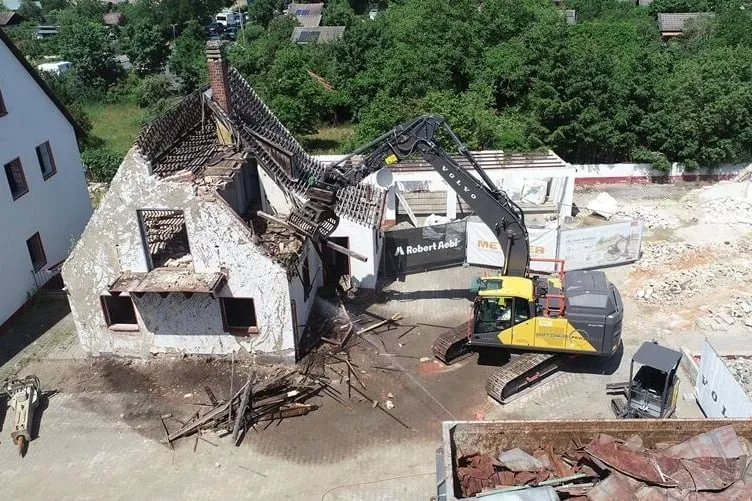
Nuremberg is demolishing a former nursery using electric construction machines and electric trucks. The city already stipulated emissions-free operation in the tender. The project follows the example of a demolition project by Siemens in neighboring Erlangen.
At a roughly 7,000-square-metre site at the former Sauerbrey nursery in Nuremberg’s Westpark, the city is trialling a largely CO₂-free demolition process. According to its own statements, Nuremberg has launched Bavaria’s first public tender for such a project.
The requirements are comprehensive: all machinery, equipment, and transport vehicles used must operate without emissions. Only electric, hydrogen-powered, or other CO₂-free drivetrains are permitted. Conventional internal combustion engines are excluded, even in hybrid form or when using alternative fuels. Additionally, no fossil-fuel-powered generators may be used for charging.
The demolition work has been awarded to Metzner Recycling (supported by Robert Aebi Nürnberg). In practice, the company is using a fully electric fleet: a Volvo EC230 Electric crawler excavator, an ECR18 Electric compact excavator, and an L20 Electric wheeled loader from Volvo Construction Equipment (Volvo CE). For logistics, a Volvo FM Electric roll-off skip lorry is also available.
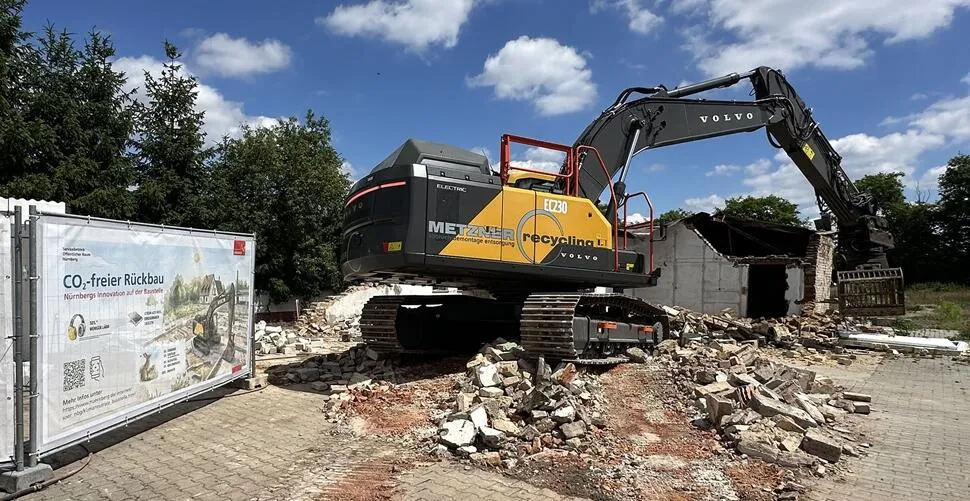
No special charging infrastructure was installed for the project. The electric machinery and vehicles are powered using the site’s regular construction electricity supply. This approach demonstrates that emission-free construction site operations are possible without extensive additional energy infrastructure. At the same time, the electric machinery reduces noise and local pollutant emissions such as particulate matter and nitrogen oxides, benefiting neighbouring residential areas.
However, this approach is not entirely new to the region. Nuremberg’s project follows a fully electric building demolition completed in 2025 at the Siemens Technology Campus in nearby Erlangen. There, companies including Volvo CE, Metzner Recycling, Robert Aebi, and Volvo Trucks largely electrified the construction process from demolition and material processing to logistics.
“With the CO₂-free demolition of the former Sauerbrey nursery, the City of Nuremberg is deliberately breaking new ground,” said Mayor and First SÖR Works Director Andreas Krieglstein. The city aimed to demonstrate that sustainable practices can begin with the demolition of buildings, with circular economy principles also playing a role in the project. For example: construction materials were separated to ensure suitable materials were returned to the recycling loop wherever possible. Once the work is completed, the site itself will also be repurposed: Nuremberg purchased the former nursery grounds to extend the Westpark eastwards by around 7,000 square metres, creating additional public green space.
The Nuremberg project thus translates the experiences from Erlangen into municipal practice. The key innovation is not that electric construction machinery can handle demolition – this was already demonstrated in the Siemens project. What is new is that a local authority is mandating emission-free construction site operations through its procurement process, creating a model that could potentially be applied to other public construction projects.