
China’s EV boom increasingly driven by exports
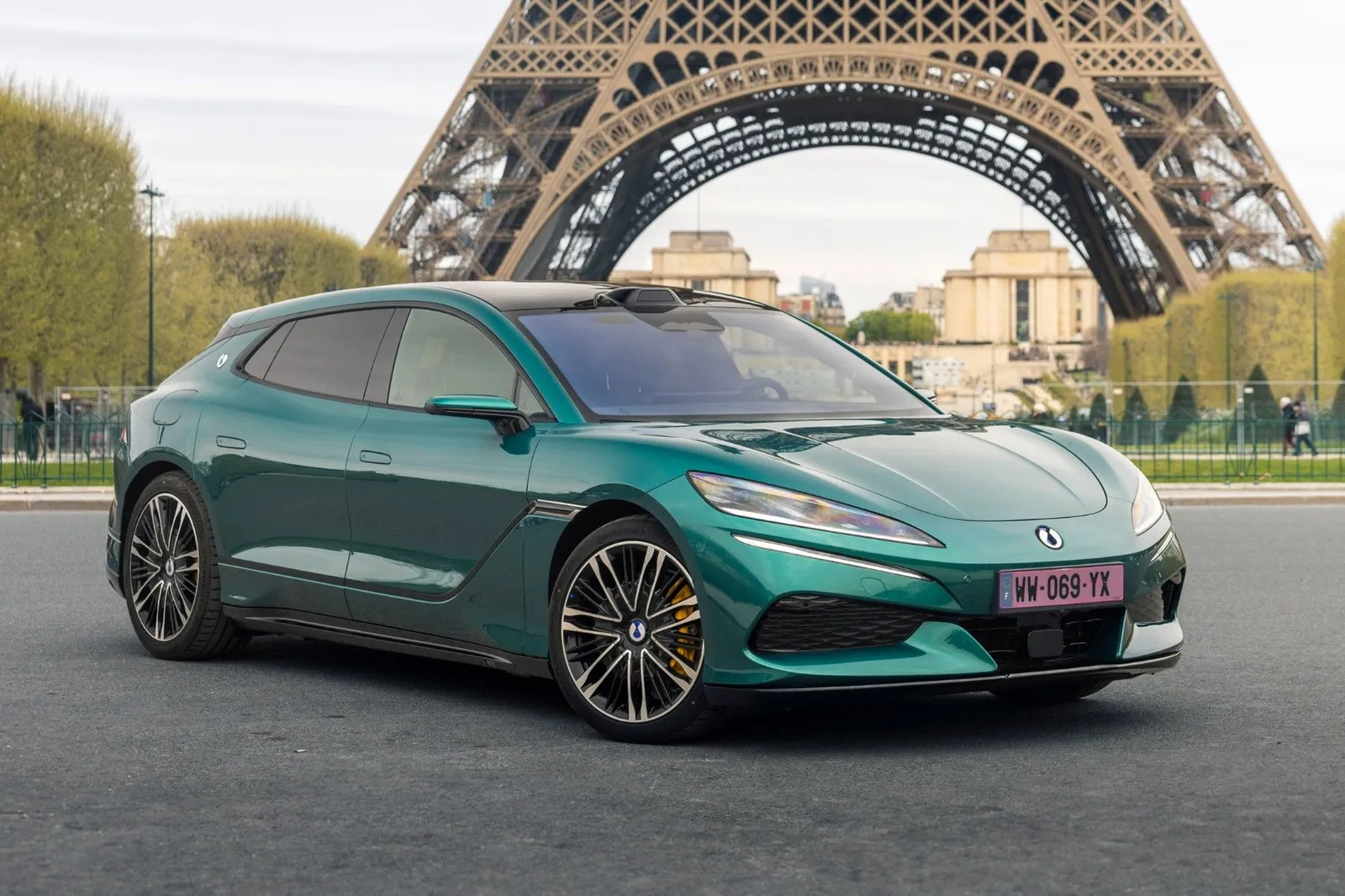
In August, EVs and plug-in hybrids manufactured in China achieved a sales volume of 1.64 million units, an 18 per cent increase year-on-year. However, the drivetrain types are developing very differently: plug-in hybrids are stagnating, while pure electric cars are at an annual high - with exports becoming a key pillar.
Image: BYD
According to statistics from the China Association of Automobile Manufacturers (CAAM), August saw sales of 1,643,000 NEVs. In China, this category includes BEVs and plug-in hybrids, covering both passenger cars and commercial vehicles. The August figure represents a 17.8 per cent year-on-year increase and a 5.3 per cent rise compared to July. This year, only June reached a similar level. However, the current sales figures still fall short of the record highs set in the fourth quarter of 2025, which occasionally exceeded 1.8 million units sold in a single month.
However, the final quarter is traditionally a strong sales period in China – and the current NEV penetration suggests that sales are likely to climb even higher this year. In August, plug-in vehicles accounted for 60.6 per cent of total vehicle sales, up from 48.8 per cent in August 2025. Notably, according to _Car News China_, nine of the top ten best-selling passenger car models in China in August were BEVs. The sole exception was the BYD Fang Cheng Bao Ti7, which, unlike the other nine models, is available as both a BEV and a PHEV. Apart from Tesla’s high-volume models, the Model 3 and Model Y, all top ten vehicles were from Chinese brands.
Cumulative NEV sales for the first eight months of the year have already reached 10.65 million units (+10.7 per cent year-on-year), accounting for 52.4 per cent of total vehicle sales. However, the overall vehicle market is under pressure: total vehicle sales in August amounted to 2.7 million units (-5.1 per cent year-on-year). As has been the case throughout the year, China’s domestic market is weakening, while exports continue to reach new record highs.
BEVs once again emerged as the growth driver in China in August: sales reached 1,161,000 units, representing a 27.8 per cent year-on-year increase and an 8.3 per cent rise month-on-month—marking a new annual high. In contrast, PHEV sales totalled 482,000 units (-0.9 per cent year-on-year). After two consecutive months of slight year-on-year growth, the figures have now declined again. The sales level is also barely different from 2024, indicating that China’s PHEV market is increasingly entering a phase of stagnation.
Looking at sales regions: in August, 1,118,000 units of China-built vehicles were sold domestically (-4.6 per cent year-on-year), meaning the level has now been below the domestic NEV sales of 2025 for the entire year so far. Notably, while NEV passenger cars saw an 8.2 per cent decline domestically in August, NEV commercial vehicles included in the statistics increased by 56.6 per cent to 103,000 units. In other words, while the domestic passenger car market is shrinking (down 24 per cent year-on-year across all drivetrains), the domestic market for electric buses and trucks is booming.
Meanwhile, exports of plug-in vehicles reached 526,000 units, the second-best result ever after July. Compared to August 2025, the over half a million NEV exports represent a 130 per cent increase. Another point of interest: for the third consecutive month, plug-in vehicles accounted for more than half of all exports. In August, the figure was 52.1 per cent. Cumulative NEV exports for the first eight months of the year reached 3.44 million units according to CAAM statistics, a 124 per cent increase over the same period last year.
On the production side, CAAM statistics for August show 1,653,000 NEVs built in China (+18.9 per cent year-on-year), which is roughly 10,000 more than the number of NEVs sold. According to the Chinese government’s new five-year plan, NEVs are expected to account for 70 per cent of domestic new car sales in the passenger segment and 40 per cent in the commercial vehicle segment by 2030. Furthermore, NEVs are projected to make up around 30 per cent of the total vehicle fleet in China by 2030.