
CATL begins test production of battery cells in Debrecen
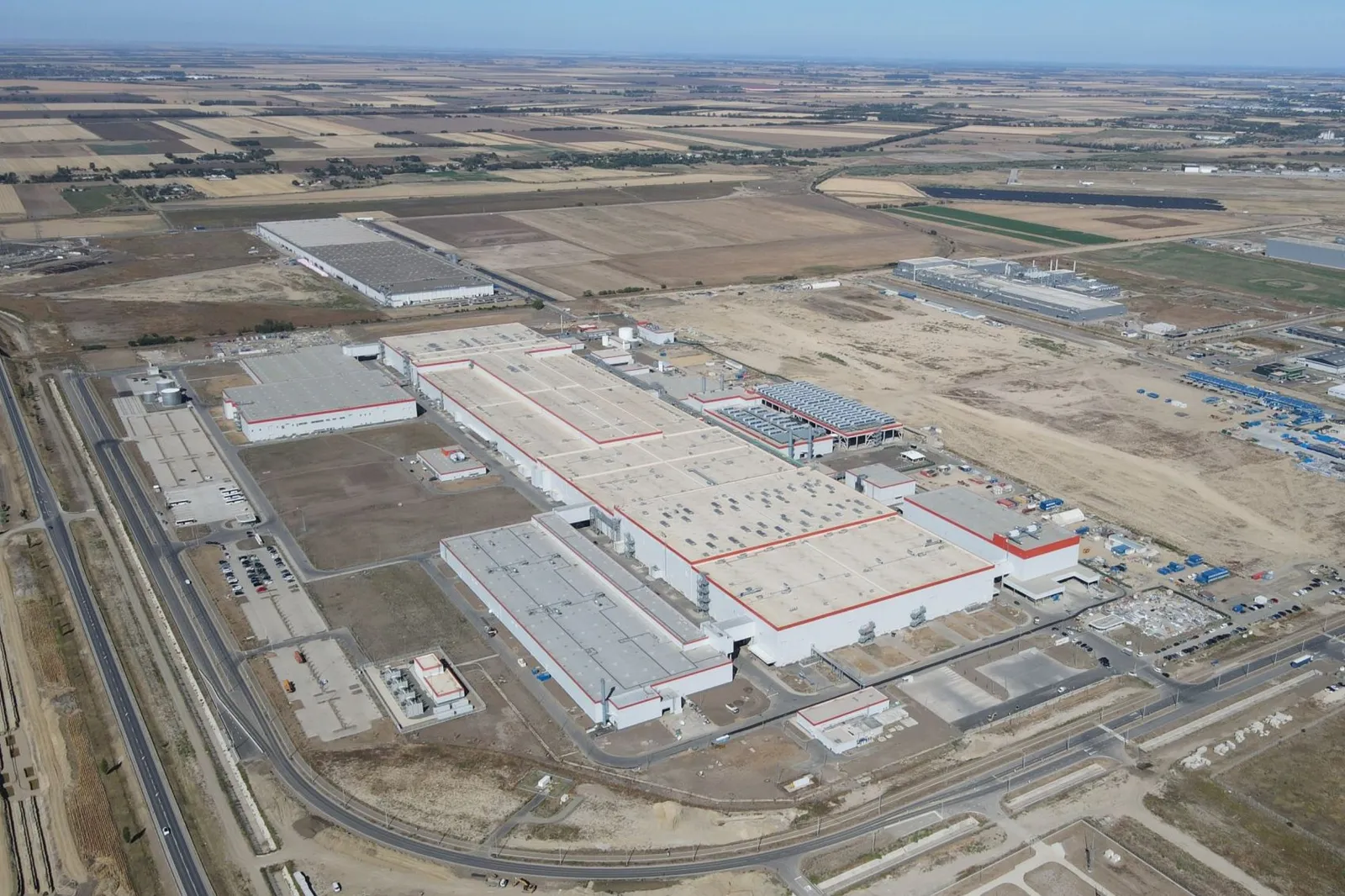
Chinese battery giant CATL has begun test production of battery cells at its new plant in Debrecen, Hungary. Previously, there were multiple delays, forcing European automakers to source supplies from China as an alternative. More recently, political headwinds have also emerged.
Aerial view of the new CATL factory in Debrecen
Image: CATL
CATL has begun test production at its new battery cell plant in Debrecen, Hungary. According to the company, this follows the successful fulfilment of all necessary prerequisites and regulatory requirements. The test phase aims to fully set up, optimise, and validate the production facilities and manufacturing processes before mass production begins. The first two production lines at the plant have now been commissioned for these test purposes.
However, it remains unclear when full-scale mass production of battery cells in Debrecen will actually commence. Test production in new cell factories typically lasts months rather than weeks. On the other hand, CATL is the world’s largest battery cell manufacturer, with extensive experience in the field. Its customers are eagerly awaiting the cells: according to a media report, Mercedes-Benz even had to halt production of the all-electric GLC in Bremen this summer because CATL was unable to supply enough cells. In response, the company specifically restructured its supply chain to temporarily supply Mercedes with cells from China for the GLC and VLE.
CATL already operates a cell factory in Thuringia
CATL announced the Debrecen plant in August 2022 as its second European cell factory, alongside the facility in Arnstadt, Thuringia, which opened at the end of 2022. The plan included investments of €7.34 billion and a production capacity of up to 100 GWh per year, making it CATL’s largest factory outside China. The Debrecen plant is set to supply locally produced cells to Mercedes-Benz, as well as BMW – which also operates its new EV factory in Debrecen – and other European automakers. Construction of the first phase began in 2023, but the originally expected production start was delayed several times; it was supposed to begin in spring 2026.
Additional challenges arose during the ramp-up, including approval and environmental issues. Local residents and environmental organisations contested the environmental permits, with experts criticising aspects such as water consumption, noise, and impacts on the water balance. This summer, a non-compliant wastewater discharge and elevated nickel exposure among employees led to regulatory interventions. While production of battery modules had already begun, cell manufacturing took longer to get underway.
The project also faces an increasingly critical political environment: the government of Viktor Orbán, which was voted out in April, had heavily supported Hungary’s development into a European battery hub and attracted several Asian manufacturers to the country. Following the change in government, the new leadership under Prime Minister Péter Magyar announced stricter environmental controls and new oversight for the battery industry. However, there is no clear evidence of a direct link between the political shift and the delays at CATL; the company emphasises that it has obtained the necessary approvals for the now-launched trial operation and has rectified the previously identified deficiencies.