
BYD Atto 2 DM-i review: Something a little different
3.5OUT OF 5
The verdict
A new approach
The BYD Atto 2 DM-i is a unique prospect in its class, with decent efficiency and value which could be enough to overcome a few shortcomings
★★★★★
BYD first arrived in the UK three years ago with the all-electric Atto 3, following that up quickly with the Seal and Dolphin – both also pure EVs.
Since then it has expanded its line-up with more electric models and a range of plug-in hybrid models as part of its “new energy” approach.
The Atto 2 first arrived as one of the brand’s all-electric models, taking on the best from Renault, Kia and Volvo, but has since added a plug-in hybrid option, which we’ve spent a week testing.
Going for a plug-in setup is an unusual choice in the compact SUV segment. In fact, it’s unique. Most rivals are either fully electric or make do with “self-charging” hybrid setups. BYD says its arrangement gives the advantages of an EV-led driving experience backed up by the 600-mile range of an efficient petrol car.
But with so many capable rivals, does that approach make sense?
Design and interior
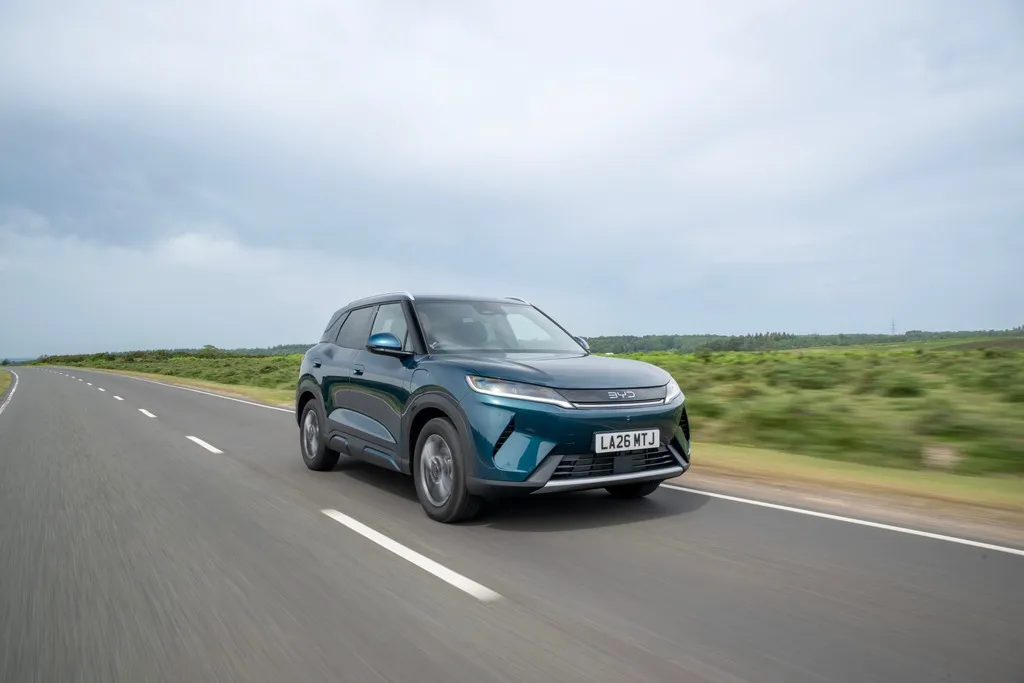
BYD describes the Atto 2 as a B-segment SUV but it’s definitely towards the top end of that class, certainly from the outside. While pitched price-wise at the Renault 4, Vauxhall Mokka (its various Stellantis cousins) and Ford Puma, it’s a hefty 4.3m long by 1.8m wide by 1.67 tall, making it the size of a £33k Kia EV3 or Hyundai Kona. That said, its 2.62m wheelbase is identical to the Renault 4’s and its 425-litre boot is a mere five litres bigger, so interior space isn’t any more generous. Where it is noticeably bigger is in headroom – it’s a good 10cm taller than most rivals, giving it an airier feel and more road presence.
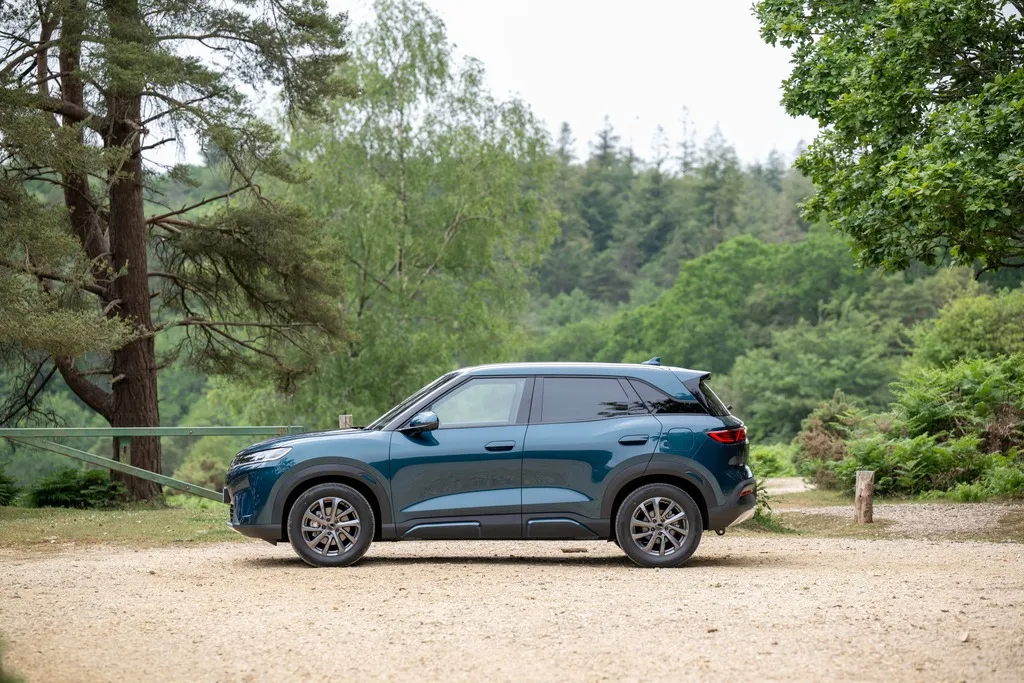
That presence doesn’t translate to much appeal though. When even my mother-in-law comments on how generic a car looks, you know you’re not winning any design awards. It’s tall, boxy and with some low-level cladding for the traditional crossover look, and falls safely into the “you’ll lose it in a car park” category.
The interior design is similarly straightforward with none of the wild embellishments that afflict some BYD models. It is predictably screen-focused but otherwise the two-tone dashboard and multi-level centre console are simple and logical, and the build quality feels a step above its European rivals.
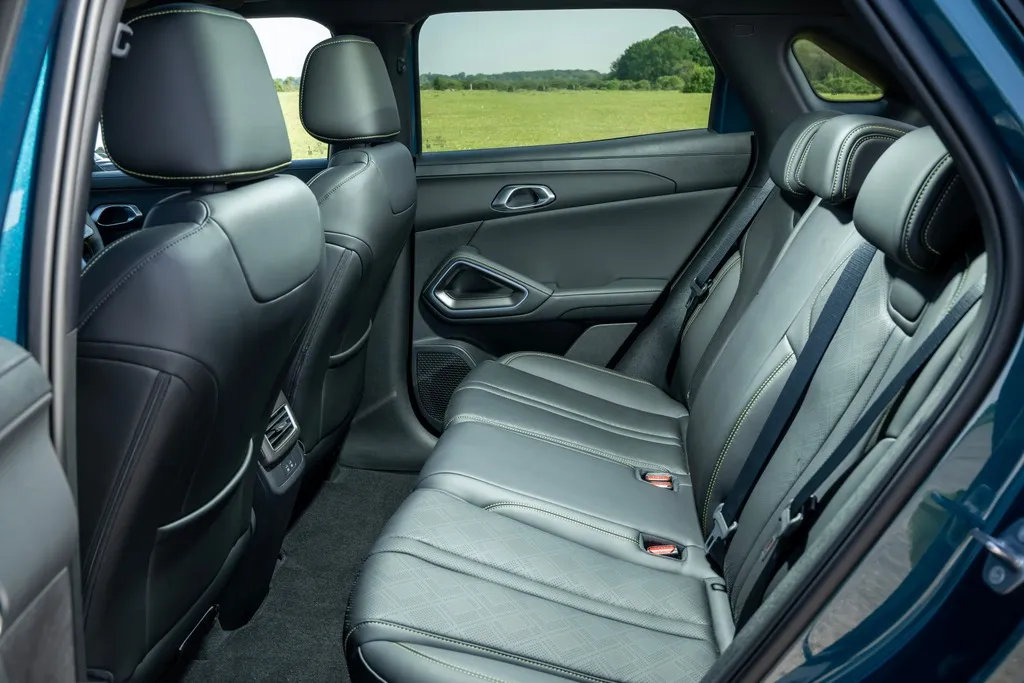
My test car’s appealing pale perforated faux-leather interior and panoramic sunroof helped give the Atto 2 a light, airy feel. However, interior space is on a par with most rivals. There’s room for four average adults, and you might squeeze three younger passengers across the rear bench, but something like an EV3 or Skoda Elroq is still a step above.
Technology and equipment
At the centre of the BYD Atto 2’s dashboard is a 12.8-inch touchscreen, backed up by an 8.8-inch digital instrument panel. With this model, you can feel the incremental improvements in BYD’s user interface but it’s still far from great. The home screen is a big blank expanse with small shortcuts locked to a thin strip along the bottom. A swipe-down menu gives access to more shortcuts for frequently adjusted settings such as key ADAS functions. But why these can’t be locked to the main screen is a mystery. And once you get into the menus, you’ll be scrolling for days.
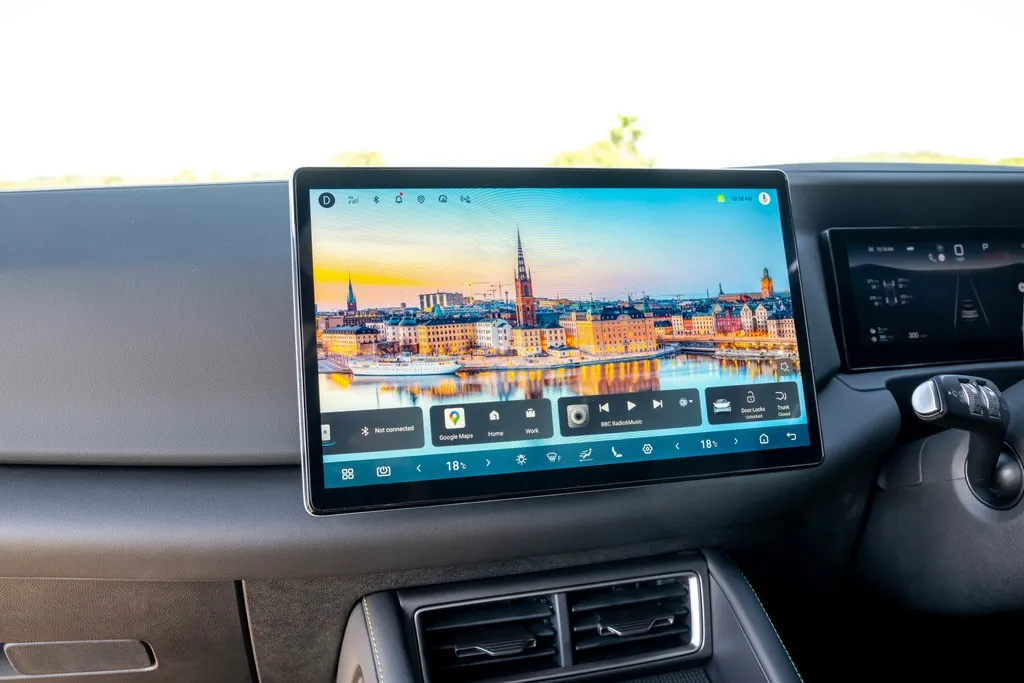
There’s Apple and Android mirroring and, helpfully, now an option to keep your climate controls on-screen even when using your smartphone app of choice. The Atto 2 also now allows Google Maps mirroring on the digital instrument panel, which is also handy. However, this screen still looks oddly old-fashioned and crowded.
Things don’t feel like they have improved on the driver “assistance” front. The Atto 2 is packed with scores of active safety systems but the key ones remain as intrusive and inaccurate as ever. You can swipe down on the screen and hit three buttons to kill the most irritating ones, but it’s still nowhere near as simple as Renault, Kia or even Geely make it.
Every model gets the two digital screens, adaptive cruise control, a reversing camera and keyless entry with the option to use a phone or wearable tech as a “smart key”. Boost models upgrade the camera to a 360-degree unit with a handy read-out that tells you exactly how many centimetres there are between you and the thing you’re going to crash into. It also introduces vehicle-to-load capability and front parking sensors.
Range, battery and charging
The BYD Atto 2 DM-i comes with a choice of batteries for its PHEV setup. Entry-level Active cars get a fairly measly 7.8kWh unit which should give up to 24 miles of all-electric range. Above that, the Boost gets a more substantial 18kWh unit which delivers up to 55 miles of WLTP range.
Neither model supports rapid DC charging. The Active is capped at 3.3kW while the Boost supports up to 6.6kW, resulting in a 15-100% top-up taking around three hours for both variants.
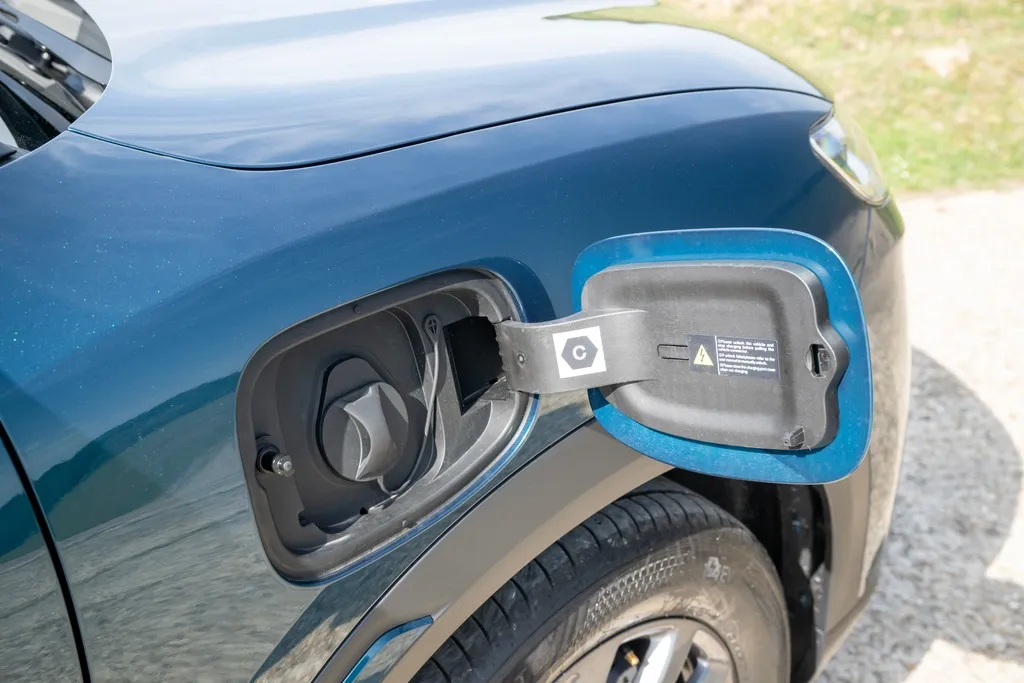
This being a PHEV, however, once the electric range has run out, there’s a 1.5-litre petrol engine to keep things going. In most cases this acts to recharge the battery, kicking in to drive the wheels during high-demand driving. BYD quotes an official “weighted” efficiency of 201mpg for the Active and 470mpg for the Boost, with up to 621 miles of combined range.
In the real-world, of course, things are different. With the battery charged and on a mixed urban/rural driving route, I saw a comfortable 62mpg. The long-term trip computer showed that the “unweighted” efficiency figure of 55mpg is far closer to the truth, with a real-world driving range somewhere around 550 miles.
Performance and driving
As well as a bigger battery, the Boost version of the Atto 2 DM-i also gets a more powerful electric motor – 210bhp compared with the Active’s 163bhp. Total system torque for both versions is 221lb ft.
That will get the Boost version from standstill to 62mph in 7.5 seconds and on top a top speed of 11mph.
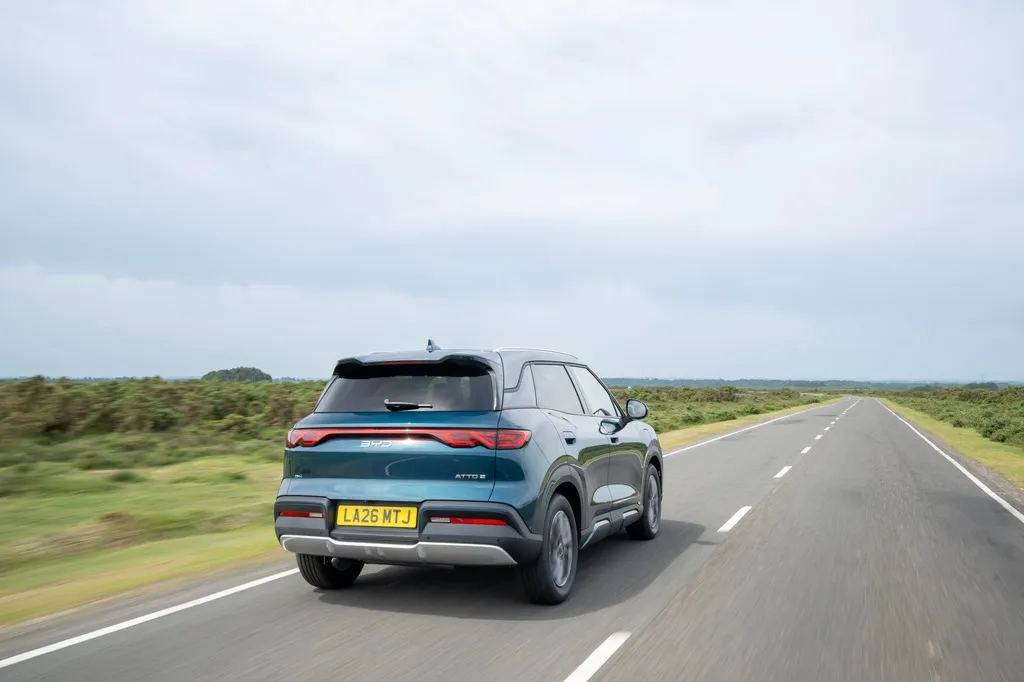
The Atto 2 DM-i is set up as an EV-first powertrain, meaning that most of the time the driving experience is pleasantly like a regular EV. Despite reasonable on-paper figures, it doesn’t feel particularly quick on the road. However, it is still perfectly adequate for the class and its power delivery is smooth and refined, with no obvious handover between the electric and petrol motors.
The only time the petrol engine becomes particularly noticeable is when the battery is fully depleted, when it tends to drone slightly. There are two stages of regenerative braking to keep the battery topped up – standard or high. High works fine at higher speeds but in low-speed situations delivers whiplash-inducing levels of bite.
Small SUVs aren’t famed for their focus on dynamics and the Atto 2 DM-i is no different. Along with unremarkable pace its steering is lifeless and the car’s height is apparent on twisty roads. The experience isn’t helped by a stiff-jointed ride that delivers harsh jolts through the cabin on all but the smoothest of roads, and some quite pronounced wind noise at motorway speeds.
Price, trims and rivals
BYD isn’t quite as intent on undercutting rivals as some Chinese brands but the Atto 2 DM-i still represents fairly strong value.
The entry-level Active trim costs from £26,995, with the Boost model priced at £29,995.
Active features the 12.8-inch touchscreen with smartphone mirroring and 8.8-inch digital instruments, and gets 16-inch alloy wheels, LED lights, rear parking sensors and a reversing camera as standard.
Boost adds the larger battery and ups the wheels to 17-inch designs. It also gets heated and electrically adjustable front seats, a heated steering wheel, tinted rear glass, a panoramic sunroof and wireless phone charging, along with V2L capability.
As the UK’s only B-segment PHEV, the Atto 2 DM-i’s rivals are a mix of pure electric or “regular” hybrids. On the EV front, its price and size puts it up against models ranging from the Renault 4 and Volvo EX30 to the Skoda Elroq and Kia EV3. For drivers who still need petrol power there are myriad options, from the Fiat 600 and Ford Puma to the Hyundai Kona and Toyota Yaris Cross.
Verdict – 3.5/5
BYD’s model range veers from the impressive – the Seal – to the disappointing – the Dolphin Surf. The Atto 2 sits somewhere between those extremes.
Its ride and refinement still have room for improvement, as does its user interface. It’s also not as spacious as its external dimensions would have you believe. However, it represents strong value for money, feels robustly built and delivers impressive real-world range. It also offers a unique powertrain for the segment, which could be enough to help it stand out.
For
Good real-world efficiency
Well-equipped
Solidly built
Against
Dull driving experience
Slow charging
Stiff ride
Fact file
BYD Atto 2 DM-i Boost
Price
£29,995
Powertrain
1.5-litre petrol, electric motor, FWD
Battery
18kWh
Power
210bhp
Torque
221lb ft
Top speed
111mph
0-62mph
7.5 seconds
WLTP EV Range
55 miles
WLTP consumption
470.8mpg
Real-world range
40-45 miles (est)
Charging
up to 6.6kW
Boot space
425 litres
Insurance group
40
The rivals
Alternatives worth a test drive