
BMW iX5 Hydrogen: testing of the upcoming hydrogen SUV underway
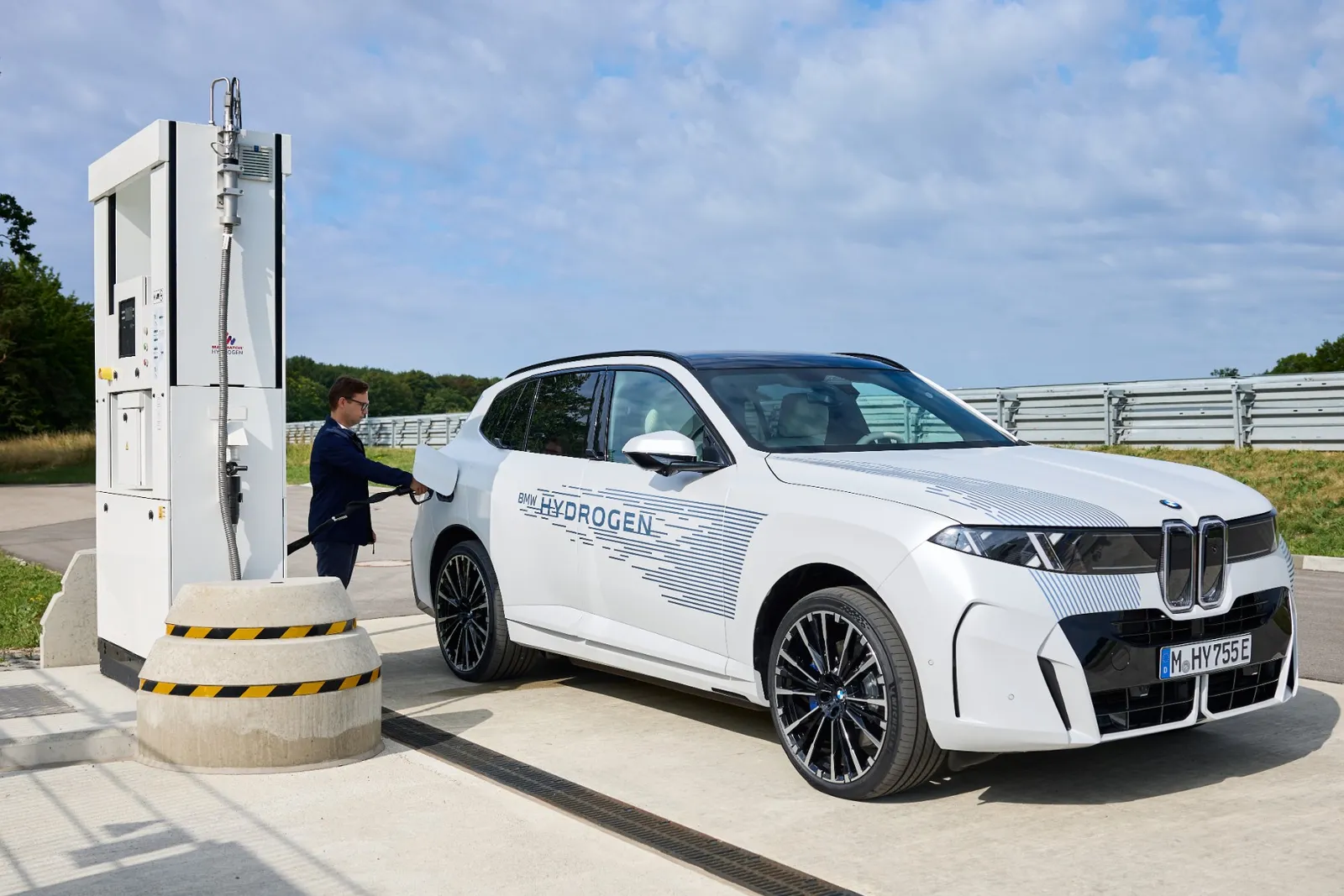
BMW will launch the new generation of the X5 with five powertrain options, including a hydrogen fuel cell. The company has now provided its first insights into the testing of prototypes of the hydrogen SUV, which is set to hit the market in 2028 under the name BMW iX5 Hydrogen.
Prototype of the BMW iX5 Hydrogen
Image: BMW
BMW previously deployed a test fleet of 100 converted units equipped with fuel cells from the fourth generation of the X5 – built in Spartanburg, USA, and internally designated as G05 – to gain practical experience with the technology and enable test drives for selected journalists. We at electrive also had the opportunity to try out such a vehicle two years ago.
Now, the company has begun testing the first prototypes of the upcoming BMW iX5 Hydrogen, which is based on the fifth generation of the X5 (internally designated as G65 at BMW). The model celebrated its world premiere at the end of June here – and at that time, BMW announced five different powertrain options for the X5: fully electric under the iX5 designation, petrol, diesel, and plug-in hybrid as the X5, as well as the aforementioned BMW iX5 Hydrogen with a hydrogen (H₂) fuel cell. The first four powertrain options are expected to reach the market in 2027, while the H₂ version is not scheduled until 2028.
€273 million in funding for the powertrain
This approach underscores BMW’s commitment to remaining ‘technology-open’ – a term frequently used by former CEO Oliver Zipse. The Bavarian company has also secured funding for its hydrogen efforts on multiple occasions, such as in the HyPowerDrive project (link in German), where it received €273 million from the German federal government and the Free State of Bavaria for the development and industrialisation of an innovative fuel cell electric powertrain for passenger cars, including the 2028 BMW iX5 Hydrogen.
The Munich-based automaker has now announced that prototypes of the new-generation BMW iX5 Hydrogen are undergoing a comprehensive testing programme, including trials at BMW’s test facility in Aschheim near Munich, as seen in the press photos. In parallel, a new prototype construction phase for the third-generation fuel cell system has begun at the Hydrogen Competence Centre in Munich. Additionally, preparations for the industrialisation and future series production of the hydrogen fuel cell system are currently underway at BMW’s engine plant in Steyr, Austria. At the BMW plant in Landshut, pre-series production of the central control unit, the “Energy Master”, for the hydrogen powertrain has already commenced here.
“Our ambition for the BMW iX5 Hydrogen is clear: a true BMW – with Sheer Driving Pleasure. A perfectly coordinated overall system is crucial for this. Current testing demonstrates how the fuel cell system, high-voltage battery and electric drive train are already successfully integrated and how systematically we are developing the technology towards series production,” says Josef Hochreiter, Head of Hydrogen Vehicles at BMW Group.
BMW iX5 Hydrogen aims to match the performance of the iX5
The primary objective of the current tests is to ensure the powertrain’s full performance capability at all times while also “further optimising BMW’s hallmark driving dynamics in the fuel cell electric vehicle,” according to the company. The development targets performance levels comparable to those of the fully electric BMW iX5, including an intended acceleration of under five seconds from 0 to 100 km/h.
However, the purpose of a hydrogen fuel cell-powered vehicle remains debatable. The manufacturer aims for a range of 750 km for the BMW iX5 Hydrogen – a figure that the generous 141-kWh battery of the new fully electric iX5 is also likely to achieve. And as is well known, there are far more charging stations for electric cars than hydrogen refuelling stations for fuel cell vehicles. But let’s see what the future holds for the company’s ‘technology-open’ approach.